
Vietnam’s Economy in 2025 and Prospects for 2026: Promoting Digital Economic Development in the New Era
24/04/2026 2026-05-26 9:19Vietnam’s Economy in 2025 and Prospects for 2026: Promoting Digital Economic Development in the New Era
Vietnam’s Economy in 2025 and Prospects for 2026: Promoting Digital Economic Development in the New Era
On the morning of April 24, National Economics University organized the national scientific conference “Vietnam’s Economy in 2025 and Prospects for 2026: Promoting Digital Economic Development in the New Era”, and simultaneously announced the Annual Vietnam Economic Review 2025 publication.
The conference was jointly organized by National Economics University in collaboration with the Central Policy and Strategy Committee; the Economic and Financial Committee of the National Assembly.
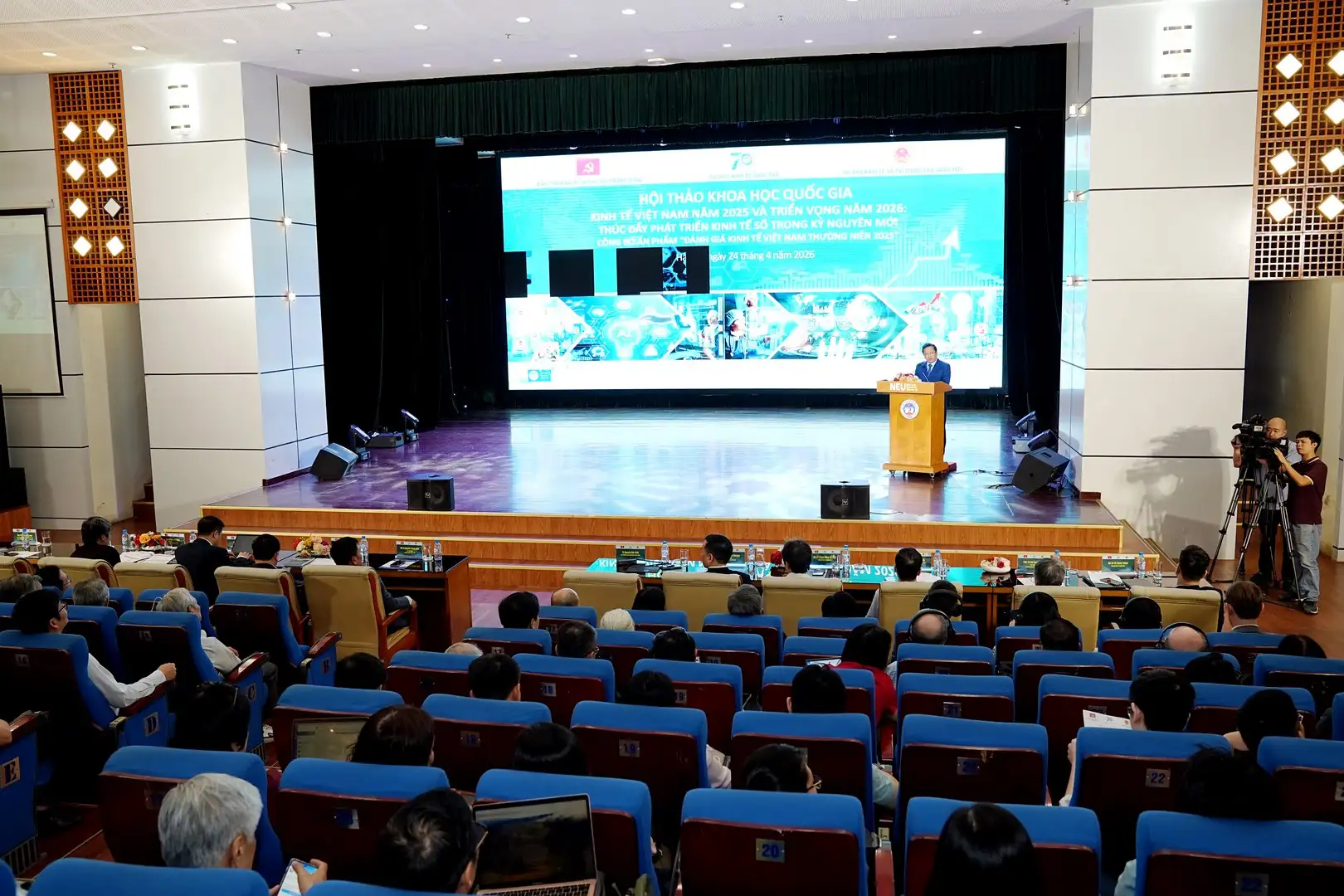
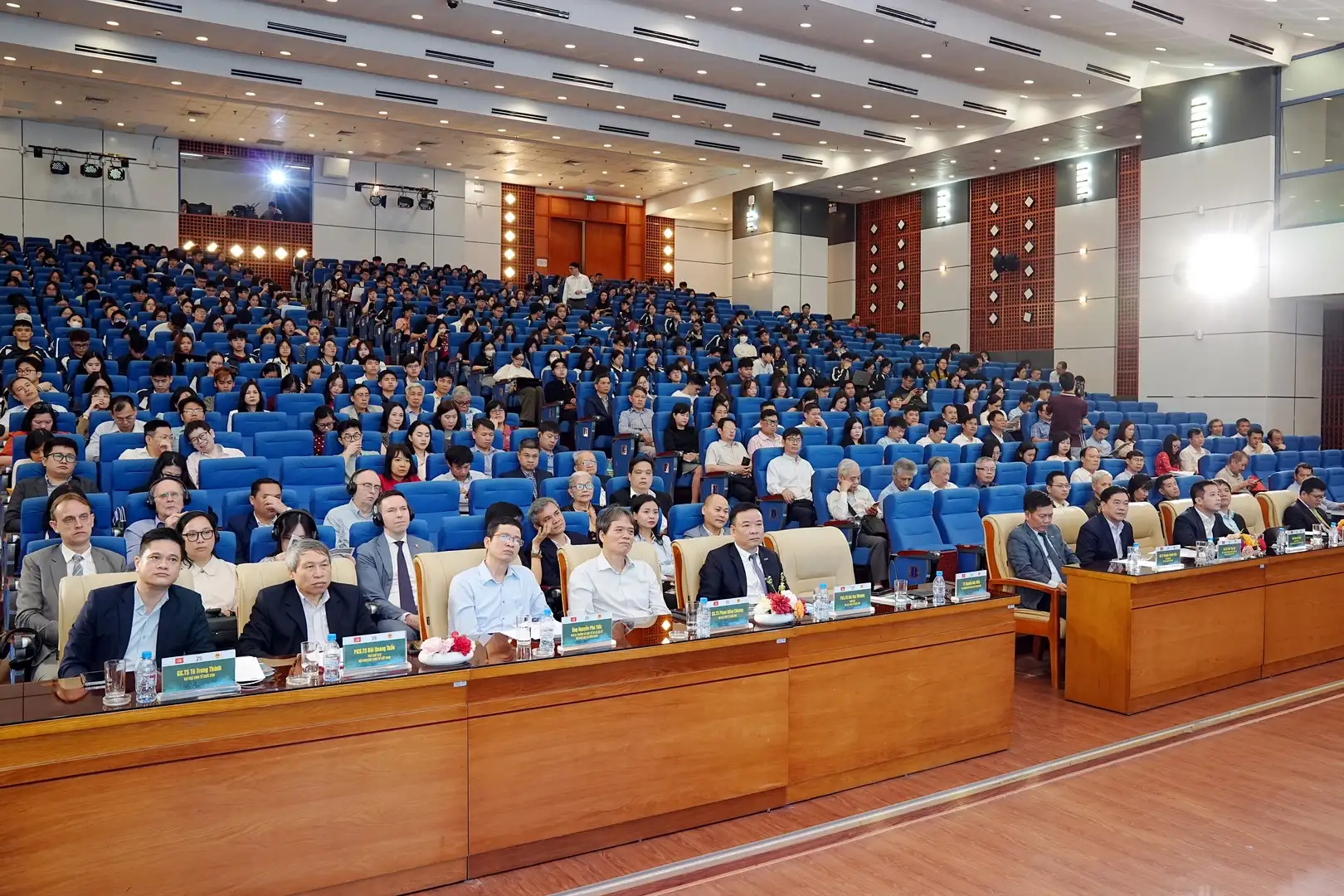
Scene at the Conference
Attending the conference, from outside the university, were: Dr. Nguyen Duc Hien – Deputy Head of the Central Policy and Strategy Committee; Dr. Tran Kim Anh – Deputy Director of the General Economic Department, Central Policy and Strategy Committee; Dr. Nguyen Quang Huy – Deputy Director of the General Economic Department, Central Policy and Strategy Committee; Mr. To Hong Nam – Deputy Director of the Department of Science, Technology and Information, Ministry of Education and Training; Assoc. Prof. Dr. Chu Khanh Lan – Deputy Director of the Forecasting and Statistics – Monetary and Financial Stability Department (SBV); Mr. Le Anh Dung – Deputy Director of the Payment Department, State Bank of Vietnam; Mr. Nguyen Ba Hung – Chief Economist of the Asian Development Bank (ADB); Mr. Nguyen Phu Tien – Deputy Director of the Digital Economy and Society Department, Ministry of Science and Technology; Assoc. Prof. Dr. Bui Quang Tuan – Vice President of the Vietnam Economic Science Association; Mr. Dau Anh Tuan – Deputy Secretary General of the Vietnam Chamber of Commerce and Industry; Mr. Nguyen Anh Duong – Policy and Strategy Research Institute, Central Policy and Strategy Committee; Assoc. Prof. Dr. Nguyen Hong Son – Former Deputy Head of the Central Policy and Strategy Committee; Dr. Le Dang Doanh – Former Director of the Central Institute for Economic Management; Ms. Pham Chi Lan – Economic Expert; Dr. Vo Tri Thanh – Former Deputy Director of the Central Institute for Economic Management; Mr. Nguyen Bich Lam – Former Director General of the General Statistics Office; Dr. Dang Duc Anh – Acting Director of the Policy and Strategy Research Institute; Mr. Nguyen Tu Quang – Chairman of the Board, CEO of Bkav; Mr. Nguyen Huu Hieu – CEO of FiinGroup; Dr. Tran Van The – Chairman of the Board of Investment and Development Company InDel.
From the international guests, there were: Mr. Anton Golubev – Counselor, Embassy of the Russian Federation in Vietnam; Ms. Jane Runkat – Economic Counselor, Embassy of Indonesia; Dr. Bounpone Keophengla – Second Secretary, Embassy of Laos; Mr. Felix Weidenkaff – Employment and Labor Market Policy Specialist, ILO in Vietnam.
From National Economics University, there were: Assoc. Prof. Dr. Bui Huy Nhuong – President; Prof. Dr. Nguyen Thanh Hieu – Vice President; Prof. Dr. To Trung Thanh – Head, Research Management Department; Prof. Dr. Tran Tho Dat – Chairman of the Scientific and Training Council; Prof. Dr. Pham Hong Chuong – Chairman of the Economics Professorial Council, former President of the University; along with representatives of the leadership of Schools, Departments, Faculties, Institutes, Centers affiliated with and under the University, experts, and scientists.
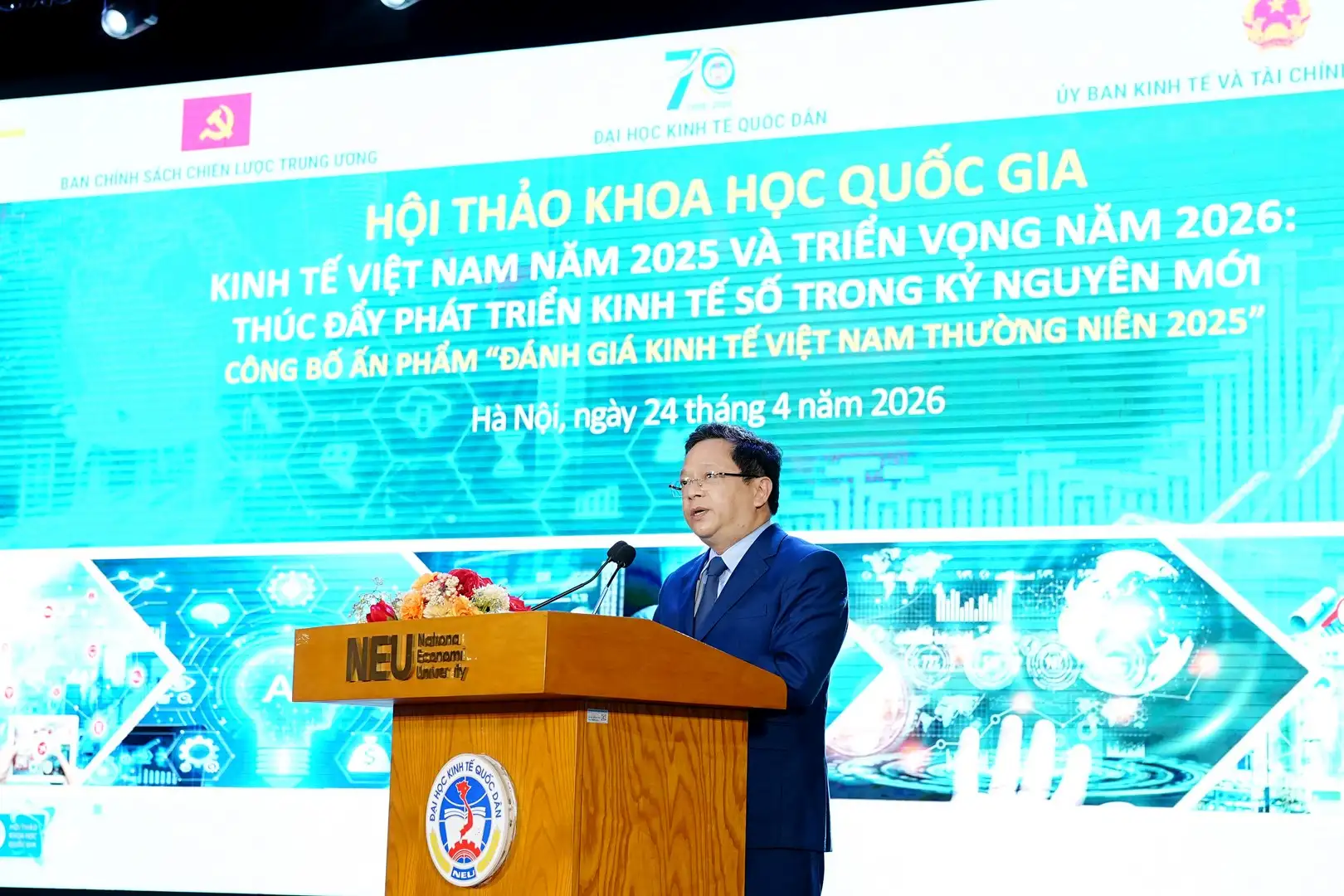
Dr. Nguyen Duc Hien – Deputy Head of the Central Policy and Strategy Committee delivering the keynote speech at the Conference
In his keynote speech at the conference, Dr. Nguyen Duc Hien – Deputy Head of the Central Policy and Strategy Committee stated that in the context of unpredictable international fluctuations, the global economy tends to grow slowly, facing many risks, particularly, geopolitical conflicts are becoming increasingly complex… greatly affecting Vietnam’s socio-economy, requiring responsive solutions. Therefore, any nation that effectively leverages its advantages and exploits the conditions for digital economic development will have the development space to overcome the negative impacts in the current context.
However, Dr. Nguyen Duc Hien acknowledges that Vietnam’s digital economy has not yet matched the new development demands. The goal of having the digital economy account for approximately 30% of GDP by 2030 is a challenge. Currently, FDI inflows into high technology only account for about 5% of total FDI, mostly focusing on processing and assembly stages, resulting in low added value. Therefore, it is necessary to clarify the bottlenecks hindering the potential development of the digital economy in Vietnam to devise feasible solutions and create new momentum.
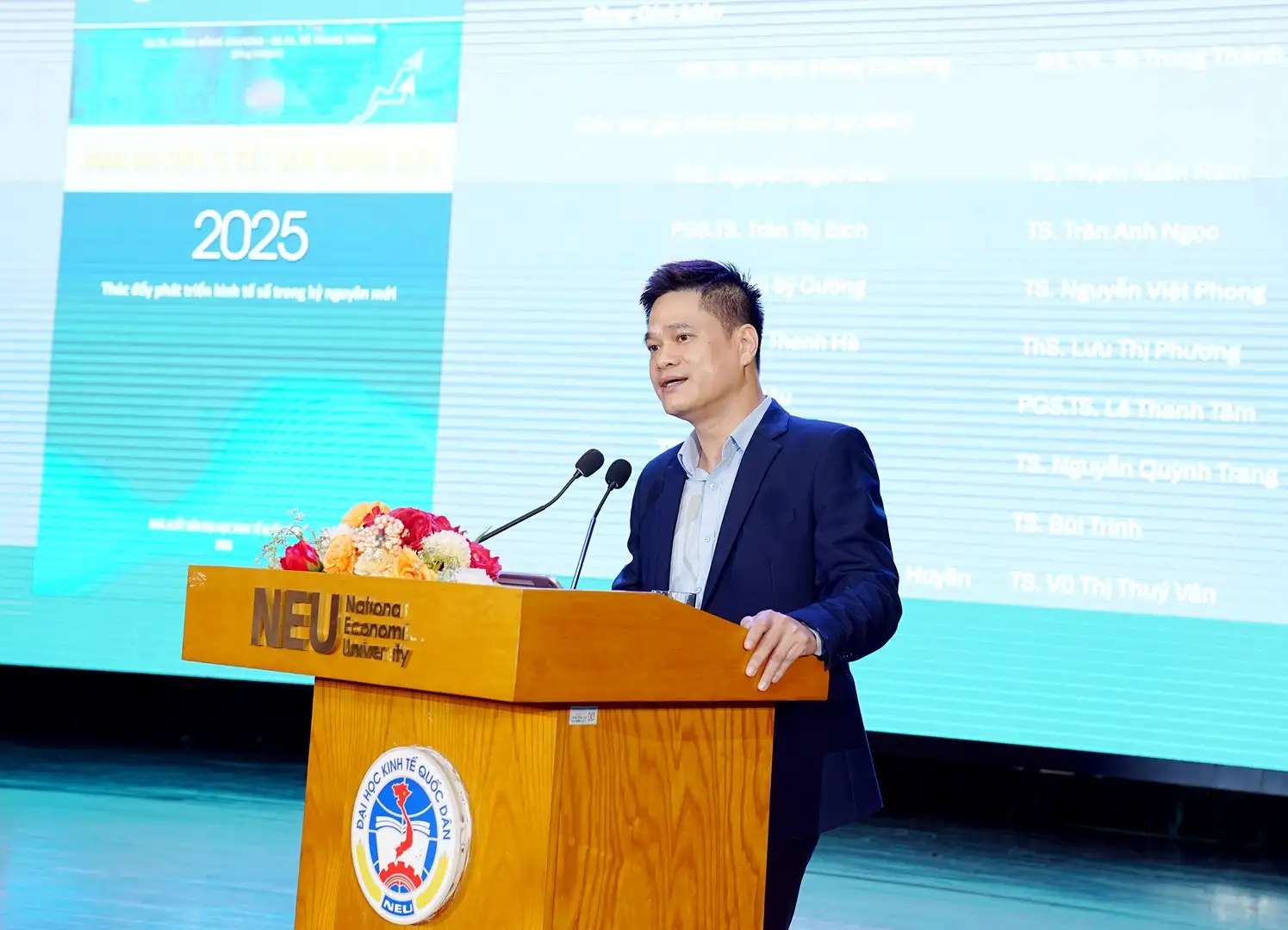
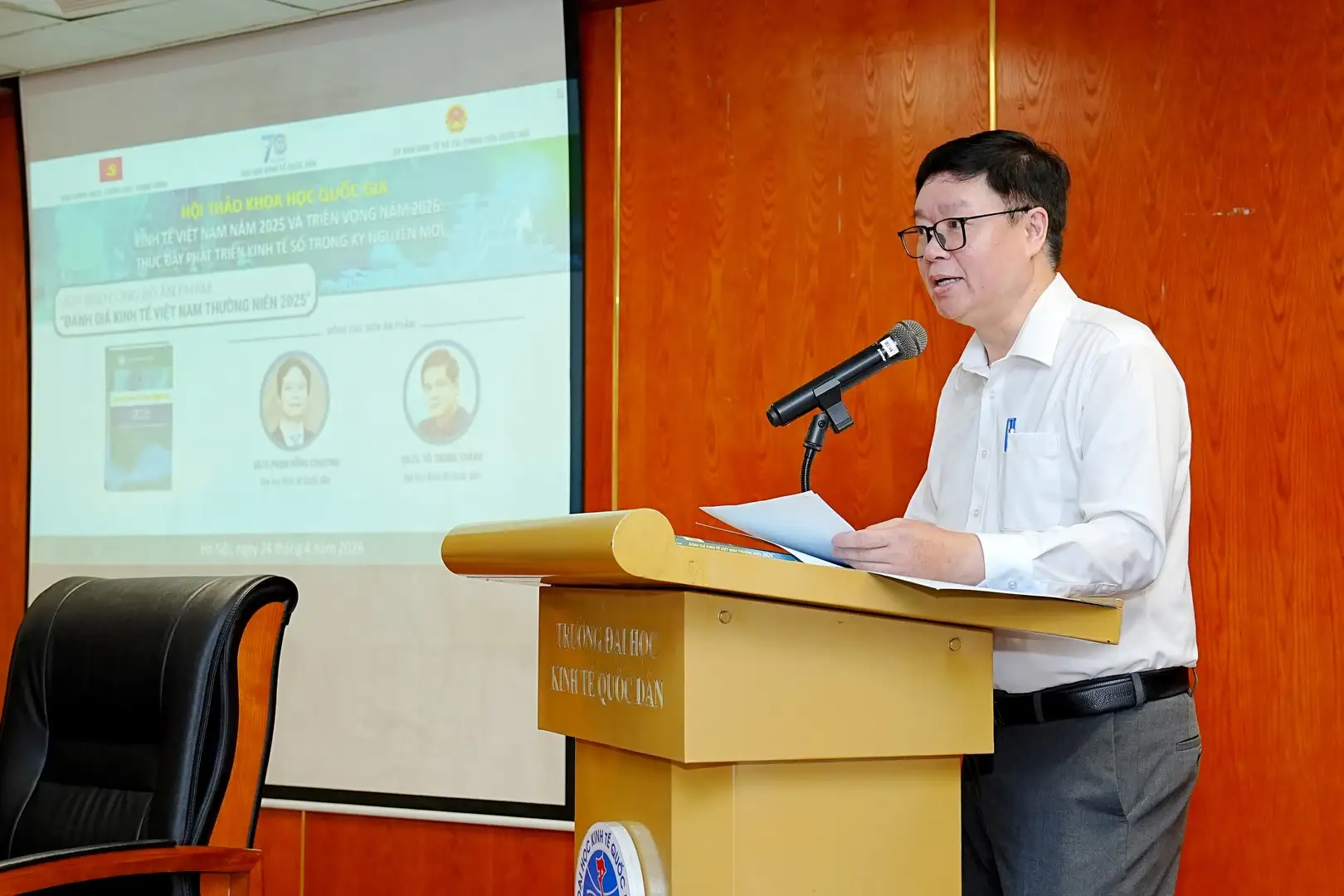
Prof. Dr. To Trung Thanh – Head, Research Management Department presents the content of the Annual Vietnam Economic Review 2025
Prof. Dr. To Trung Thanh – Head, Research Management Department, representing the scientists of the National Economics University, stated that in practice, Vietnam’s digital economy is currently expanding rapidly in scale but not yet strong in quality. Developing the digital economy in the new era is not merely about technology application or expanding the scale of digital sectors, but fundamentally about restructuring the growth model.
Therefore, according to Prof. Dr. To Trung Thanh, the orientation for developing Vietnam’s digital economy by 2030 should be viewed not merely as the digitization of existing activities, but as a structural transformation where digital technology becomes a core production factor, determining productivity, growth quality, and national competitiveness.
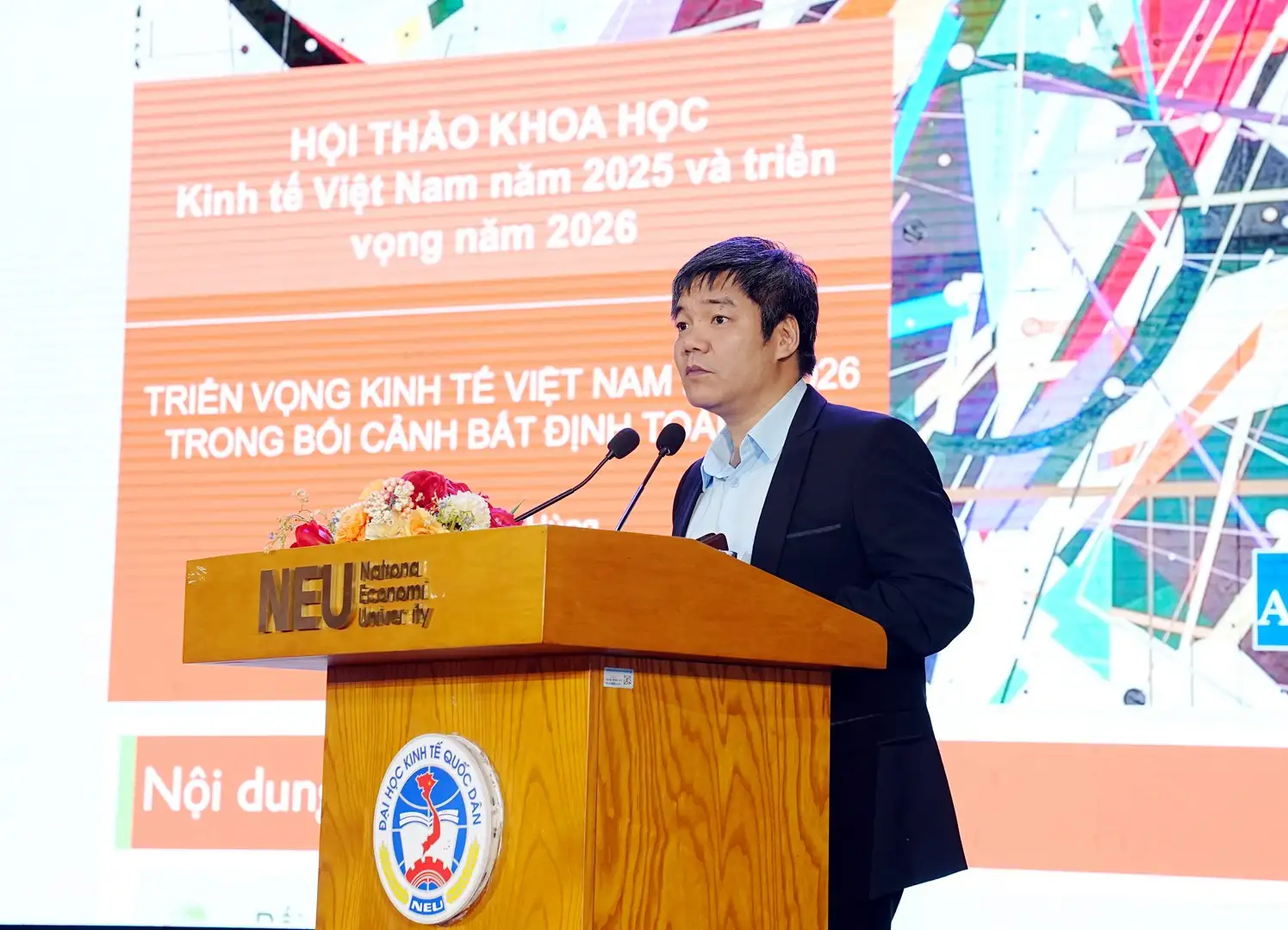
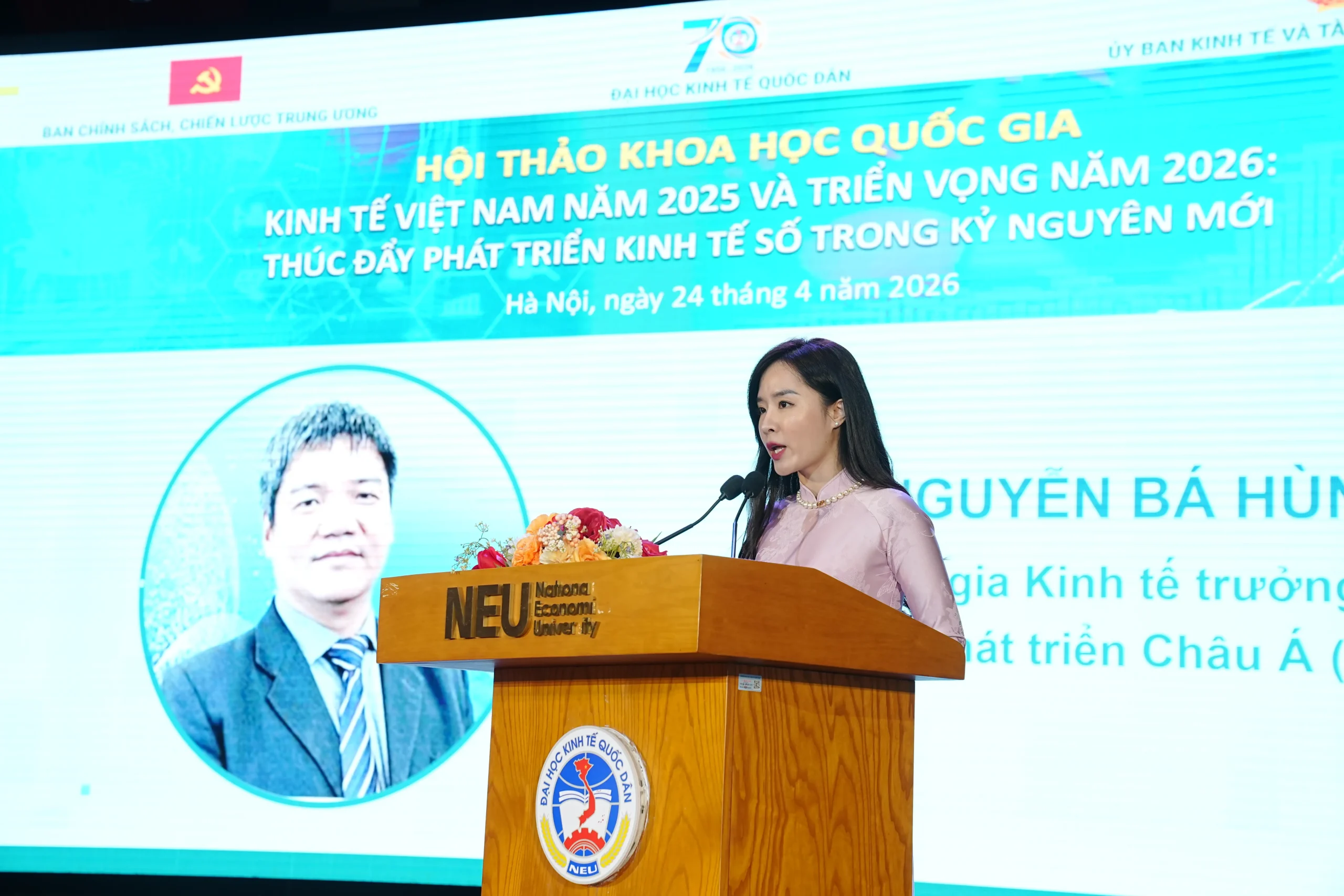
Mr. Nguyen Ba Hung – Chief Economist of the Asian Development Bank (ADB) presents the paper “Vietnam’s Economic Outlook 2026 in the Context of Global Uncertainty”
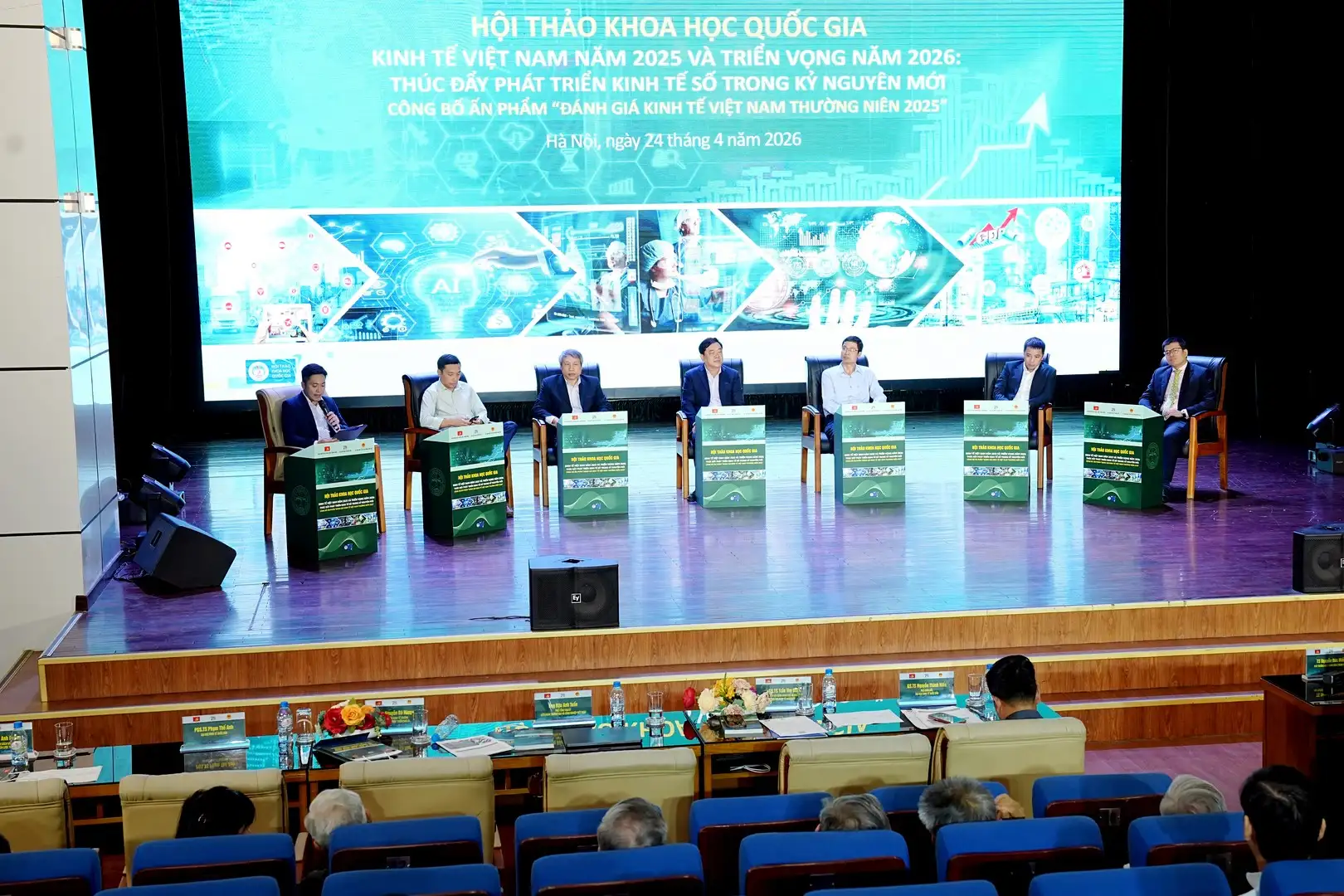
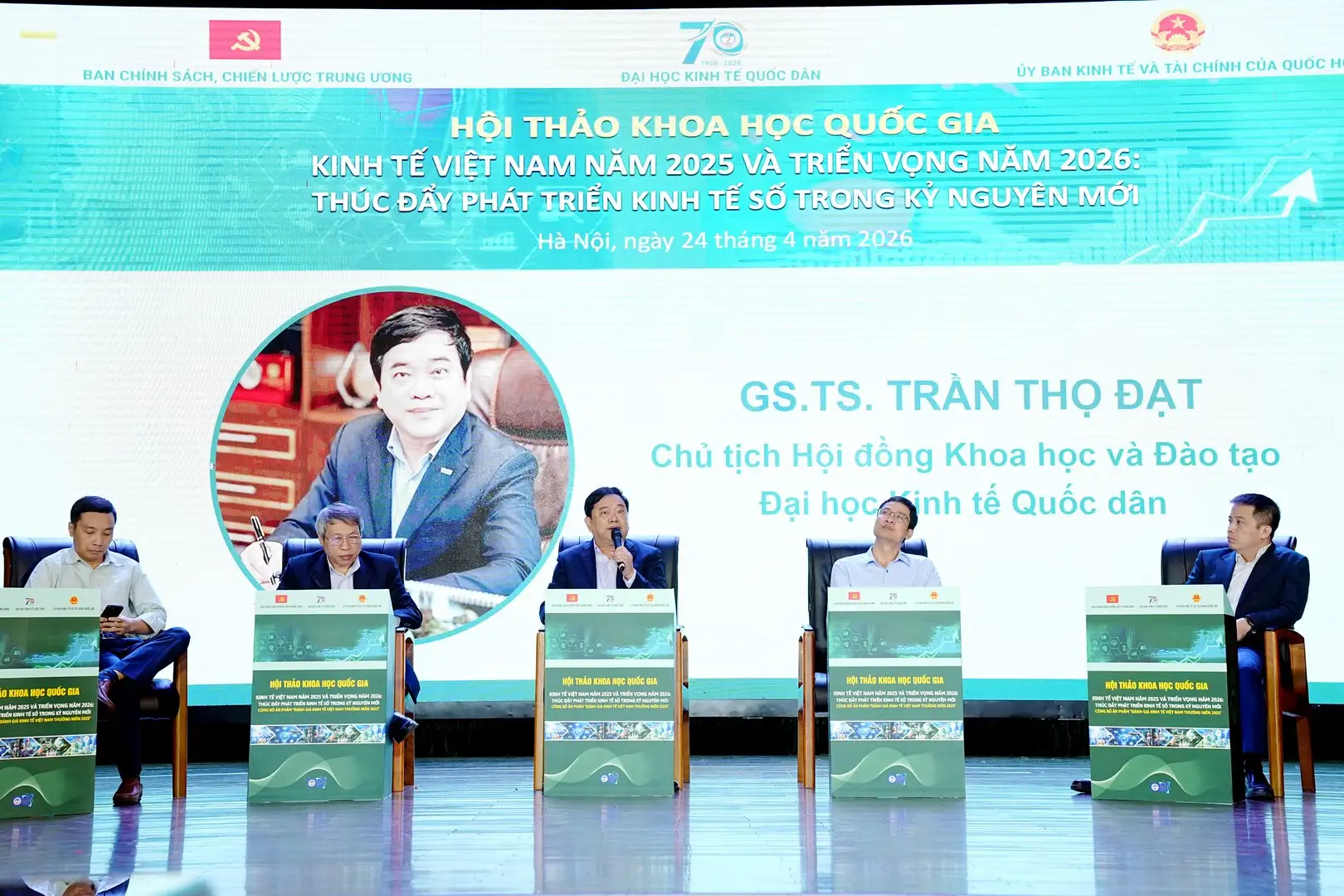
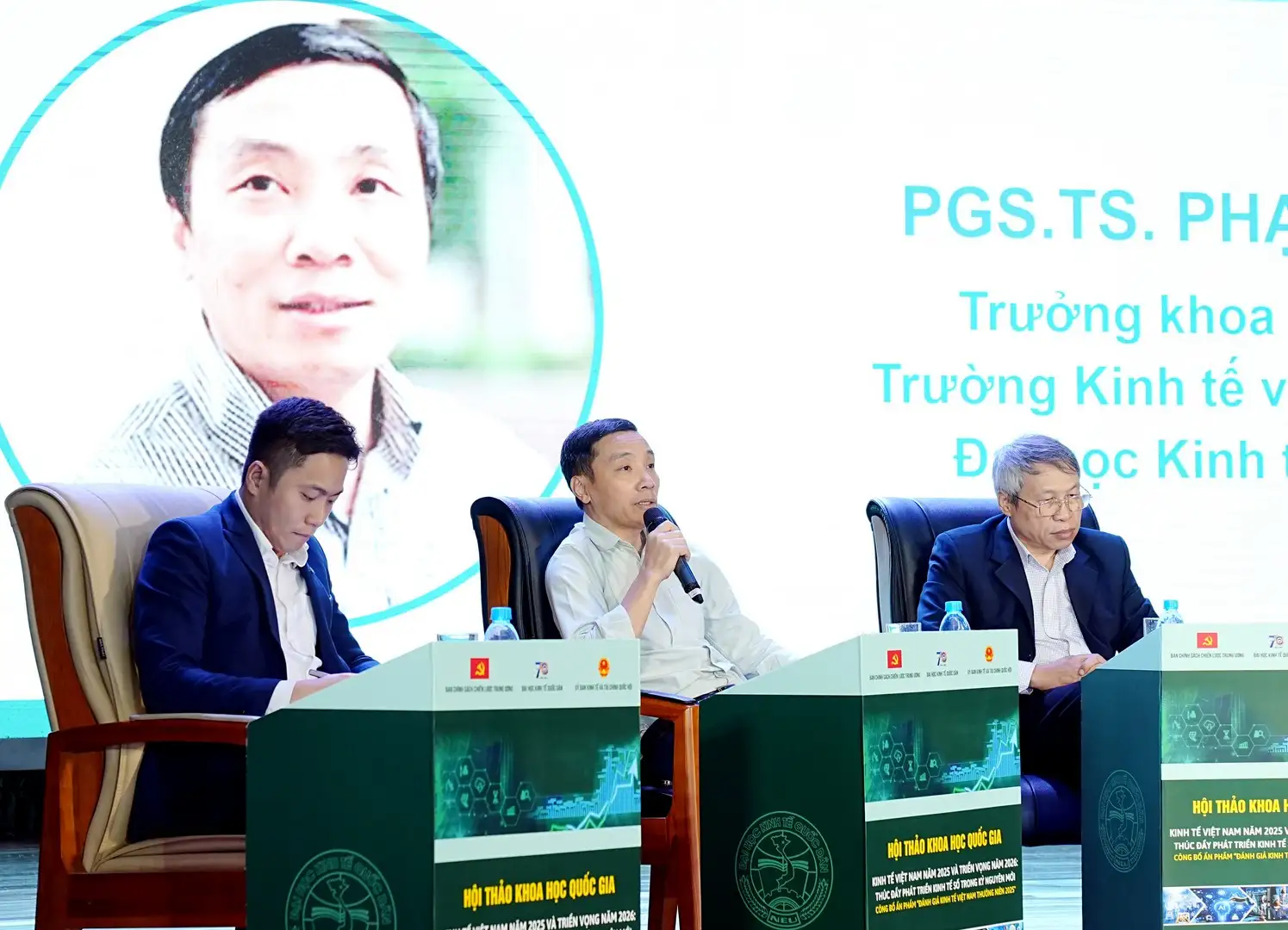


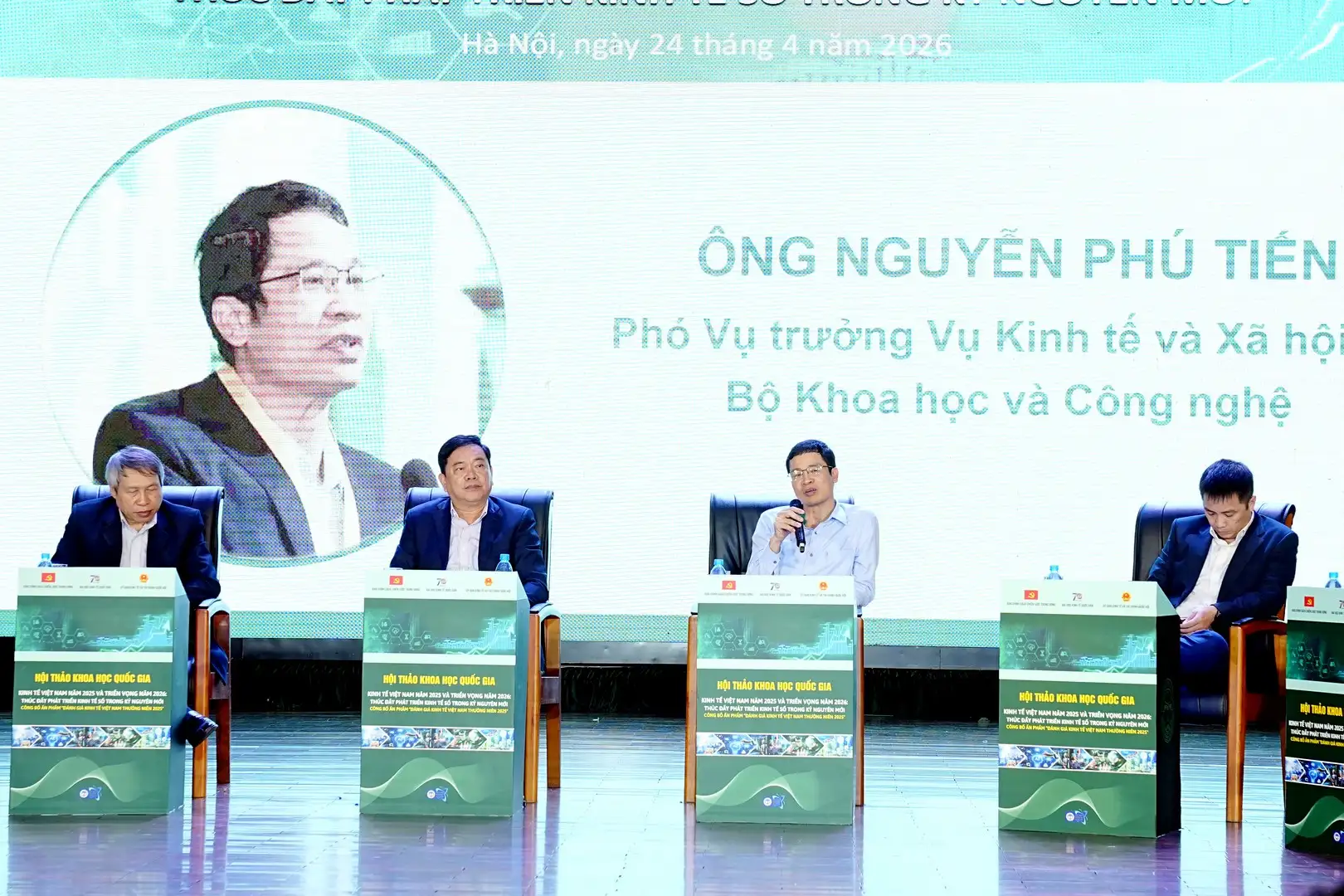
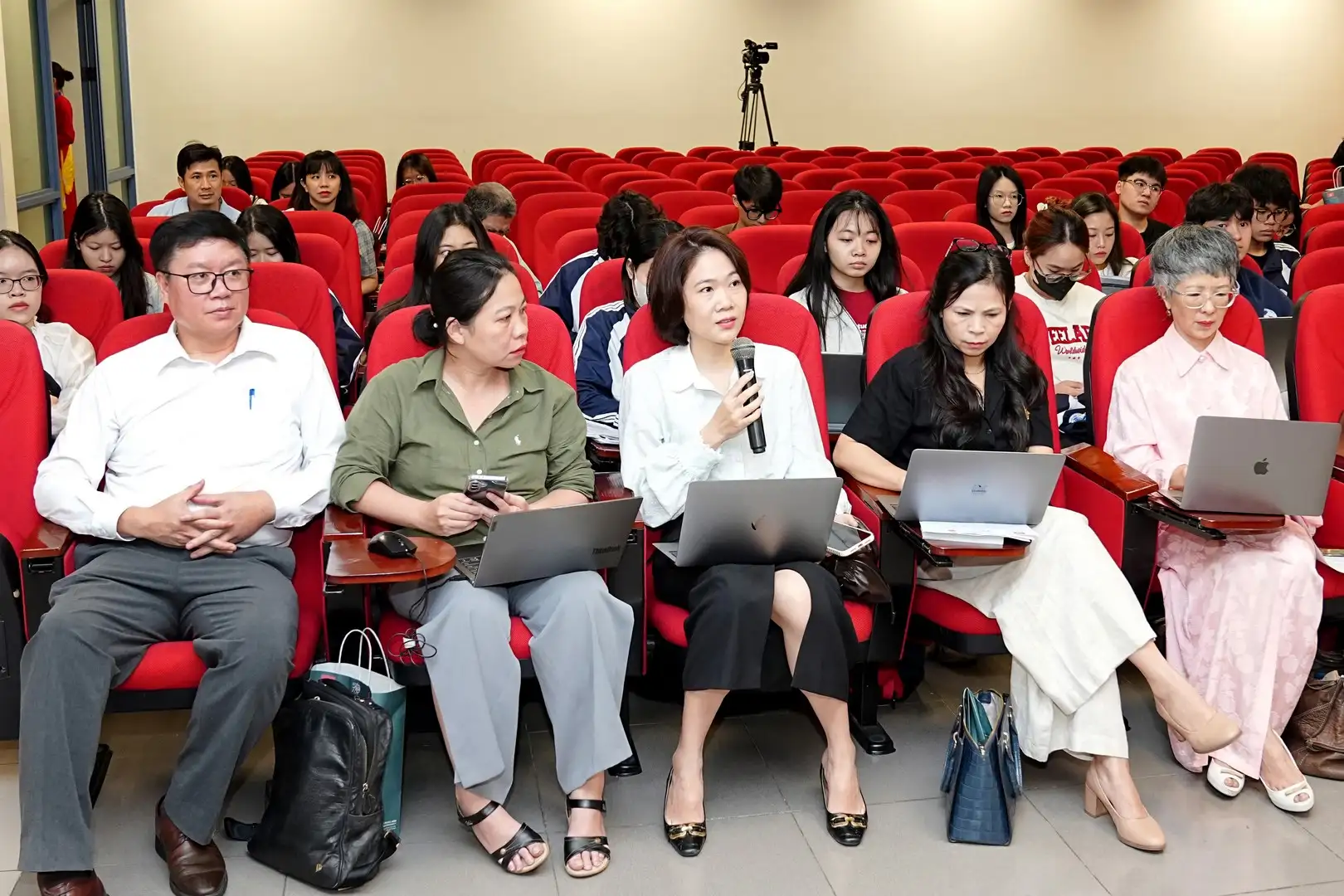
Experts and scientists discuss at the Conference
At the Conference, experts focused on discussing and objectively, comprehensively evaluating the economic landscape of Vietnam in 2025; deeply analyzing the role, mechanisms of impact, and the spread of the digital economy on the economy. From there, they proposed policy orientations and breakthrough solutions to effectively exploit opportunities from digital transformation in the upcoming period.
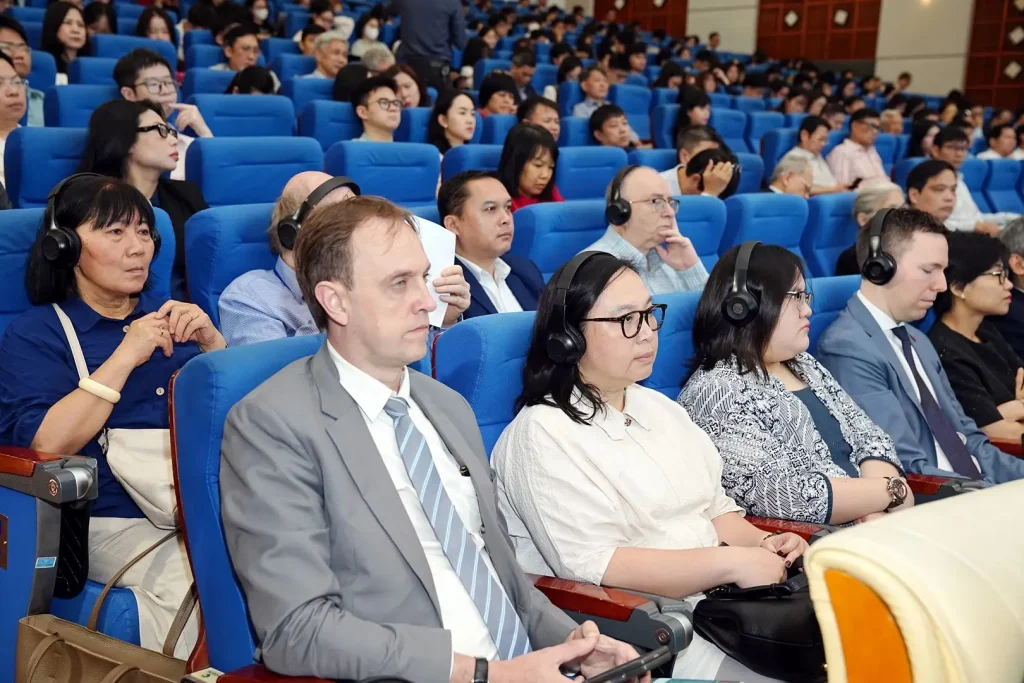





The conference attracted the attention of a large number of speakers, experts, and scientists from both domestic and international circles
According to experts, the digital economy is no longer a separate field, nor is it merely a simple technology story, but it is becoming an important component of the new growth model.
From state governance, production, trade, services, finance, education, logistics to enterprise operations, digital data, digital platforms, artificial intelligence (AI), and new technologies are profoundly changing the way value is created. However, for the digital economy to truly become a growth driver, it is necessary to perfect institutions, develop digital infrastructure, digital data, connectivity standards, enhance the quality of human resources, and expand the technology absorption capacity of enterprises.
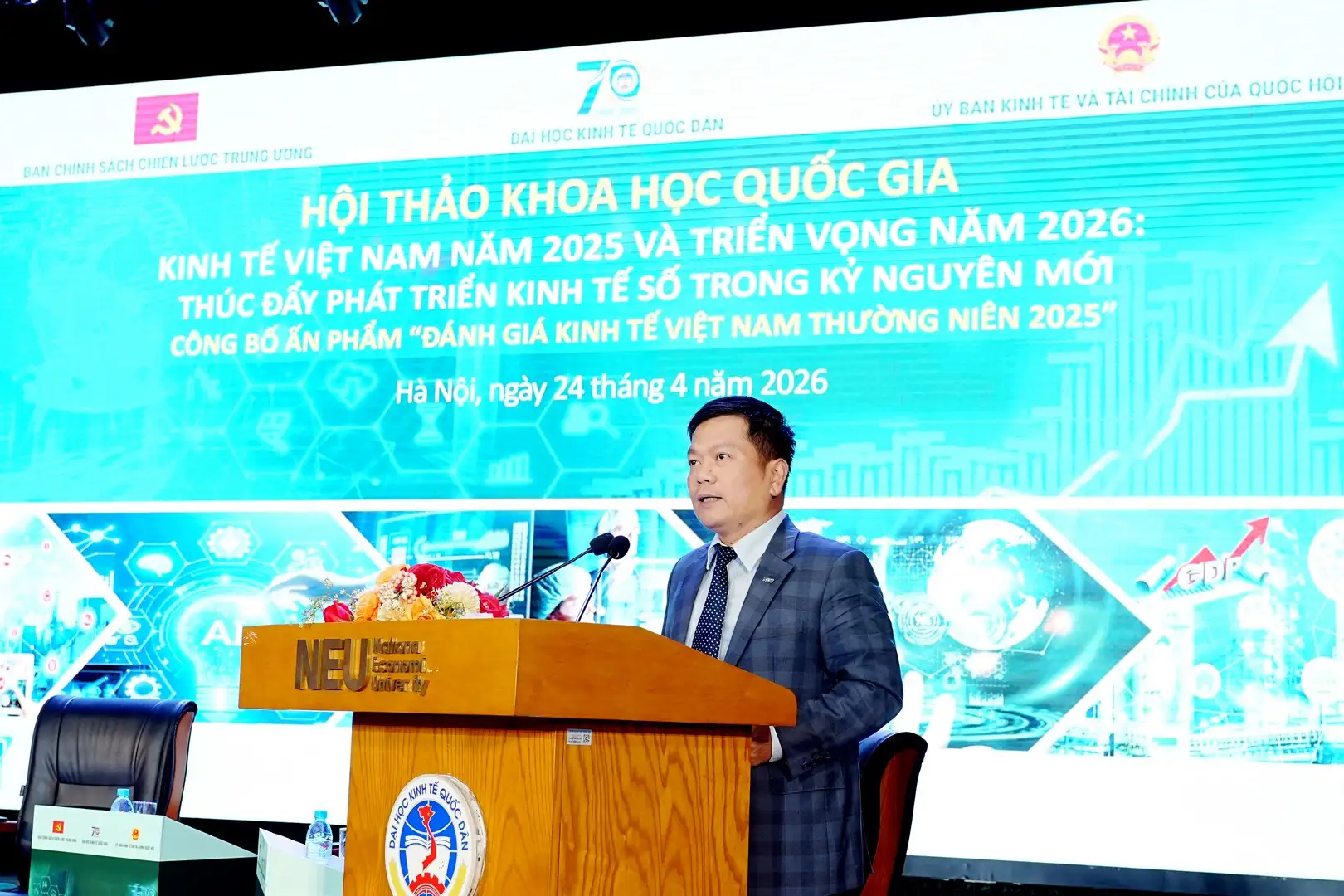
Prof. Dr. Nguyen Thanh Hieu – Vice President of the University delivers the closing speech of the Conference
Within the framework of the event, National Economics University announced the publication “Annual Vietnam Economic Review 2025” aimed at comprehensively summarizing Vietnam’s economy in 2025. The report also assesses the current state of the digital economy and its impact on the economy and enterprise productivity, thereby proposing policy recommendations for managing the digital economy in 2026.
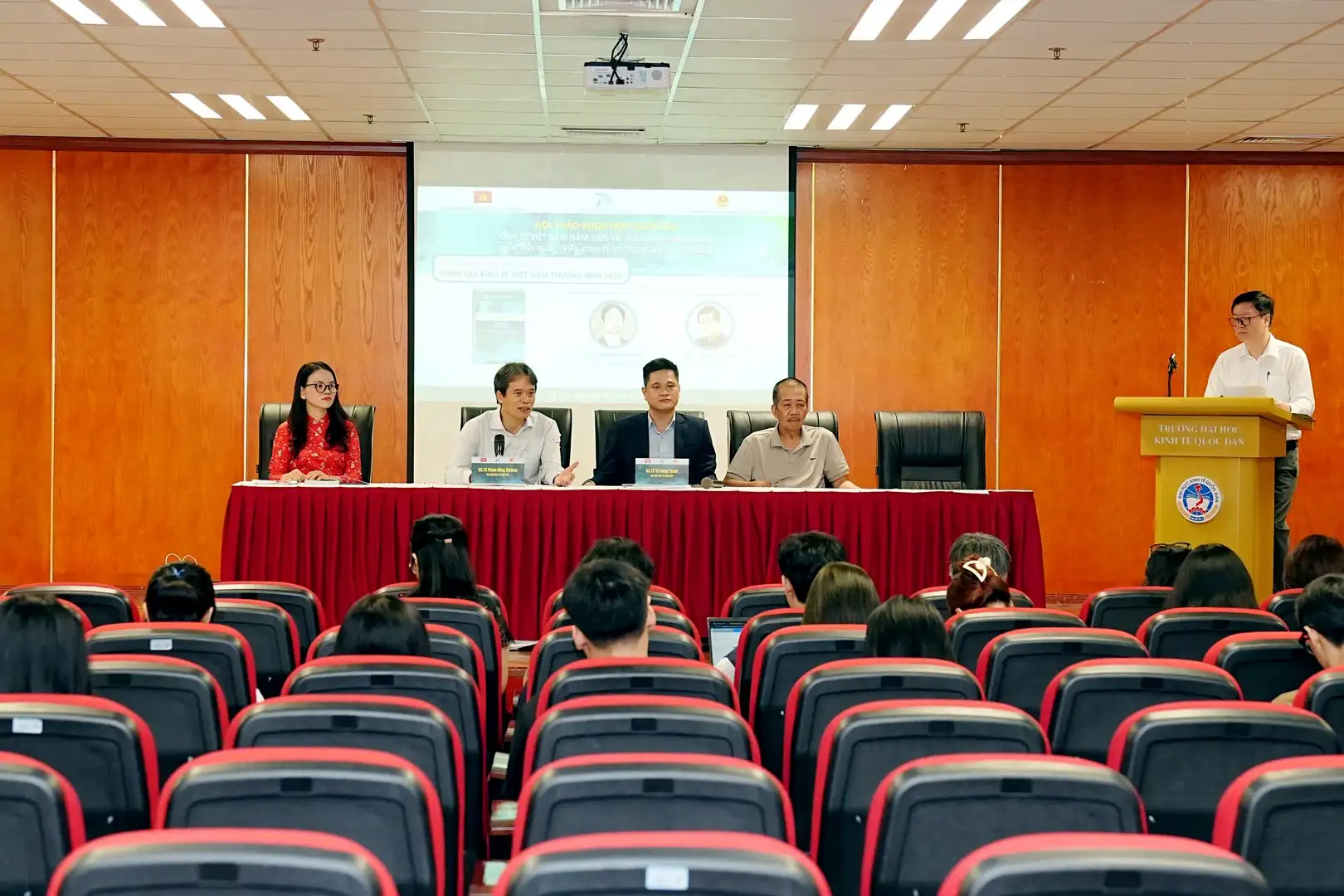
Scene at the Launch of the Annual Vietnam Economic Assessment Publication 2025

Prof. Dr. Pham Hong Chuong – Chairman of the Economics Professorial Council, former President of National Economics University, co-editor introduces and shares about the Publication
Prof. Dr. Pham Hong Chuong – Chairman of the Economics Professorial Council, former President of National Economics University, and co-editor of the publication, believes that as Vietnam’s economy faces numerous challenges regarding speed, quality, and growth drivers, this year’s report focuses on the digital economy as a strategic direction.
Prof. Dr. Pham Hong Chuong emphasized that based on science, technology, and innovation, the digital economy is the “locomotive” driving breakthrough transformations.
By applying various research methods, the author group aims to clarify the connection between digital economic sectors and the entire economy, thereby contributing to the formation of new growth drivers for Vietnam.
Prof. Dr. Pham Hong Chuong also expressed hope that in the near future, the role of science and technology will become more evident, helping the economy undergo qualitative changes in the growth model.

Prof. Dr. To Trung Thanh – Head of Research Management Department, co-editor introduces and shares about the Publication
Further discussing the content of the publication, Prof. Dr. To Trung Thanh – Head of Reseach Management Department, National Economics University, stated that in 2025, Vietnam’s real economy is witnessing a strong recovery with GDP growth reaching 8.02%, surpassing the set target and ranking among the highest in the world amid global economic instability. The economy’s scale reaches approximately 514 billion USD, placing Vietnam at 33rd globally, while per capita GDP reaches about 5,026 USD, continuing to narrow the gap with some countries in the region. Growth drivers are strengthened over the quarters, with an increasing trend, reflecting the uniform recovery of economic sectors, especially industry-construction and services.
According to Prof. Dr. To Trung Thanh, despite high growth, the quality of growth still reveals structural limitations. The growth model continues to heavily rely on bank credit, with credit growth in 2025 reaching 19.01%, the highest in many years, and the proportion of credit channels accounting for over 50% of the total mobilized capital of the entire economy. This dependence reflects the underdevelopment of the capital market and increases the risks to the financial system. The main risks include maturity mismatches between mobilization and lending, increased potential bad debts, and pressures on inflation, exchange rates, and asset prices. This indicates that the current growth model still relies more on expanding capital scale rather than improving efficiency.
Some images from the Conference:
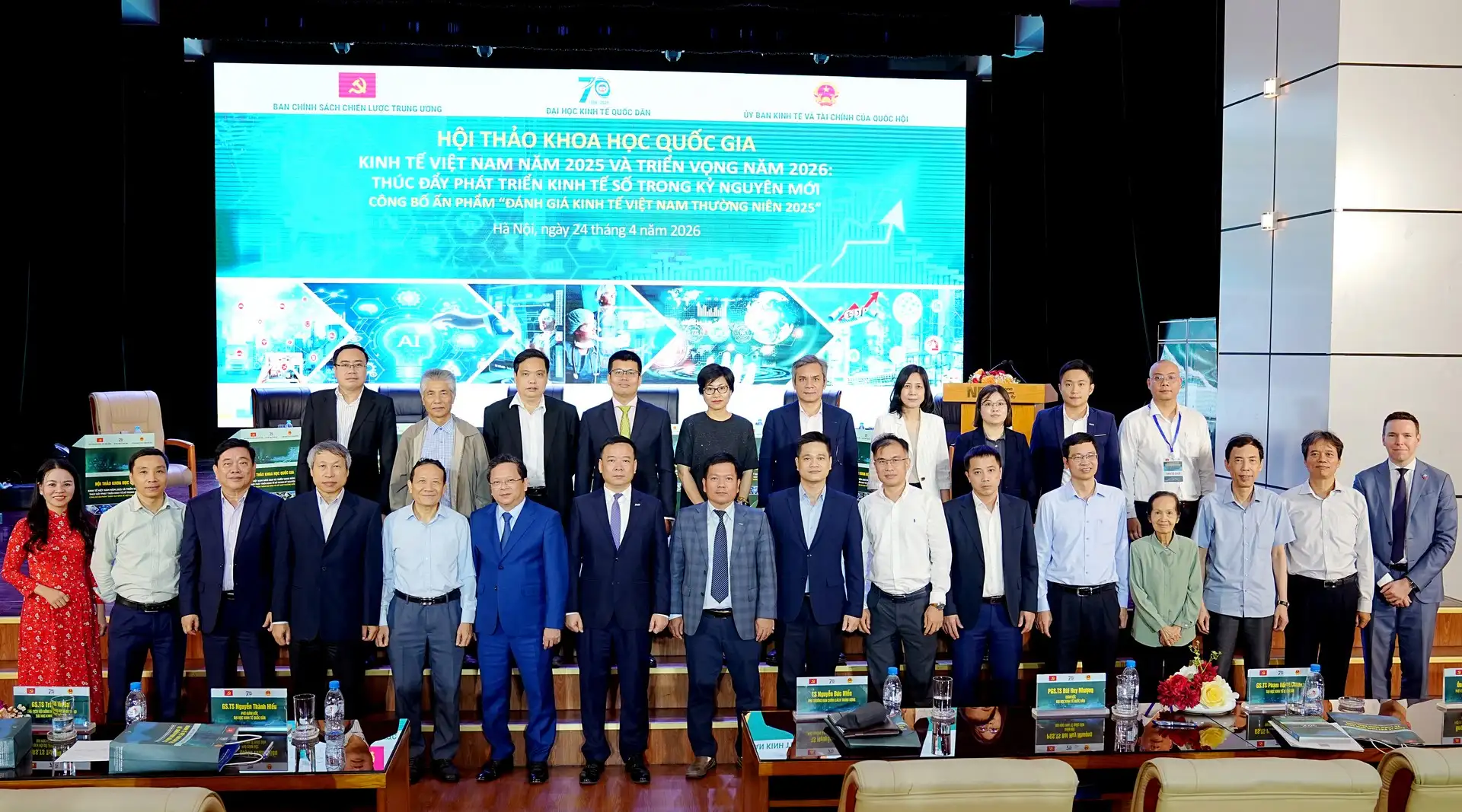







Article and photos: Communications Department
Media agencies report on the Conference:
Hanoi Television: Restructuring the Economy Based on Digital Platforms
Lãi suất huy động giảm nhưng lãi suất cho vay khó giảm sâu
Vietnam News Agency: Digital Economy – A Key Driver for Sustainable Growth
People’s Newspaper: Digital Economy Promotes Restructuring of Growth Models
Improving Economic Quality is a Top Priority
Labor Newspaper: Three Pillars to Make Vietnam’s Digital Economy Account for 30% of GDP
Vneconomy: Economic Growth in 2026: Seeking Momentum from Institutional Reforms and Digital Economy
Nghịch lý tăng trưởng và yêu cầu đổi mới mô hình từ “lõi”
Financial Times: Digital Economy: The “Key” to Restructuring Growth Models
Đại biểu Nhân dân: Kinh tế số – mở nhiều cơ hội phát triển đất nước
Sài Gòn Times: Ngân hàng lớn xoay xở giữa áp lực vĩ mô
Government Newspaper: The ‘Key’ for the Digital Economy to Unlock New Growth Paths
Tiền phong: Phát triển kinh tế số: Chuyển đổi mang tính cấu trúc, không chỉ là số hoá
Policy & Life (Vietnam News Agency): Developing the Digital Economy to Restructure Growth Models
New Hanoi: Double-Digit Growth with Digital Economy and Innovation
Great Unity: Promoting the Digital Economy to Create Momentum for Growth
Audit Newspaper: Digital Economy: The Equation for Breakthrough Growth
Industry and Trade News: Promoting Digital Economy: The Key to ‘Qualitative’ Growth
Tăng trưởng kinh tế 2026: 3 khuyến nghị từ ADB
Báo Đầu tư: Một năm có Nghị quyết 68: Doanh nghiệp lớn “hưng phấn”, doanh nghiệp nhỏ vẫn loay hoay
Tạp chí Kinh tế tài chính: Kinh tế số phải đi vào chuỗi giá trị để tạo dư địa tăng trưởng
Exchange Rate Pressure Returns, Monetary Policy Should Be “Cautiously Flexible”
Hoàn thiện thể chế, tạo động lực then chốt nâng cao chất lượng tăng trưởng kinh tế
Banking Times: Digital Economy Is Not Just About Integrating Technology into the Economy, but Changing Operational Methods
Saigon Liberation: Digital Economy at the ‘Crossroads’ of Quantity and Quality
Financial and Monetary Market Journal: Monetary Policy Cannot “Shoulder” Growth Alone
Để kinh tế số trở thành động lực cho tăng trưởng 2 con số
Corporate Finance Magazine: Economic Growth: New Momentum from Digital Transformation
Business Journal: Digital Economy as a Driver for Restructuring, Unraveling “Capital-Intensive Bottlenecks”
A Boost from the 3I Model is Needed for Vietnam to Break Through
Diễn đàn Doanh nghiệp: Số hoá chuỗi cung ứng, mở rộng dư địa tăng trưởng
Tạp chí BĐS Việt Nam: Thúc đẩy phát triển kinh tế số trong kỷ nguyên mới: “Bài toán” về mô hình phát triển cho 10 – 20 năm tiếp theo
PGS.TS. Phạm Thế Anh: Chính sách tiền tệ cần giữ vai trò “mỏ neo” cho ổn định vĩ mô
Tạp chí Nhà đầu tư: Cần thay đổi cơ chế lan tỏa để kinh tế số không phải ‘càng số càng tốt’
Tạp chí Doanh nghiệp & Tiếp thị: Tăng trưởng 2 con số với kinh tế số, đổi mới sáng tạo
Enterprise & Integration: Dr. Nguyen Duc Hien: Digital Economy Paves the Way for New Growth in Vietnam
Tạp chí Chất lượng Việt Nam: Kinh tế số phải đi vào chuỗi giá trị để mở rộng dư địa tăng trưởng
Tạp chí Kinh doanh và Phát triển: Hội thảo khoa học quốc gia: “Kinh tế Việt Nam năm 2025 và triển vọng năm 2026”
Người quan sát: Kinh tế Việt Nam trước sóng gió toàn cầu: Dư địa chính sách dần thu hẹp