
NEU Library and Information Center: The Digital Knowledge Hub of a Smart University
29/04/2026 2026-05-04 15:04NEU Library and Information Center: The Digital Knowledge Hub of a Smart University
NEU Library and Information Center: The Digital Knowledge Hub of a Smart University
In the context of the digital era, where knowledge is continuously updated and disseminated globally, university education is no longer confined to lecture halls or traditional textbooks. It requires an open environment that allows learners to actively access, exploit, and create knowledge. At the National Economics University, the Information and Library Center is identified as the nucleus of the modern learning ecosystem, playing a foundational role in supporting students to develop self-learning capabilities, research thinking, and gradually become digital citizens in the context of integration.
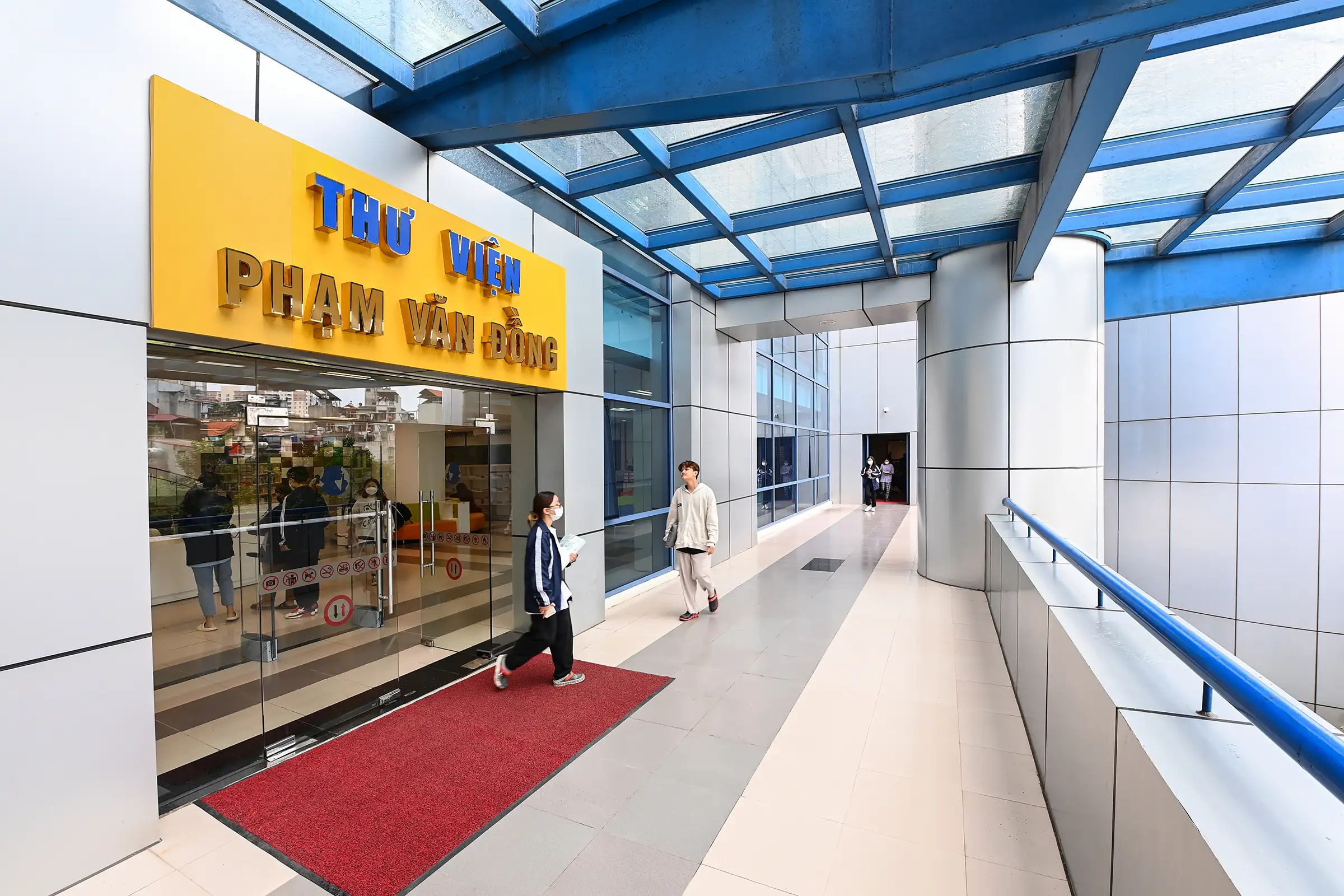
Located at National Economics University, the Pham Van Dong Library – one of the most modern and largest libraries in Vietnam – is named after the late Prime Minister Pham Van Dong, the first honorary President of the University.
The Gateway to Global Knowledge
NEU Information and Library Center possesses a rich, diverse, and academically profound information resource, effectively meeting the training and research requirements of the University. Currently, the Library space houses hundreds of thousands of textbooks and printed materials, while also investing in a modern electronic resource system, enabling students to directly access global knowledge through databases from reputable publishers worldwide.





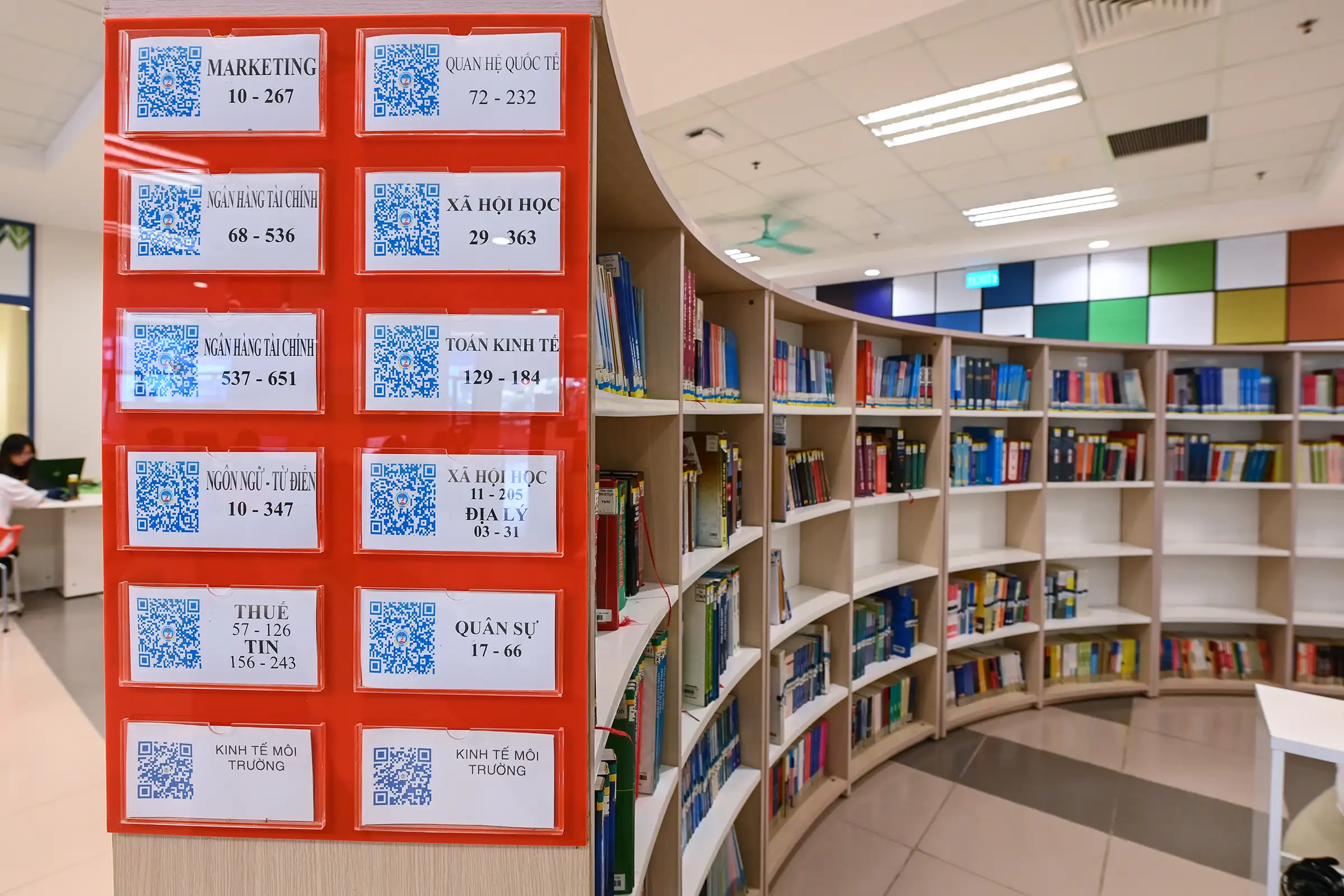
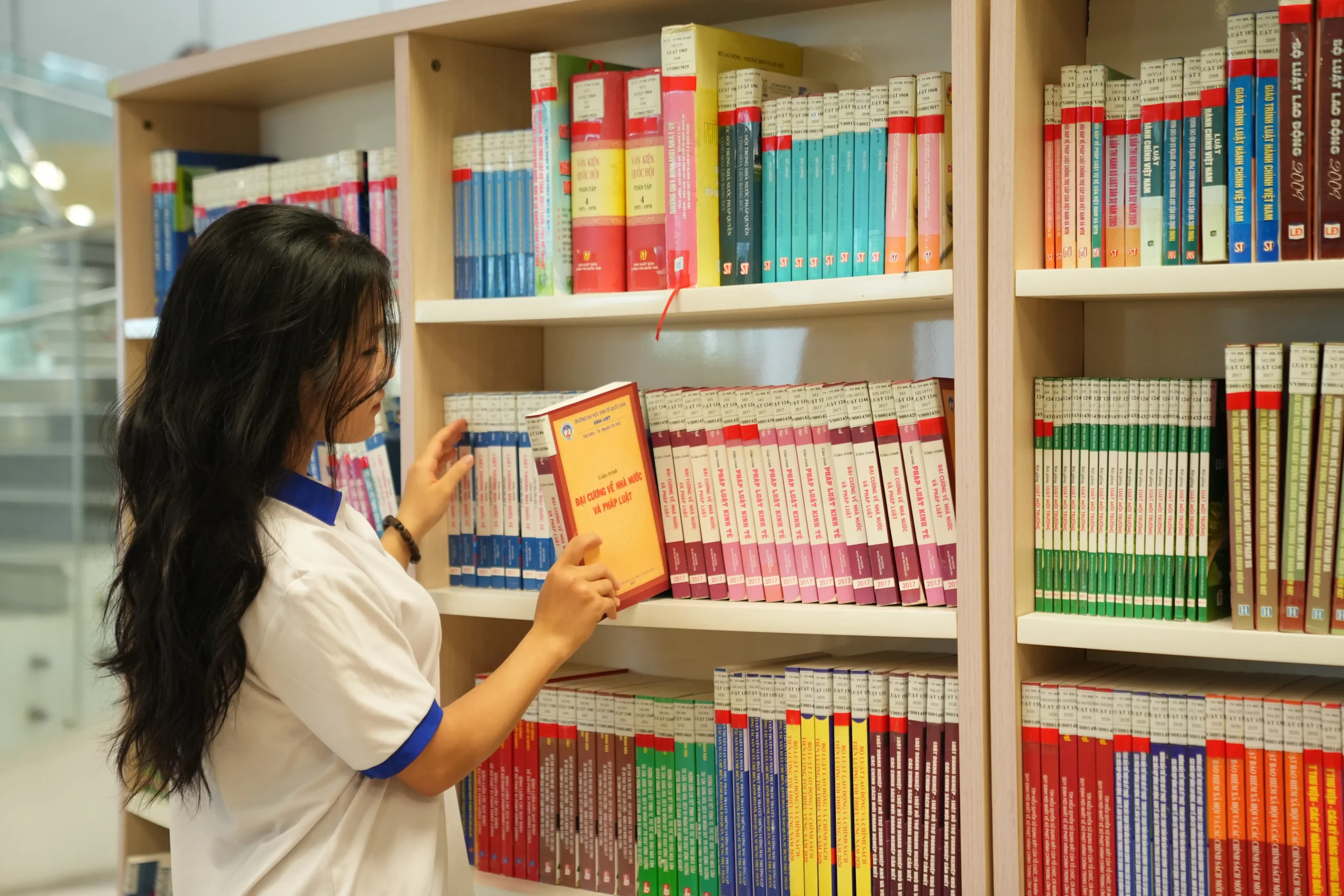
The electronic library system is equipped with a large database, covering various fields such as economics, finance, and science, with tens of thousands of books placed throughout the library space. The content is diverse, ranging from specialized books to knowledge in science, technology, society, and foreign languages.
Among them, ProQuest Central provides a multidisciplinary resource with nearly 27,000 full-text documents across more than 160 fields; Emerald Insight offers over 200 academic journals, 2,000 case studies, and over 8,000 specialized eBooks. Additionally, SAGE Journals has a collection of over 900 international scientific journals; Springer eBooks provides over 11,000 eBooks with long-term access rights; Elsevier eBooks and IG Publishing add thousands of in-depth materials for research. Furthermore, the ProQuest eTextbook system with hundreds of electronic textbooks also directly supports teaching and learning activities. As a result, the Library is not only a modern academic space but also a “knowledge gateway” connecting students with global academic resources.
In addition to diverse academic resources, NEU Library also provides high-value specialized databases such as FiinPro – a Vietnamese economic, financial, and macroeconomic data system with information from thousands of enterprises, along with international open educational resources (OER) and domestic scientific databases.
Notably, the Library stores a large volume of endogenous materials, including over 22,000 master’s theses, nearly 2,000 doctoral dissertations, over 8,000 graduation theses, and numerous academic research projects, creating a practical knowledge source that directly reflects the research capabilities of generations of students, learners, and scientists of the University. Accessing this comprehensive knowledge ecosystem contributes to promoting a transformation in learning methods, helping students shift from the role of knowledge receivers to active explorers, researchers, and creators.
Unlimited Learning – Proactive in Every Space
Not only distinguished by its academic resources, the Information – Library Center of National Economics University is also comprehensively invested in facilities and technological infrastructure, creating a modern learning environment oriented towards a smart university.
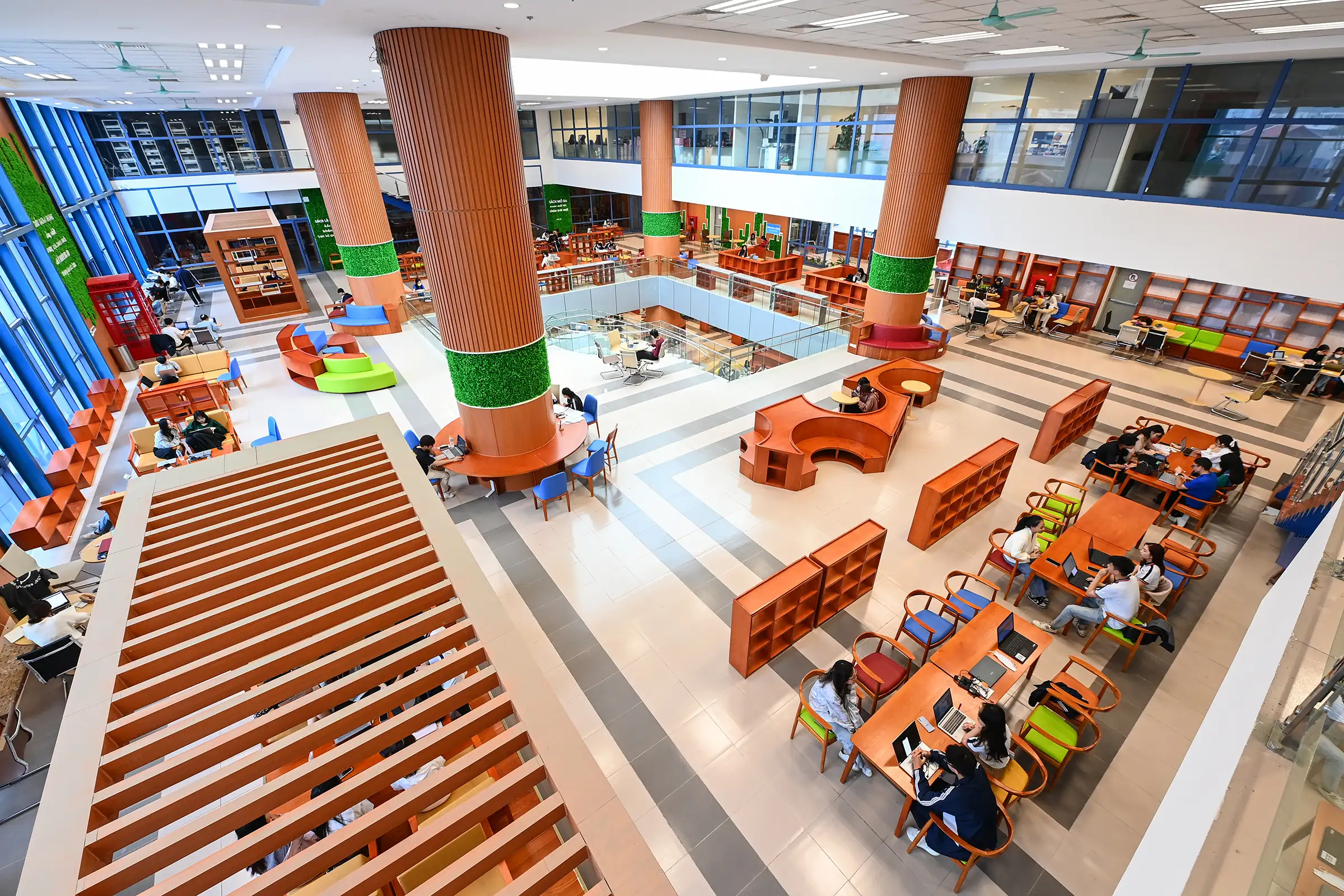
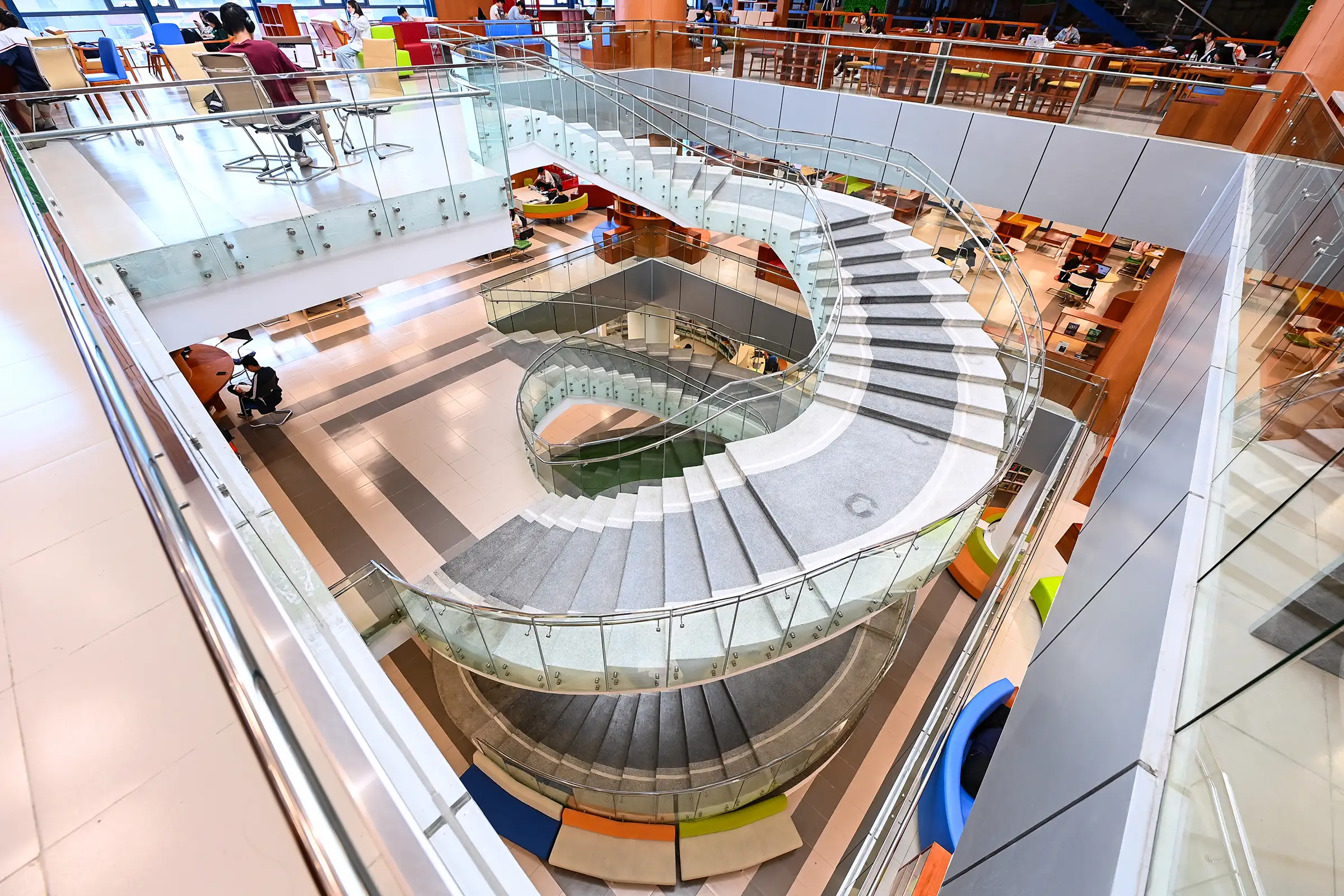
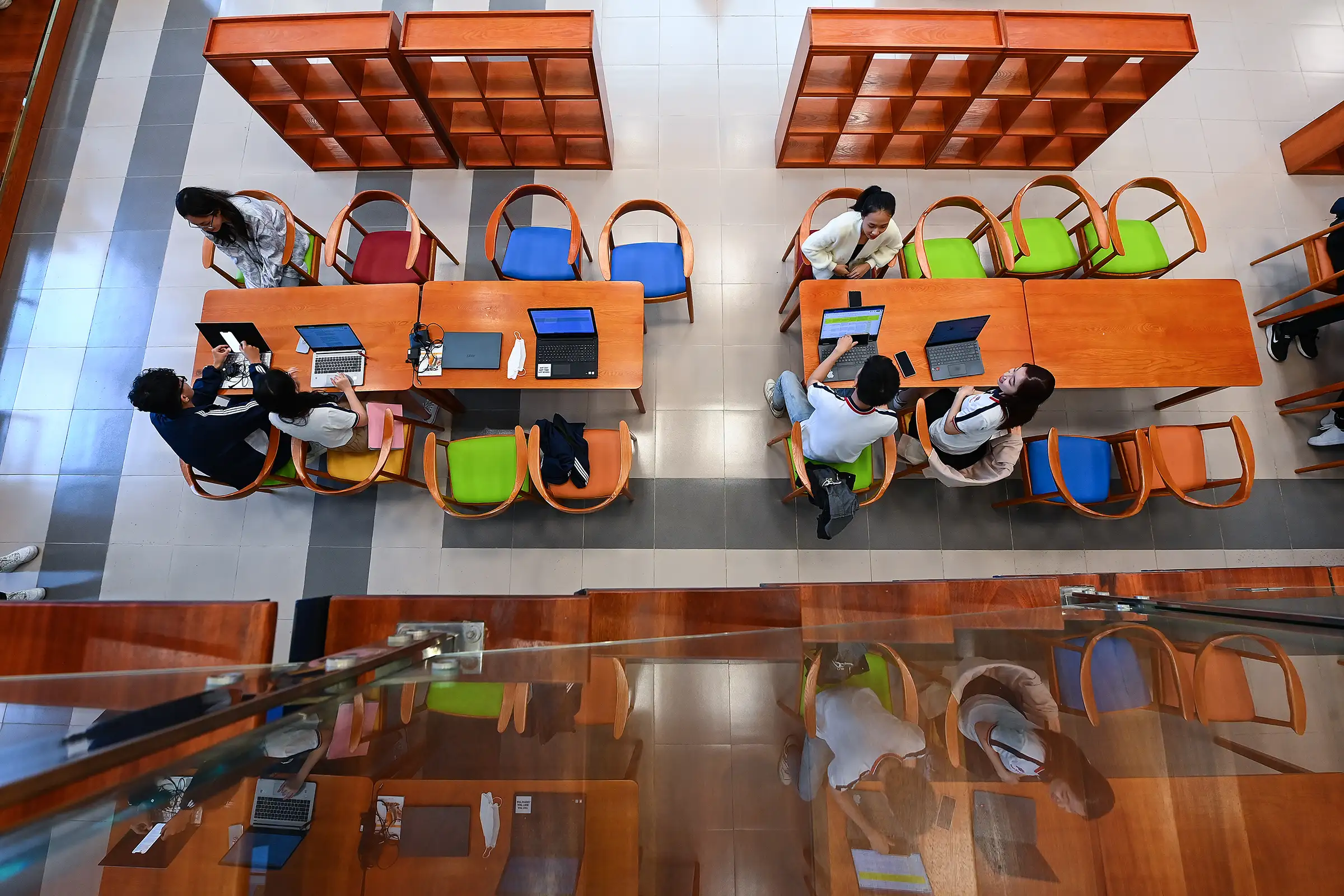
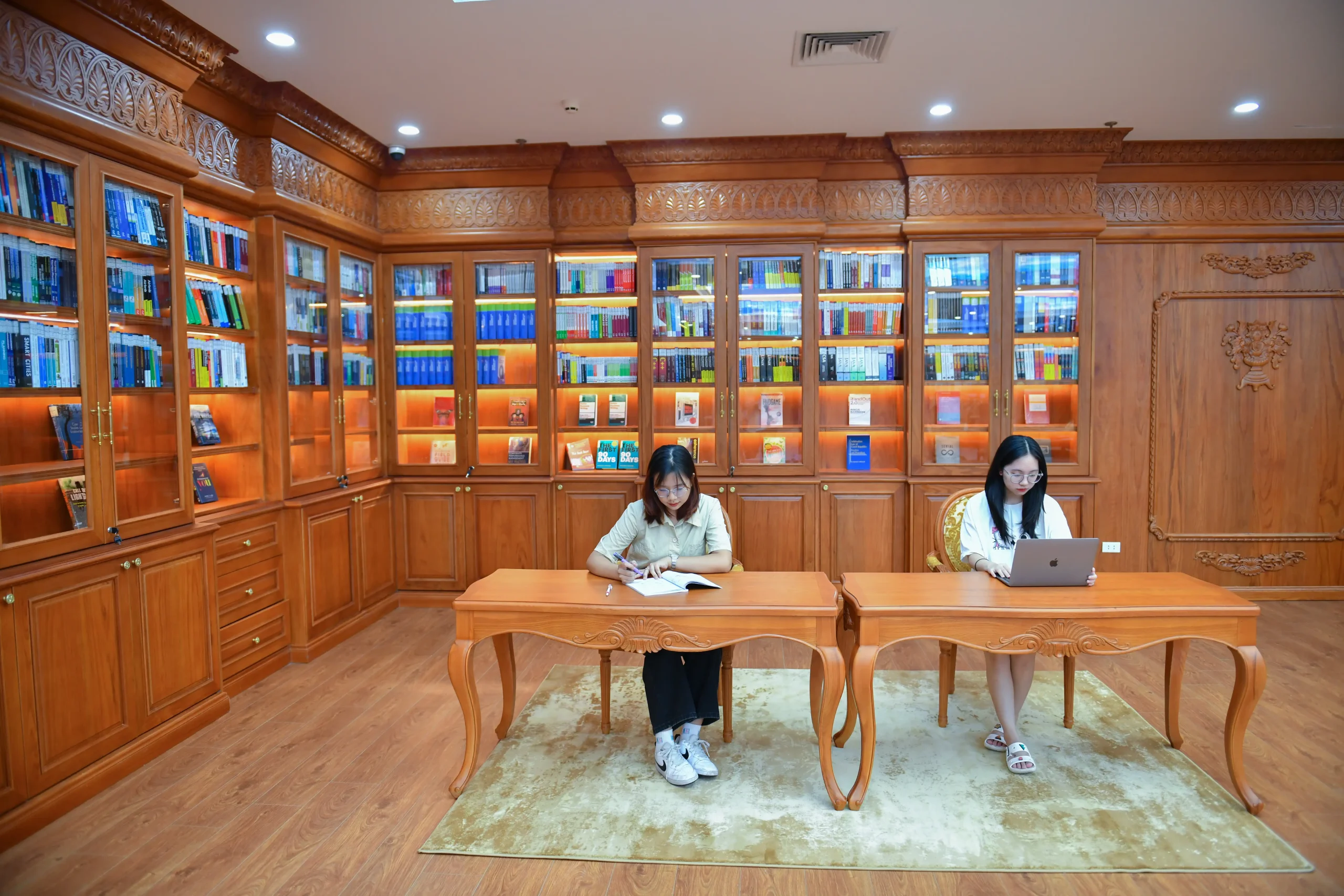
On each floor, besides common areas, the library also has several small rooms suitable for group meetings or organizing workshops
Advanced technology systems such as facial recognition, security gates, RFID chips, automatic borrowing and returning devices, document digitization and sterilization systems, along with an AI virtual assistant supporting library users 24/7, have contributed to optimizing the experience, enabling students to access materials quickly, conveniently, and safely.
In parallel, a comprehensive management software ecosystem has been implemented, including the Lima library portal, the Sierra print document management system, the DSpace digital document management system, and the NEU Book Reader application integrating DRM copyright protection technology, allowing flexible access to materials on multiple platforms anytime, anywhere.
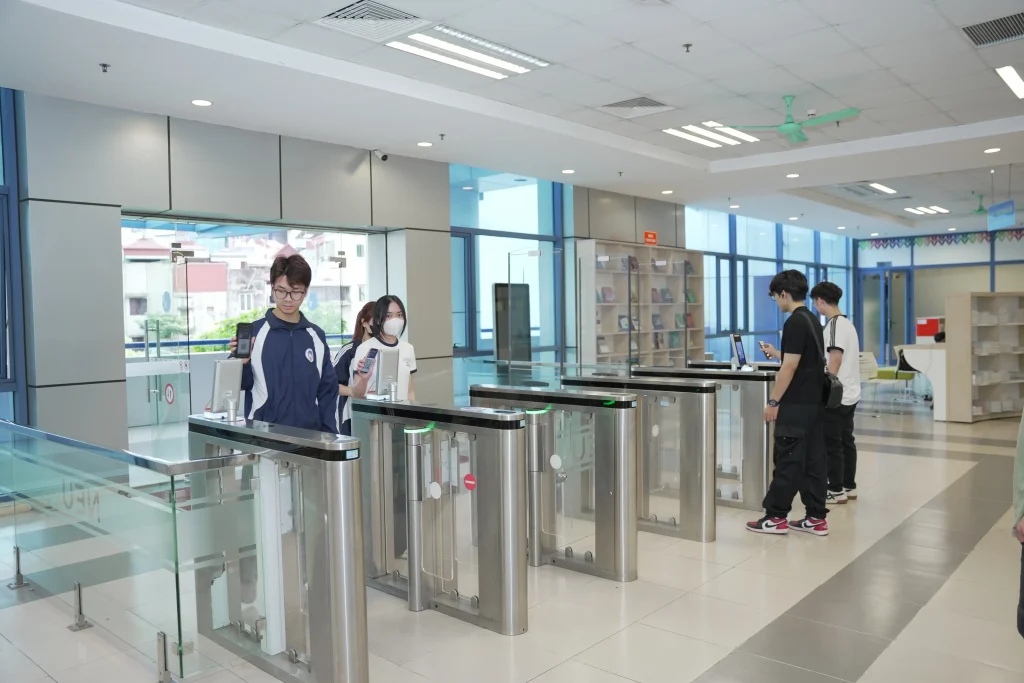
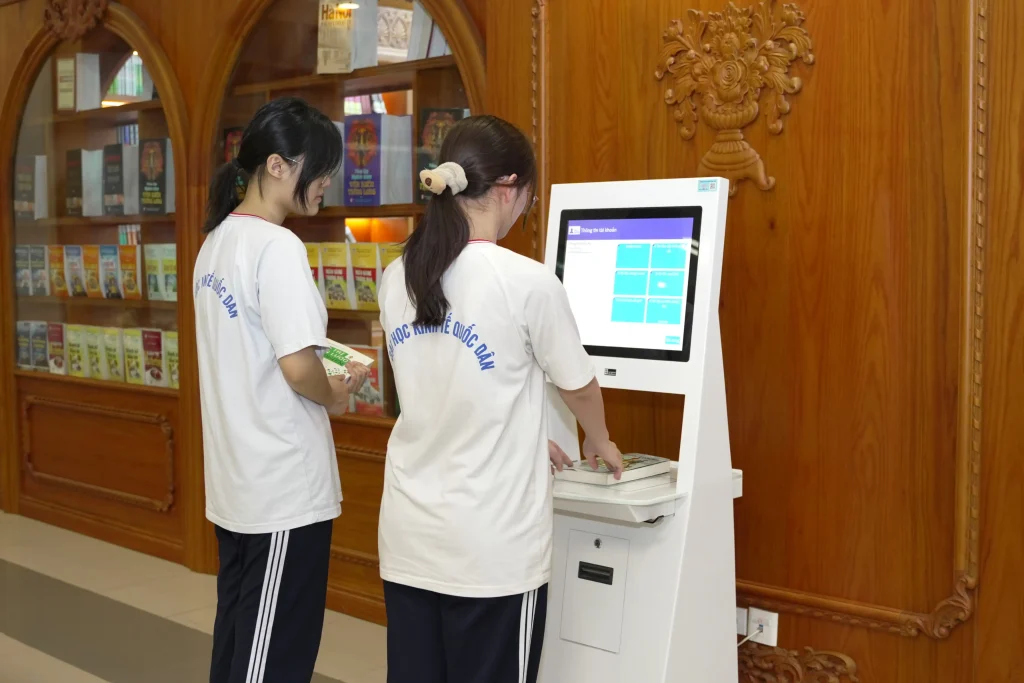
The library is equipped with advanced technology systems such as facial recognition, security gates, RFID chips, and automatic borrowing and returning devices
On this foundation, learning and research activities are no longer limited by space or time, allowing students to proactively access and exploit global knowledge resources with just a personal device, while gradually developing self-learning capabilities and effectively adapting in a digital environment.
From Knowledge Access to Knowledge Creation
The core value of the Information – Library Center at National Economics University extends beyond providing information, as it plays a role in promoting the process of knowledge creation. With a rich data source and a modern support tool system, students can conduct in-depth research, participate in academic activities, and develop highly applicable projects.
Accessing specialized data sources in economics, finance, management, etc., contributes to enhancing analytical capabilities, critical thinking, and problem-solving skills. Thus, the library becomes an important academic space where knowledge is transformed from reception to creation, aligning with training requirements in the context of digital transformation.
Distinctive Advantage for Students in Their Development Journey
In an increasingly competitive context, students’ advantages come not only from an academic knowledge base but also from practical capabilities and adaptability to the working environment. The Information – Library Center of National Economics University not only provides learning resources but also serves as a comprehensive support platform for learners in developing their competencies.
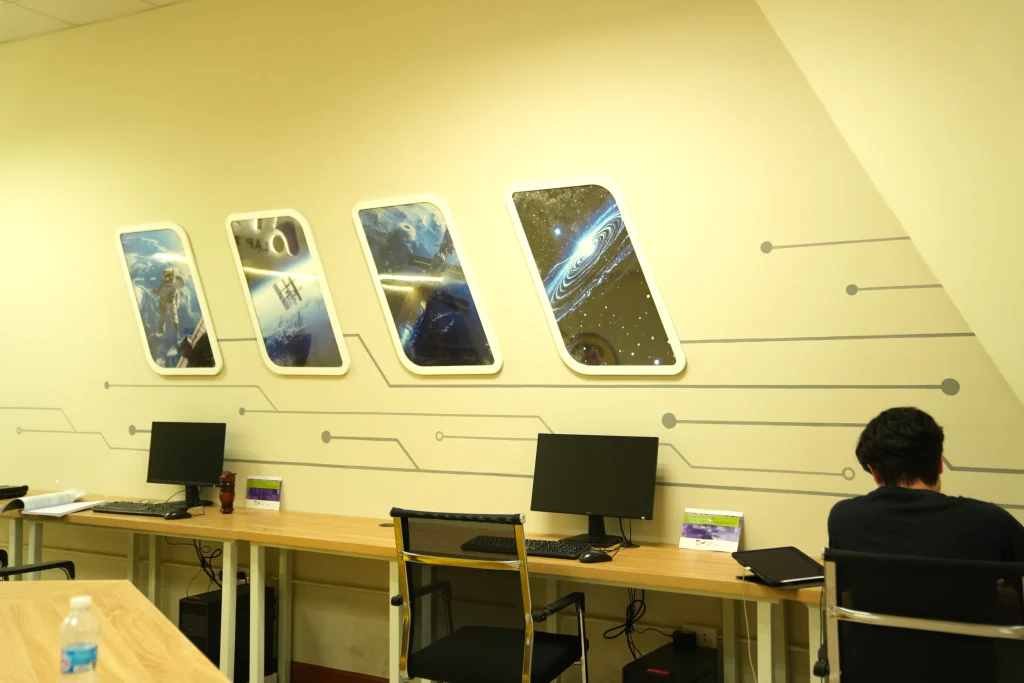
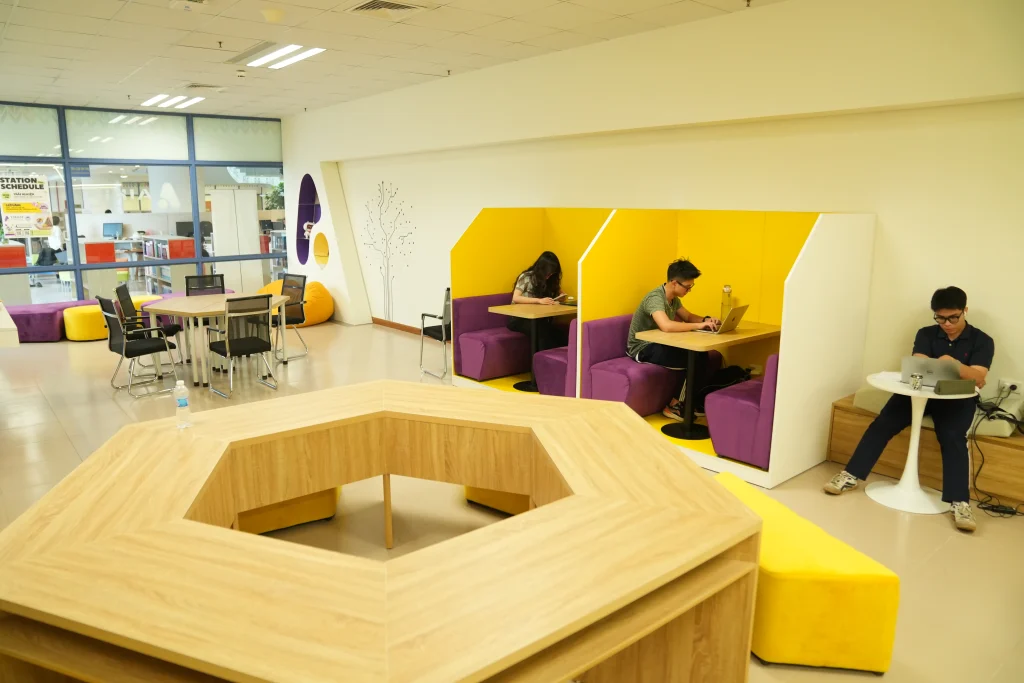
The AIKiP Knowledge Programming Station Located at Pham Van Dong Library, National Economics University
In addition to specialized resources, the Library develops a collection of books on soft skills, contributing to the cultivation of critical thinking, communication skills, teamwork, and self-management. Notably, the implementation of the AIKiP Knowledge Programming Station with courses on soft skills and supplementary knowledge helps students expand their understanding beyond the main academic curriculum.
Notably, more than 2,200 practical case studies from international databases provide valuable reference sources, enabling students to understand theory and apply it to specific contexts. Thus, the learning process does not stop at acquiring knowledge but becomes a process of accumulating practical competencies, laying an important foundation for learners to be ready to enter the labor market.
The Library – The Foundation of a Smart University
In the strategy to develop a smart university model, the Library plays a central role in connecting knowledge, technology, and people. With a comprehensive digitalization orientation, the National Economics University Library is gradually building an open, flexible, and creatively rich learning environment.
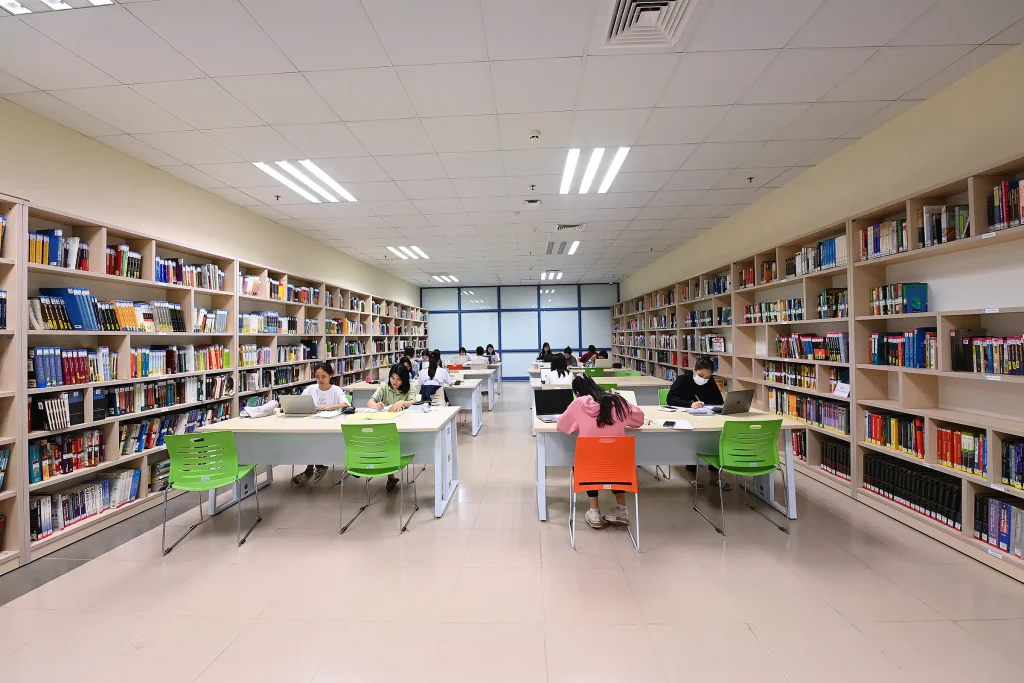

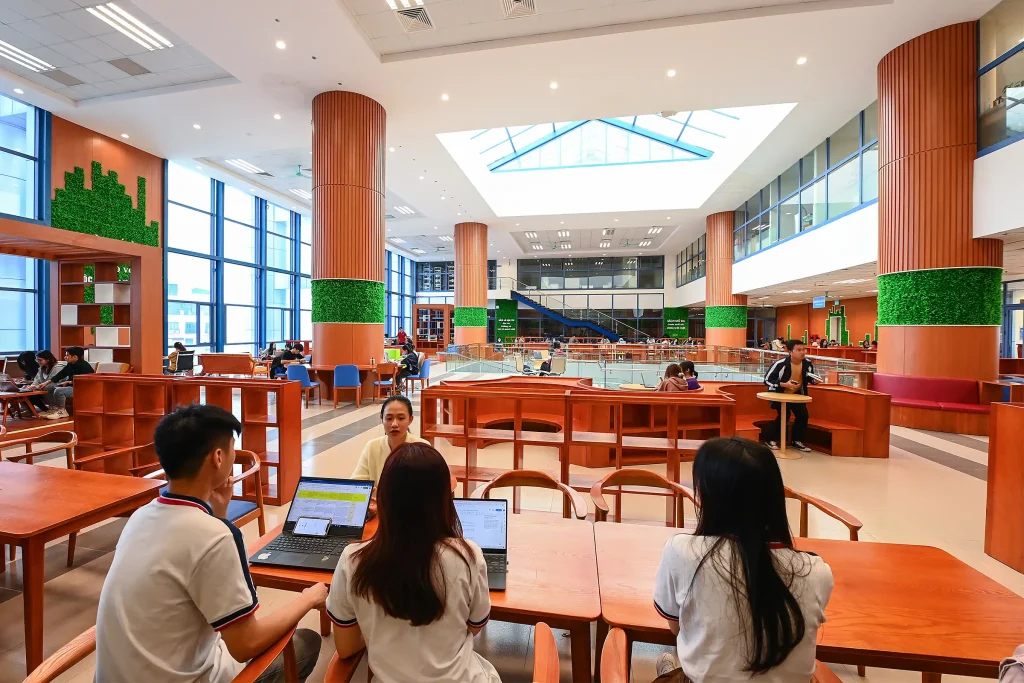
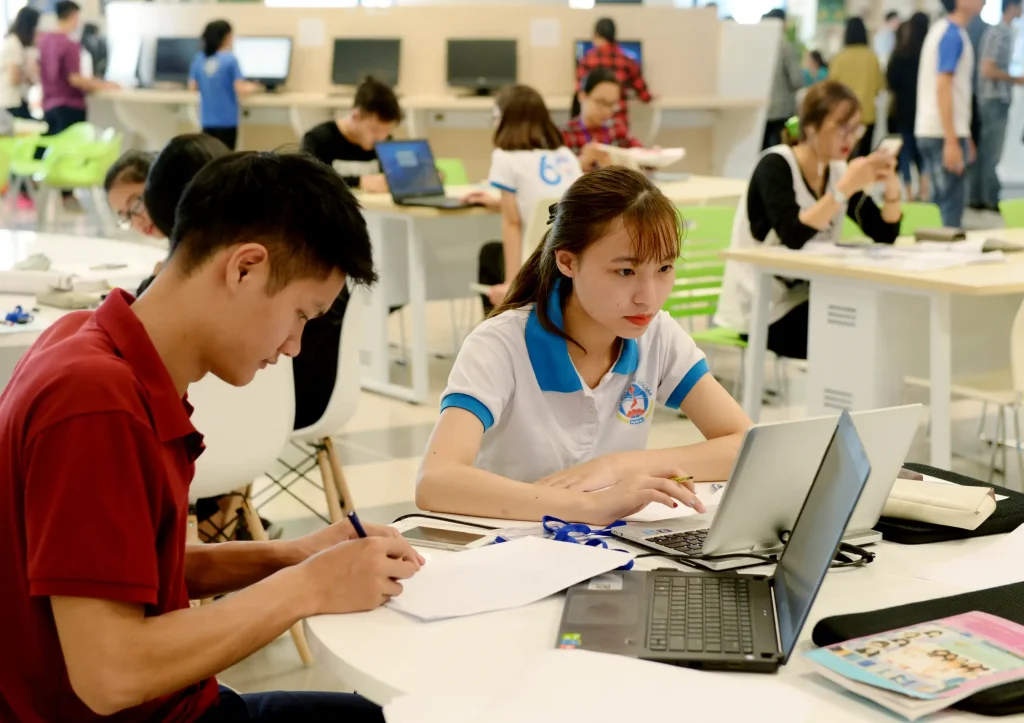
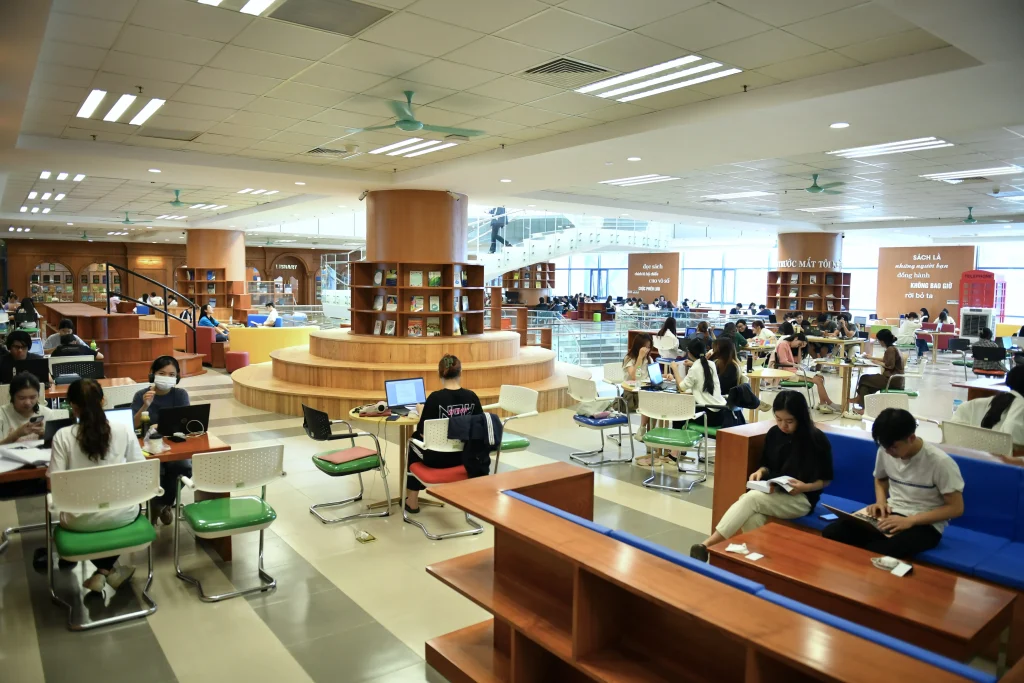
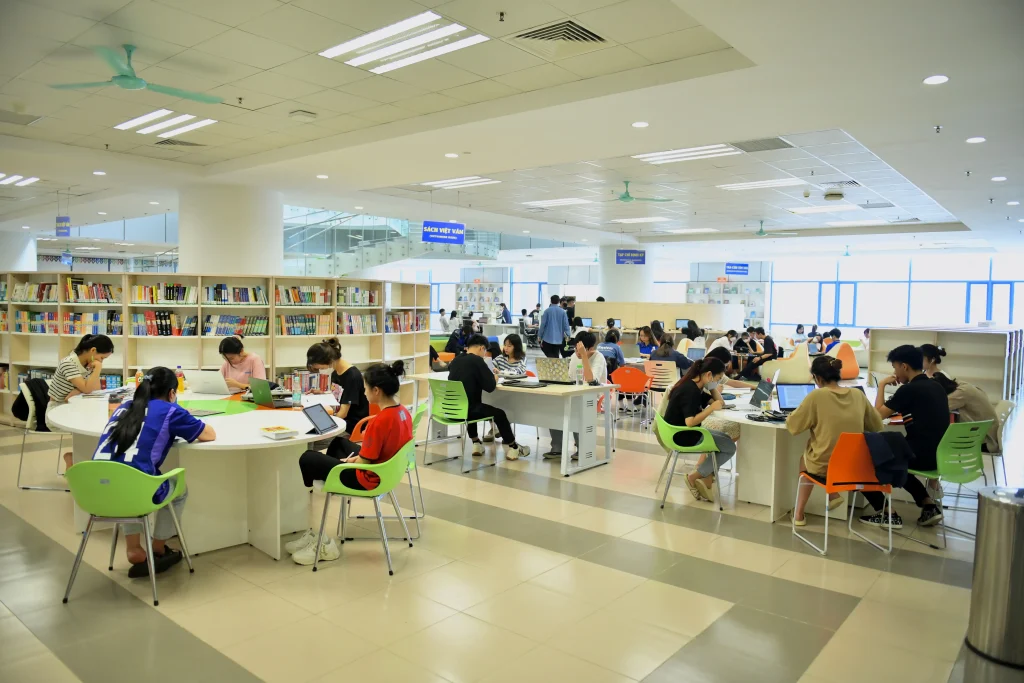
National Economics University Library serves as the core connecting knowledge, technology, and people
Here, students are not only equipped with information exploitation skills but also develop critical thinking, question-posing, and problem-solving abilities, accumulating core competencies that help learners effectively adapt to the increasingly high demands of the labor market.
Choosing NEU – Choosing a Knowledge Ecosystem
Choosing a university means choosing a foundation for long-term development. With a modern Library system, comprehensive academic resources, and advanced technological infrastructure, National Economics University is gradually creating a quality learning environment, equipping students with a solid knowledge base, critical thinking skills, and adaptability in the context of integration. Through this, NEU not only affirms its role as a leading educational institution but also as a comprehensive academic ecosystem, supporting learners to confidently enter the labor market and international environment.
Article and Photos: Information Center – Library and Communication Department