
High-Level Seminar on “Policy and Strategic Capabilities for Vietnam’s New Era”
31/10/2025 2025-10-31 15:47High-Level Seminar on “Policy and Strategic Capabilities for Vietnam’s New Era”
High-Level Seminar on “Policy and Strategic Capabilities for Vietnam’s New Era”
On October 30–31, 2025, National Economics University (NEU), in collaboration with the United Nations Development Programme (UNDP), organized a high-level seminar on “Policy and Strategic Capabilities for Vietnam’s New Era” to provide a forum for exchanges among policymakers, experts, scholars, and development organizations.
.JPG)
Overview of the seminar
Representing the Central Commission for Policy and Strategy at the seminar were Dr. Nguyen Anh Tuan, Member of the Party Central Committee and Vice Chairman of the Central Commission for Policy and Strategy; Dr. Nguyen Hai Minh, Deputy Director of the Department of General Economic Affairs; and Dr. Nguyen Van Ton, Deputy Director of the Department of Sectoral Economic Affairs, Central Commission for Policy and Strategy. Representing the Prime Minister’s Policy Advisory Council were Prof. Dr. Pham Hong Chuong; Prof. Dr. Hoang Van Cuong; Assoc. Prof. Dr. Tran Dinh Thien; and Dr. Nguyen Tu Quang. Representing central ministries, commissions, and agencies were Assoc. Prof. Dr. Hoang Van Nghia, Director of the Department of International Cooperation, Ho Chi Minh National Academy of Politics; and Assoc. Prof. Dr. Tran Quang Dieu, Director of the Center for Technology and Digital Transformation at the Ho Chi Minh National Academy of Politics. Representing international organizations were Ramla Khalidi, UNDP Resident Representative in Vietnam; Watanabe Takakazu, Counselor and Head of the Economic Section, Embassy of Japan in Vietnam; Kobayashi Yosuke, Chief Representative of the Japan International Cooperation Agency (JICA) in Vietnam; Soulikanh chomsipaseuth, First Secretary of the Embassy of Laos in Vietnam; Sok Phondany, Representative of the Embassy of the Kingdom of Cambodia; Le Thi Thanh Thao, Representative of the United Nations Industrial Development Organization; and Felix Weidenkaff, Employment and Labor Market Policy Specialist, International Labour Organization. Keynote speakers, researchers, and business representatives included Dr. Jonathan London, Senior Economic Advisor, UNDP Vietnam; Prof. Dr. Joo Young-Sup, Seoul National University; Prof. Dr. Lee Keun, Seoul National University; Prof. Dr. Lan Coxhead, Japan External Trade Organization; Pham Quang Vinh, former Vietnamese Ambassador to the United States; Prof. Dr. Kenichi Ohno, National Graduate Institute for Policy Studies, Japan; Assoc. Prof. Dr. Le Xuan Ba, former Director of the Central Institute for Economic Management; Dr. Nguyen Dinh Cung, former Director of the Central Institute for Economic Management; Dr. Vo Tri Thanh, former Deputy Director of the Central Institute for Economic Management; Dr. Dang Duc Anh, Deputy Director of the Institute for Policy and Strategy Studies; and Dang Huynh Uc My, Chair of the Board of Directors of Thanh Thanh Cong (Bien Hoa) Joint Stock Company. Also attending were experts, scholars, representatives of universities and research institutes, and international partners.
Representing NEU were Assoc. Prof. Dr. Bui Duc Tho, Secretary of the Party Committee and Chair of the University Council; Assoc. Prof. Dr. Bui Huy Nhuong, President; Prof. Dr. Nguyen Thanh Hieu, Vice President; and Prof. Dr. To Trung Thanh, Head of the Department of Research Management. Also attending were representatives of the leadership of schools, departments, faculties, institutes, and centers; leaders of units and divisions; and a large number of faculty, staff, and students from across the University.
.JPG)
Assoc. Prof. Dr. Bui Huy Nhuong, President of NEU, delivers remarks
In his opening remarks, Assoc. Prof. Dr. Bui Huy Nhuong, President of NEU, warmly welcomed the delegates and emphasized the seminar’s particular significance as Vietnam enters a new stage of development with numerous opportunities and challenges. Vietnam faces an urgent need to renew its growth model, restructure its economy, and strengthen its capacity for policy formulation, coordination, and implementation—the foundation for building a modern state, achieving sustainable development, and adapting to global changes.
According to Assoc. Prof. Dr. Bui Huy Nhuong, after nearly 40 years of Doi Moi (Renewal), Vietnam has achieved much to be proud of, but also faces structural challenges, including limited productivity, uneven innovation capabilities, and institutions that have not kept pace with development. In this context, strengthening policy and strategic capabilities has become a key factor in helping Vietnam reposition its development model in the era of digital transformation, green transition, and the artificial intelligence (AI) revolution.
This year’s seminar took place as Vietnam prepares to formulate its Socio-Economic Development Plan for 2026–2030 and vision to 2045. It featured five in-depth discussion sessions on the pillars of a modern state’s capabilities: innovating policymaking approaches; promoting industry and innovation; linking trade and labor policies; and strengthening institutions for digital transformation and AI. Each dialogue session was expected to produce practical recommendations to support the formulation and implementation of national development policies.
As a national key university in economics, management, and business administration, NEU has always regarded scientific research and policy advisory work as a core mission alongside education. In recent years, the University has continually renewed its science and technology strategy and promoted international cooperation programs with UNDP and many development organizations, aiming to strengthen institutional capacity and support Vietnam in realizing its aspirations for sustainable development and prosperity by 2045, Assoc. Prof. Dr. Bui Huy Nhuong emphasized.
On behalf of the University’s leadership, Assoc. Prof. Dr. Bui Huy Nhuong thanked UNDP in Vietnam, as well as the agencies, organizations, experts, and academic partners that had worked with NEU on this event of profound academic and practical significance. He also expressed confidence that the seminar would generate valuable new knowledge and contribute positively to Vietnam’s development and renewal in the new era.
.JPG)
Dr. Nguyen Anh Tuan, Member of the Party Central Committee and Vice Chairman of the Central Commission for Policy and Strategy, delivers remarks
Also speaking at the seminar, Dr. Nguyen Anh Tuan, Member of the Party Central Committee and Vice Chairman of the Central Commission for Policy and Strategy, emphasized that Vietnam is entering a new stage of development with the aspiration to become a modern industrialized, upper-middle-income country by 2030 and a developed, high-income country by 2045. These are not merely economic milestones, but also reflect the aspiration for a prosperous and happy country with rapid, sustainable, and inclusive development.
Given the demands of this new stage of development, strengthening the capacity to formulate and implement national development policies and strategies has become urgent. Dr. Nguyen Anh Tuan spoke highly of the seminar’s program of five in-depth discussion sessions focusing on key pillars: narrowing development gaps; reforming policymaking approaches; promoting economic upgrading; strengthening links among trade, skills, and productivity; and enhancing state governance capacity in the digital era.
Accordingly, Vietnam needs to continue vigorously reforming its policymaking approaches to make them scientific, flexible, and data-driven; connect strategic vision with practical action; accelerate industrialization and the development of the digital, green, and circular economies; and strengthen state governance capacity to adapt effectively to digital transformation and global changes.
The Central Commission for Policy and Strategy commended the efforts of NEU and UNDP in organizing this meaningful academic forum. The views and recommendations presented at the seminar will serve as important references, helping refine mechanisms, policies, and documents to be submitted to the 14th National Party Congress, toward the goal of rapid, sustainable, and inclusive development in 2026–2030.
.JPG)
Ramla Khalidi, UNDP Resident Representative in Vietnam, delivers remarks
According to experts, to realize its aspiration to become a developed country by 2045, Vietnam needs not only a long-term strategic vision but, more importantly, a modern and comprehensive system of national governance capabilities.
These capabilities include the ability to formulate, coordinate, and implement development policies and strategies across multiple sectors in a synchronized, flexible, and accountable manner, maintaining consistency in national governance over time and at different levels. According to experts, this is the defining characteristic of a developmental state—a decisive factor that has enabled many Asian countries and economies, such as Japan, South Korea, Taiwan (China), and Singapore, to make breakthroughs in industrialization, raise productivity, and sustain inclusive growth over many decades.
Participants at the seminar also agreed that the need to strengthen state capacity has been clearly articulated in recent Party resolutions and policy documents, ushering in a “New Era” of national development. In this reform process, UNDP is supporting Vietnam by organizing high-level dialogues to strengthen its capacity to formulate development policies and strategies.
With leading experts from East Asia participating, five in-depth discussion sessions focused on key topics in strengthening national policy formulation and implementation capacity.
.JPG)
Prof. Dr. To Trung Thanh, Head of the Department of Research Management at National Economics University (NEU), chairs the first dialogue session
.JPG)
Dr. Jonathan London, UNDP Vietnam, delivers a presentation at the seminar
The first dialogue session, “Bridging the Gaps: Building Policy and Strategic Capacity for Vietnam’s New Era,” opened the series, chaired by Prof. Dr. To Trung Thanh, Head of the Department of Research Management at NEU, with Dr. Jonathan London (UNDP Vietnam) delivering the keynote presentation. The session provided an overview of the dialogue series, developed a framework for policy and strategic capacity, and drew lessons from successful and unsuccessful experiences in East Asian countries and around the world in designing, coordinating, and implementing complex reforms. The discussion laid the groundwork for connecting the dialogue series with Vietnam’s development priorities, with a view to enhancing consistency and depth in policymaking.
.JPG)
Assoc. Prof. Dr. Tran Dinh Thien, Member of the Prime Minister’s Policy Advisory Council, chairs the second dialogue session
.JPG)
Prof. Dr. Kenichi Ohno, National Graduate Institute for Policy Studies, Japan, delivers a presentation at the seminar
The second dialogue session, “Reforming Vietnam’s Policy Approach,” was chaired by Assoc. Prof. Dr. Tran Dinh Thien, Member of the Prime Minister’s Policy Advisory Council, with Prof. Dr. Kenichi Ohno of the National Graduate Institute for Policy Studies, Japan, as the keynote speaker. The session focused on analyzing the need to reform Vietnam’s approach to policy and strategy formulation, while drawing on successful models from Japan, South Korea, Taiwan, and Singapore. Experts proposed specific steps and institutional adjustments to improve the quality, coherence, and feasibility of national strategies in the new phase.

Le Thi Thanh Thao, Representative of the United Nations Industrial Development Organization (UNIDO), chairs the third dialogue session

Prof. Dr. Lee Keun, Seoul National University, delivers a presentation at the seminar
The third dialogue session followed with the theme “Promoting Economic Upgrading: Lessons for Vietnam,” chaired by Le Thi Thanh Thao, Representative of the United Nations Industrial Development Organization (UNIDO), with Prof. Dr. Lee Keun of Seoul National University delivering the keynote presentation. The session provided an in-depth analysis of East Asian models of industrial upgrading through strategies combining horizontal and vertical approaches, while identifying the institutional requirements for sustainable development. It focused on translating international lessons into specific policy directions and identifying Vietnam’s priority industries and opportunities for breakthroughs during the phase of productivity-driven growth.

Assoc. Prof. Dr. Bui Quang Tuan, Vice President of the Vietnam Economic Association, chairs the fourth dialogue session

Prof. Dr. Ian Coxhead, Japan External Trade Organization, delivers a presentation at the seminar
The fourth dialogue session, “Connecting Trade, Labor, and Skills for Vietnam’s Development Path,” was chaired by Assoc. Prof. Dr. Bui Quang Tuan, Vice President of the Vietnam Economic Association, with Prof. Dr. Ian Coxhead of the Japan External Trade Organization as the keynote speaker. The session focused on analyzing the links among trade, investment, and the labor market, proposing solutions to attract investment in high technology, broaden skills, and foster entrepreneurship. Experts also recommended developing integrated policies encompassing skills development, education, training, and social protection to meet the requirements of the new development model and support the transition to high-value-added growth.

Assoc. Prof. Dr. Tran Quang Dieu, Director of the Center for Technology and Digital Transformation at the Ho Chi Minh National Academy of Politics, chairs the fifth dialogue session

Prof. Dr. Joo Young-Sup, Seoul National University, delivers a presentation at the seminar
The series concluded with the fifth dialogue session, “Industrial AI Transformation Strategies,” chaired by Assoc. Prof. Dr. Tran Quang Dieu, Director of the Center for Technology and Digital Transformation at the Ho Chi Minh National Academy of Politics, with Prof. Dr. Joo Young-Sup of Seoul National University as the keynote speaker. The session focused on sharing South Korea’s experience in digital transformation (DX), green transformation (GX), and artificial intelligence transformation (AX), while proposing suitable strategies for Vietnam to advance these three priority areas in a coordinated manner. The discussion also clarified the institutional, policy, and regulatory requirements needed to ensure a successful transformation, contributing to the effective implementation of Resolution 57 and related development strategies.
.JPG)
Delegates attending the seminar pose for a group photo
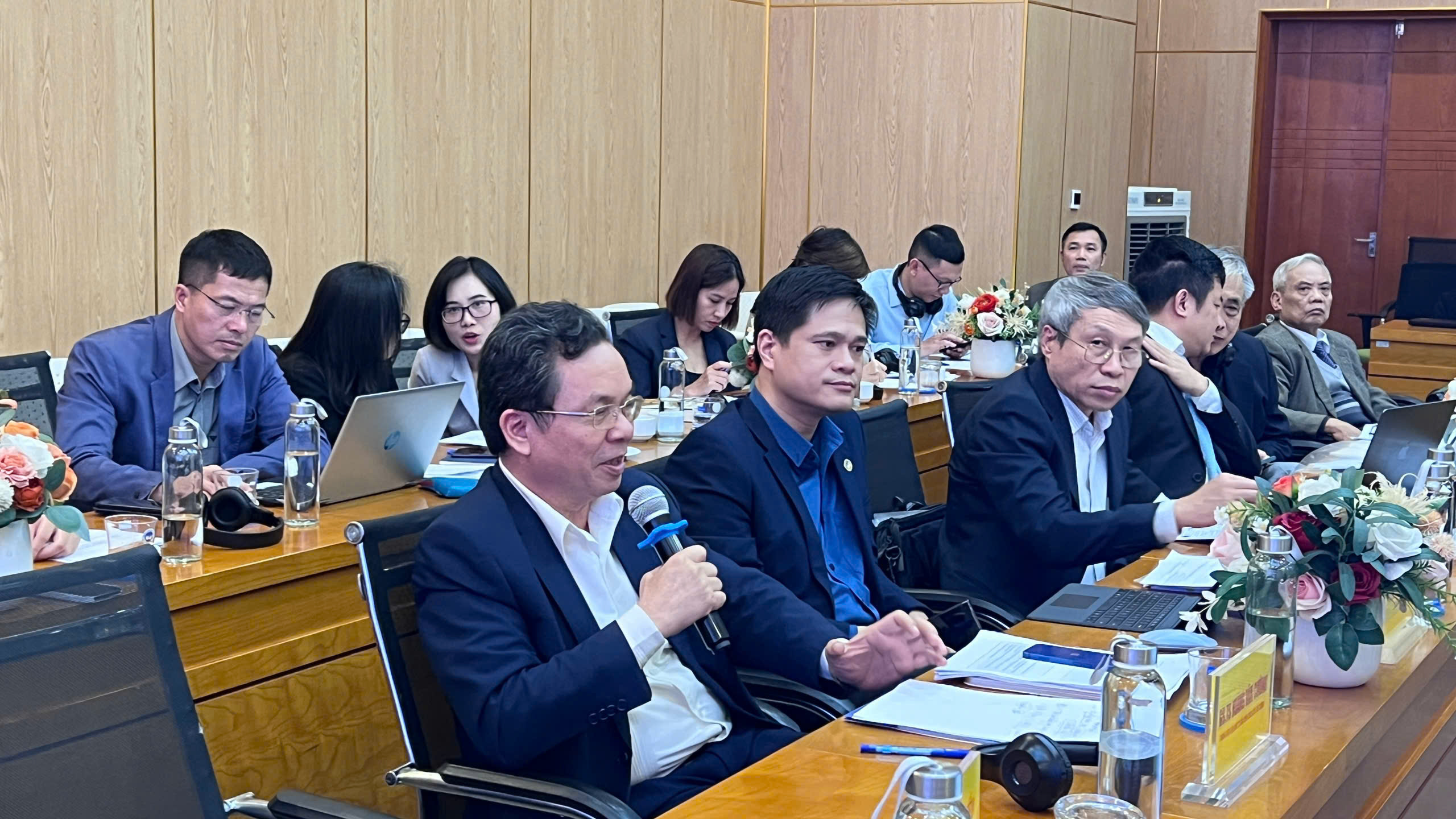
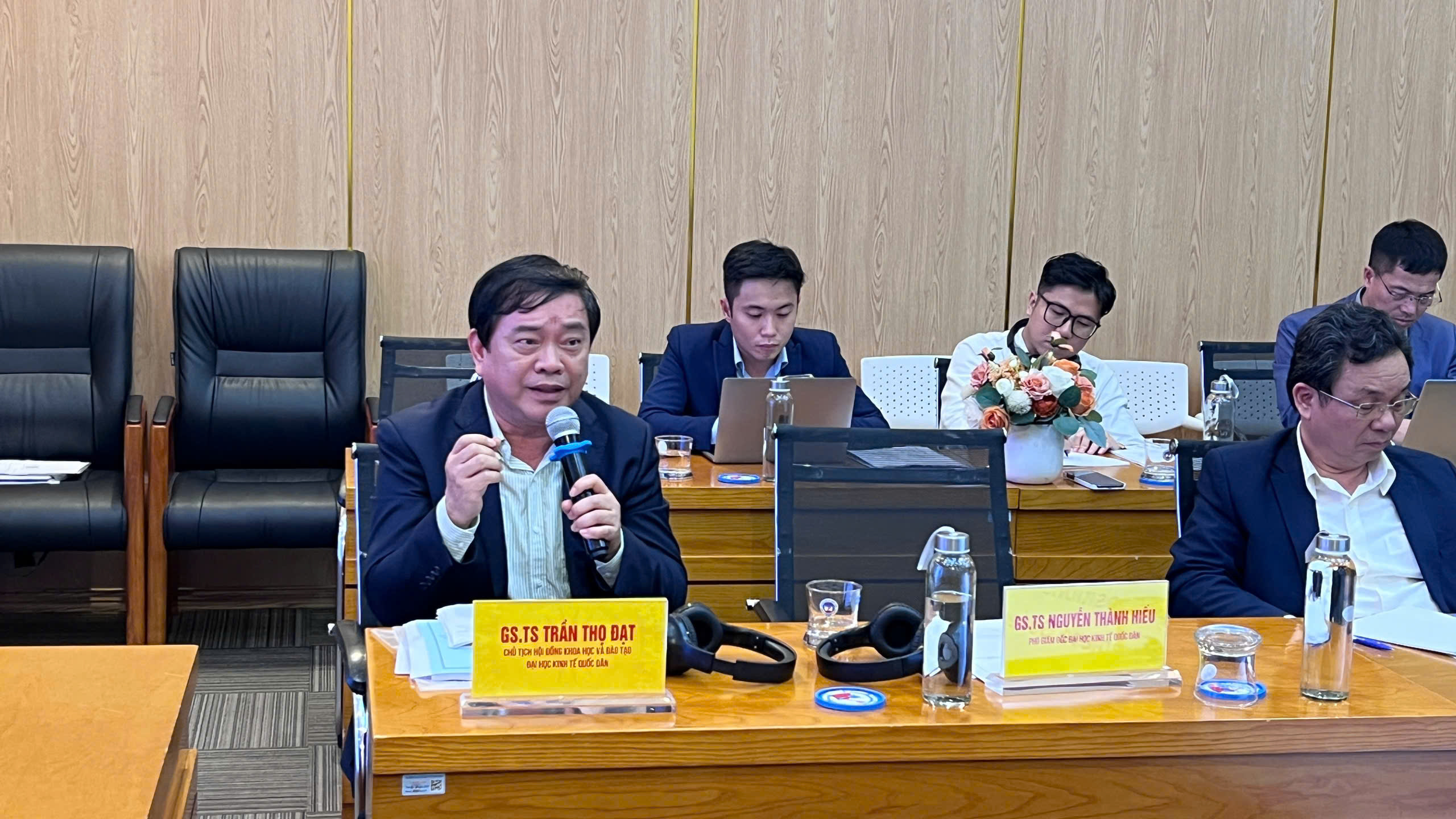
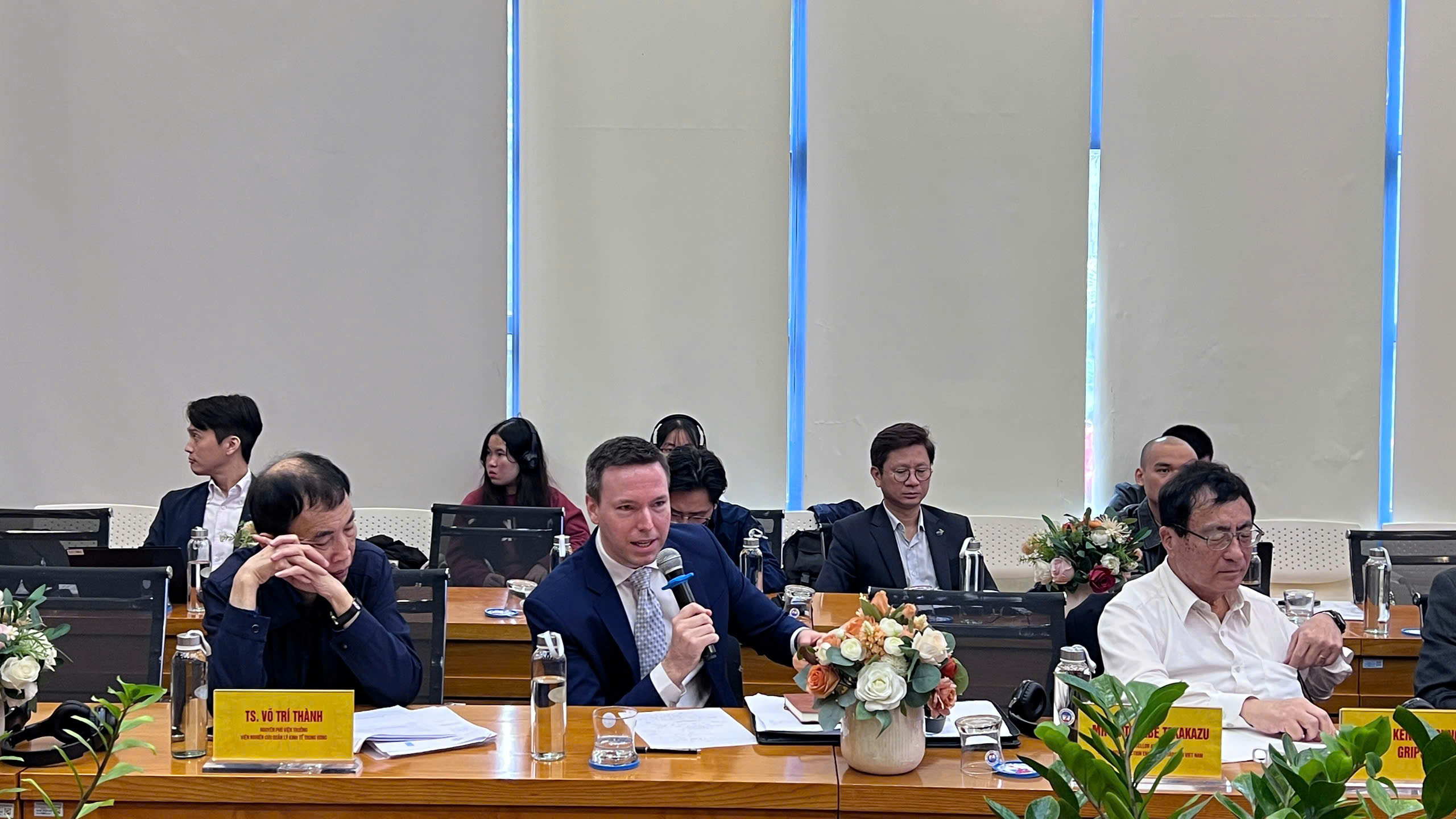
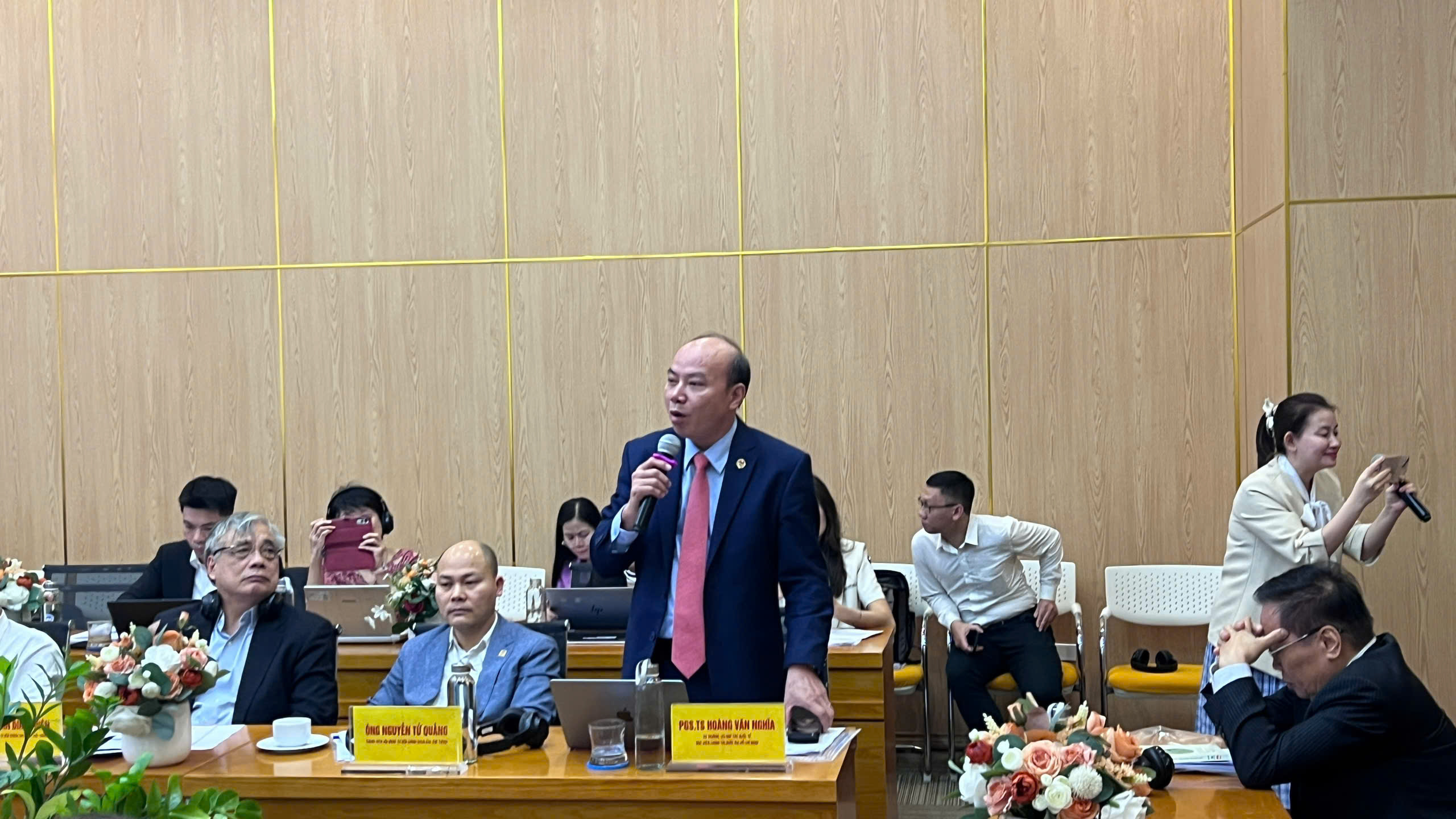
The discussion sessions not only offered multidimensional perspectives on Vietnam’s policy and strategy formulation capacity in the new context, but also provided a forum connecting policymakers, experts, and international organizations around the shared goal of building an adaptive, innovative, and sustainable developmental state.
Additional photos from the seminar:
.JPG)
.JPG)
.JPG)
.JPG)
.JPG)
.JPG)
.JPG)
.JPG)
.JPG)
.JPG)
.JPG)
Article and photos: Department of Communications
This is an automated translation. If you notice any errors, please contact the Department of Communications, National Economics University at phongtruyenthong@neu.edu.vn.



