Workshop “Collaboration in Tourism – Hospitality – Entertainment & Events Training, Creative Industries”
23/04/2026 2026-04-28 8:56Workshop “Collaboration in Tourism – Hospitality – Entertainment & Events Training, Creative Industries”
Workshop “Collaboration in Tourism – Hospitality – Entertainment & Events Training, Creative Industries”
The rapid transformation of the tourism and creative industries is creating an increasing demand for a workforce equipped with strong management capabilities and business acumen to effectively leverage cultural and creative products, meeting the growing expectations of tourists and the market.
This was the central theme of the workshop titled “Collaboration in Training for Tourism, Hospitality, Leisure & Events, and Creative Industries”, held at National Economics University on the morning of April 23.
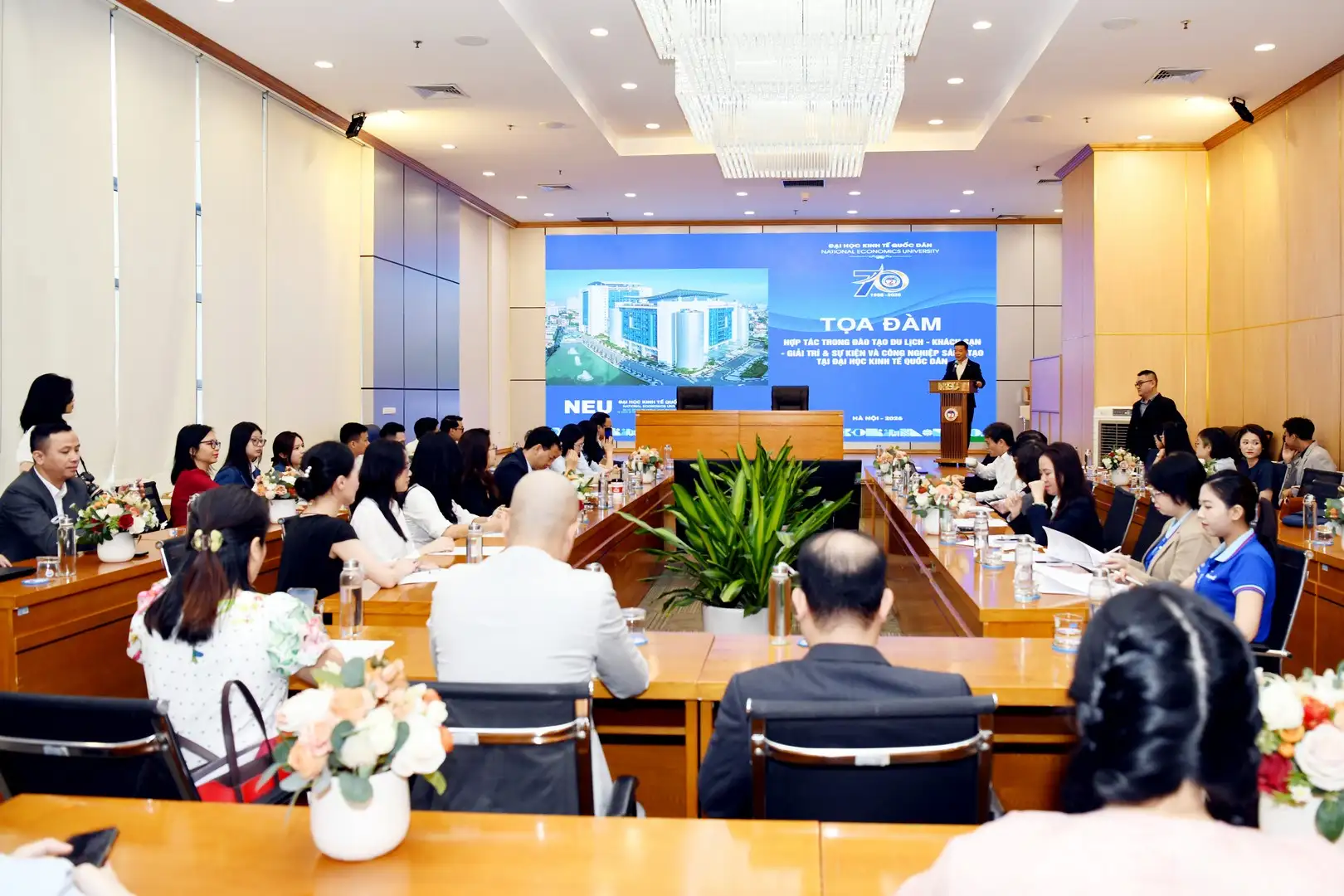
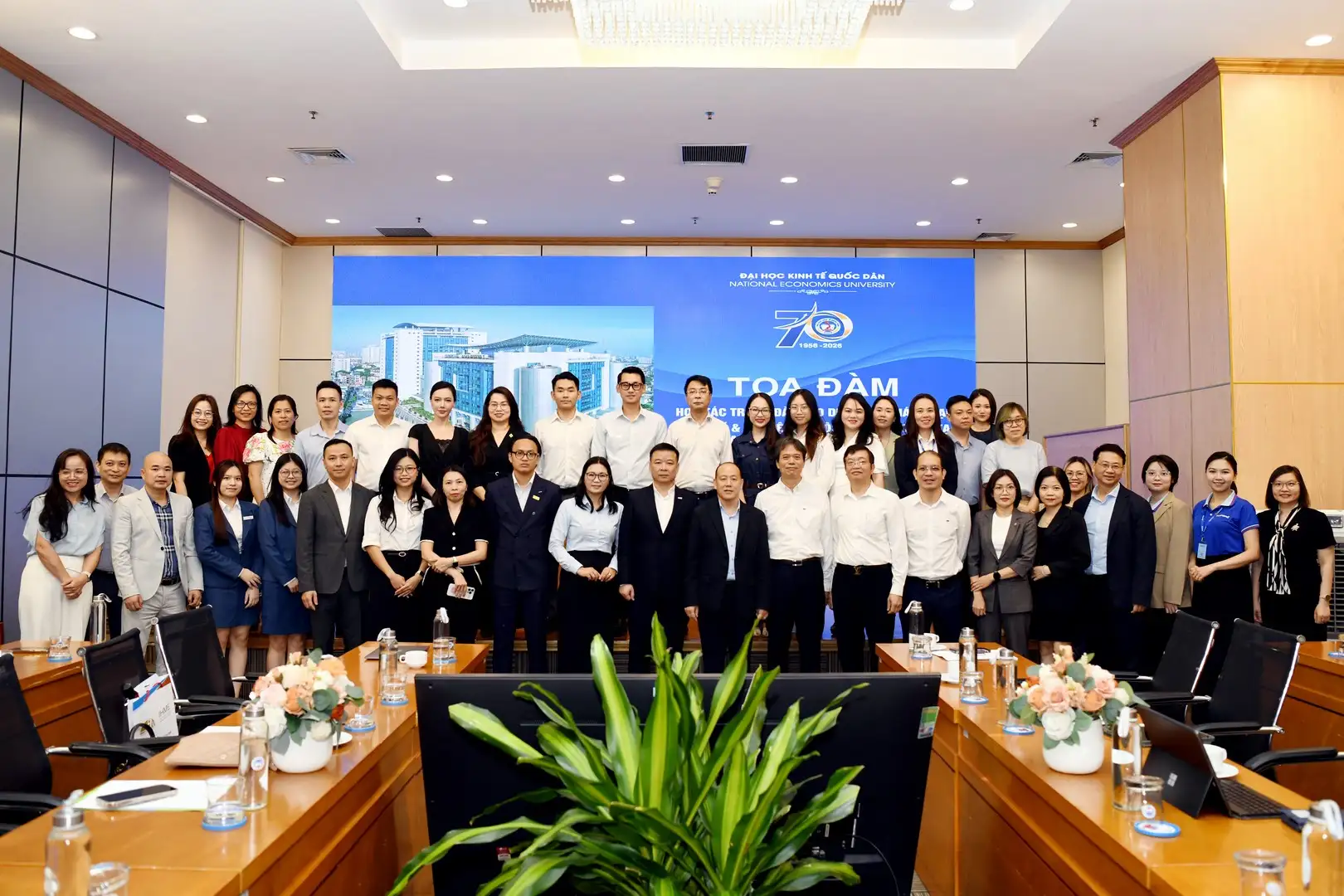
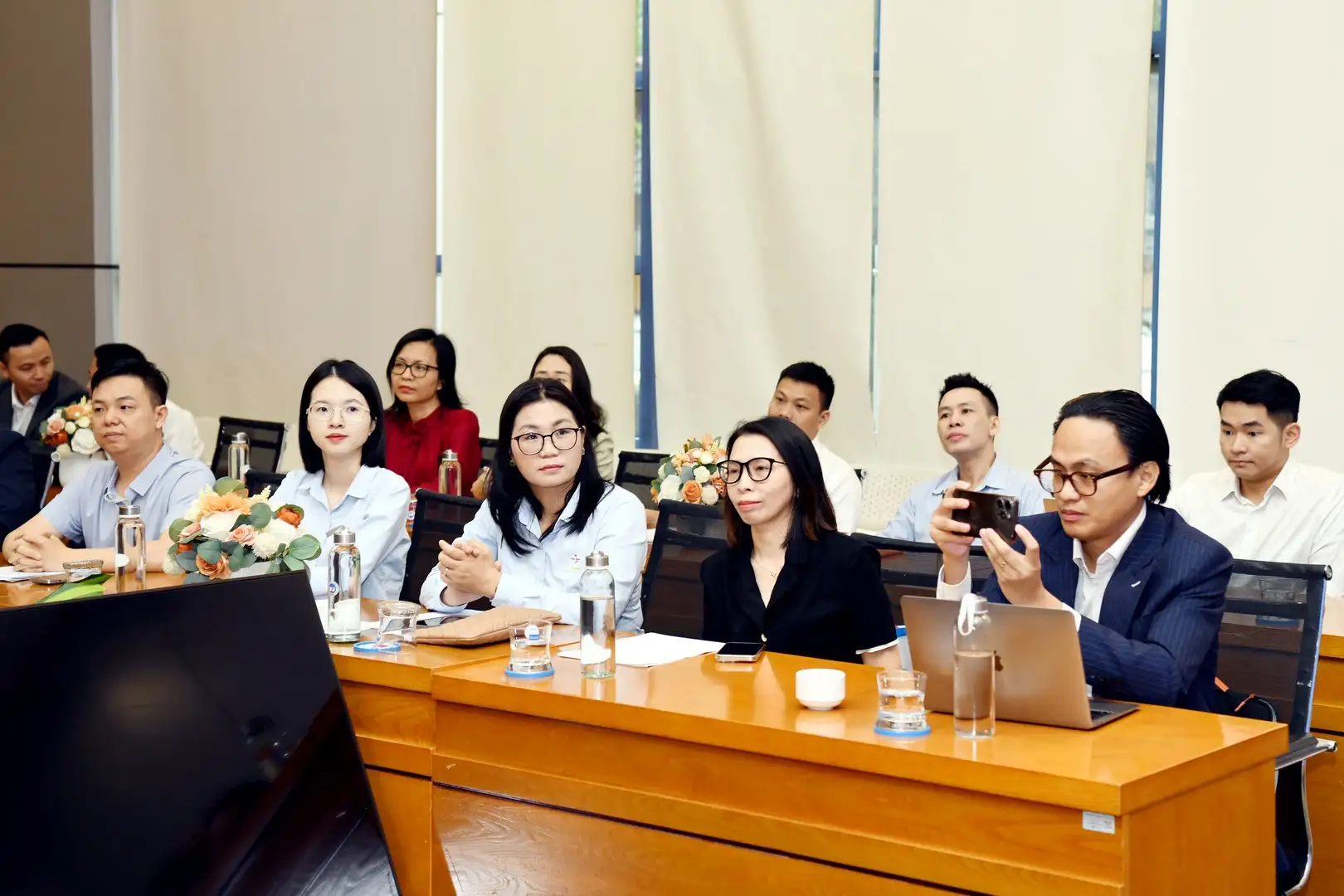
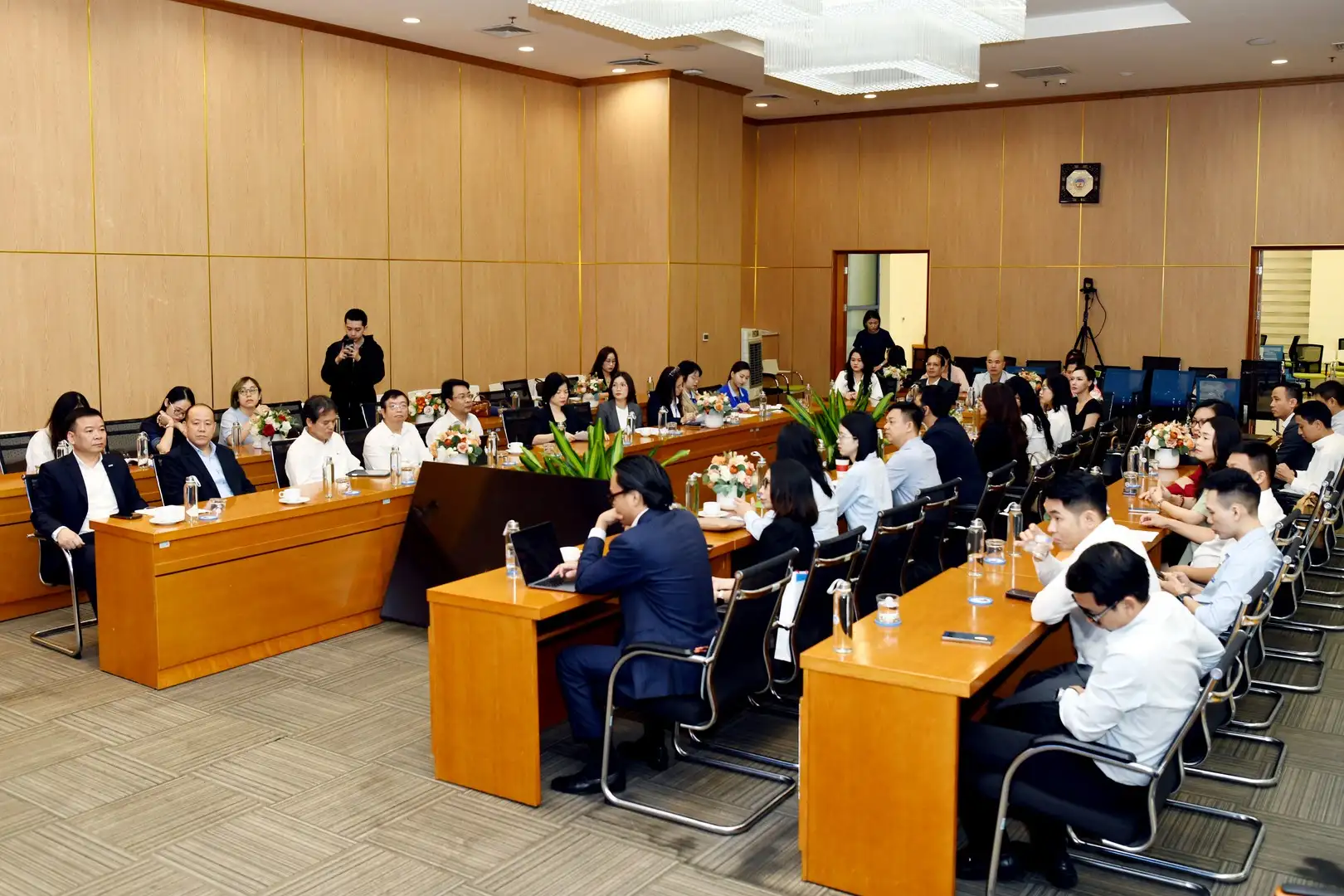
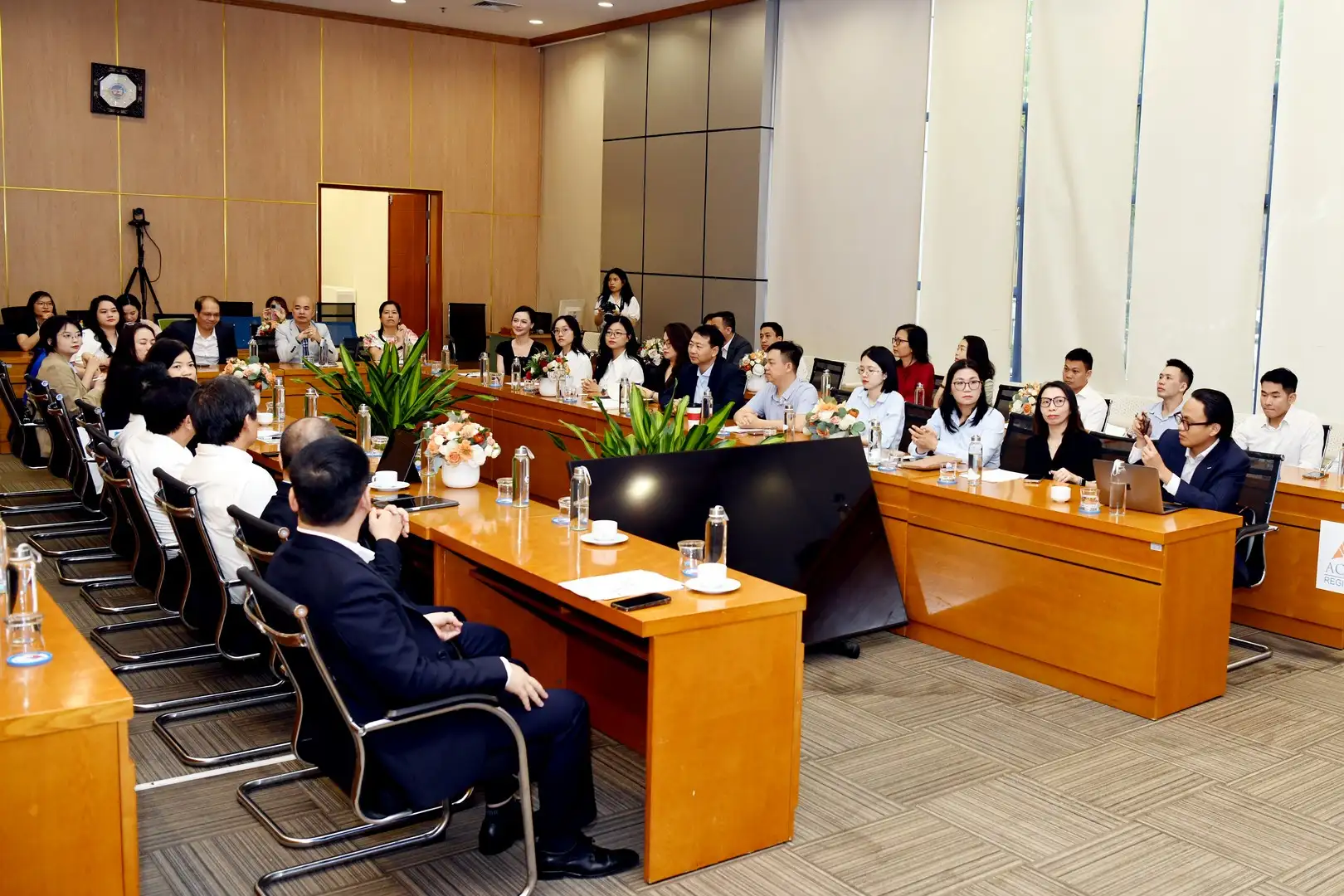
Overview of the Workshop
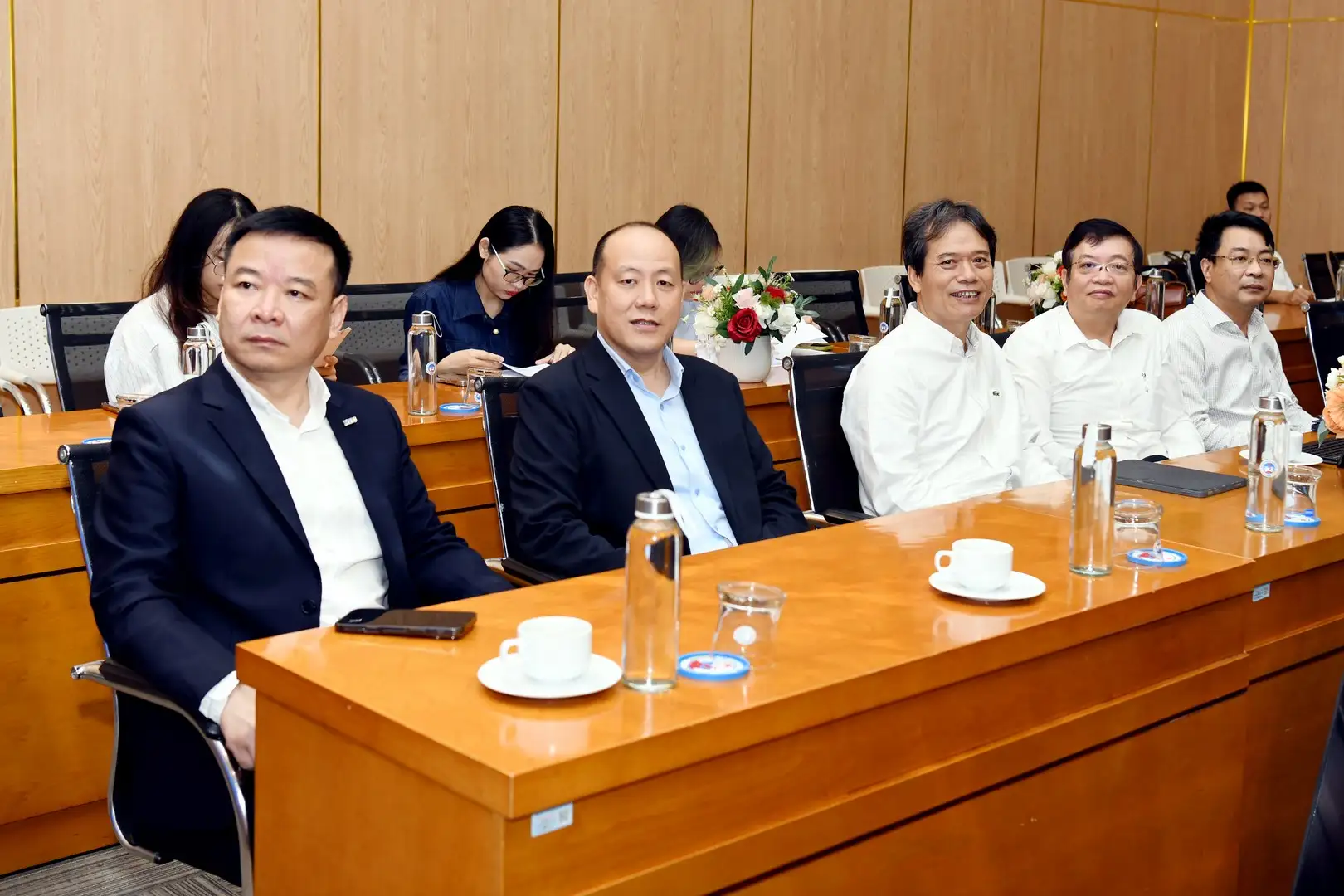
Attending the workshop were: Assoc. Prof. Dr. Bui Huy Nhuong – President; Prof. Dr. Ta Van Loi – Rector, College of Business; Assoc. Prof. Dr. Pham Truong Hoang – Dean, Faculty of Tourism & Hospitality; Prof. Dr. Pham Hong Chuong – Chairman of the Economics Professorial Council, former President of the University; along with representatives from various Schools, Departments, Faculties, Institutes, Centers, staff, lecturers, experts, and scientists from within and outside the University.
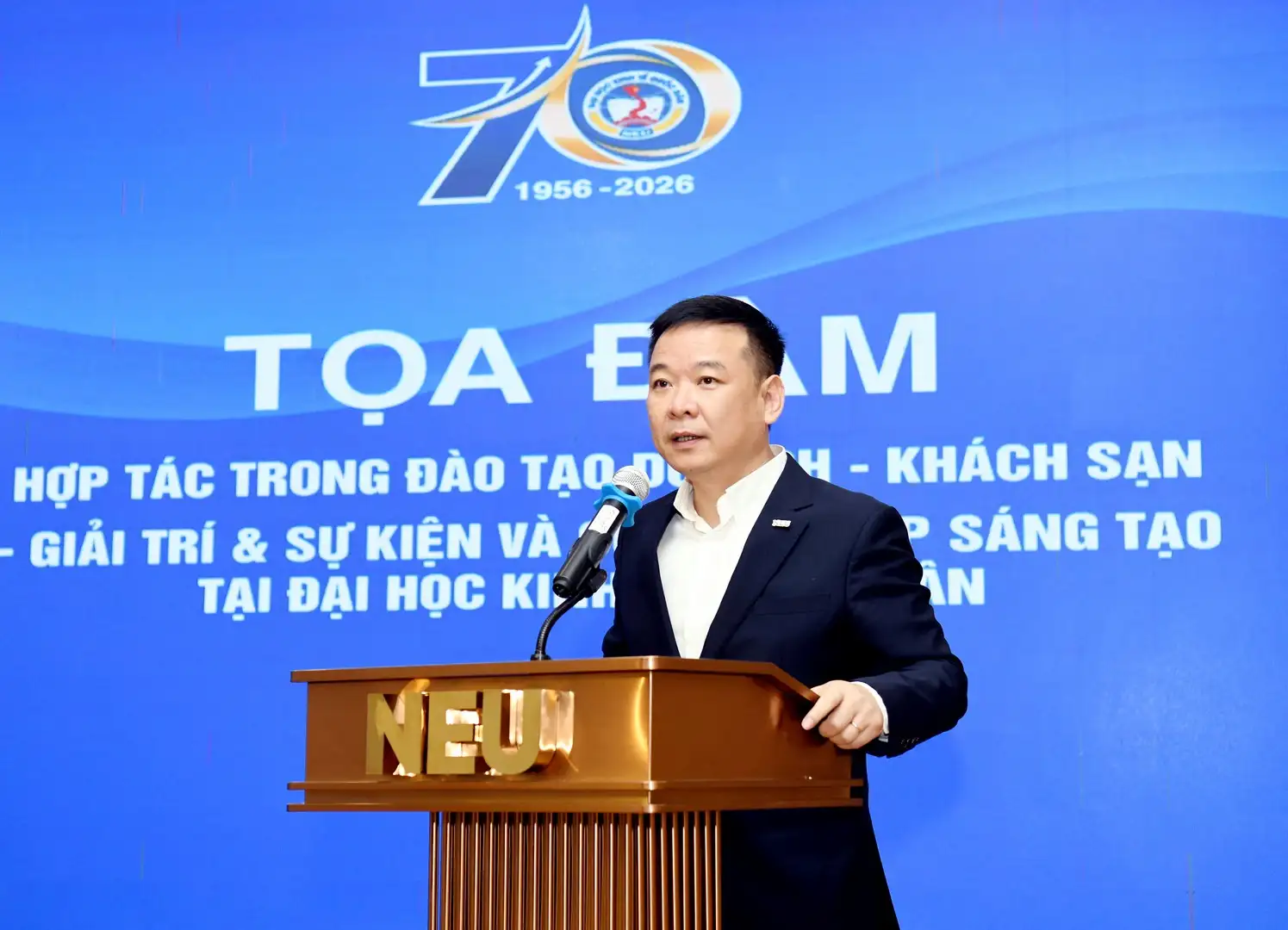
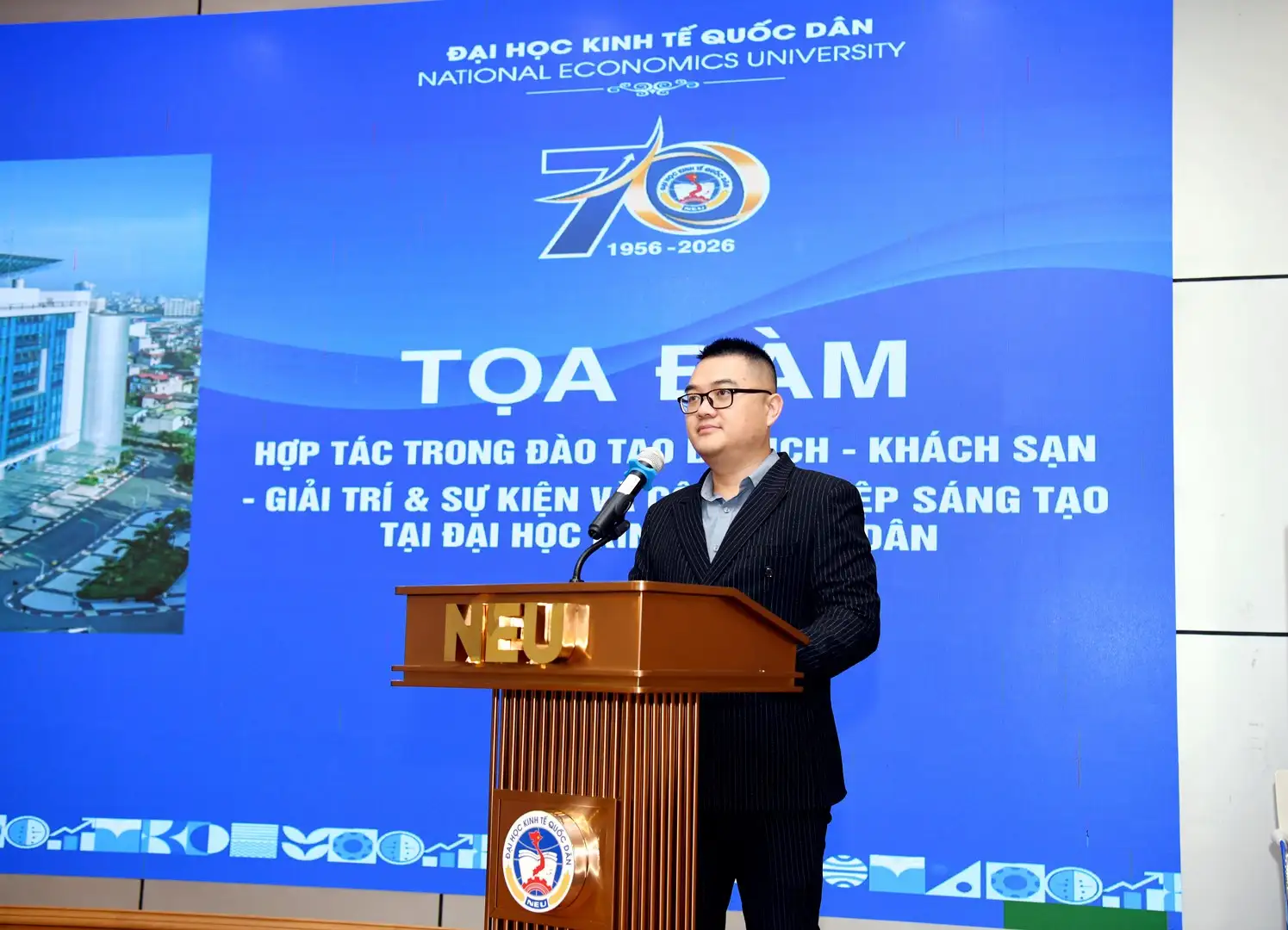
Assoc. Prof. Dr. Bui Huy Nhuong – President of National Economics University speaking
In his opening remarks at the workshop, Assoc. Prof. Dr. Bui Huy Nhuong – President of the University emphasized that tourism is a highly practical industry, requiring a close integration of theory and practical experience. Therefore, the connection between “Government – University – Enterprise” is considered a crucial solution to enhance the quality of training, thereby building a workforce that better meets the needs of the tourism industry and the labor market.
From the perspective of development trends, Prof. Dr. Pham Hong Chuong – Chairman of the Economics Professorial Council, former President of the University, noted that the interdisciplinary linkage between tourism, entertainment, events, and creative industries is becoming inevitable, stemming from the increasingly diverse needs of global tourists. Accordingly, tourists not only wish to visit but also desire to experience cultural, artistic activities, creative products, and handicrafts at destinations.
This trend demands a strong innovation from both educational institutions and enterprises in adapting, coordinating, and innovating development models, aiming to create an environment attractive enough for tourists, while also promoting job creation and socio-economic development. Additionally, the increasingly profound impact of modern technology requires stakeholders to enhance inter-sectoral connections and exchanges to improve responsiveness to the rapid changes in the tourism and entertainment market.
According to Assoc. Prof. Dr. Pham Truong Hoang – Dean, Faculty of Tourism and Hospitality, National Economics University, the field of cultural and creative industries still has significant potential for development to meet market demands.
Currently, the tourism industry serves as a bridge in the fields of entertainment, events, and creative industries, targeting tourists, especially international visitors interested in exploring Vietnamese culture, thereby generating economic value and widespread impact. Tourism enterprises play a role in “packaging” creative products to serve tourists as well as other beneficiaries.
At the seminar, experts emphasized the importance of school-enterprise collaboration in developing human resources, with increasing expectations placed on educational institutions. Both tourism and the creative economy require the ability to transform ideas, knowledge, and creativity into economic value. Unlike traditional industries, tourism and the creative industries rely on “intangible resources” such as human intellect. Therefore, students need to study and research topics related to the creative economy, experiential tourism, digital transformation, and innovation to prepare for the future.
Using the example of the “Harry Potter” franchise, which has generated significant economic value from novels to films, tourist attractions, and theme parks, a British Council expert analyzed that creative industry products based on intellectual property are the driving force attracting tourists, stimulating shopping, and creating a ripple effect on local economic value. Vietnam has numerous monuments, heritage sites, and creative products, but effective exploitation requires the transformation of knowledge from academia into practice, with the coordinated participation of multiple parties. Students must not only learn theory but also engage in real-world projects, connect with businesses, and explore creative spaces.
Mr. Nguyen Tien Dat, Vice Chairman of the Hanoi Tourism Association, suggested that besides collaboration between schools and businesses in internships and recruitment, Hanoi currently has many communes and craft villages with natural and cultural “materials” eager to develop tourism but lacking human resources and knowledge. This is the “gap” where educational institutions, along with faculty members and students, can participate. Additionally, the Faculty of Tourism and Hospitality and the Hanoi Tourism Association should establish a regular and continuous exchange mechanism to promote the development of tourism human resources in the capital, especially as Hanoi joined the UNESCO Creative Cities Network in 2019.
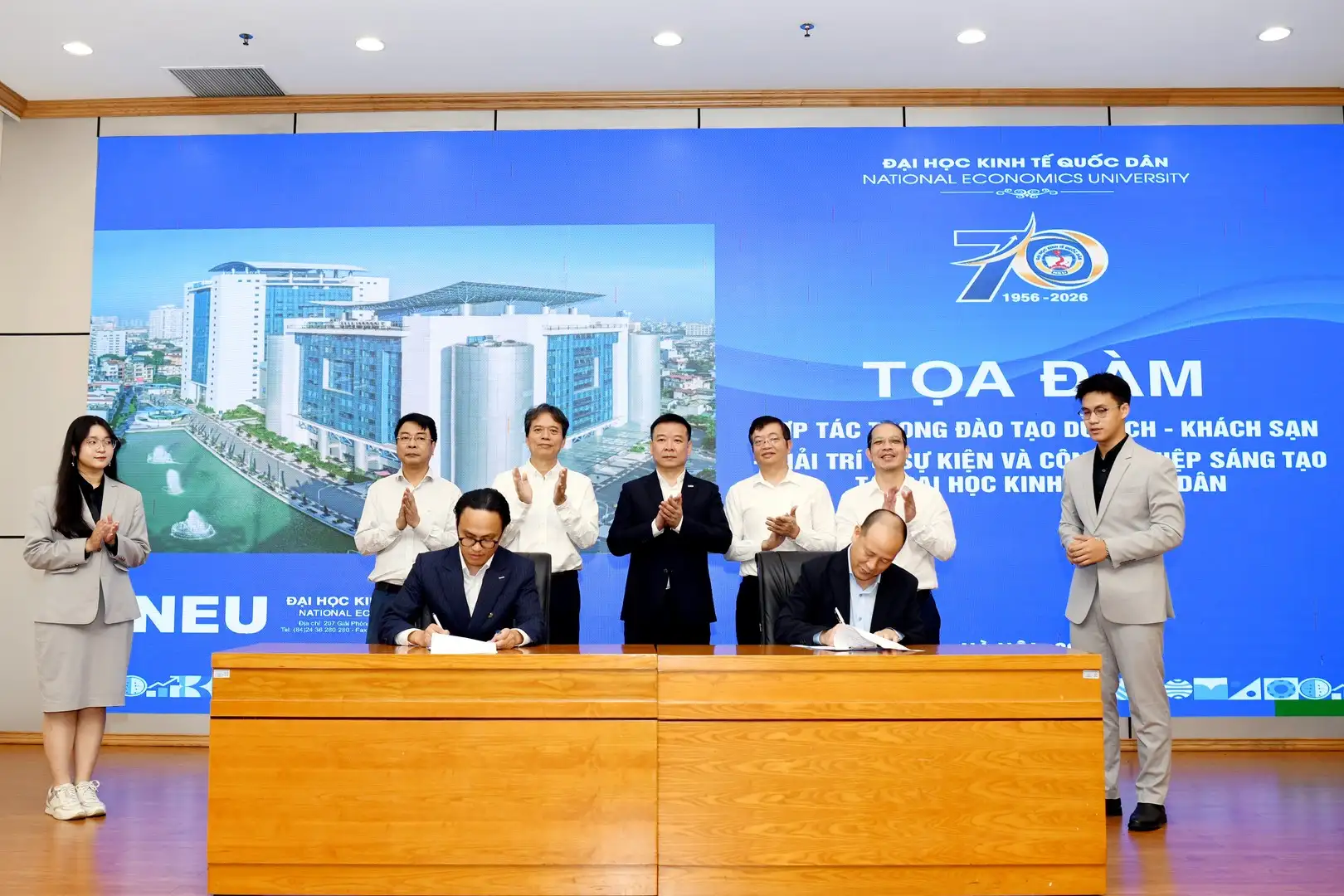
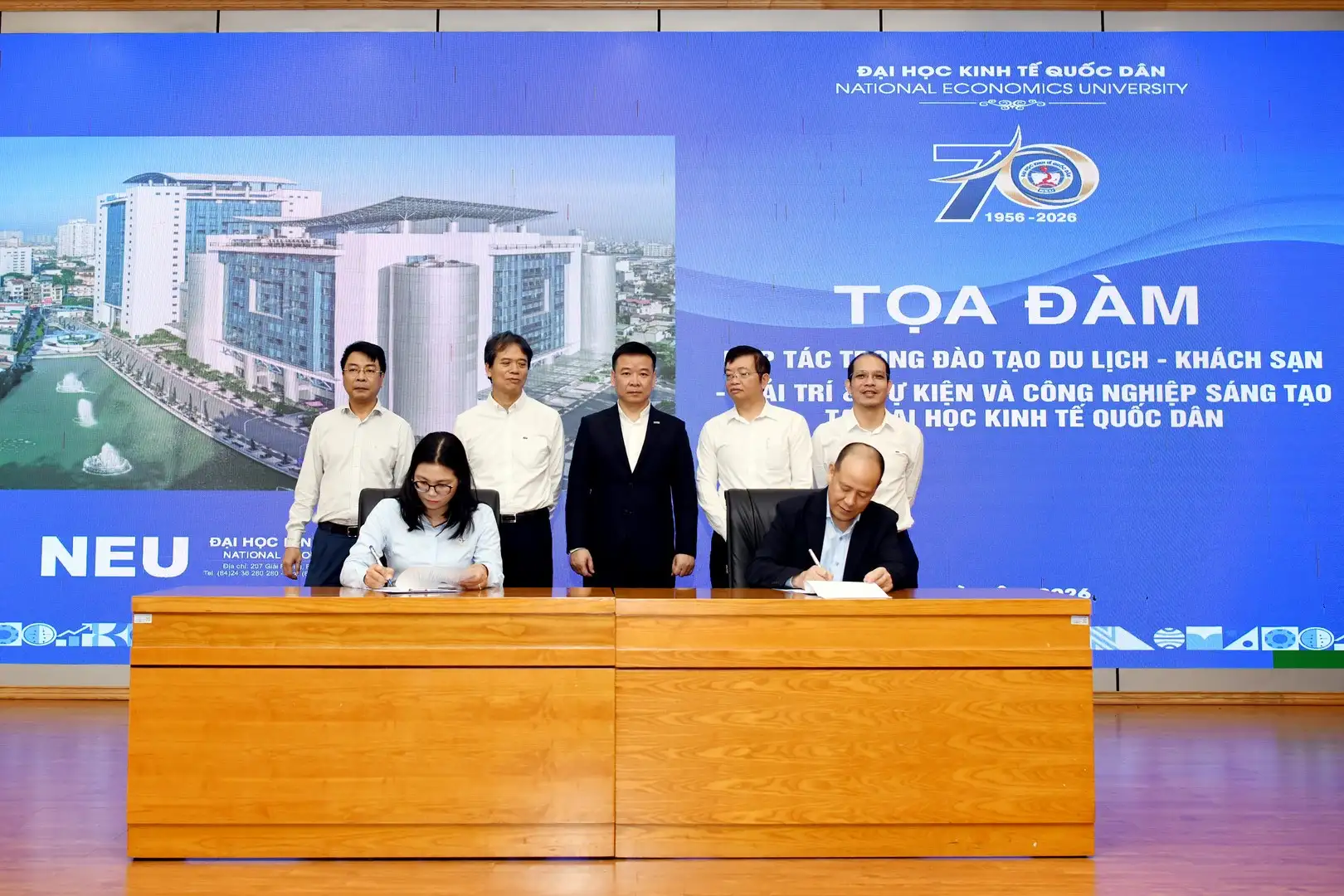
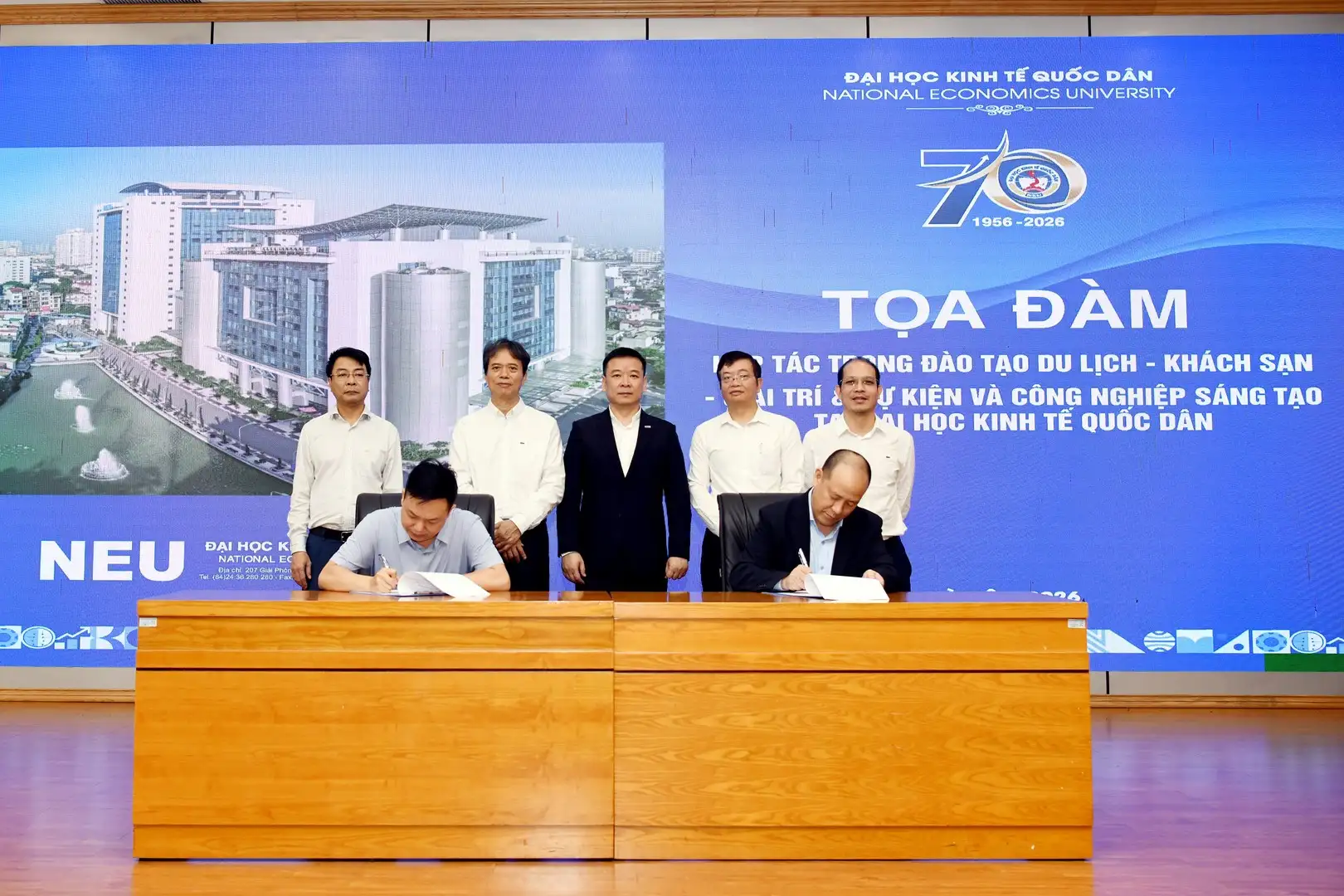
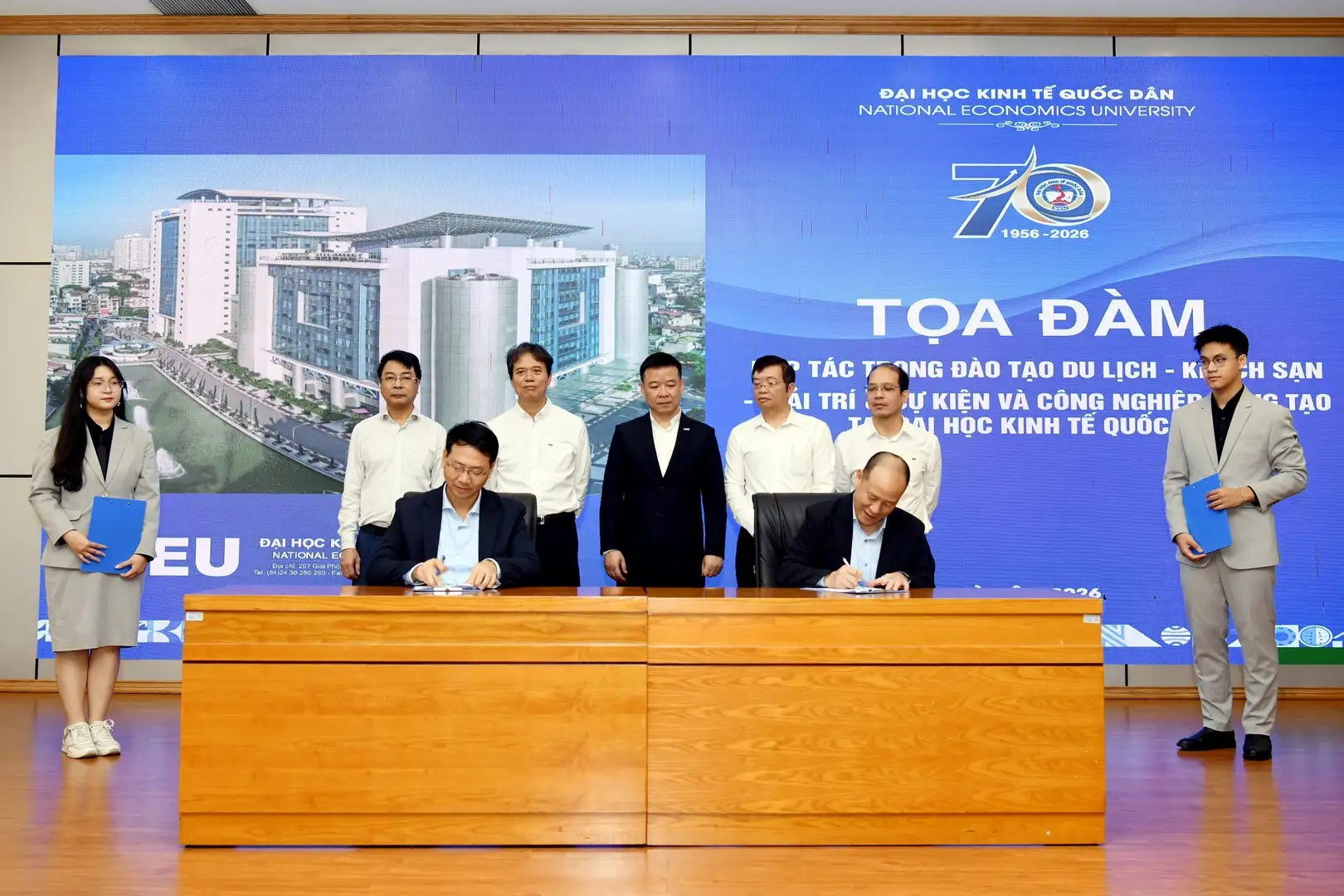
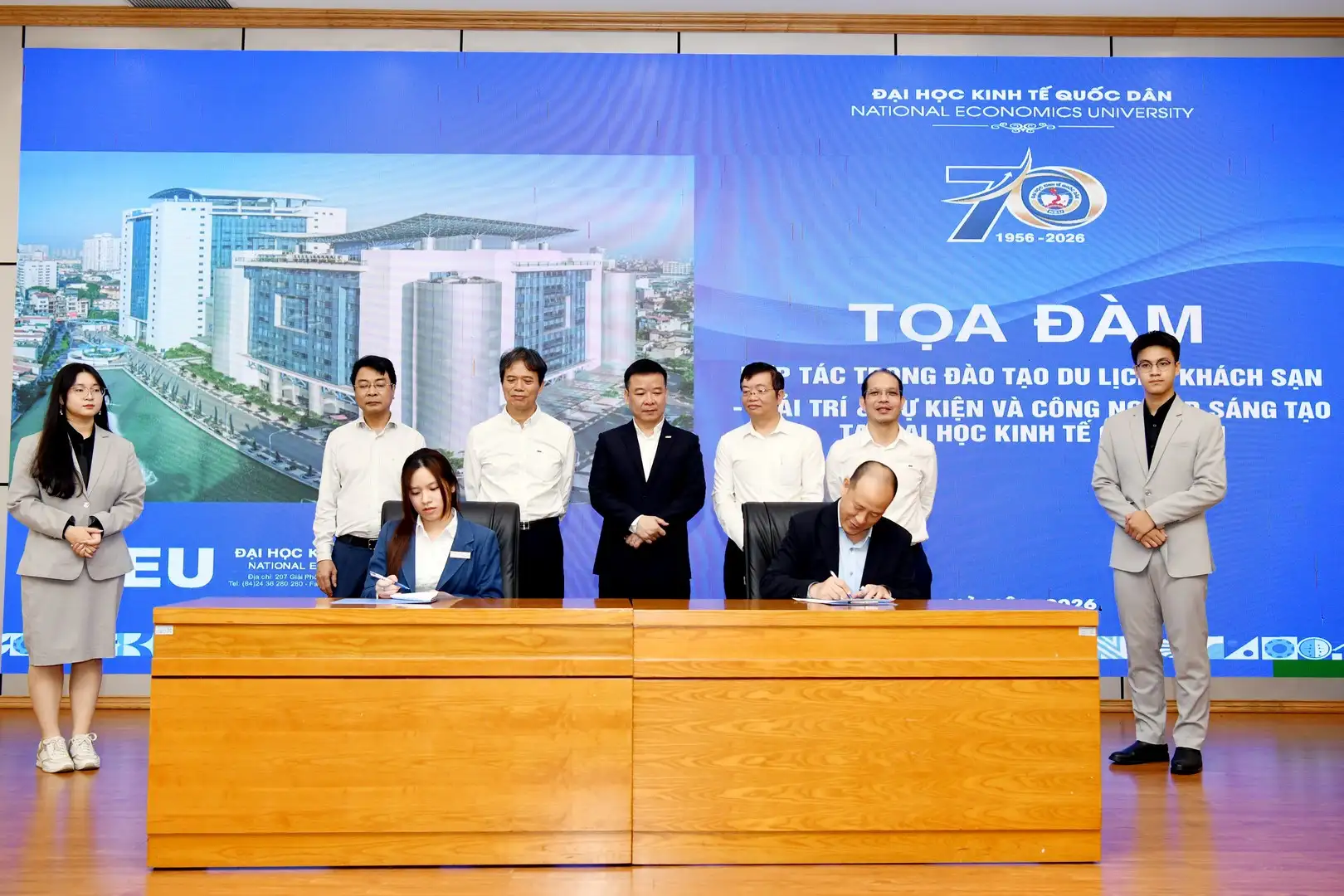
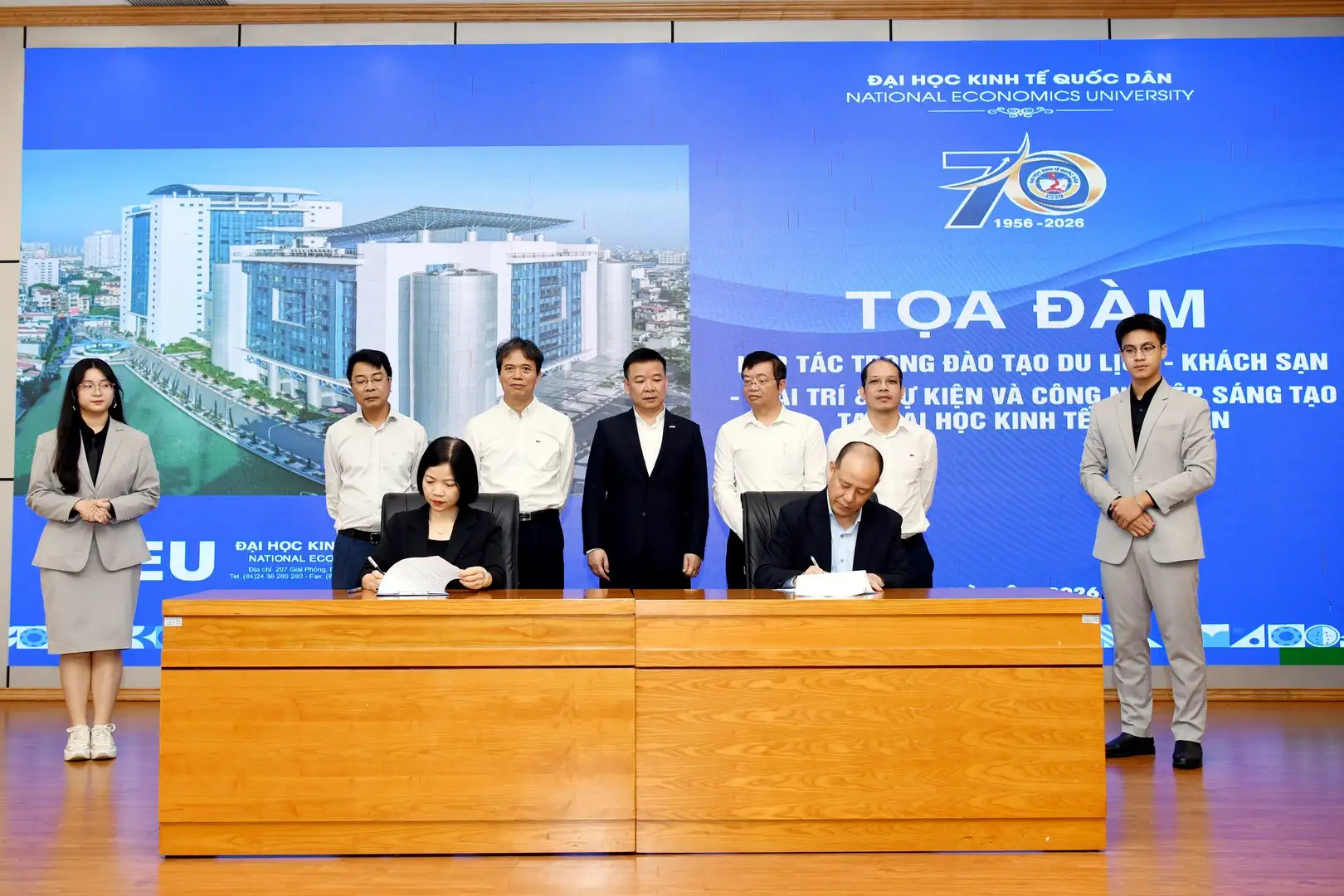
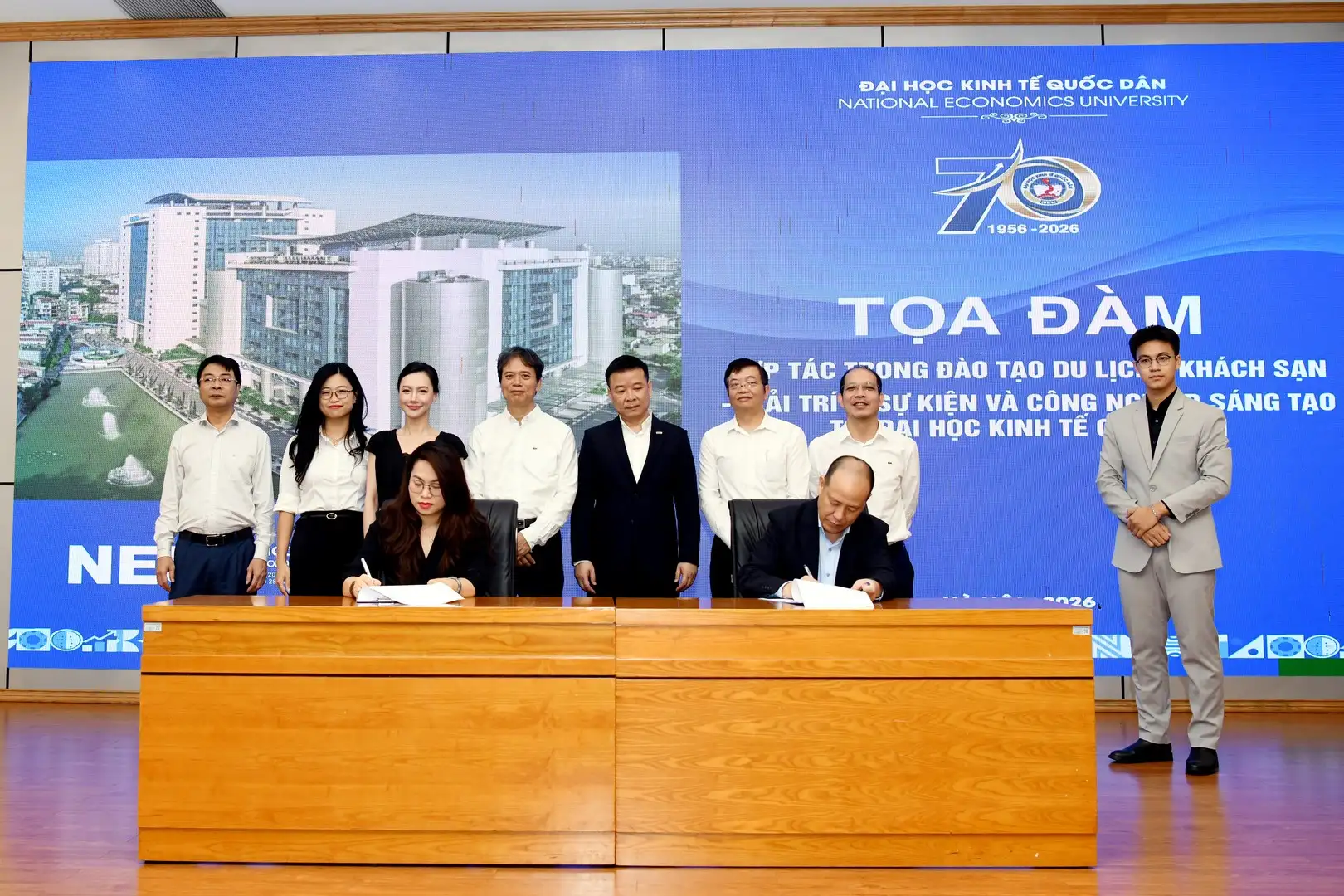
University leaders witness the signing of the memorandum of understanding between the Faculty of Tourism and Hospitality and partners
At the program, the Faculty of Tourism and Hospitality, National Economics University, signed a memorandum of understanding with partners in the fields of tourism, hospitality, entertainment, events, and creative industries, paving a new path in linking education with practice. The agreement focuses on developing academic programs aligned with market needs, enhancing internships and professional experiences, while also promoting research and knowledge transfer, contributing to improving the quality of human resources in the service and creative industries.
Some images from the program:
Article and photos: Communications Department