Promoting the Research of the “Energy Services” Model in the Journey Towards Net Zero 2050
19/09/2026 2026-10-20 9:50Promoting the Research of the “Energy Services” Model in the Journey Towards Net Zero 2050
Promoting the Research of the “Energy Services” Model in the Journey Towards Net Zero 2050
On September 18, 2026, at the National Economics University, the Faculty of Economics hosted the scientific conference “Business Model ‘Energy as a Service’ (EaaS) in Vietnam’s Energy Sector in the Context of Achieving the Net Zero 2050 Goal.” The conference focused on clarifying the necessary conditions for the gradual implementation of the Energy Services model in practice, from finance, market, customers, enterprises to technology, data, and policy.
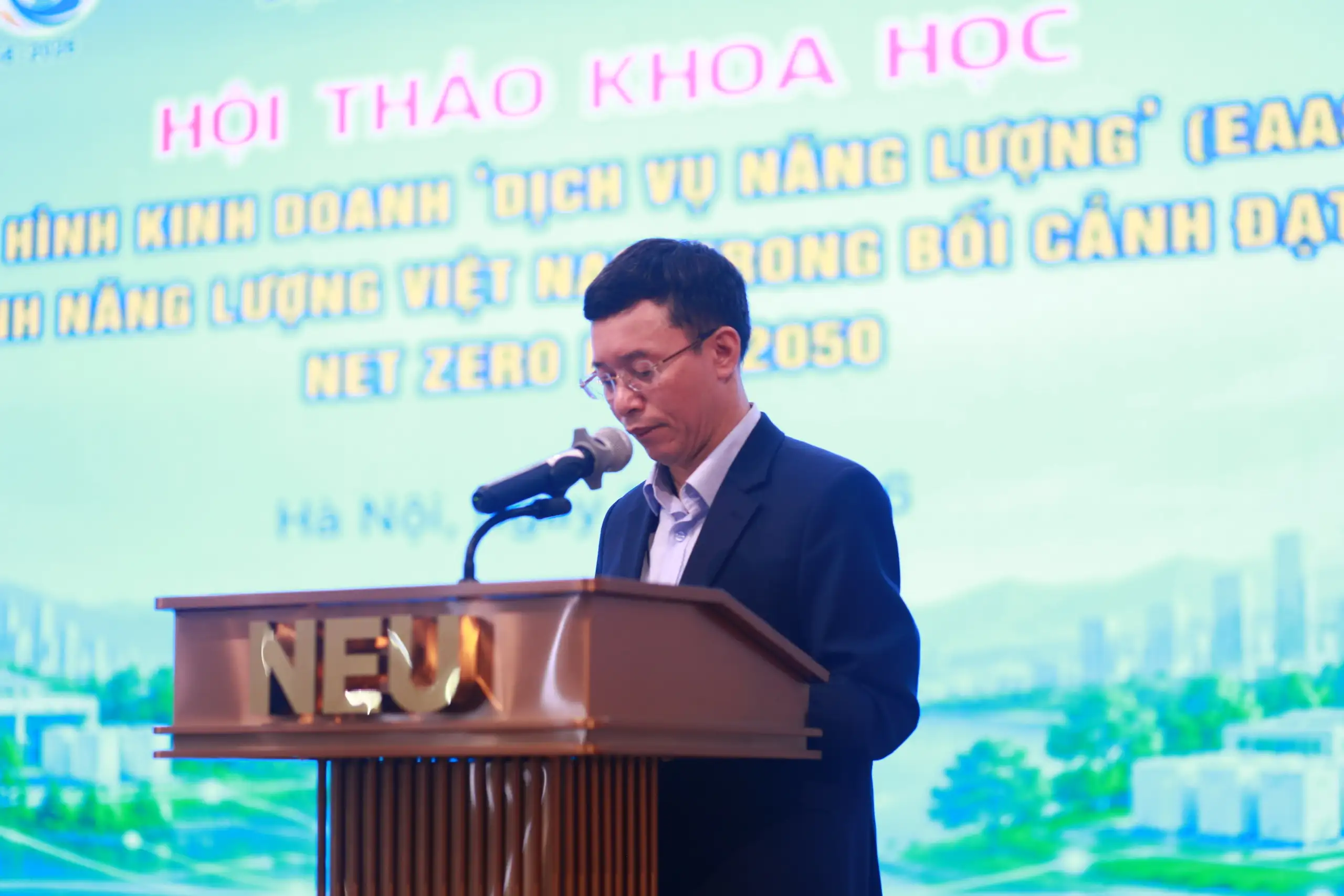
Prof. Dr. Le Quoc Hoi – Vice Rector of the School of Economics & Public Management delivered the opening remarks at the Conference
In his opening remarks at the Conference, Prof. Dr. Le Quoc Hoi – Vice Rector of the School of Economics & Public Management stated that energy transition, green growth, and the goal of net-zero emissions by 2050 are becoming important orientations in Vietnam’s development process. This is no longer just an issue for the energy or technology sectors, but directly relates to growth models, investment, markets, business operations, and consumer behavior.
In this context, Energy as a Service (EaaS) is seen as a noteworthy approach, shifting from primarily supplying energy to providing energy services and solutions. Accordingly, energy efficiency, technology, data, and customer demand are increasingly playing important roles. However, for EaaS to move from concept to practice requires multiple simultaneous conditions regarding technology, finance, institutions, market, enterprise capabilities, and customer readiness.
Prof. Dr. Le Quoc Hoi also emphasized the role of economic approaches in the energy transition process. Besides technological innovation, this process raises issues about markets, investment, business and consumer behavior, resource allocation, and policy design. These are aspects where economics can provide analytical tools, contributing to bringing energy solutions from technical feasibility to practical viability.
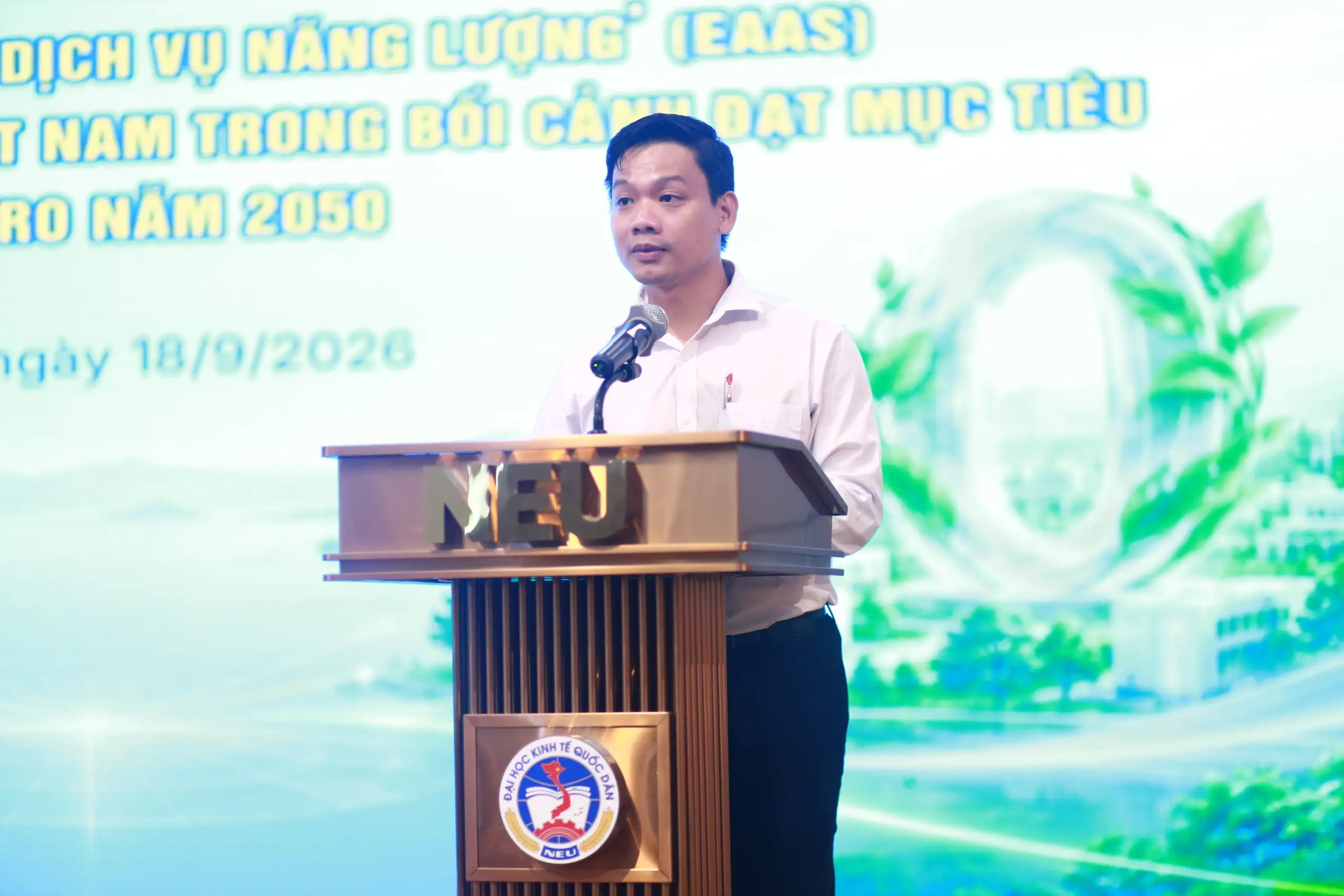
Assoc. Prof. Dr. Le Thanh Ha – Center for Policy Analysis and Simulation, School of Economics and Public Management, National Economics University delivered the keynote at the Conference
In the keynote address, Assoc. Prof. Dr. Le Thanh Ha – Center for Policy Analysis and Simulation, School of Economics and Public Management, National Economics University elaborated on the EaaS model approach. Traditionally, customers purchase electricity, equipment, and bear most of the investment, operational costs, and related risks. With EaaS, the focus gradually shifts from providing an energy product to offering a service or solution tailored to the specific needs of customers. Services may include energy-saving solutions, electricity demand management, equipment optimization, or the application of data and technology to enhance energy efficiency.
According to Assoc. Prof. Dr. Le Thanh Ha, the potential of a new model does not equate to immediate practical implementation. For Vietnam, especially in the electricity sector, many issues need further clarification such as market readiness, service providers, capital sources, customer demand and participation capability, the role of technology and data, as well as institutional, organizational, and execution capacity conditions.
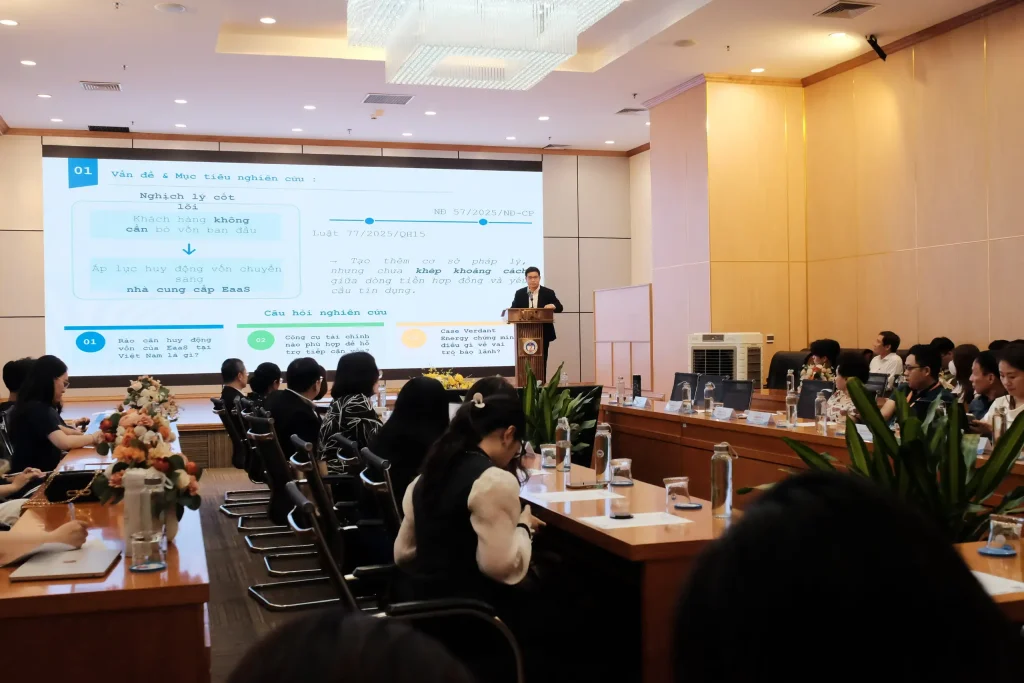
Conference Overview
Based on this premise, the Conference program is designed into two closely connected sessions. The first session focuses on the Energy-as-a-Service (EaaS) model, the conditions for its implementation, and green finance issues, thereby addressing foundational issues related to finance, resource mobilization, and the necessary conditions for forming EaaS. The second session delves into empirical research on the Energy-as-a-Service model, examining more specifically issues from the perspectives of customers, businesses, and power companies.
The presentations at the Conference approach EaaS from various angles, including financial solutions and capital mobilization for the Energy-as-a-Service model in Vietnam aimed at national energy security and the Net Zero 2050 target; the conditions for implementing EaaS in the electricity sector; household classification in fair energy transition; backup power and business resilience to electricity supply disruptions; and the use of Machine Learning to predict electricity load when applying the Energy-as-a-Service model.
Notably, empirical studies contribute to concretizing the conditions for implementing EaaS by identifying the characteristics of customer groups, business resilience, and data exploitation for electricity demand forecasting. Thus, EaaS is placed in an overall relationship between the market, finance, customers, businesses, technology, data, and policy, rather than being considered as an isolated model.
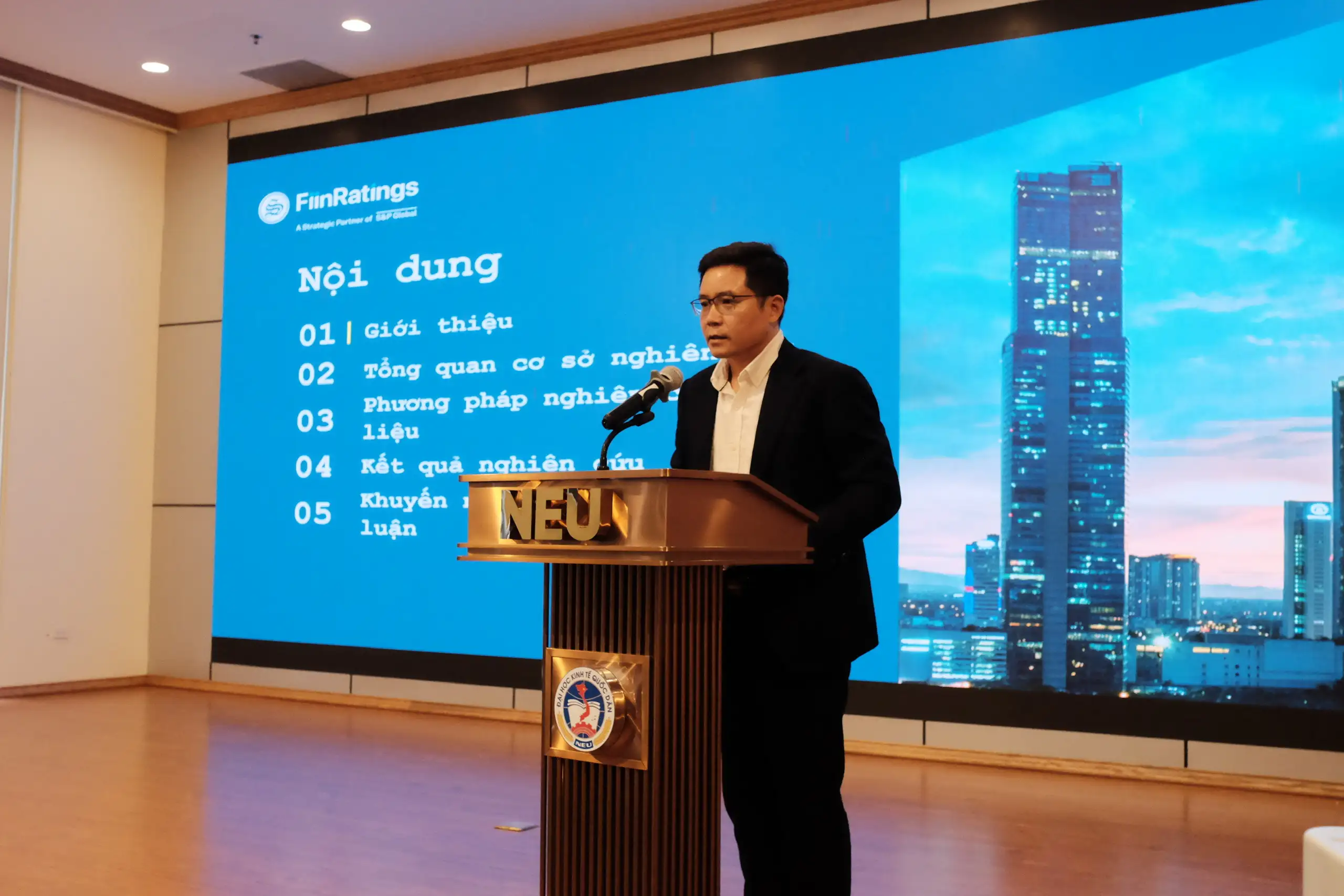
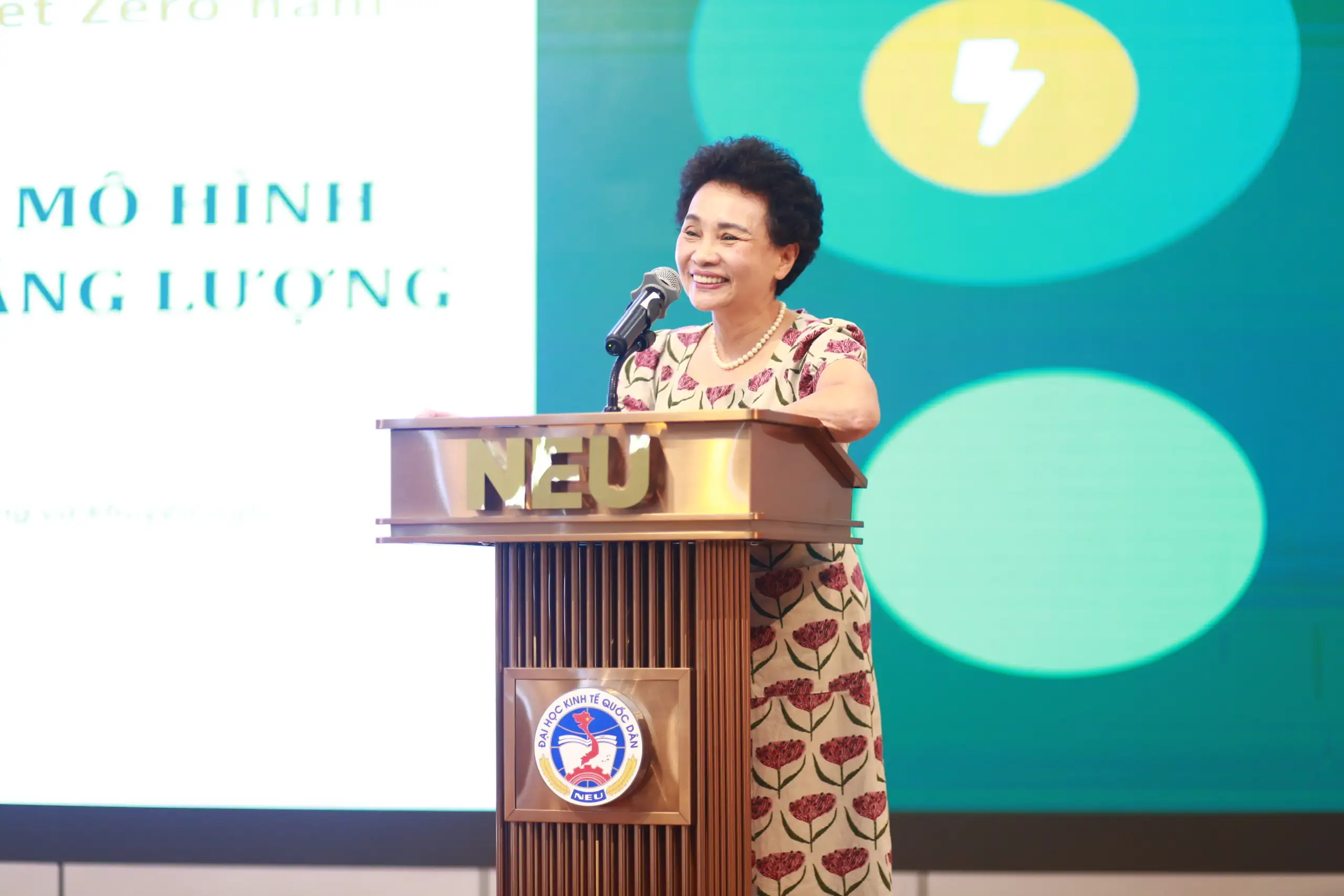
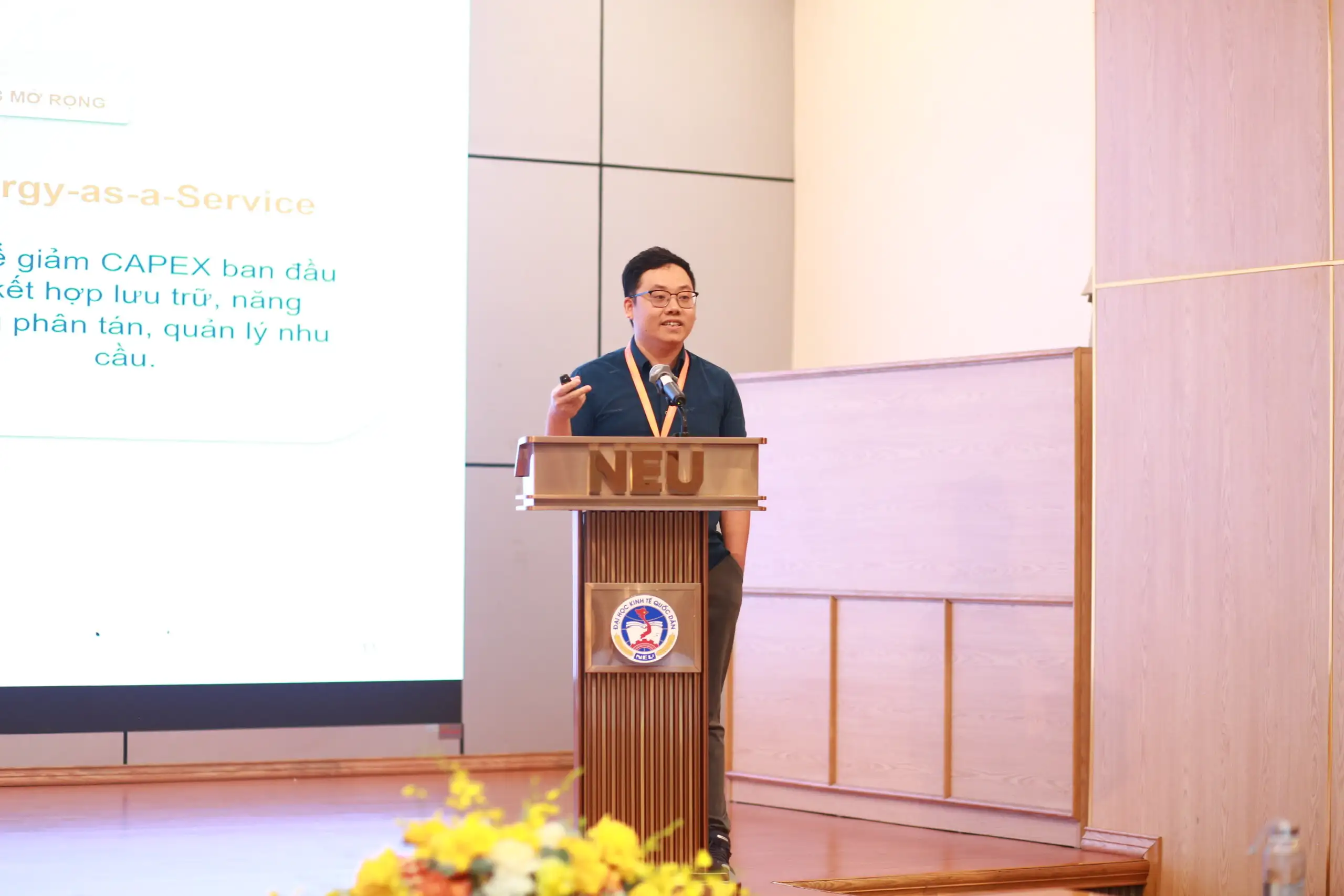
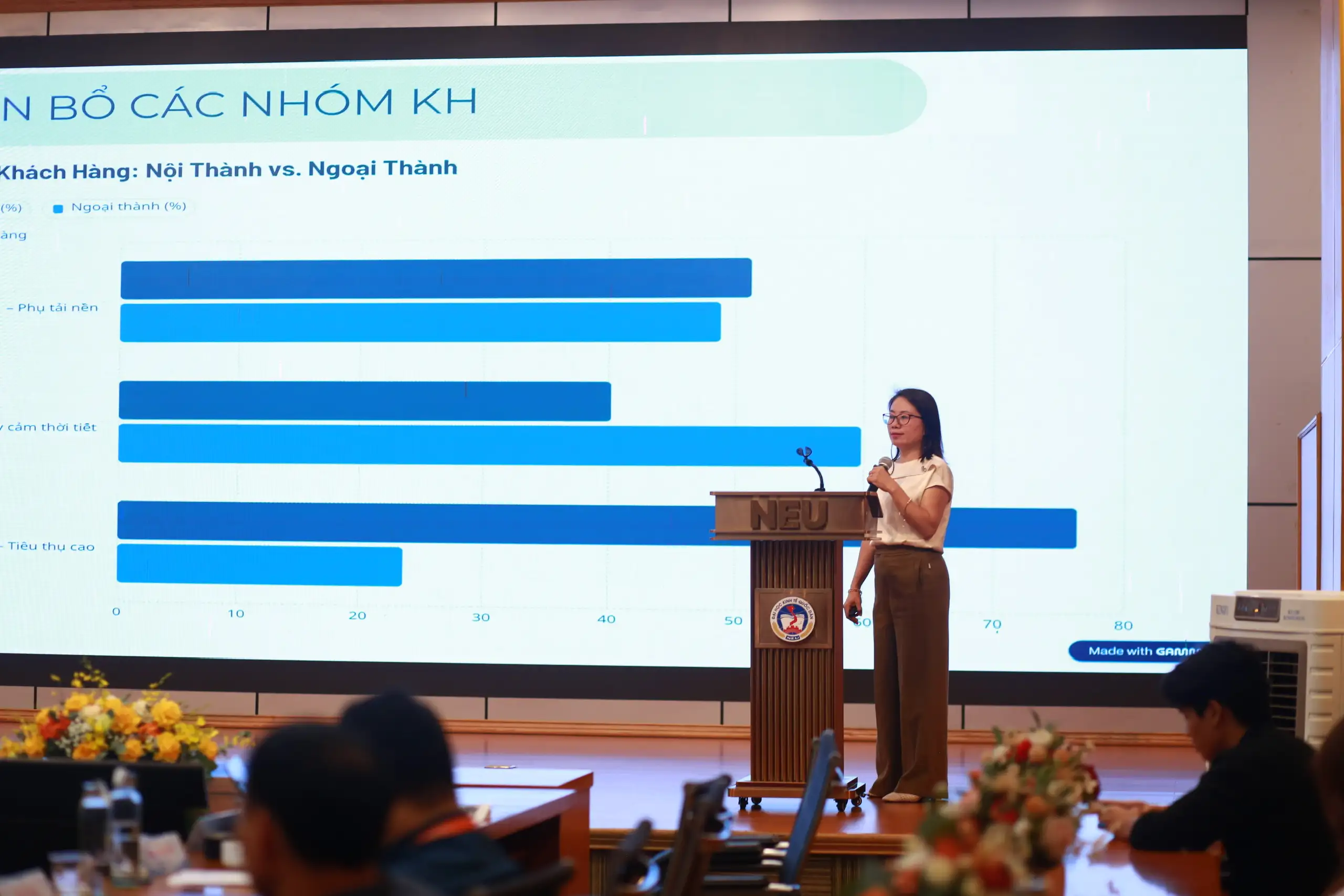
Speakers Presenting at the Conference
Approaching the Energy-as-a-Service model from the perspective of finance and capital mobilization, Mr. Nguyen Quang Thuan – Executive Chairman of FiinGroup and FiinRatings, believes that one of the significant challenges for implementing EaaS in Vietnam lies in accessing capital. EaaS projects are often small-scale, dispersed, with limited collateral and higher risk levels, making capital mobilization through traditional methods challenging.
To address this bottleneck, Mr. Nguyen Quang Thuan proposes diversifying financial tools and products suitable for the characteristics of the EaaS model; simultaneously enhancing the role of credit enhancement mechanisms, bond guarantees, and blended finance. Accordingly, the coordination between policy-making agencies, development financial institutions, and EaaS enterprises will be crucial in gradually unblocking capital flows, creating conditions for the model to be implemented and expanded in practice.
The Conference also creates a space for connecting research and practice with the participation of enterprises in the electricity sector, including the Vietnam Electricity Group (EVN), along with consulting, financial, and technology companies, and scientists from various universities. According to Prof. Dr. Le Quoc Hoi, the connection between universities, businesses, and experts is meaningful in bringing research results into dialogue with practical issues, while also opening up new research collaboration directions.
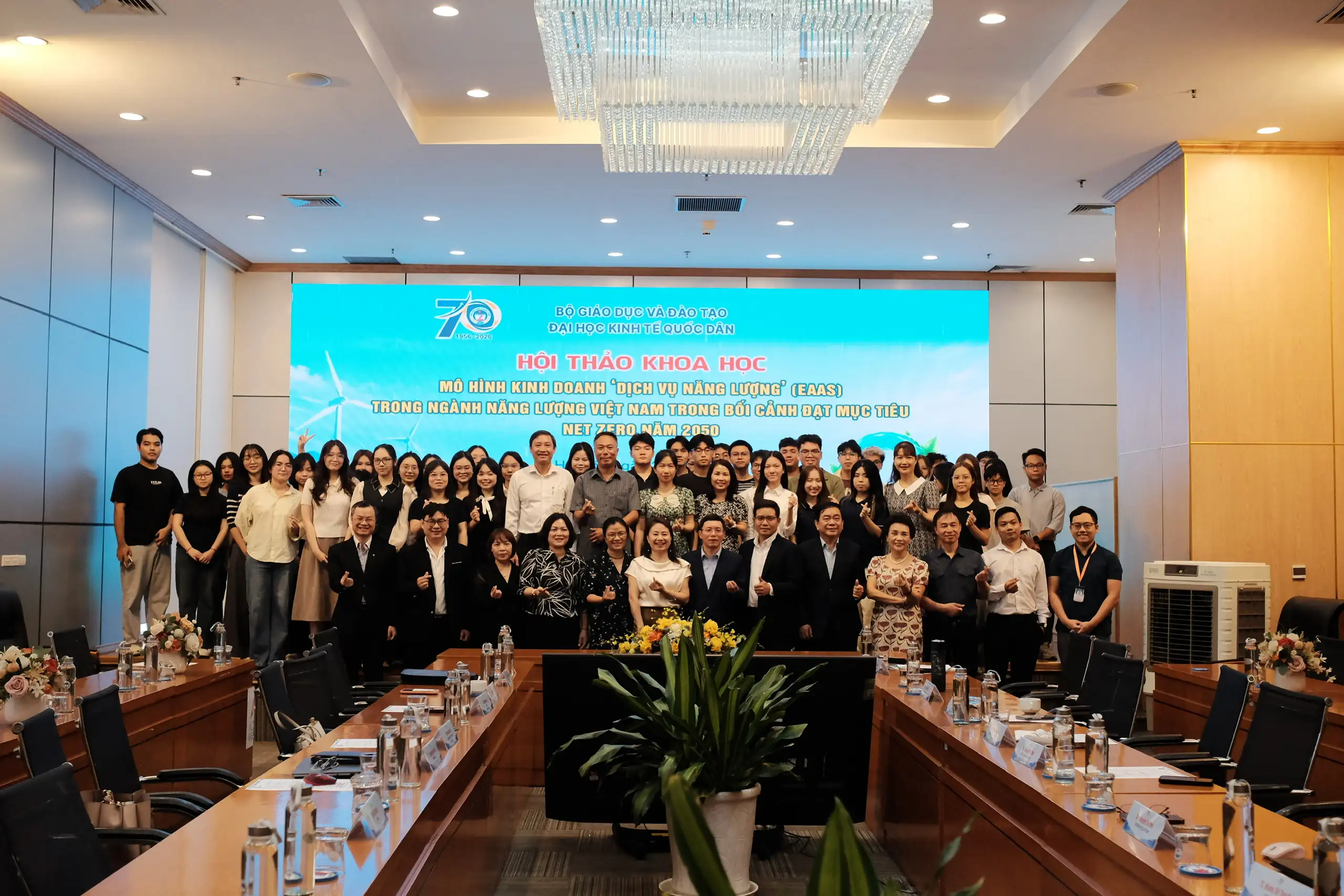
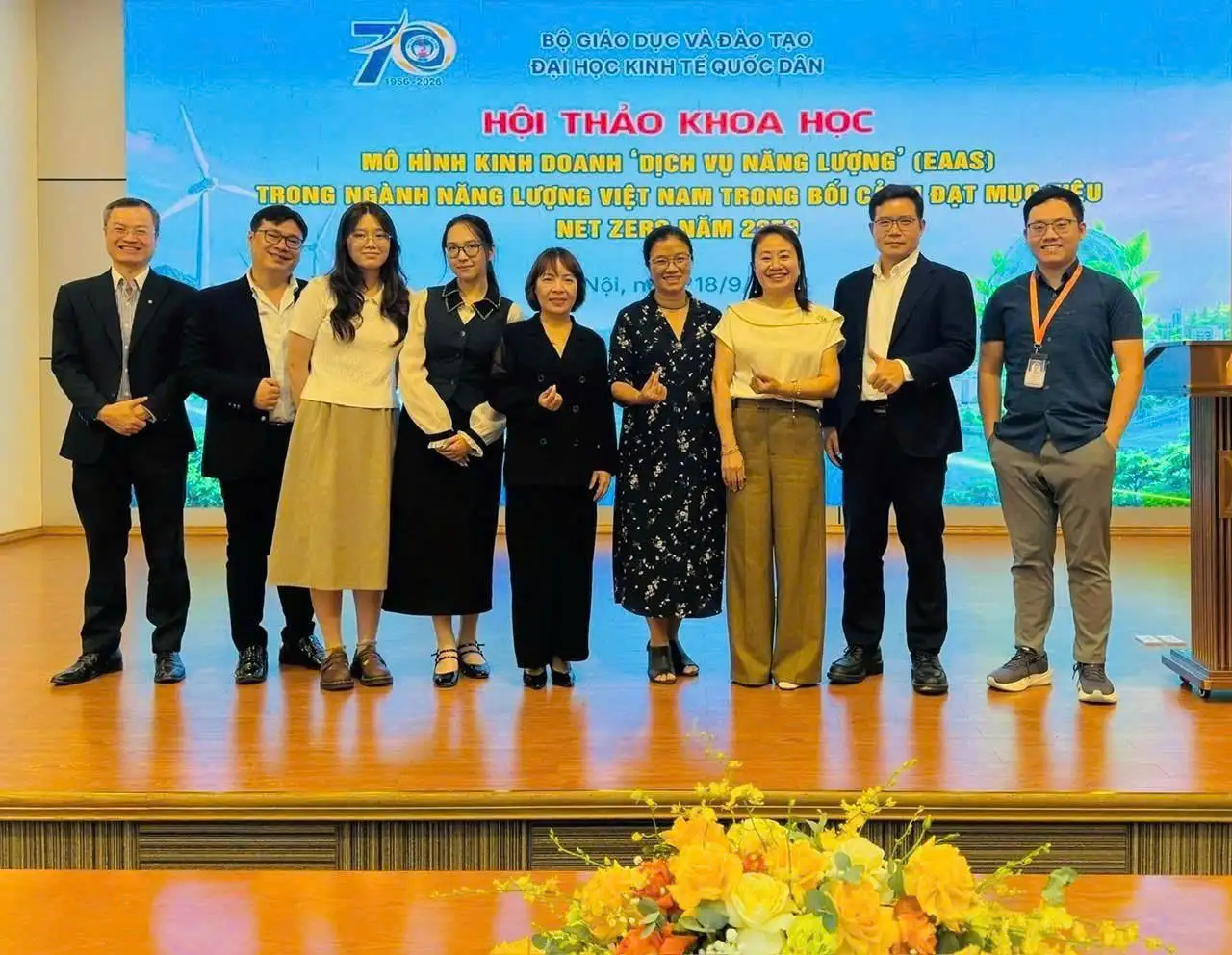
Delegates Attending the Conference Taking a Commemorative Photo
For the National Economics University, research on energy transition, green growth, business model innovation, and data application aligns with the orientation of promoting interdisciplinary research, enhancing research connected with practice, and expanding connections with businesses and society. The exchange results at the Conference are expected to provide additional evidence, perspectives, and suggestions for researching the conditions for implementing EaaS in Vietnam, while also laying the groundwork for the research team to continue refining the content of the project.
Article and Photos: Faculty of Economics and Communications Department