
Developing Regenerative Tourism in Vietnam: From Mindset Change to Policy and Practical Implications
25/09/2026 2026-10-20 9:49Developing Regenerative Tourism in Vietnam: From Mindset Change to Policy and Practical Implications
Developing Regenerative Tourism in Vietnam: From Mindset Change to Policy and Practical Implications
On the afternoon of September 24, 2026, the National Economics University hosted the national scientific conference “Developing Regenerative Tourism in Vietnam,” as part of the ministerial-level project “Solutions to Promote the Development of Regenerative Tourism in Vietnam,” led by the National Economics University. The conference provided a forum for scientists, experts, managers, and business representatives to discuss approaches, policies, destination management, and necessary conditions to promote regenerative tourism suitable for the context of Vietnam.
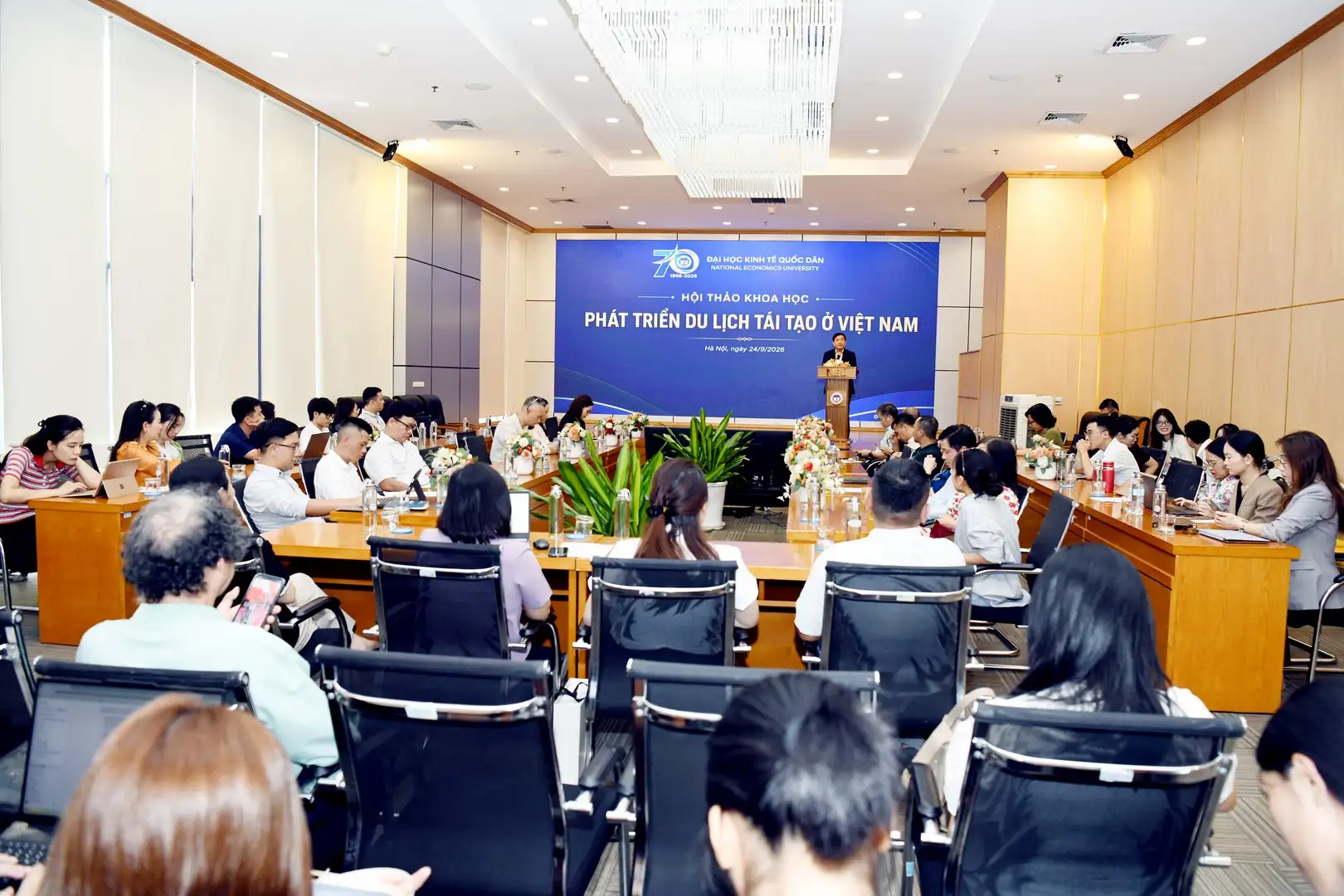
Conference Overview
Attending the conference, from outside the university, were: Assoc. Prof. Dr. Tran Thi Minh Hoa – Rector of the School of Tourism, Phenika University; Assoc. Prof. Dr. Nguyen Viet Thai – Head of the Faculty of Hotel and Tourism, University of Commerce; Dr. Dong Xuan Dam – Director of the Institute of International Training, Phenika University; Dr. Le Ngoc Tuan – Deputy Head of the Faculty of Tourism and Hospitality, School of Economics, Phenika University; Dr. Pham Manh Ha – CEO of Luxgroup; Mr. Nguyen Duc Vuong – Founder and CEO of Tham Ma Retreat; Mr. Tran Dinh Thuong – CEO of Augroup; Ms. Pham Thi Thanh Thuy – Deputy General Director of Treviet Tours.
From the National Economics University, attendees included: Prof. Dr. Tran Tho Dat – Chairman of the Scientific and Training Council; Assoc. Prof. Dr. Pham Truong Hoang – Head of the Faculty of Tourism & Hospitality; along with representatives from various Schools, Departments, Faculties, Institutes, and Centers under and directly affiliated with the University; as well as scientists, experts, esteemed faculty members, and all distinguished delegates participating in the conference.
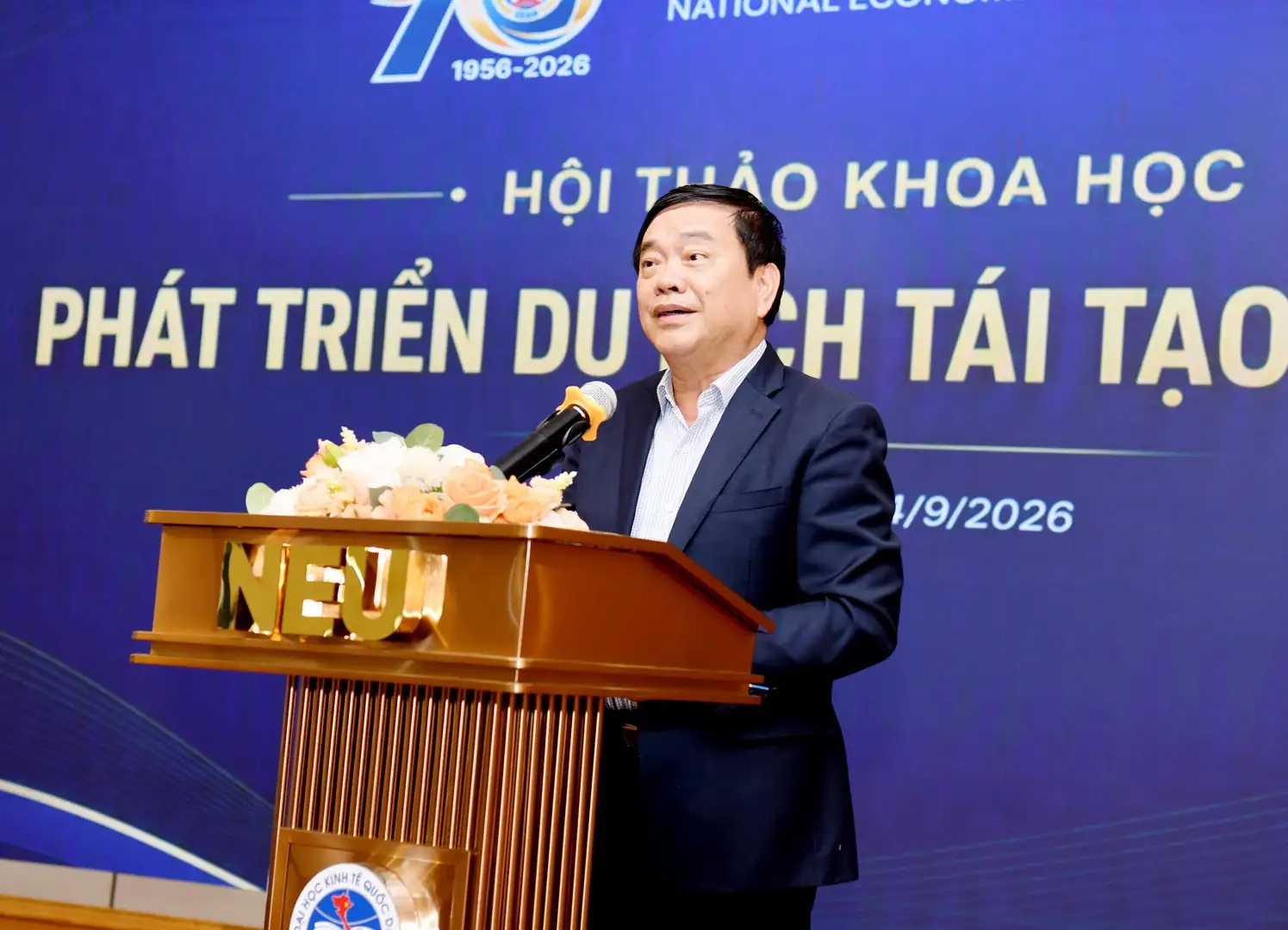
Prof. Dr. Tran Tho Dat – Chairman of the Scientific and Training Council, National Economics University, delivers a speech
In his opening remarks at the conference, Prof. Dr. Tran Tho Dat – Chairman of the Scientific and Training Council, National Economics University, addressed the issue of the quality of tourism development in the new context. According to Prof. Dr. Tran Tho Dat, besides economic values, employment, and livelihoods, tourism is also associated with cultural preservation, natural resource conservation, national image promotion, and enhanced connectivity. However, the development of the industry also requires a deeper examination of how value is created and distributed, particularly what tourism leaves behind for the community and destinations.
From this perspective, Prof. Dr. Tran Tho Dat suggested that, in addition to questions about growth scale, attention should be paid to the value tourism creates, how it creates value, and the foundation today’s development leaves for the future. This requirement becomes more pronounced as Vietnam’s tourism industry faces demands for a shift in mindset and approach, moving from focusing on quantity to quality, added value, and competitiveness; developing towards high quality, smart, green, creative, and culturally rich tourism.
In this context, regenerative tourism is seen as an approach gaining interest from both researchers and practitioners. According to the opening remarks, regenerative tourism is not a new type or product of tourism, but rather poses the need to reassess the relationship between tourism and the places where tourism activities occur. While sustainable development thinking focuses on minimizing negative impacts, responsibly using resources, and ensuring benefits for future generations, the regenerative approach goes further by questioning whether tourism can positively contribute to the recovery, regeneration, and enrichment of the destination’s values.
Prof. Dr. Tran Tho Dat also noted that regenerative tourism should be approached with a scientific mindset, rather than viewing it as a one-size-fits-all model applicable to every destination. It is essential to clarify the significance of this approach in the context of Vietnam, the necessary prerequisites for development, as well as the potential limitations and challenges.
As an educational and research institution in the fields of economics, management, and development, the National Economics University approaches tourism issues from an interdisciplinary perspective. Behind the development of a destination lies not only tourists and revenue but also the community, culture, nature, environment, livelihoods, businesses, government, technology, and many other stakeholders. Therefore, the University hopes the conference will become a space that bridges science and practice, connecting researchers with those directly involved in the tourism development process.
From Sustainable Tourism to Regenerative Thinking
The specialized sessions of the conference approach regenerative tourism from various perspectives. MSc. Hoang Ngoc Quynh from the Vietnam National Administration of Tourism presented the paper “From Sustainable Tourism to Regenerative Tourism: Shifting Mindsets, Awareness, and Policy Frameworks for Tourism Development in Vietnam,” addressing the transformation in mindset, awareness, and policy when approaching the new development model.
Following that, Nguyen Ngoc Bich, Chairman of Rustic Hospitality Group and Sustainable Tourism Development Expert at ST4SD, presented on the topic “Regenerative Destination Management: From Community Projects to Development Models for Rural Vietnam.” The content brings the discussion of regenerative tourism to the level of destinations and communities, linked to the development narrative in rural Vietnam.
From a research perspective, Assoc. Prof. Dr. Pham Truong Hoang, Head of the Faculty of Tourism and Hospitality at the National Economics University, presented the paper “From Sustainable Tourism to Regenerative Tourism: Issues for Vietnam,” further expanding the discussion on the issues that need to be identified when placing the regenerative tourism approach in the practical conditions of Vietnam.
Following the specialized presentations, the conference continued with the discussion session “Rethinking Tourism Development: Towards Regeneration.” Experts and scientists focused on exchanging ideas about development thinking, destination management, the role of the community, and the necessary conditions to promote regenerative tourism in Vietnam. The subsequent open discussion session provided additional space for delegates, experts, and speakers to directly exchange questions and perspectives.
Throughout the conference, questions were raised about the true meaning of regenerative tourism in the context of Vietnam; existing practices that could become the foundation for the transition; barriers for localities, businesses, and communities; as well as the necessary changes in mindset, leadership, and destination management. Instead of immediately seeking a common model, discussions aimed at gradually identifying suitable pathways for Vietnam’s conditions and characteristics through research, dialogue, and collaboration among stakeholders.
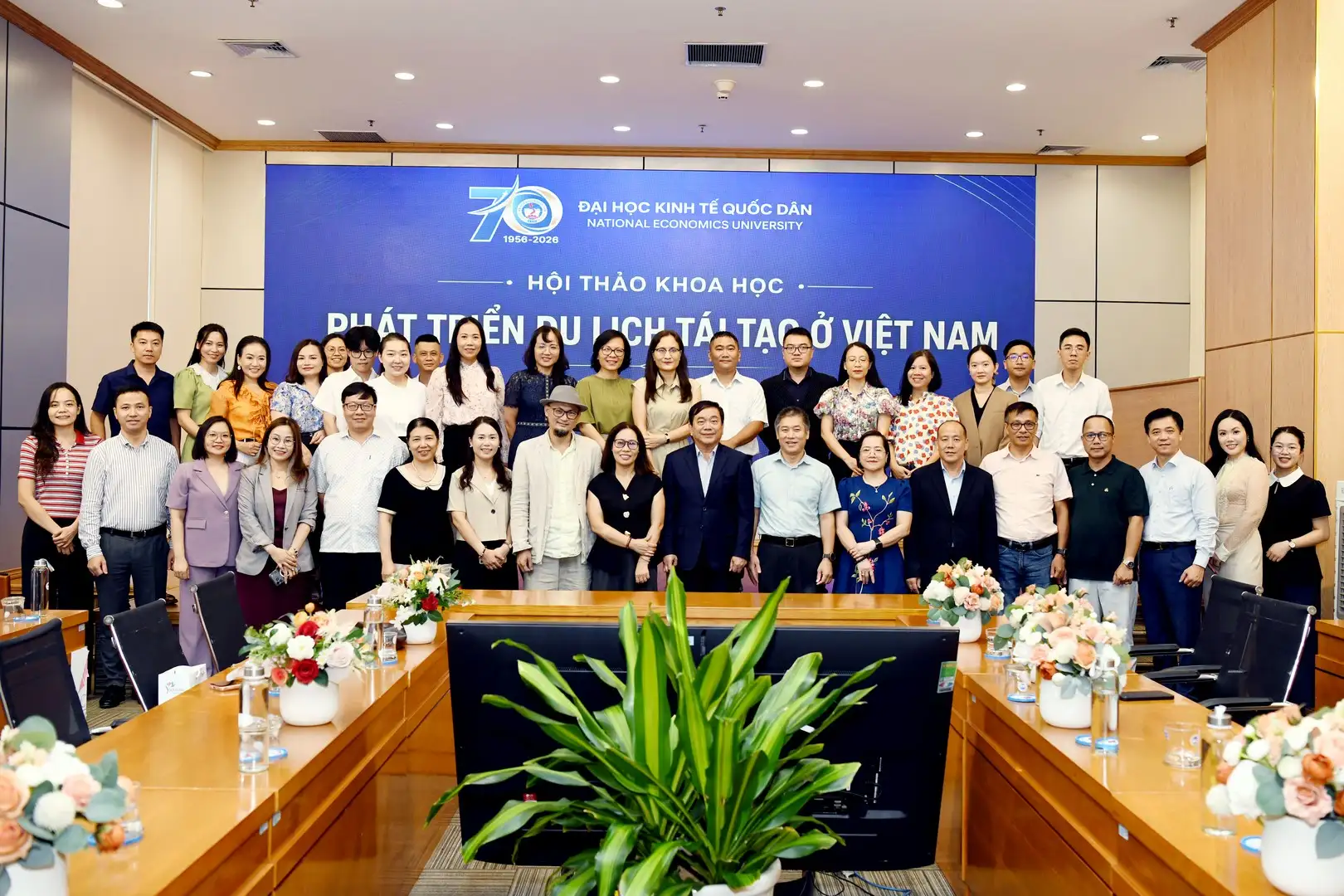
Delegates attending the conference take a commemorative photo
The conference contributed to clarifying the approach to regenerative tourism, from shifting mindsets and policies to destination management, community development, and the issues posed for Vietnam. Exchanges from researchers, managers, and practitioners also provided additional perspectives to support research, policy refinement, and the search for suitable tourism development methods in the new phase.
Article and photos: Communications Department



