
Development of Digital Economy and Digital Society in the New Context
16/09/2026 2026-10-20 9:56Development of Digital Economy and Digital Society in the New Context
Development of Digital Economy and Digital Society in the New Context
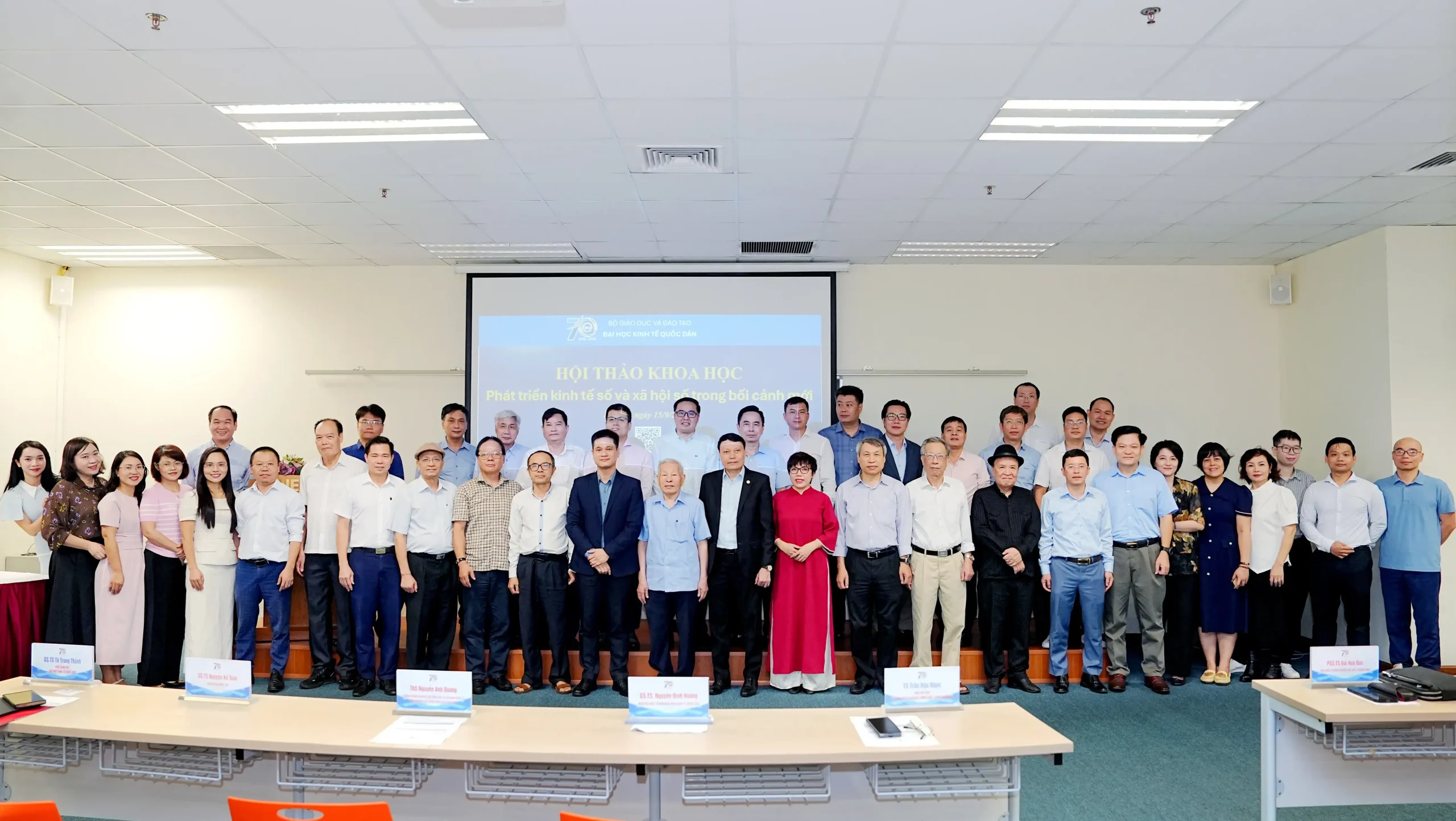
On September 15, 2026, the National Economics University hosted the scientific conference “Development of Digital Economy and Digital Society in the New Context.” The conference focused on clarifying the impact of the digital economy on the productivity of the economy, the requirements for the development and governance of a digital society in the era of artificial intelligence, thereby contributing additional scientific and practical foundations for policy formulation in the upcoming period.
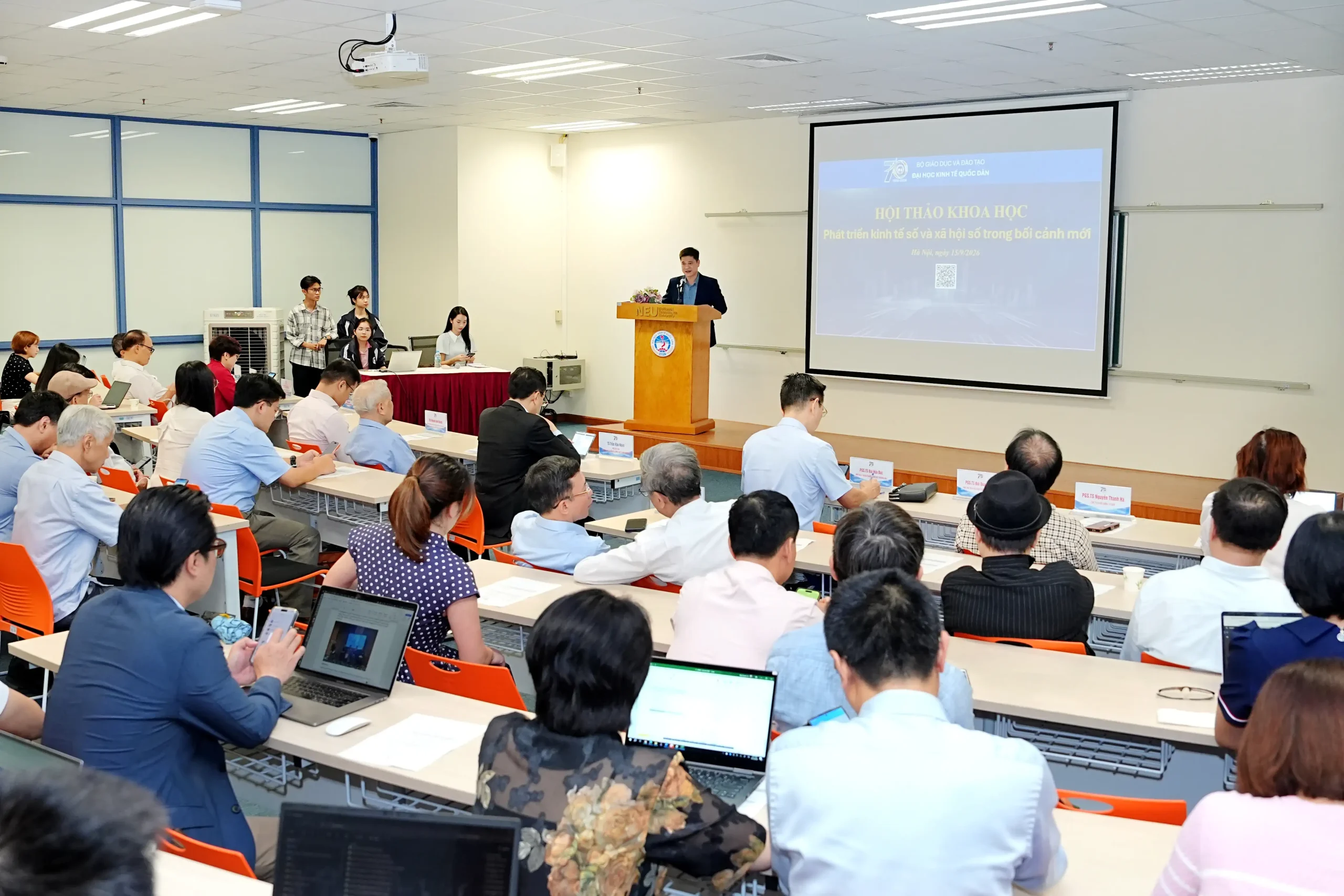
Conference Overview
Attending the conference, external delegates included: Dr. Nguyen Tung Lam – Director of the Vietnam Productivity Institute; Dr. Tran Hau Ngoc – Vice Chairman of the National Standards and Quality Measurement Committee; Assoc. Prof. Dr. Bui Huu Duc – Vice Rector of the University of Commerce; Dr. Le Xuan Sang – Deputy Director of the Vietnam and World Economy Institute; MSc. Nguyen Anh Duong – Head of the Comprehensive Research and International Integration Department, Institute of Policy and Strategy Research; Dr. Nguyen Van Truc – Head of Incubation Department, Department of Startups and Technology Enterprises, Ministry of Science & Technology; Assoc. Prof. Dr. Bui Quang Tuan – Vice President of the Vietnam Economic Science Association; Dr. Vu Van Chat – Director of the Institute of Economics – Culture and Digital Society; Assoc. Prof. Dr. Do Huong Lan – Head of Scientific Management Department, University of Finance – Marketing.
From the National Economics University, participants included: Prof. Dr. To Trung Thanh – Vice President of the University; Prof. Dr. Tran Tho Dat – Chairman of the Scientific & Training Council; Assoc. Prof. Dr. Nguyen Thanh Ha – Chairman of the Advisory Council; along with representatives from various Schools, Departments, Faculties, Institutes, Centers; experts, scientists, staff, and lecturers of the University.
The conference was organized within the framework of the national scientific project “Impact of the Digital Economy on Economic Productivity in the New Context – Current Situation, Forecasts, and Policy Recommendations until 2030,” code KX.01.07/21-30, in coordination with the project “Digital Society Development Policy and Digital Society Governance: International Experiences and Policy Implications for Vietnam,” code KX.06.05/21-30. The integration of these two research directions allows for an approach to digital transformation not only from a technological or economic perspective but in the close relationship between the digital economy and digital society.
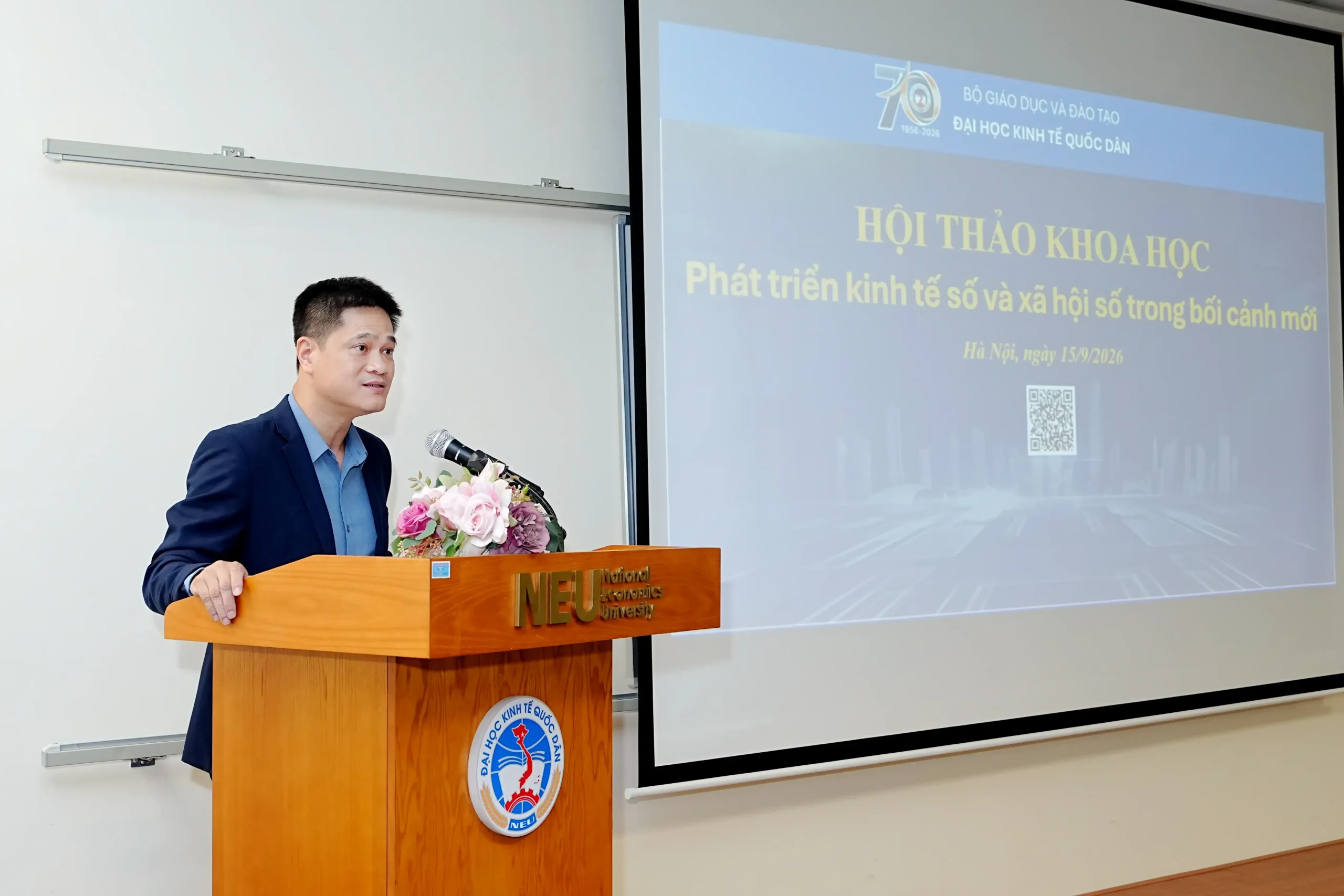
Prof. Dr. To Trung Thanh – Vice President of the National Economics University speaks
In his opening remarks at the conference, Prof. Dr. To Trung Thanh – Vice President of the National Economics University stated that in the new context, the focus should not only be on how far digital technology has developed, how digital infrastructure is invested, or what percentage of GDP the digital economy accounts for, but more importantly, the real values that the digitization process creates for the economy and society.
According to Prof. Dr. To Trung Thanh, technology only has economic significance when it contributes to increasing productivity, creating greater added value, and improving competitiveness. Therefore, the ultimate goal of digital transformation is not “more digitization” but “better development.” Along with the requirement to promote a dynamic and high-productivity digital economy, the transformation process should aim for an inclusive, safe, and trustworthy digital society, ensuring that vulnerable groups are not left behind.
In the context of rapid advancements in artificial intelligence, data increasingly becoming a crucial resource, and digital platforms transforming market organization methods, the Vice President of the National Economics University emphasized the need for a policy mindset shift. Instead of merely questioning how to apply technology, we should focus on larger issues: how technology can generate productivity, how data can become a developmental resource, how Vietnamese enterprises can gradually master and innovate technology, and how citizens can truly become the protagonists of the digital society.
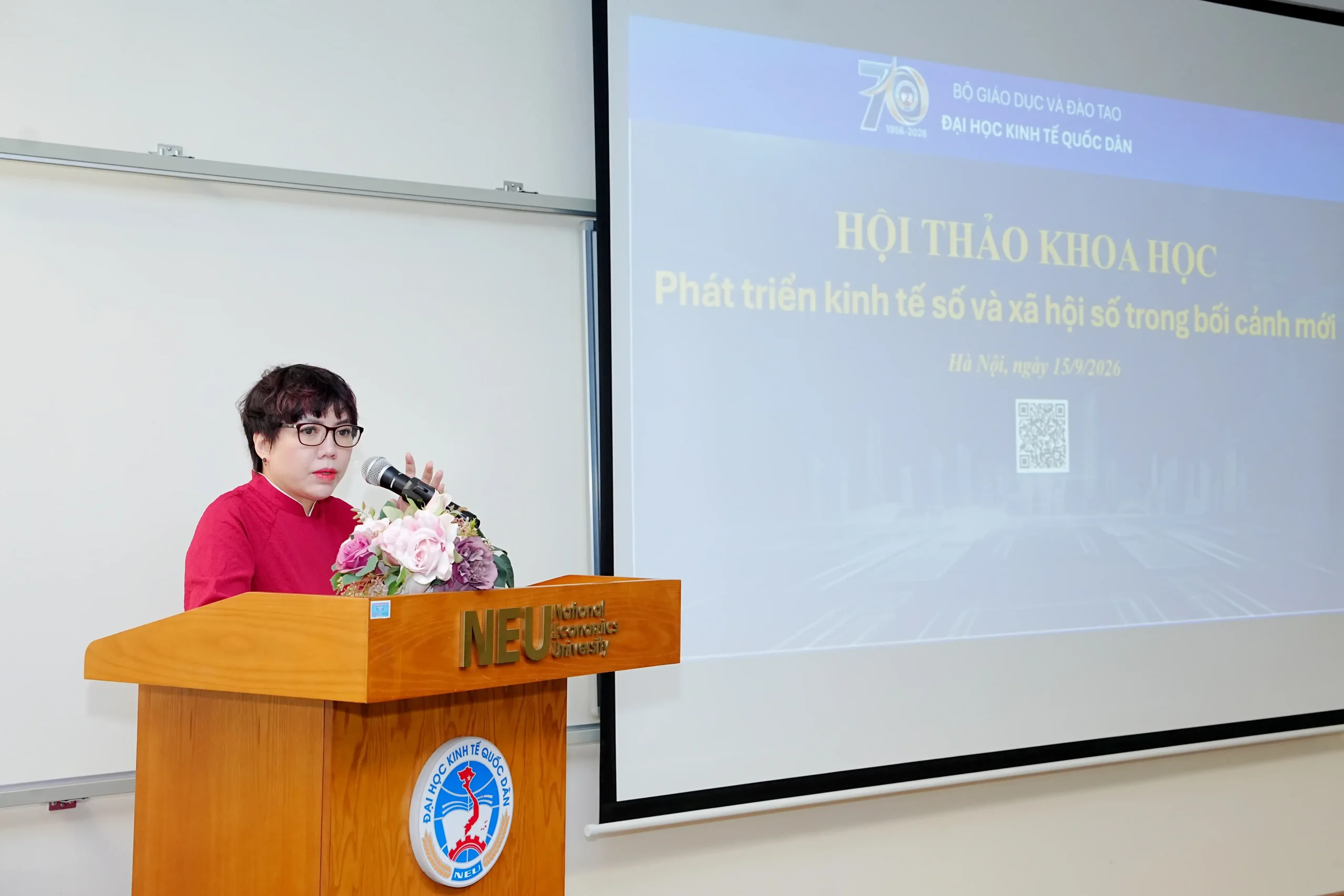
Assoc. Prof. Dr. Do Huong Lan – Head of the Scientific Management Department, University of Finance and Marketing, delivered a speech
In the introductory report, Assoc. Prof. Dr. Do Huong Lan – Head of the Scientific Management Department, University of Finance and Marketing, emphasized the necessity of placing the digital economy and digital society in a close relationship, rather than approaching them as relatively independent fields. The digital economy is only truly meaningful when it creates higher productivity, enhances resource efficiency, fosters innovation, and forms new growth models. However, the digital transformation process cannot be considered successful if citizens lack digital capabilities, the technology access gap widens, trust in the digital environment declines, personal data is not protected, or vulnerable groups are left behind.
In this context, an integrated approach is proposed between digital technology – innovation – productivity – growth – social transformation – digital social governance. This also serves as the foundation for the conference to focus on the overarching question: how to develop a digital economy that not only creates productivity and new growth drivers but also contributes to forming an inclusive, safe, adaptable digital society centered on people.
From this approach, the conference contents are implemented in two sessions, moving from the impact of the digital economy on productivity to the social issues arising during the digitalization process. The first session focuses on “The Impact of the Digital Economy on Economic Productivity in the New Context – Current Situation, Forecasts, and Policy Recommendations until 2030”; the second session discusses “Development and Management of the Digital Society in Vietnam: Current Situation and Emerging Issues.”
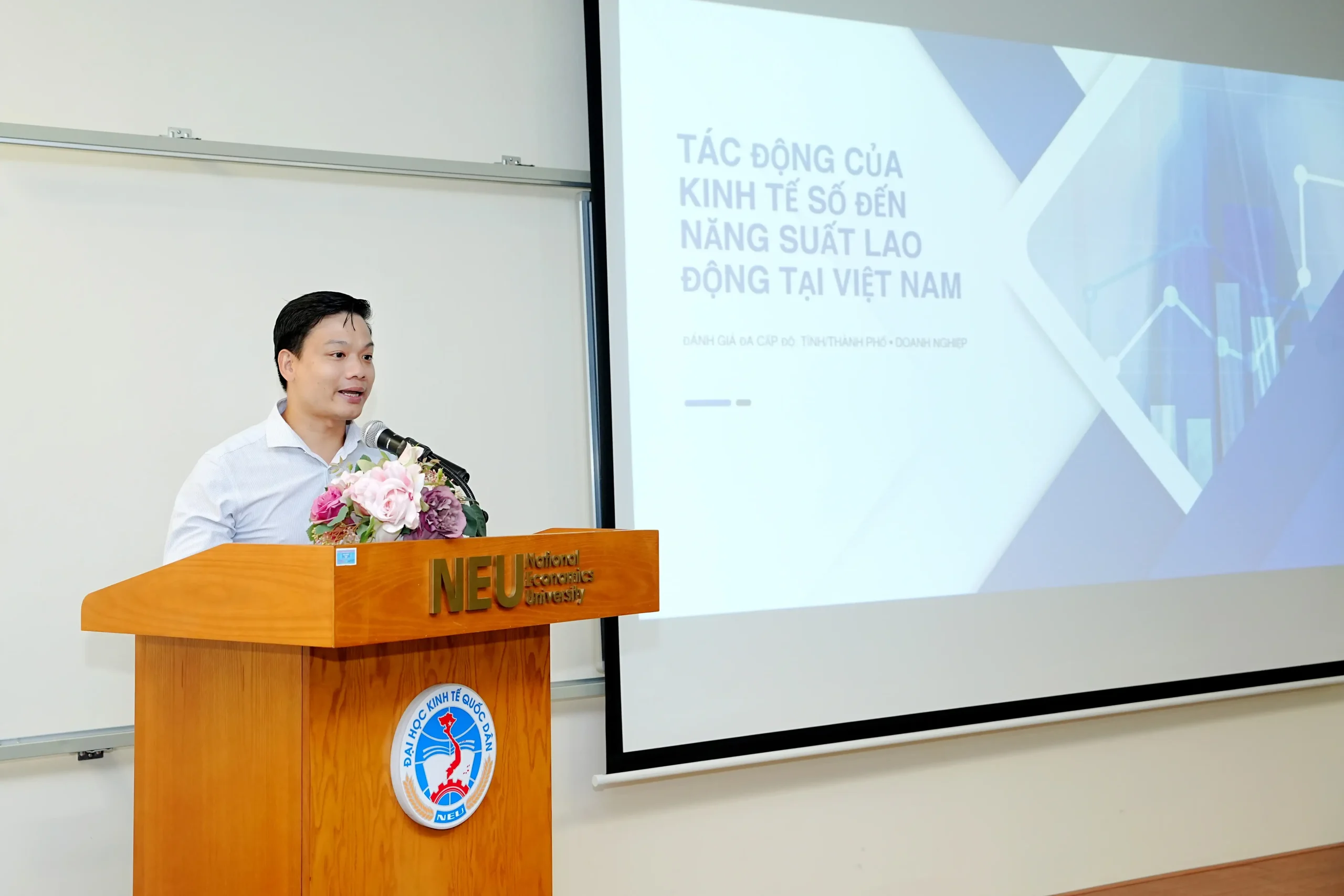
Assoc. Prof. Dr. Le Thanh Ha – National Economics University presented a paper: The Impact of the Digital Economy on Economic Productivity in the New Context
From a productivity perspective, the paper by Assoc. Prof. Dr. Le Thanh Ha – National Economics University focuses on assessing the impact of the digital economy on labor productivity in Vietnam at the provincial, city, and enterprise levels. The research approaches the digital economy from activities significantly based on or supported by technology, infrastructure, digital services, and data; simultaneously focusing on measuring the added value created by the digital economy and the relationship between digitalization and productivity.
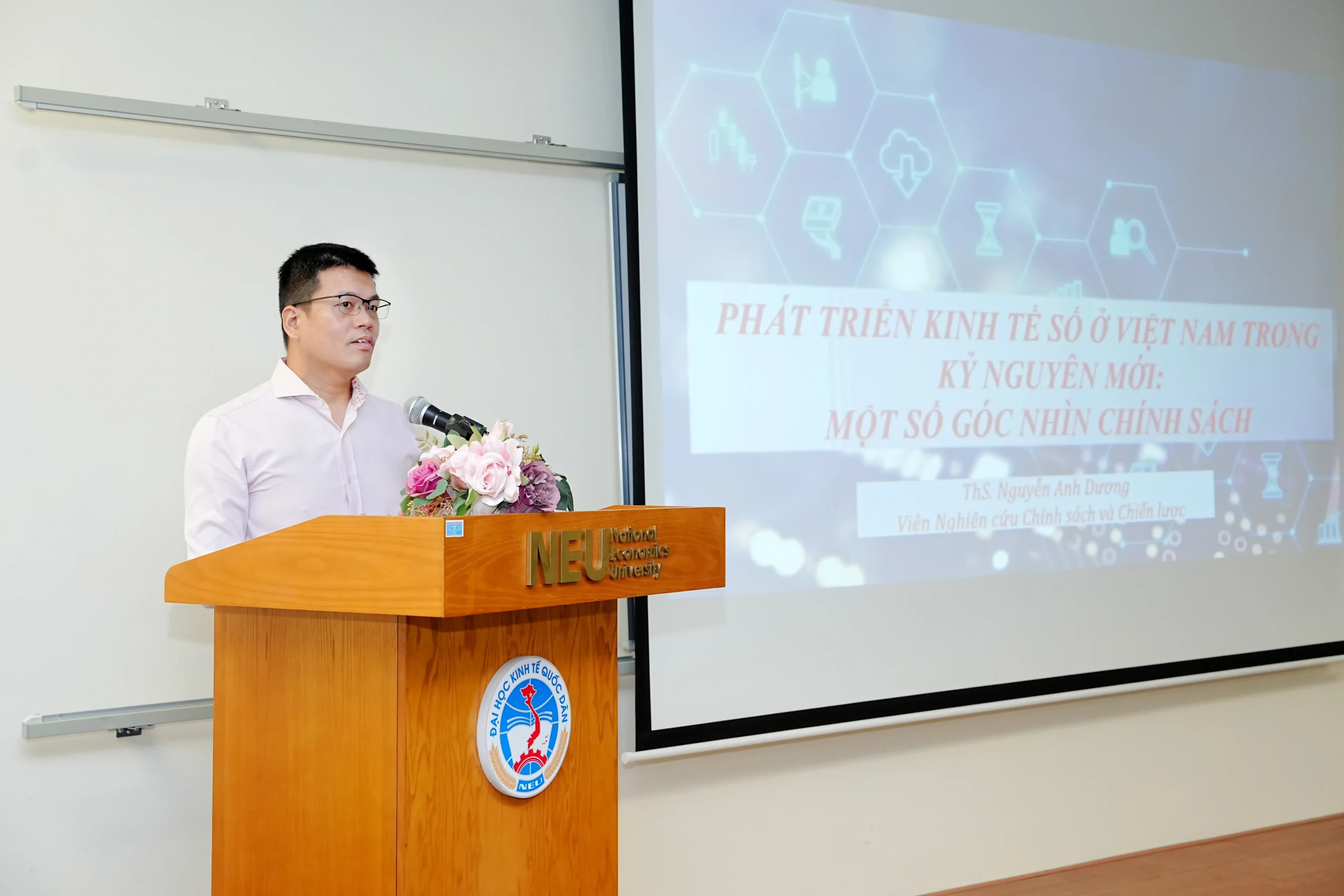
Master Nguyen Anh Duong – Head of the Department of General Research and International Integration, Institute for Policy and Strategy Research, presented a paper: Developing the Digital Economy in Vietnam in the New Era: Some Policy Perspectives
Approaching from a policy perspective, Master Nguyen Anh Duong – Head of the Department of General Research and International Integration, Institute for Policy and Strategy Research, analyzed the requirements for developing the digital economy in Vietnam in the new era. The paper suggests that enterprises should be positioned as the main actors in the transformation process, while continuing to raise awareness and capacity to seize opportunities from the digital economy. Additionally, there is a need to improve the institutional framework for innovation, enhance technological autonomy linked with international integration, ensure competition, protect consumers, and increase transparency in data usage as well as the responsibility of digital platforms.
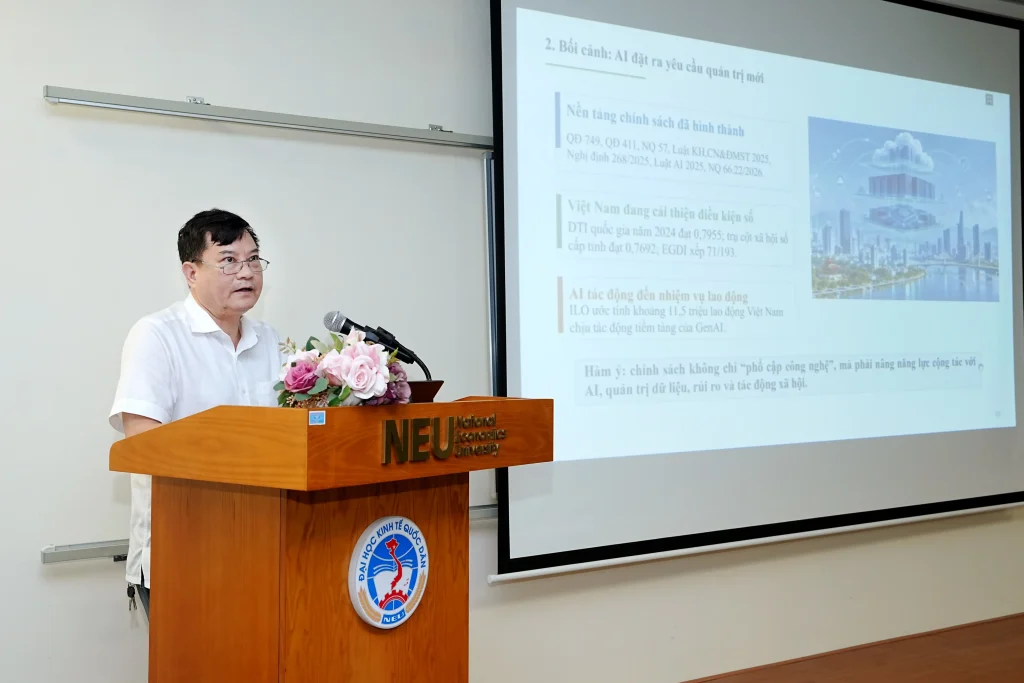
Dr. Nguyen Van Truc – Head of the Incubation Department, Department of Startups and Technology Enterprises, Ministry of Science and Technology, presented a paper: Social Governance in the AI Era: An Approach from the Innovation Ecosystem and Technology Absorption Capacity in Vietnam
From the digital economy, the conference expanded the discussion to the issue of digital social governance in the AI era. Dr. Nguyen Van Truc – Head of the Incubation Department, Department of Startups and Technology Enterprises, Ministry of Science and Technology, proposed shifting the approach from “introducing technology into society” to “creating value from technology.” Accordingly, evaluating digital transformation should not stop at the number of Internet subscriptions, identity accounts, online services, or implemented platforms, but should focus on digital capabilities, AI capabilities, technology absorption capacity, as well as the substantial impacts on productivity, public service quality, quality of life, inclusiveness, safety, and digital trust.
The paper also points out that technology absorption capacity is a crucial link in the chain of transformation from digital infrastructure and access capabilities to innovation, creating socio-economic value, and aiming towards an inclusive, sustainable digital society. Technology only creates value when it is received, adapted, integrated into practical activities, and continuously improved.
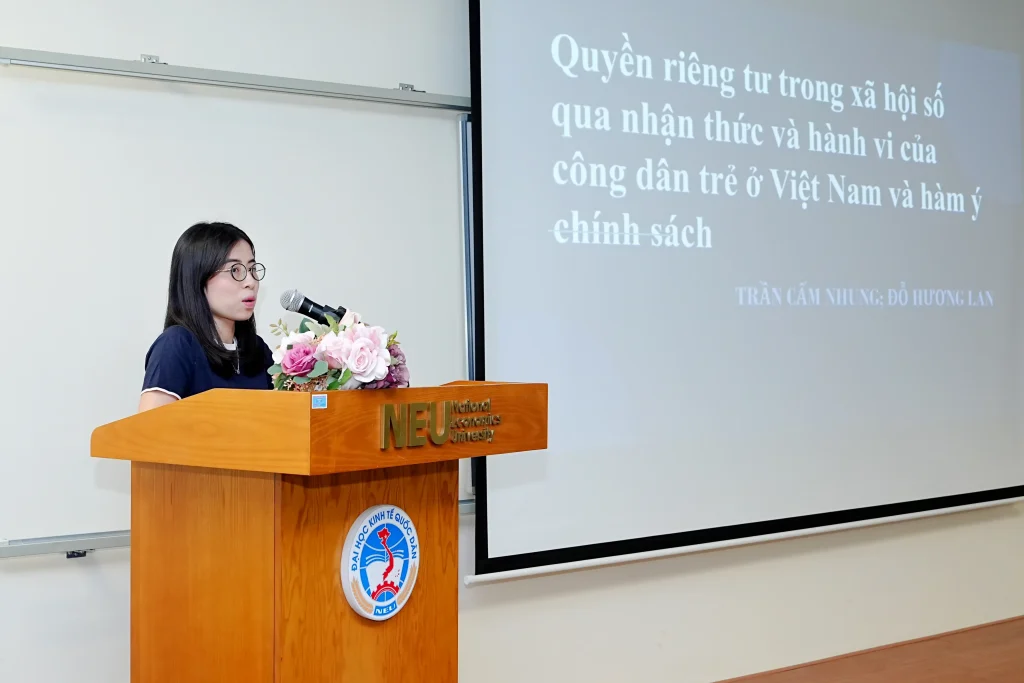
Master Tran Cam Nhung – University of Social Sciences & Humanities presents a paper: Privacy in the Digital Society through the Perceptions and Behaviors of Young Citizens in Vietnam and Policy Implications
Another issue raised is the privacy of young people in the digital society. The research presented by Master Tran Cam Nhung and Assoc. Prof. Dr. Do Huong Lan analyzes the perceptions and behaviors of young citizens in protecting privacy, identifying influencing factors, and proposing policy implications. The study, based on 224 valid samples, indicates that risk perception, social norms, digital literacy, and privacy protection behaviors are all at high levels, while trust in cyberspace is at a medium level.
Notably, the research model results show that social norms have the strongest impact on privacy protection behaviors, followed by digital literacy and risk perception. The research team suggests that protecting the privacy of young people is not only a personal decision but is also significantly influenced by the environment and social norms.
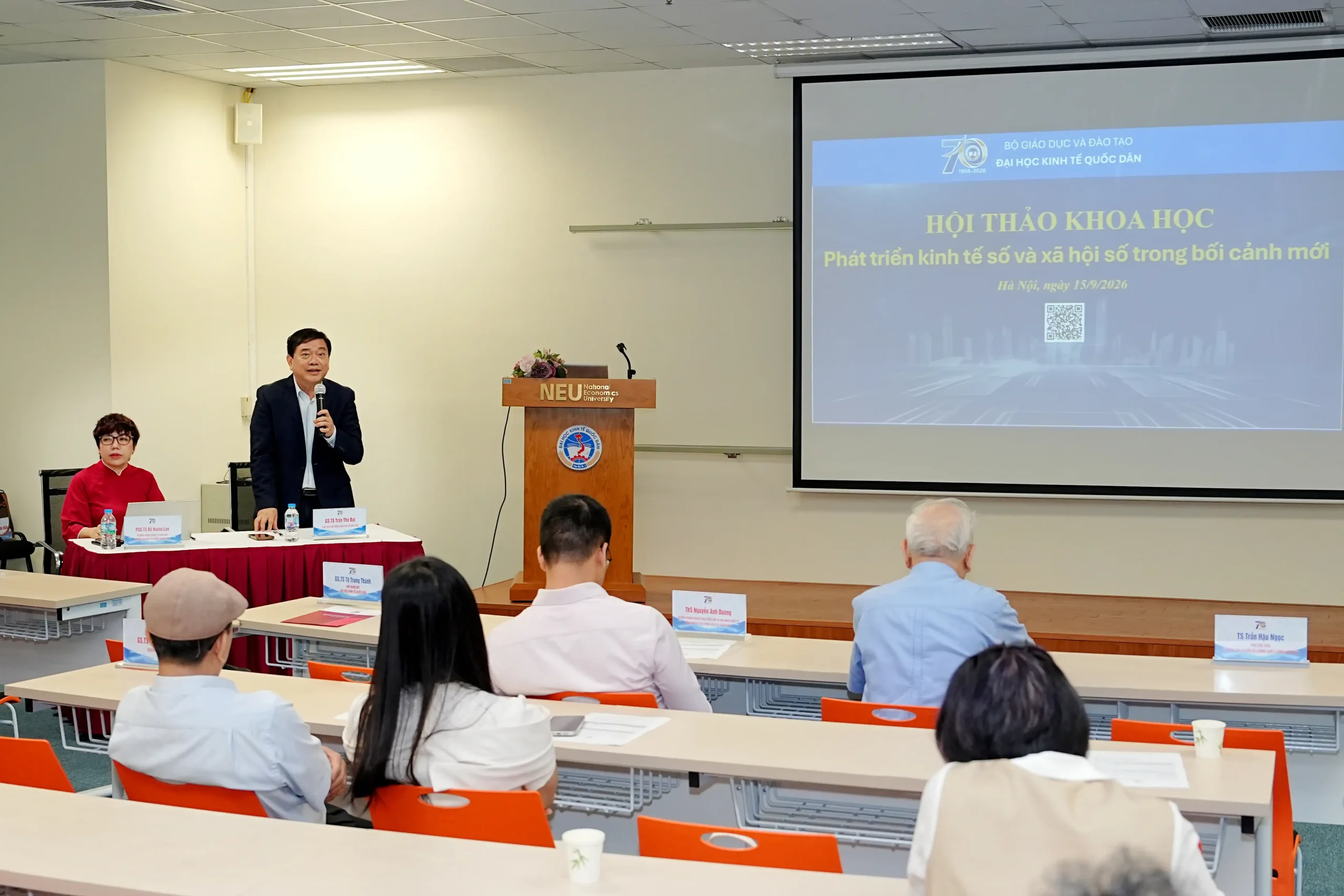
Prof. Dr. Tran Tho Dat – Chairman of the Scientific & Training Council, National Economics University and Assoc. Prof. Dr. Do Huong Lan – Head of the Scientific Management Department, University of Finance and Marketing chaired the discussion session at the Conference
The discussions at the Conference indicate that the development of the digital economy and the construction of a digital society are increasingly difficult to view as two separate processes. As technology, data, and artificial intelligence increasingly impact production, employment, and social life, the requirement is not only to accelerate technology application but also to transform these advancements into productivity, growth quality, and practical values for the people.
Through exchanges between scientists, experts, managers, and business representatives, the Conference contributes to supplementing the scientific and practical basis for two research topics, while also suggesting policy directions aimed at developing the digital economy associated with enhancing productivity, effectively managing changes brought by technology, and building an inclusive, safe, adaptable digital society centered on people.
Article and photos: Communication Department



