
Thoibaonganhang.vn: Prof. Dr. To Trung Thanh: Harnessing Domestic Strengths for High Economic Growth in 2025
12/04/2025 2025-04-12 9:56Thoibaonganhang.vn: Prof. Dr. To Trung Thanh: Harnessing Domestic Strengths for High Economic Growth in 2025
Thoibaonganhang.vn: Prof. Dr. To Trung Thanh: Harnessing Domestic Strengths for High Economic Growth in 2025
Speaking with a reporter, Prof. Dr. To Trung Thanh of National Economics University (NEU) said that unpredictable changes in the global economy also present an opportunity for Vietnam to harness domestic drivers such as the private sector and domestic consumption to pursue high growth in 2025 and the years ahead.
How do you assess Vietnam’s economic growth prospects in the current context?
In 2024, Vietnam’s economy recorded strong growth and returned to its pre-COVID growth trajectory of 2019. However, its growth model continued to rely on expanding inputs, with little improvement in growth quality. New growth drivers such as innovation and the digital economy still made limited contributions to growth.
In addition, the economy remains vulnerable to global economic instability, while environmental sustainability issues persist.
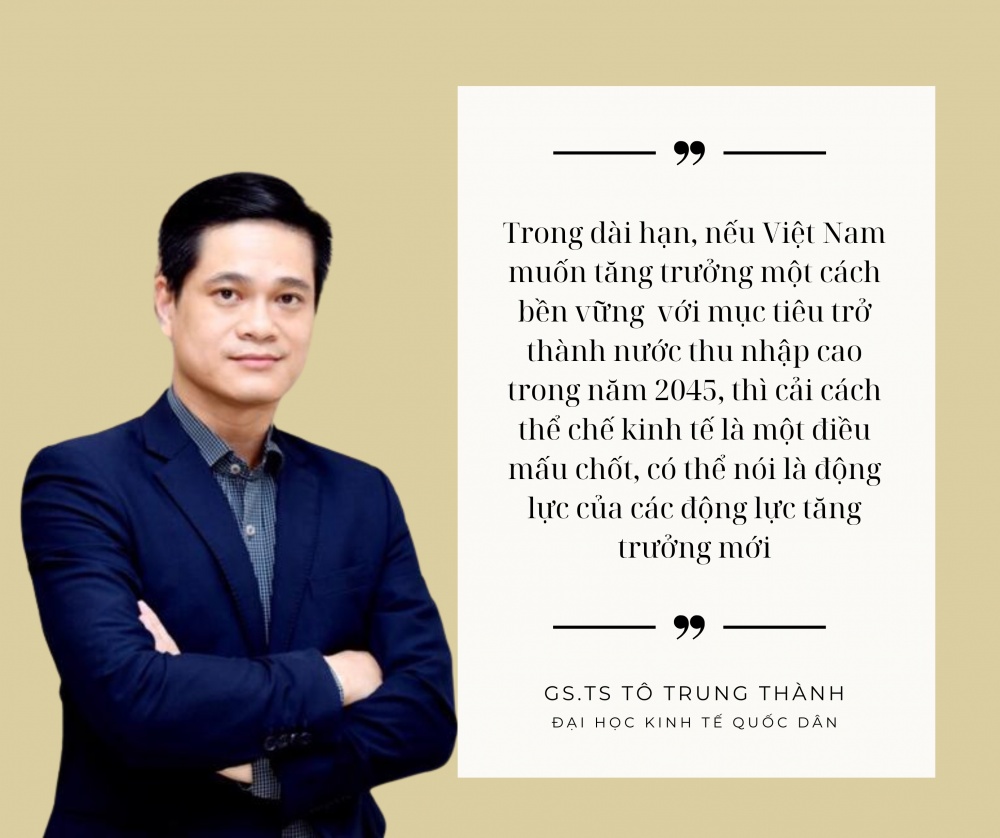
Given these characteristics of the economy, Vietnam must be very cautious about macroeconomic instability if it seeks rapid growth in the coming period. To achieve sustainable long-term growth and the goal of becoming a high-income country in 2045, economic institutional reform is essential. It could be described as the driver behind new growth drivers.
 |
As you mentioned, institutional reform is an important driver of economic growth. Could you elaborate on this driver?
Although Vietnam’s economic institutions have been improved toward a socialist-oriented market economy and have created a very favorable environment for production and business activities, certain limitations remain. In particular, there is still hesitancy about respecting market principles, and traditional intervention measures are still being used. In my view, these are important areas where there is room for institutional reform, both in the economy and in the state administrative apparatus. This will provide a foundation for economic growth in the next period.
I recommend developing an economic legal and institutional framework that maintains the state’s management role but, more importantly, supports private-sector development, abandoning the mindset of “ban what cannot be managed.”
Second, policy implementation capacity must be strengthened.
Third, administrative controls should be minimized to create a transparent, equitable environment for all economic sectors to develop.
One issue attracting considerable attention today is the United States’ imposition of tariffs on Vietnamese goods, and we are currently still in negotiations. From an economist’s perspective, what recommendations would you offer if we fail to secure a rate favorable to the economy?
The United States’ imposition of a 46% reciprocal tariff on Vietnamese goods (currently suspended for 90 days) could represent a major shock if we do not achieve a favorable negotiating outcome, because it affects both exports and the foreign direct investment (FDI) sector. These have also been important sources of economic growth in recent years. Clearly, therefore, economic growth could be significantly affected, with consequences not only for jobs and incomes but also potentially for macroeconomic stability, exchange rates, inflation, and domestic interest rates. Managing policy to maintain strong growth in the coming period will also become more difficult.
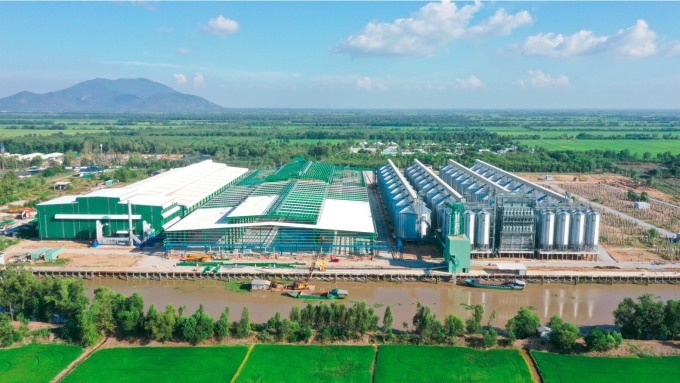 |
| Unpredictable changes in the global economy also present an opportunity for Vietnam to harness domestic drivers such as the private sector and domestic consumption |
Therefore, global instability and volatility present an opportunity for us to focus on the domestic economy. The private sector must be regarded as the most important economic sector for strengthening domestic capacity and creating the flexibility needed to respond to global macroeconomic instability.
At the same time, we need to diversify export markets. Vietnam currently has many free trade agreements (FTAs), and this is an opportunity to make use of them. Concentrating on a single market clearly leaves the economy vulnerable when instability arises.
In addition, Vietnam needs to restructure its production chains and increase domestic production. Efforts should also focus on promoting domestic consumption and turning it into an important driver of economic growth.
Current policies indicate that there is still room to improve domestic consumption through increased public spending or selective tax reductions. This is crucial to increasing private consumption, strengthening the economy’s domestic drivers, and supporting growth in the coming period.
Thank you!
This is an automated translation. If you notice any errors, please contact the Department of Communications, National Economics University at phongtruyenthong@neu.edu.vn.



