
NEU in the Media – Prof. Dr. Giang Thanh Long: “Resolution 72 Has Identified the Population Challenge, Focusing on Vulnerable Groups”
02/10/2025 2025-10-02 9:06NEU in the Media – Prof. Dr. Giang Thanh Long: “Resolution 72 Has Identified the Population Challenge, Focusing on Vulnerable Groups”
NEU in the Media – Prof. Dr. Giang Thanh Long: “Resolution 72 Has Identified the Population Challenge, Focusing on Vulnerable Groups”
(ĐBND) – Prof. Dr. Giang Thanh Long, Senior Lecturer at National Economics University (NEU) and an expert in population economics and social policy, affirmed that the Politburo’s Resolution 72 has identified the population challenge, making a strong shift from treatment to prevention and developing a preventive healthcare system with a focus on vulnerable groups.
The Challenge of Population Aging and the Burden of Chronic Diseases
Speaking with a reporter from Dai Bieu Nhan Dan Newspaper, Prof. Dr. Giang Thanh Long said studies have shown that Vietnam is a middle-income country with one of the fastest rates of population aging in the world.

Prof. Dr. Giang Thanh Long, Senior Lecturer at NEU and an expert in population economics and social policy. Photo: Xuan Quy
Statistics show that developed countries can take hundreds of years to transition from an aging population to an aged population. France took 115 years and the United States 69 years, while even Japan—previously considered the fastest-aging country in the world—took 26 years for the share of people aged 65 and older in its total population to rise from 7% to 14%.
Vietnam, however, will take only 18 years to complete this transition (2018 to 2036). This also indicates that the older population is set to grow very sharply over the next two to three decades. Vietnam is projected to have nearly 18 million older people in 2030, with the number continuing to rise rapidly to 26.3 million by 2045.
“On the positive side, the health of our country’s older population is showing a trend toward improvement. Because the older population of the future is today’s young population, they recognize the need to care for their health, so we will have a healthier older population in the future,” Prof. Long observed.
However, reports on disease trends show that Vietnam faces a double burden of communicable diseases and chronic noncommunicable diseases. Notably, chronic noncommunicable conditions such as cardiovascular diseases, diabetes, and musculoskeletal disorders account for an increasingly large share and are affecting people at younger ages. This is becoming a fairly widespread disease burden in Vietnam.

Vietnam’s older population is growing rapidly. (Illustrative image)
Against this backdrop, Prof. Long affirmed that Resolution 72 emphasizes the goals identified by the Party and the Government, demonstrating strong political determination to fundamentally transform the healthcare system to provide services that are accessible, affordable, and appropriate for everyone.
“In particular, Resolution 72 targets disadvantaged and vulnerable population groups, such as ethnic minorities, people living on islands and in mountainous areas, older people, and low-income people, whose access to healthcare services is limited,” Prof. Long observed.
The policy also clearly emphasizes a focus on preventive healthcare—the key to addressing many urgent issues facing Vietnam now and in the future, as its population formally enters the aging stage.
Numerous studies worldwide show that investment in preventive healthcare delivers substantial benefits in many respects. For example, researchers in the United States have studied and concluded that, amid population aging, every dollar invested in preventive healthcare can yield up to three dollars. Research also shows that, for certain diseases, the return on preventive healthcare is even higher: for example, spending one dollar on tobacco control can save up to four dollars in treatment costs for tobacco-related diseases.
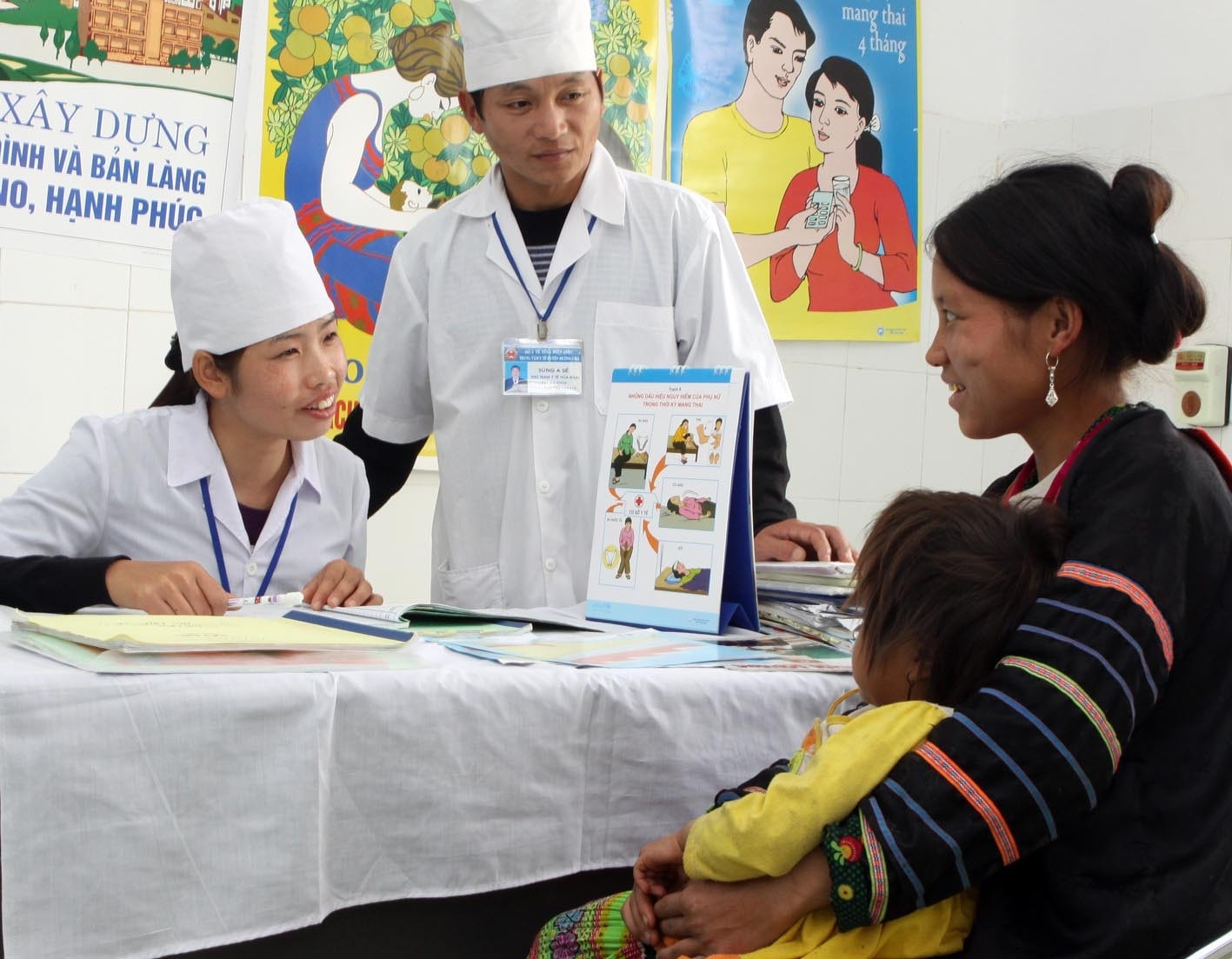
Resolution 72 emphasizes creating the most favorable conditions for people to access and use primary care services at grassroots healthcare facilities. Photo: YT
Prof. Long also highlighted another clear emphasis in Resolution 72: directing the healthcare system toward vulnerable population groups. Healthcare in remote island, mountainous, and rural areas is of relatively low quality. This, combined with limitations in personnel, facilities, and road infrastructure, makes access more difficult for residents than for those in lowland areas or major cities.
“Resolution 72 emphasizes developing a family doctor system to help connect people with the healthcare system. People living far away, who must spend an entire day traveling along difficult mountain roads to reach a commune Medical Station, can now be connected through the family doctor system,” Prof. Long observed.
Current policy also provides stronger insurance benefits to help people obtain medical examinations and treatment. For example, people living in high mountainous areas very rarely have regular health checkups, making early detection difficult. By the time a disease is detected, it is already at an advanced stage, leaving many people financially ruined by the cost of examinations and treatment.
For this reason, improving people’s access to health services through health insurance support is a very appropriate step toward reducing disease risks and easing the financial burden over the long term.
Implementing Resolution 72 – Focusing on Core Elements
According to Prof. Dr. Giang Thanh Long, given the resolution’s humanitarian values centered on caring for and improving people’s health, several breakthrough measures to address fundamental issues must be introduced soon to implement Resolution 72 effectively and meaningfully in practice.
First, the grassroots healthcare system needs to be strengthened. The merger of localities and reorganization of communes and wards have changed their scale, allowing resources to be more concentrated. The scale and capacity of commune and ward Medical Stations are also changing in terms of facilities, personnel, and equipment.
Strengthening grassroots healthcare is therefore one of the measures that can help people gain better access to healthcare services.
When commune and ward Medical Stations are close to homes and residential areas, people become more conscious of disease prevention and treatment. This changes their healthcare behavior while also helping the healthcare system reach people more effectively.

Strengthening grassroots healthcare is one of the measures that can help people gain better access to healthcare services.
Prof. Giang Thanh Long also identified upgrading the preventive healthcare system as another important measure, including developing vaccines or preventing disease well in advance. One clear example came during the most intense period of the COVID-19 pandemic, when supplying sufficient vaccines at the right time and to the right locations in vulnerable areas helped minimize the pandemic’s consequences and protect people’s health.
“Promoting vaccine development, particularly vaccine supplies suited to Vietnamese people, is a very appropriate direction for reducing the disease burden,” Prof. Long emphasized.
The third measure, which needs to be implemented promptly and effectively, is to prioritize development of the healthcare workforce. Healthcare needs across the population have now increased as population size and disease trends have also changed.
Developing the healthcare workforce therefore requires fundamental changes, particularly in areas such as geriatric care, long-term care, and social care. These measures all help advance the goals of preventing and controlling diseases and improving the health of the entire population.
In the current context, technological applications in healthcare are developing rapidly. Developing a high-quality workforce that uses technology is key to improving the effectiveness of diagnosis, medical examinations, and treatment.
In fact, countries are now effectively applying artificial intelligence (AI) to early disease diagnosis, and Vietnam can certainly learn from this. This is also one of the tasks given particular emphasis in Resolution 72 to improve the health of the entire population.
Meanwhile, the growing proportion of people using the internet and smartphones offers an opportunity to vigorously implement the fourth measure: digitalizing the healthcare system through telemedicine, telehealth, and other services. In Vietnam, older people already have access to S-Health software, which not only updates patient information but also helps connect doctors with people who need healthcare.

Applying information technology can help improve healthcare effectiveness for all groups, particularly older people. (Illustrative image)
The fifth measure emphasized by Prof. Giang Thanh Long is to increase resources for the healthcare system, with a focus on expanding health insurance coverage.
“It is important to expand health insurance coverage horizontally, meaning increasing the number of participants. Coverage currently stands at 95%, and the aim is to reach 100%. But another very important expansion is vertical—broadening the range of services covered to reduce people’s out-of-pocket spending on medical examinations and treatment.”
For vulnerable groups facing financial difficulties, the burden of disease can leave them “destitute.” For these reasons, Resolution 72 once again emphasizes the role of health insurance as an essential prerequisite.
Implementing Resolution 72 and its proposed tasks and solutions requires the joint efforts of society as a whole. According to Prof. Dr. Giang Thanh Long, a senior lecturer at National Economics University (NEU) with many years of research and work in education, universities, academies and international organizations also play an important role in this political task.
“Within their fields of activity, universities, higher education institutions, research institutes and international organizations can provide important evidence and real-world statistics; identify specific challenges, such as where shortages exist, what form they take, what works and what does not; and thereby help guide policymaking,” Prof. Long said by way of example.
International Lessons in Healthcare Policy
Drawing on his study of other countries’ healthcare policies, Prof. Dr. Giang Thanh Long believes Vietnam can apply these experiences to advance the humanitarian values of Resolution 72 on protecting, caring for and improving people’s health.
For many years, Thailand has maintained its “30 Baht” program, which helps vulnerable groups in society access healthcare services. Although 30 baht is not a large sum, the program has changed how people, particularly the poor, access healthcare services by combining financial assistance with existing health insurance packages. The program has since increased its level of support to keep pace with improvements in living standards.
Japan has also introduced long-term care insurance (LTCI) alongside health insurance.
“This approach creates multiple financial safety nets and expands the network of caregivers, thereby ensuring the welfare of all citizens, particularly older people,” Prof. Long observed.

Japan has a very good healthcare system, particularly for older people. (Illustrative image)
A common lesson from these experiences is to build a healthcare system based on an investment perspective rather than a spending perspective. This means investing now in caring for and improving people’s health to save money and minimize the costs of medical examinations and treatment in the future.
This is particularly relevant as major trends—such as population aging, urbanization, migration, digitalization and the expansion of the middle class—intensify, potentially leaving some population groups behind, unable to access and use appropriate healthcare services.
This perspective is fully consistent with the important message emphasized in the Politburo’s Resolution 72: ensuring that all citizens, regardless of region or wealth, can access essential, basic healthcare services without financial worries.
“Overall, much remains to be done to implement Resolution 72, but the most important message remains that prevention is better than cure, with the aim of minimizing people’s copayments, expanding health insurance coverage, reducing deaths caused by late diagnosis and building a fair, equitable, effective and sustainable healthcare system that leaves no one behind.”
Source: The People’s Deputies Newspaper
This is an automated translation. If you notice any errors, please contact the Department of Communications, National Economics University at phongtruyenthong@neu.edu.vn.



