
Vietnam Update 2026: Reflecting on 40 Years of Doi Moi and Shaping Vietnam’s Development Issues in the New Era
07/09/2026 2026-10-20 10:01Vietnam Update 2026: Reflecting on 40 Years of Doi Moi and Shaping Vietnam’s Development Issues in the New Era
Vietnam Update 2026: Reflecting on 40 Years of Doi Moi and Shaping Vietnam’s Development Issues in the New Era
On September 4, 2026, at the Australian National University (ANU) in Canberra, the Vietnam Update 2026 conference with the theme “Vietnam – 40 Years of Doi Moi and the Era of National Emergence” was held, featuring the participation of scientists, experts, and representatives from management agencies from Vietnam, Australia, and various countries. The National Economics University co-organized the conference with the Crawford School of Public Policy, ANU, thereby continuing to promote research collaboration, academic exchange, and policy dialogue between Vietnam and Australia.
Taking place exactly 40 years since Vietnam initiated the Doi Moi reform in 1986, Vietnam Update 2026 serves as a forum to reflect on the profound transformations of Vietnam’s economy and society over the past four decades, while also discussing the issues posed for the next phase of development amidst the rapidly changing global landscape in geopolitics, technology, climate, trade, and investment.
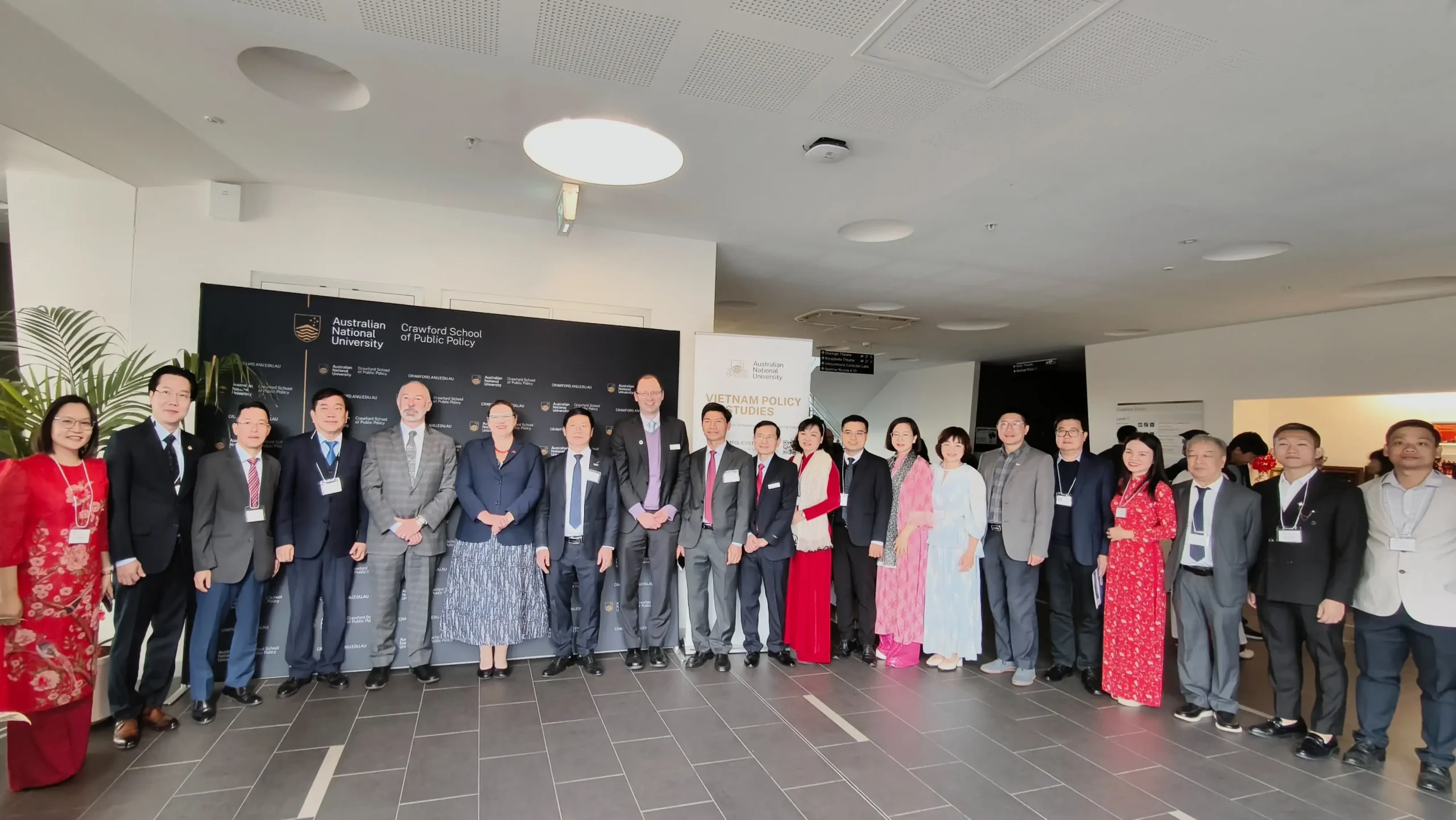
Delegates attending the Vietnam Update 2026 conference at the Australian National University, Canberra
From 40 Years of Doi Moi to Questions for the New Development Journey
The opening session of the conference featured the attendance and speeches of Dr. Gordon de Brouwer – Chancellor of the Australian National University; Ms. Carol Holmes – representative of the Vietnam and Mekong Strategy Division, Australian Department of Foreign Affairs and Trade; Mr. Nghiem Xuan Hoa – Deputy Ambassador of the Socialist Republic of Vietnam to Australia; Prof. Paul Burke – Director of the Crawford School of Public Policy; and Prof. Long Chu – Director of the Vietnam Policy Research Center, Crawford School of Public Policy, ANU.
Attending the conference were also Assoc. Prof. Dr. Nguyen Huu Anh – Vice President of the National Economics University; Prof. Dr. Tran Tho Dat – Former Rector of the National Economics University, Chairman of the Scientific and Training Council of the National Economics University, President of the Vietnam-Australia Friendship Association; along with a large number of professors, scientists, and experts from ANU, the National Economics University, and educational and research institutions both domestically and internationally.
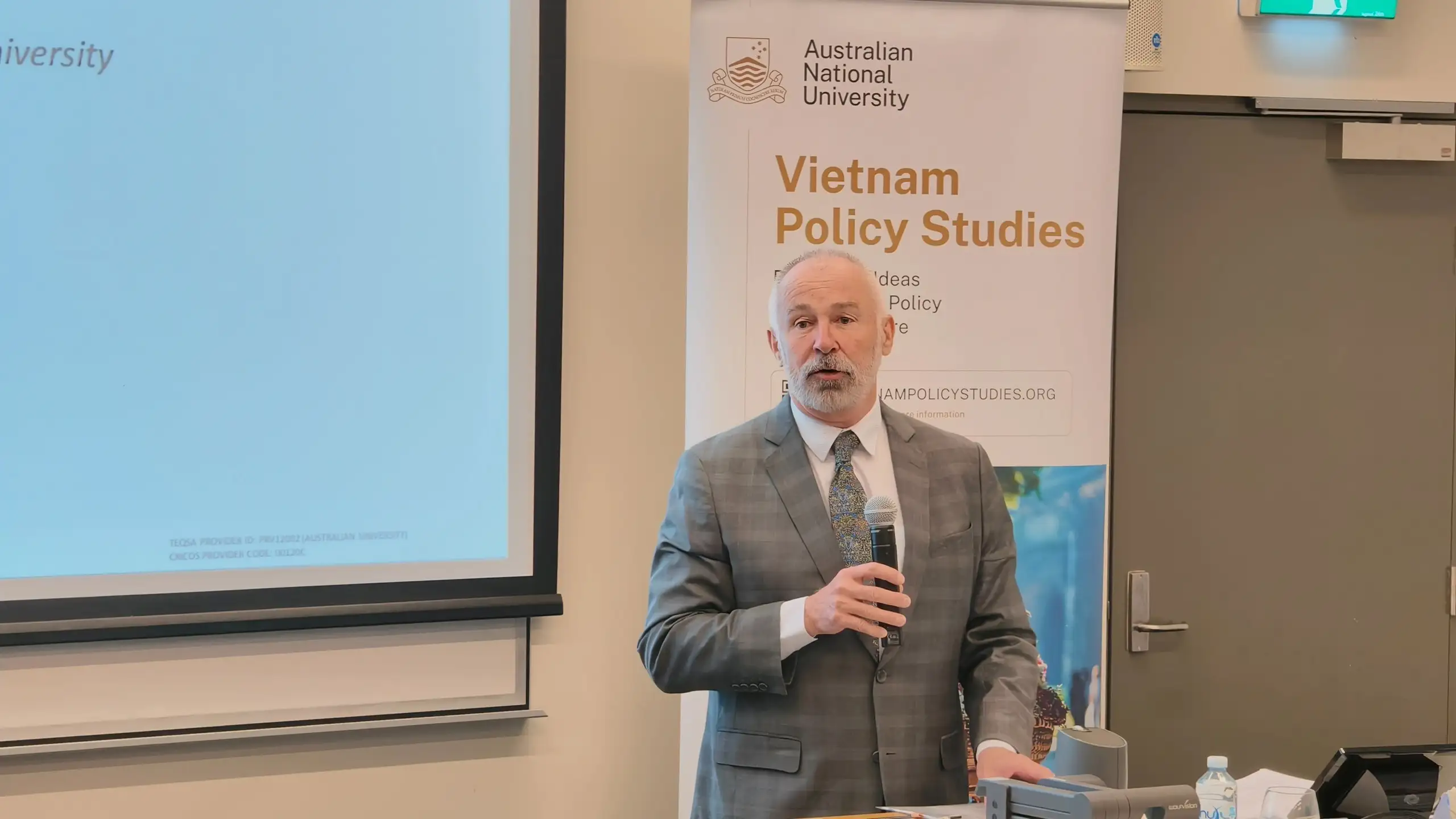
Dr. Gordon de Brouwer – Chancellor of the Australian National University delivers the opening speech at the conference.
In his opening remarks, Dr. Gordon de Brouwer – Chair of the University Council, Australian National University (ANU) emphasized that research and enhancing understanding of the Asia-Pacific region are integral to ANU’s national mission. Vietnam is a significant strategic partner for Australia, relevant both now and in the future. According to him, the connections between Vietnam and Australia are forged through people, organizations, and substantive collaborative networks, thereby establishing a sustainable foundation for understanding and cooperation between the two countries.
Drawing from institutional reform experiences, Dr. Gordon de Brouwer also shared insights on the conditions necessary for a successful transition, highlighting the importance of clear goals and vision, leadership roles, extensive participation of stakeholders within the organization, and a persistently implemented change process. According to him, studying Vietnam’s transformations over 40 years of Đổi mới holds value not only for Vietnam but also for countries and institutions facing the need for reform.
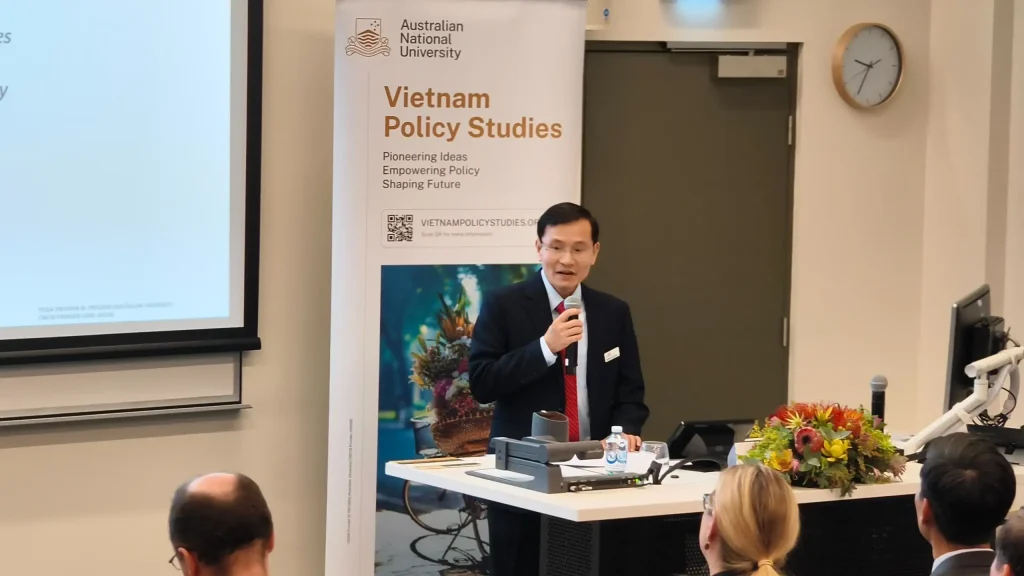
Prof. Long Chu – Director of the Vietnam Policy Research Centre, Crawford School of Public Policy, ANU introduces Vietnam Update 2026
Introducing Vietnam Update 2026, Prof. Long Chu emphasized the role of research in providing evidence and arguments for policy formulation, thereby directly contributing to Vietnam’s development goals. The Vietnam Policy Research Centre at ANU has implemented numerous research, training, policy dialogue activities, and connections with government agencies, universities, research institutes, and localities in Vietnam, enhancing the link between research, evidence, and policy practice.
Reflecting on the Đổi mới journey, Prof. Long Chu stated that the transition from a planned economy to a market economy is a significant milestone in Vietnam’s modern development history. One of the key lessons from this process is that development depends not only on resources and technology but also on the quality of policy and governance effectiveness. Therefore, Vietnam Update 2026 not only reviews past achievements but also aims to identify valuable lessons for the future.
Plenary Session 1: Vietnam – 40 Years of Đổi mới and the Road Ahead
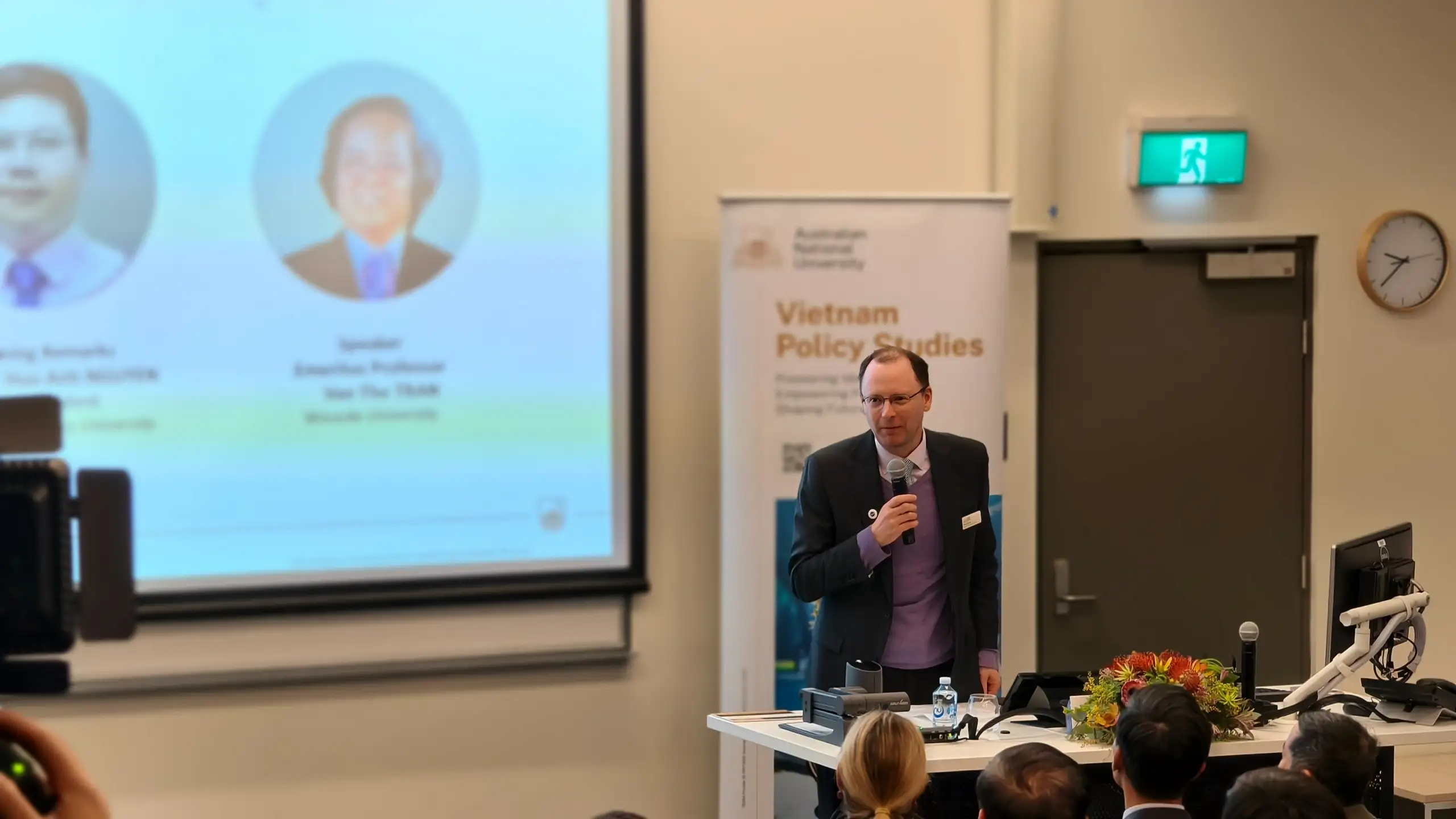
The first plenary session themed “Vietnam – 40 Years of Đổi mới and Beyond” is chaired by Prof. Paul Burke – Director of the Crawford School of Public Policy, ANU
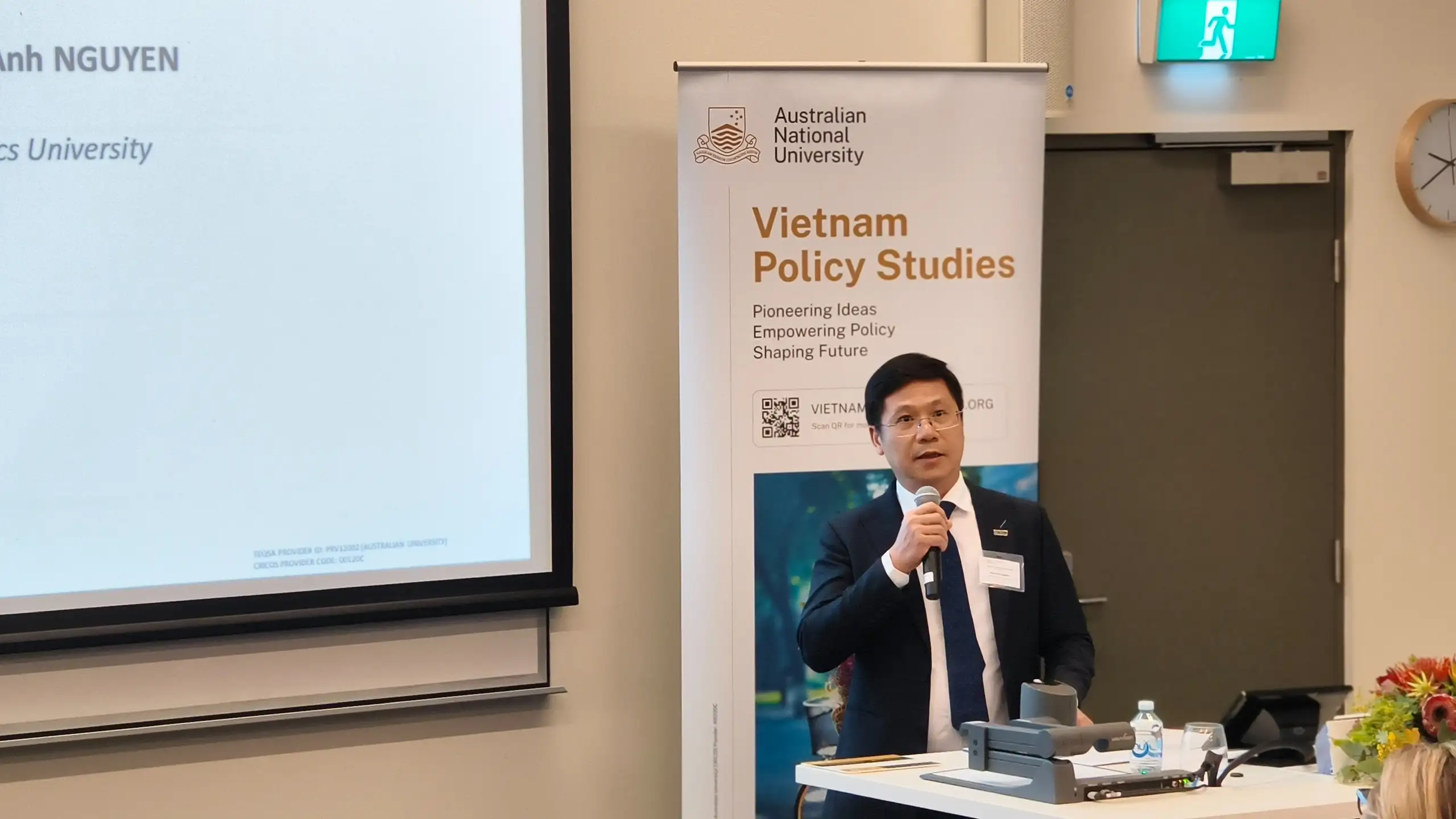
Assoc. Prof. Dr. Nguyen Huu Anh – Vice President of the National Economics University delivers the opening speech for the first plenary session
Opening the plenary session, Assoc. Prof. Dr. Nguyen Huu Anh – Vice President of the National Economics University affirmed that the 1986 Đổi mới was a fundamental turning point in Vietnam’s development process, paving the way for the transition to a market-oriented economy, deep international integration, and significant socio-economic transformations.
According to Assoc. Prof. Dr. Nguyen Huu Anh, the 40-year milestone is not only an occasion to reflect on the achievements but more importantly, to pose the question: What can Vietnam learn from four decades of reform to shape its future development journey?
In the context of Vietnam aiming for higher goals in income, productivity, innovation, and international integration, the development methods that contributed to success over the past four decades need to continue being adjusted. Assoc. Prof. Dr. Nguyen Huu Anh also emphasized that these issues cannot be resolved by a single scientific discipline or individual universities, but require serious research, policy dialogue, international collaboration, and a stronger connection between scientific evidence and policy.
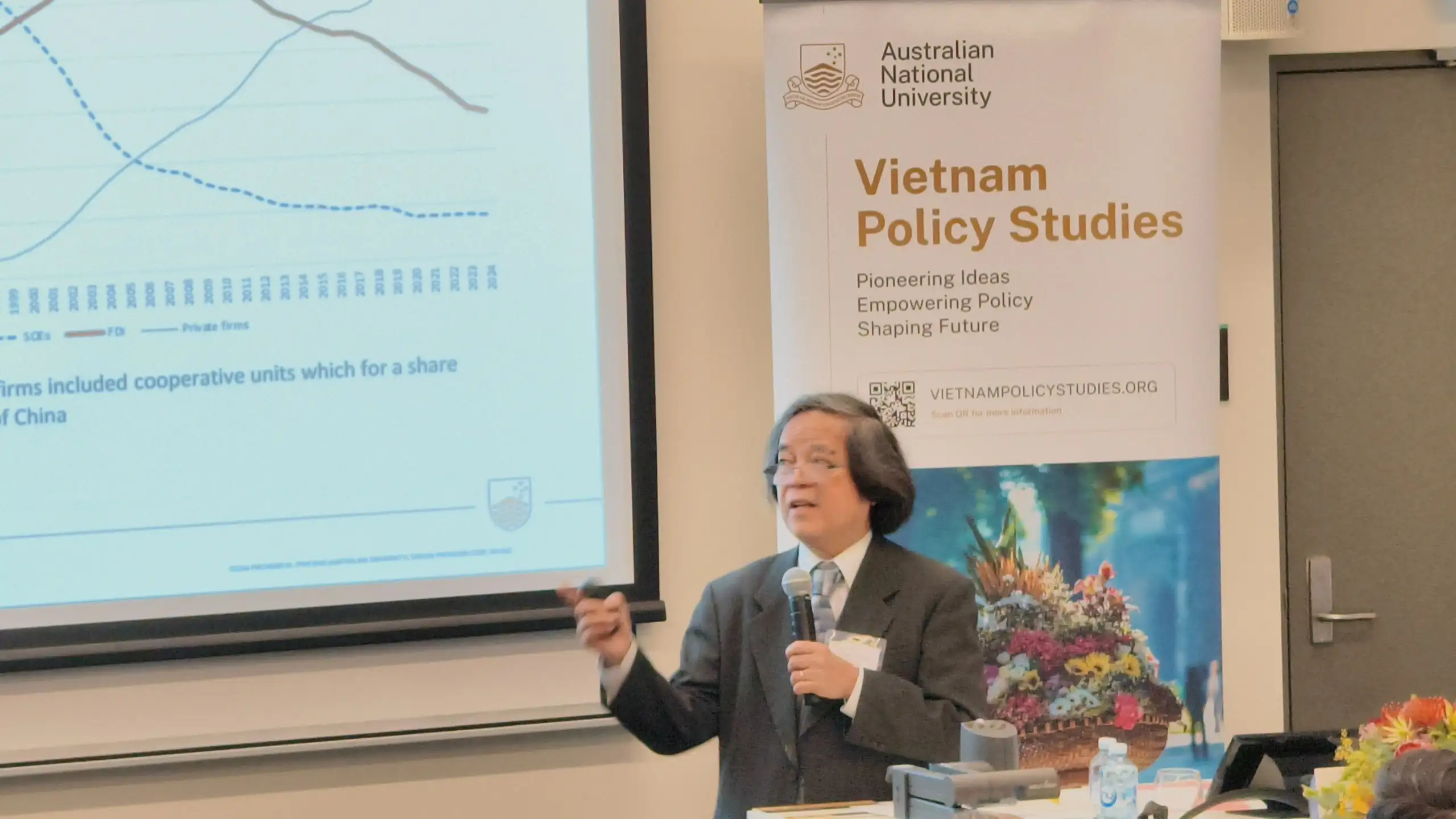
Prof. Tran Van Tho – Emeritus Professor, Waseda University, Japan presents the keynote report on 40 years of Đổi mới and Vietnam’s development process from an Asian perspective
Subsequently, Prof. Tran Van Tho – Honorary Professor at Waseda University, Japan, presented the keynote report “40 Years of Doi Moi and the Road Ahead: Vietnam’s Transition and Development from an Asian Perspective.” The report places Vietnam’s transition and development within the broader Asian context, thereby expanding the discussion on achievements, challenges, and the necessary drivers for Vietnam to continue enhancing growth quality in the upcoming period.
Second Plenary Session: Vietnam’s Doi Moi – Economy and Education
Following the discussions on transition and development, the second plenary session titled “Vietnam’s Doi Moi – Economy and Education” expands the perspective from two foundational aspects: the economic conditions leading to the 1986 reform decision and the transformation of Vietnam’s higher education during the Doi Moi period; the session was chaired by Honorary Professor Suiwah Dean-Leung from the Crawford School of Public Policy, ANU. Dr. Vu Thanh Tu Anh – Dean of the Fulbright School of Public Policy and Management, Fulbright University Vietnam, delivered the opening remarks.
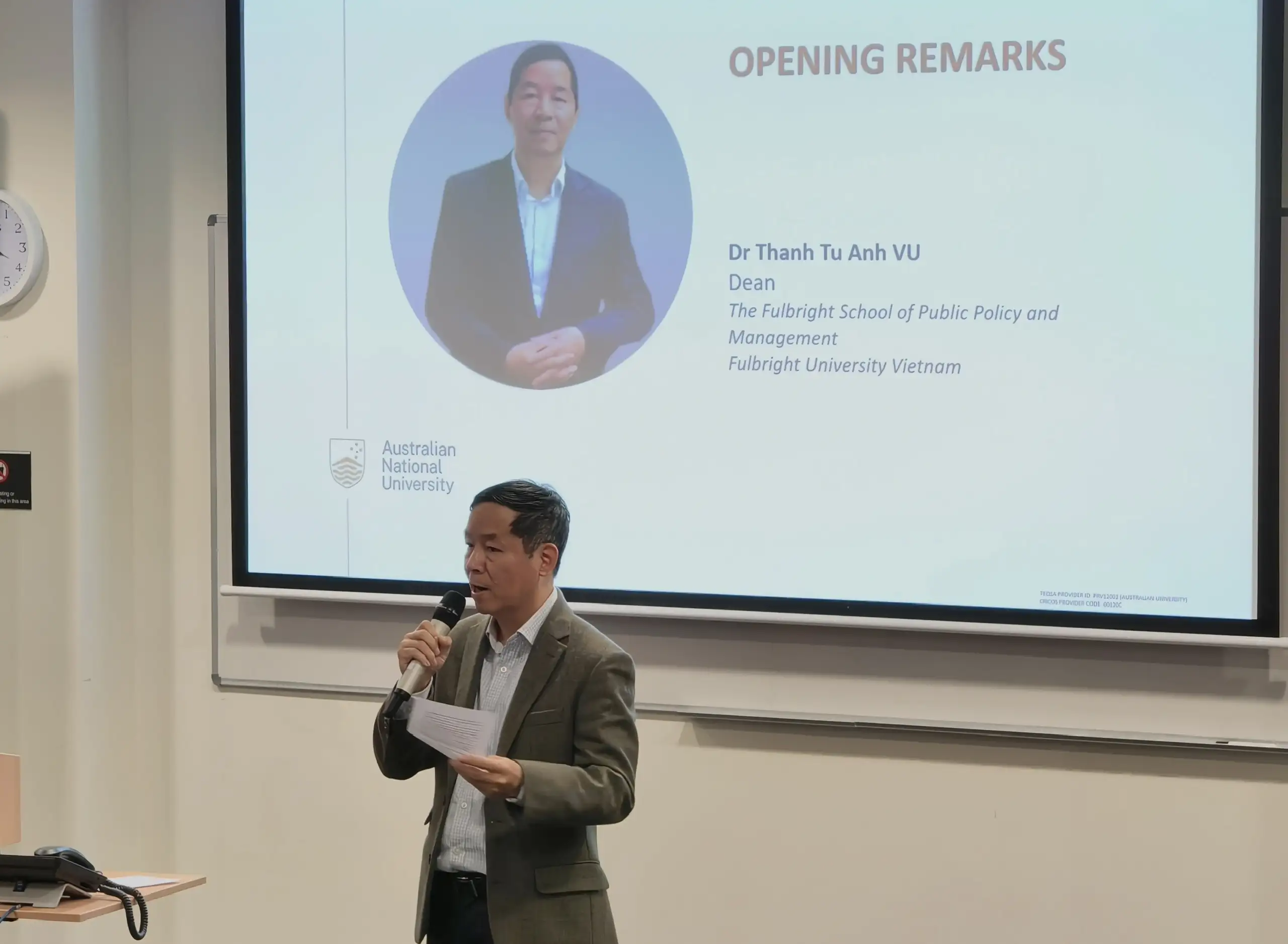
Dr. Vu Thanh Tu Anh – Dean of the Fulbright School of Public Policy and Management, Fulbright University Vietnam, delivered the opening remarks at the second plenary session.
Dr. Le Hong Giang – Research Fellow at Fulbright University Vietnam presented the keynote report on Vietnam’s economy during 1975–1986, analyzing the mechanisms of the centrally planned economy, the difficulties, and crises in the pre-Doi Moi period. Subsequently, Prof. Martin Hayden – Honorary Professor at Southern Cross University, Australia, presented the report “Vietnamese Higher Education Since Doi Moi,” analyzing the transformation of Vietnam’s higher education system amidst extensive socio-economic changes.
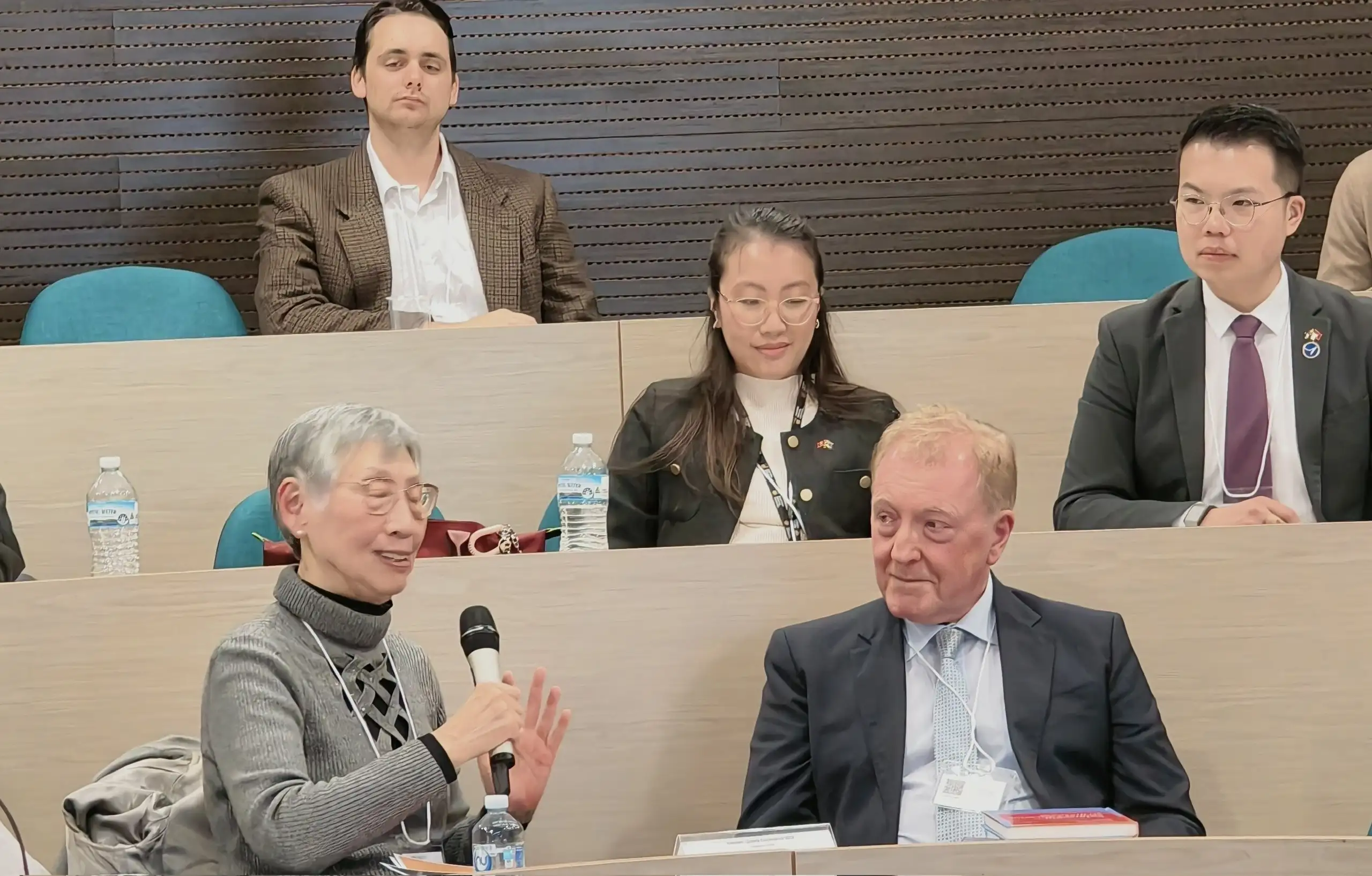
Honorary Professor Suiwah Dean-Leung from the Crawford School of Public Policy, ANU, and Prof. Martin Hayden – Honorary Professor at Southern Cross University, Australia, engaged in discussions at the second plenary session.
Specialized Sessions: From Sustainable Development and Institutions to New Growth Drivers
In addition to the two plenary sessions, Vietnam Update 2026 allocated the majority of its time to specialized sessions, providing a platform for scholars to delve into specific issues shaping Vietnam’s development process. The four thematic groups covered topics ranging from sustainable development, governance, and institutions to technology, finance, foreign investment, and the economy’s upgrading capacity.
Sustainable Development and Green Transition
The session “Sustainable Development and Green Transition,” chaired by Dr. Thang Do, focused on Vietnam’s transformations in tourism, urbanization, land use, green growth, and the circular economy.
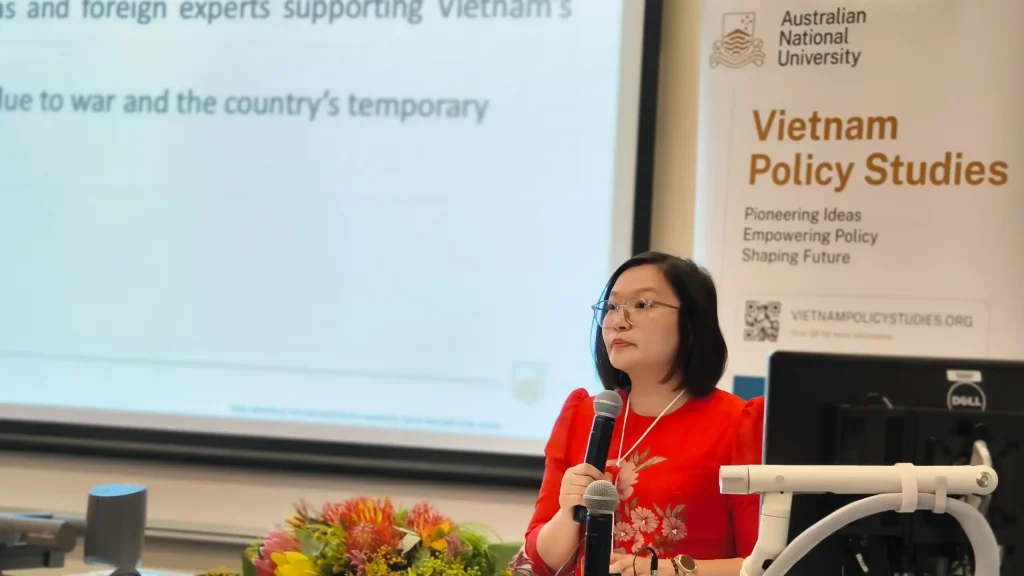
Dr. Pham Thi Thu Phuong, NEU, presented a study reviewing four decades of Vietnam’s tourism development, analyzing achievements, challenges, and implications for sustainable development.
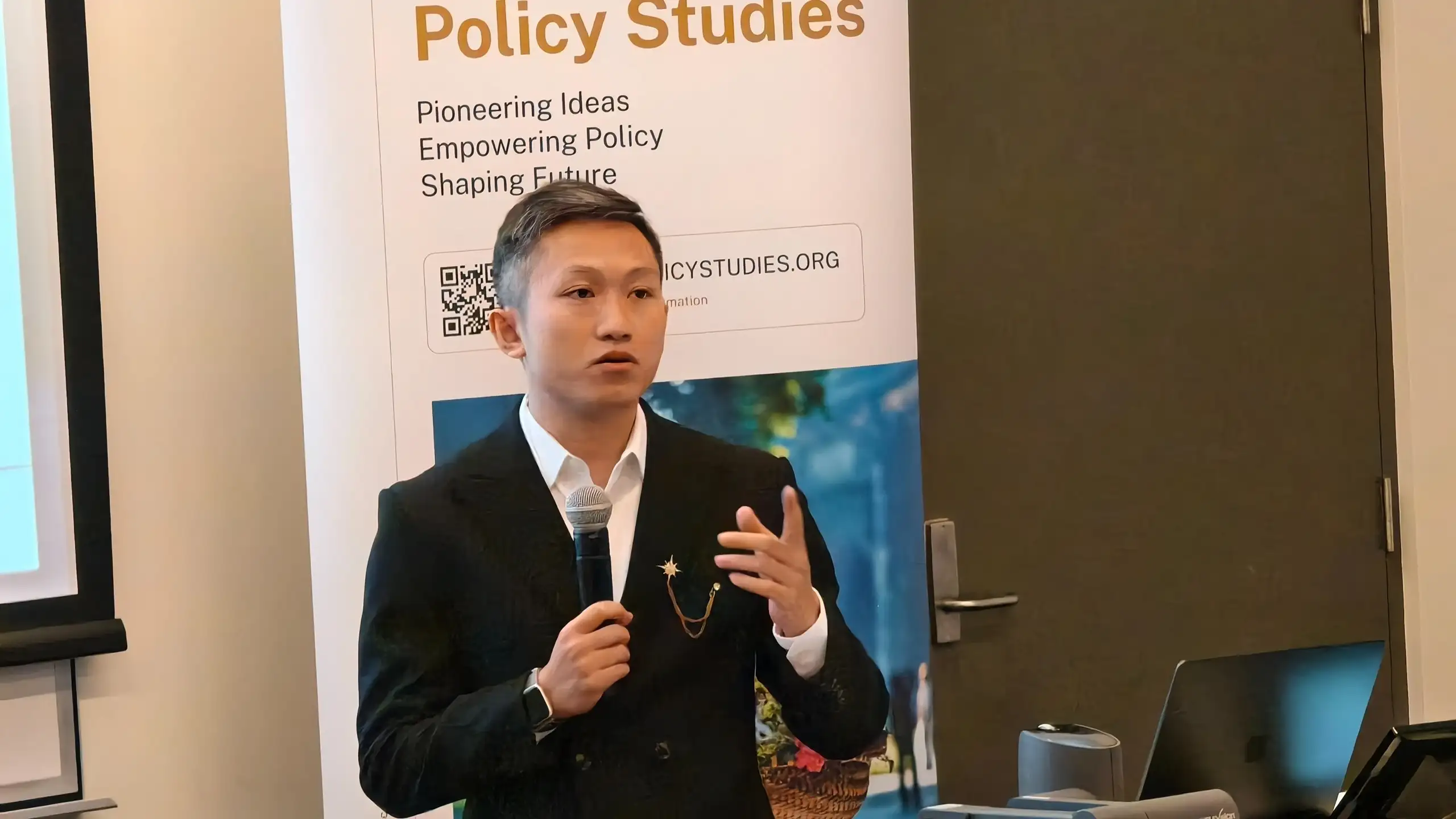
Dr. Nguyen Tran Tuan, NEU, presented a study on urban expansion and the conversion of rice-growing land during the Doi Moi period from 1995–2020 based on spatial analysis.
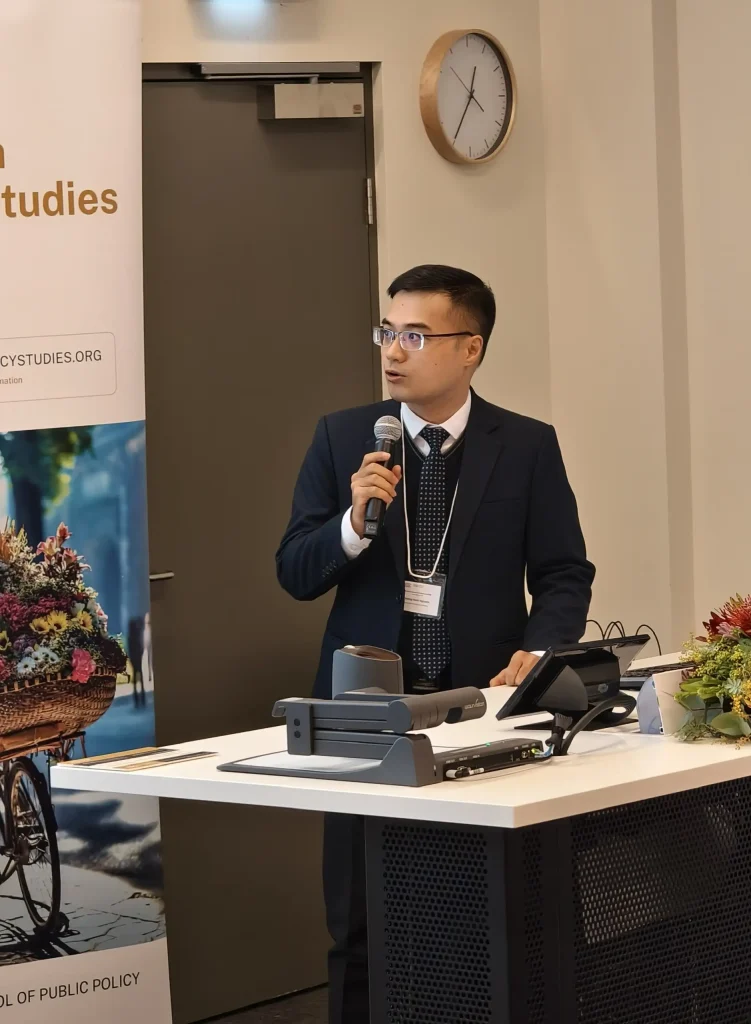
Dr. Nguyen Hoang Nam, NEU, presents research on Vietnam’s green growth model and the role of the circular economy in the new development phase post-Renovation
Governance, Institutions, and International Relations
The session “Governance, Institutions, and International Relations” chaired by Assoc. Prof. Nhung Nghiem, ANU, focuses on administrative reform, foreign policy, international trade, and the development of the private economic sector.
The reports in the session focus on analyzing the transformations in Vietnam over 40 years of Renovation across various aspects, from governance, foreign affairs, trade to private economic development. Dr. Do Thanh Hai from the Diplomatic Academy presents research on time management and administrative reform in Vietnam during 2024-2026; Assoc. Prof. Nguyen Hong Hai from VinUni analyzes the “bamboo diplomacy” and Vietnam’s international business policies amid uncertainties; Raghuvir Kelkar from Griffith University evaluates Vietnam’s export efficiency after 40 years of Renovation. From the National Economics University, Dr. Nguyen Thi Hoan and Dr. Nguyen Thi Tham present research on the Communist Party of Vietnam’s perspective on private economic development during the Renovation period.
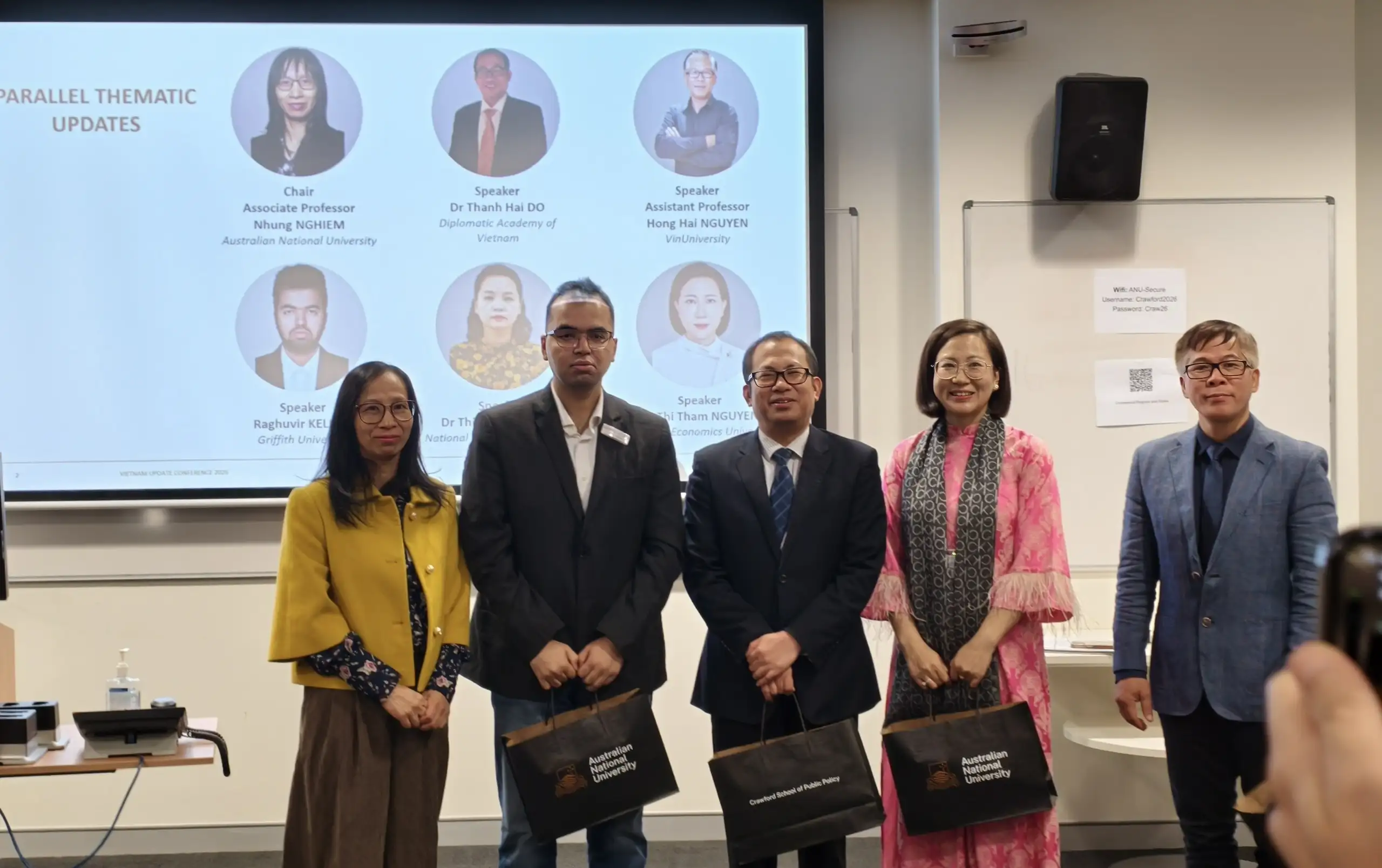
Scientists at the session “Governance, Institutions, and International Relations”
Economic Transformation, Innovation, and Markets
The session “Economic Transformation, Innovation, and Markets” chaired by Dr. Mai Nguyen, focuses on new trends strongly impacting Vietnam’s competitiveness and development model, such as renewable energy, artificial intelligence, electronic industry, digital platforms, and sustainable consumption.
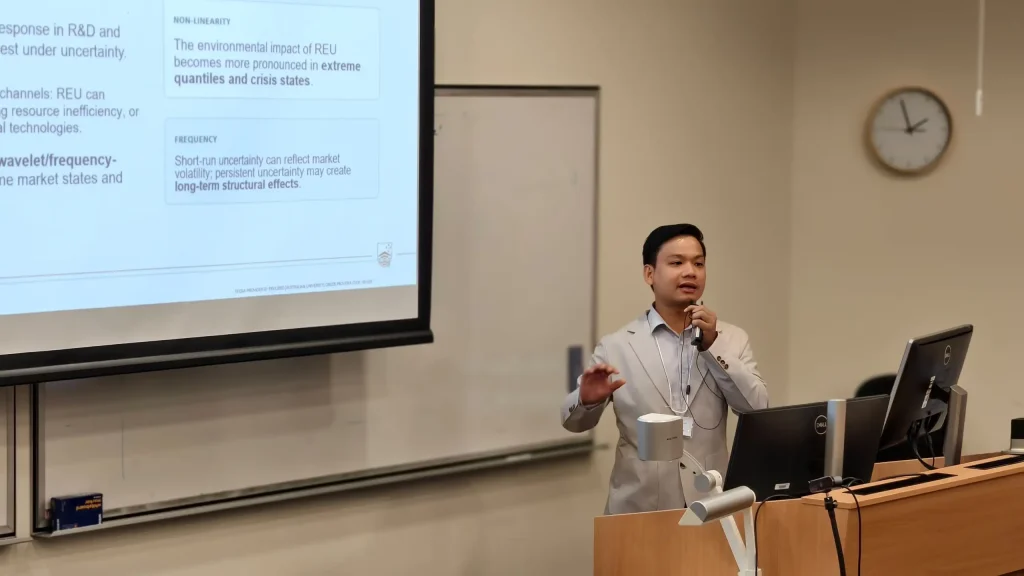
Assoc. Prof. Dr. Le Thanh Ha, NEU, presents research utilizing text analysis and natural language processing to explore the social consequences of uncertainty in renewable energy development in Vietnam
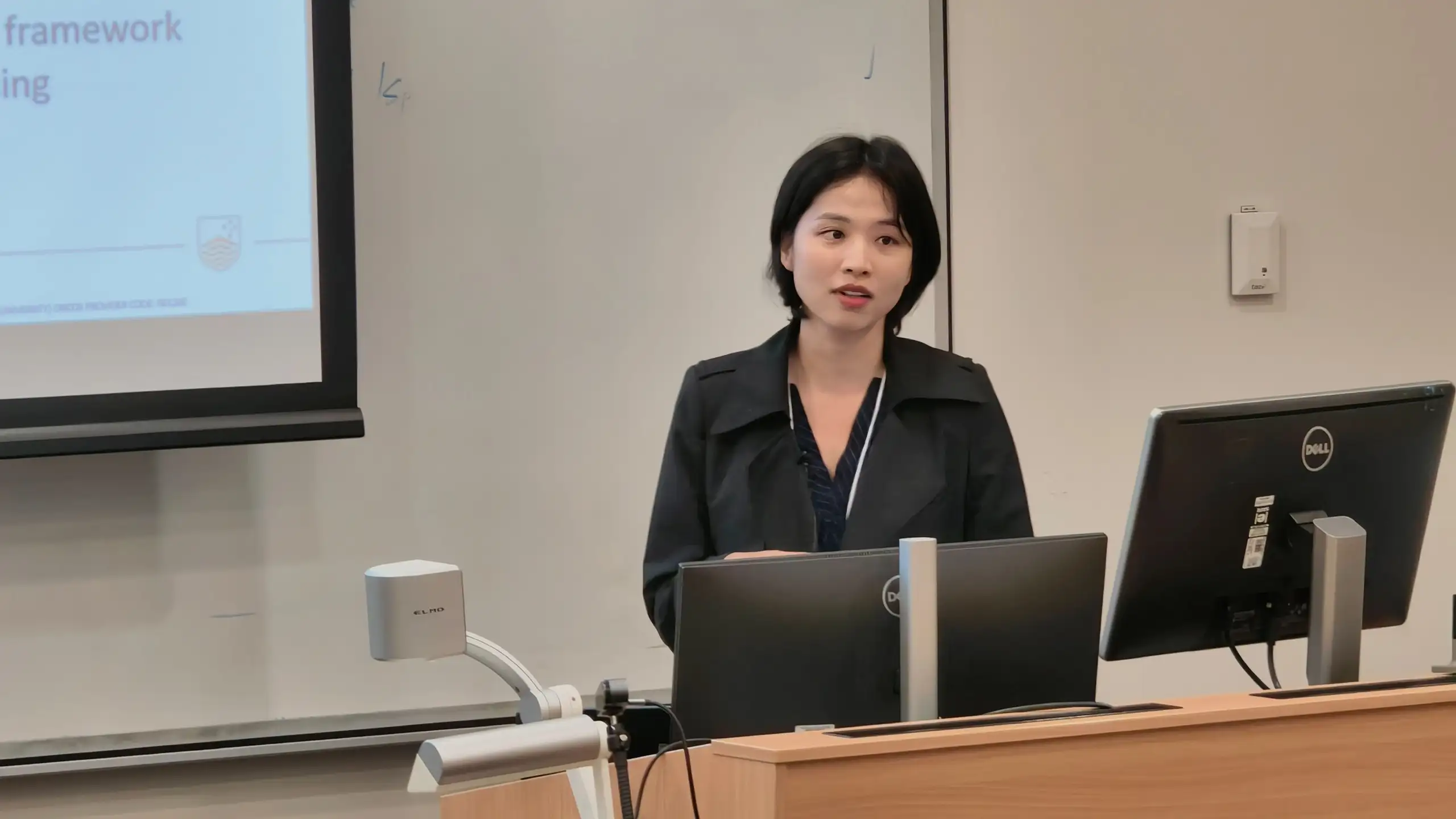
Dr. Tran Hong Nhung, NEU, presents research on the impact of short video recommendation algorithms on the sustainable shopping intentions of TikTok Shop users in Vietnam
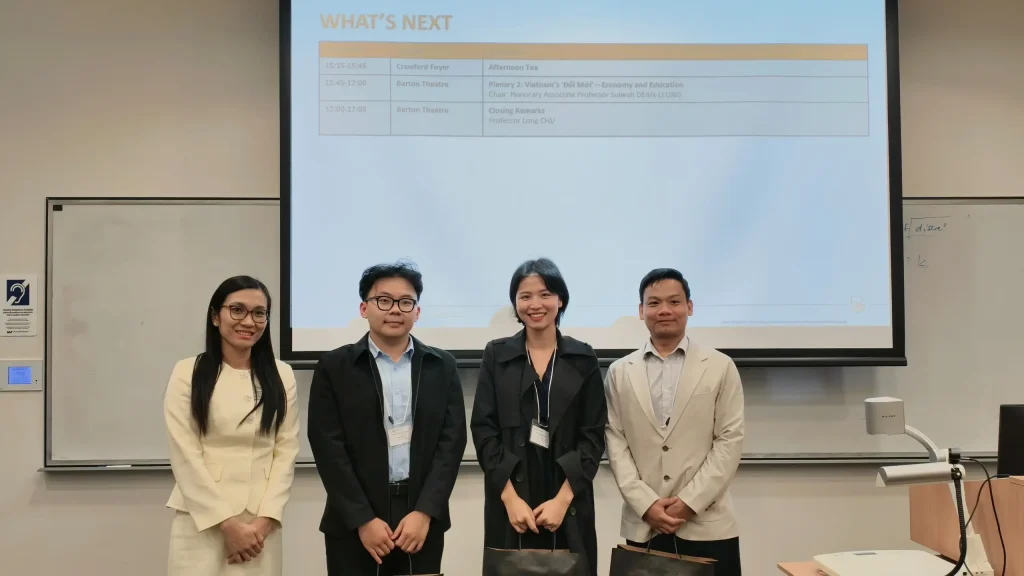
Scientists at the session “Economic Transformation, Innovation, and Markets”
Finance, Foreign Investment, and Economic Development
The session “Finance, Foreign Investment, and Economic Development” chaired by Assoc. Prof. Chung Tran, focuses on bank credit, institutional quality, the middle-income trap, and the impact of FDI on domestic production capacity.
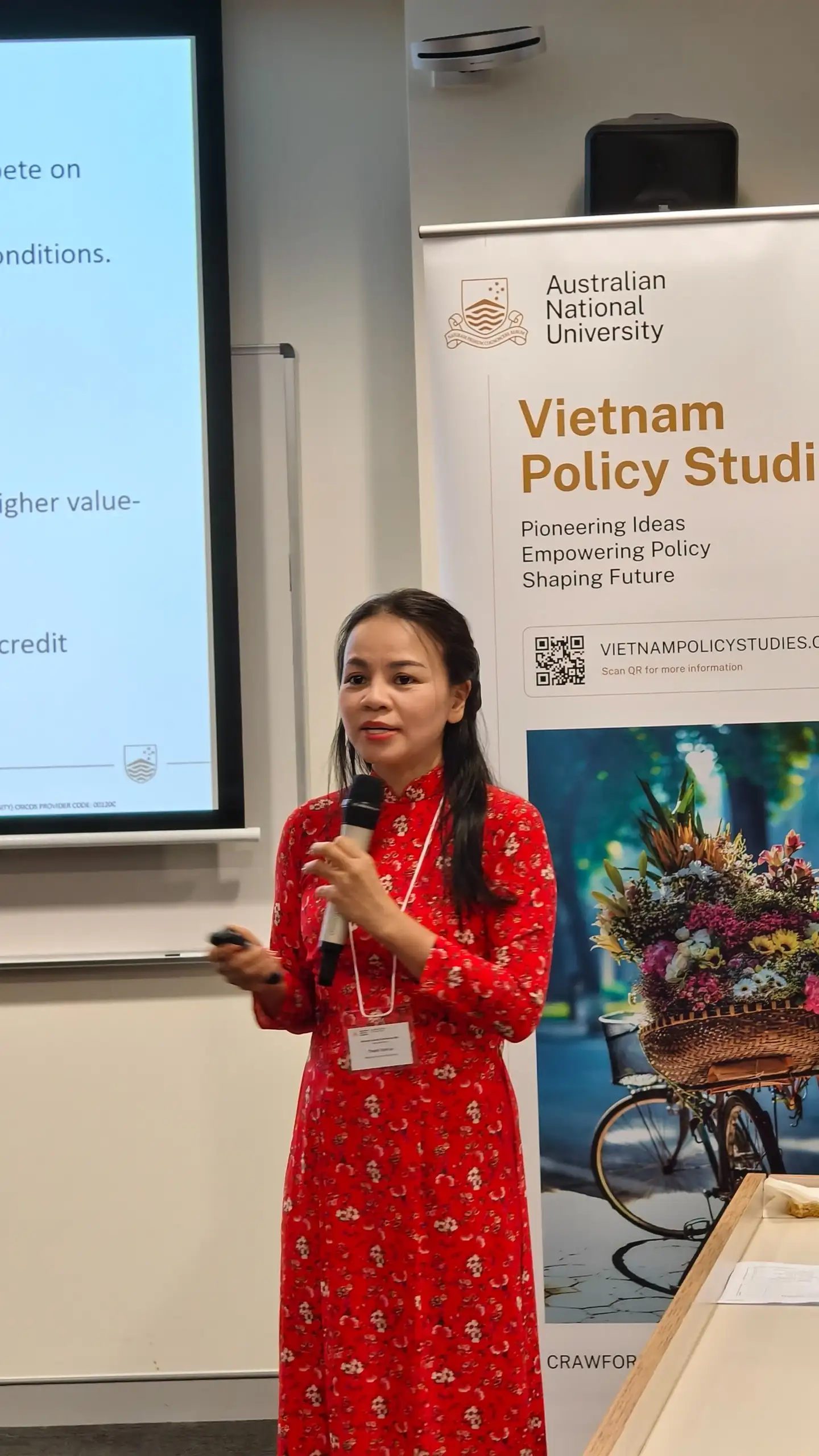
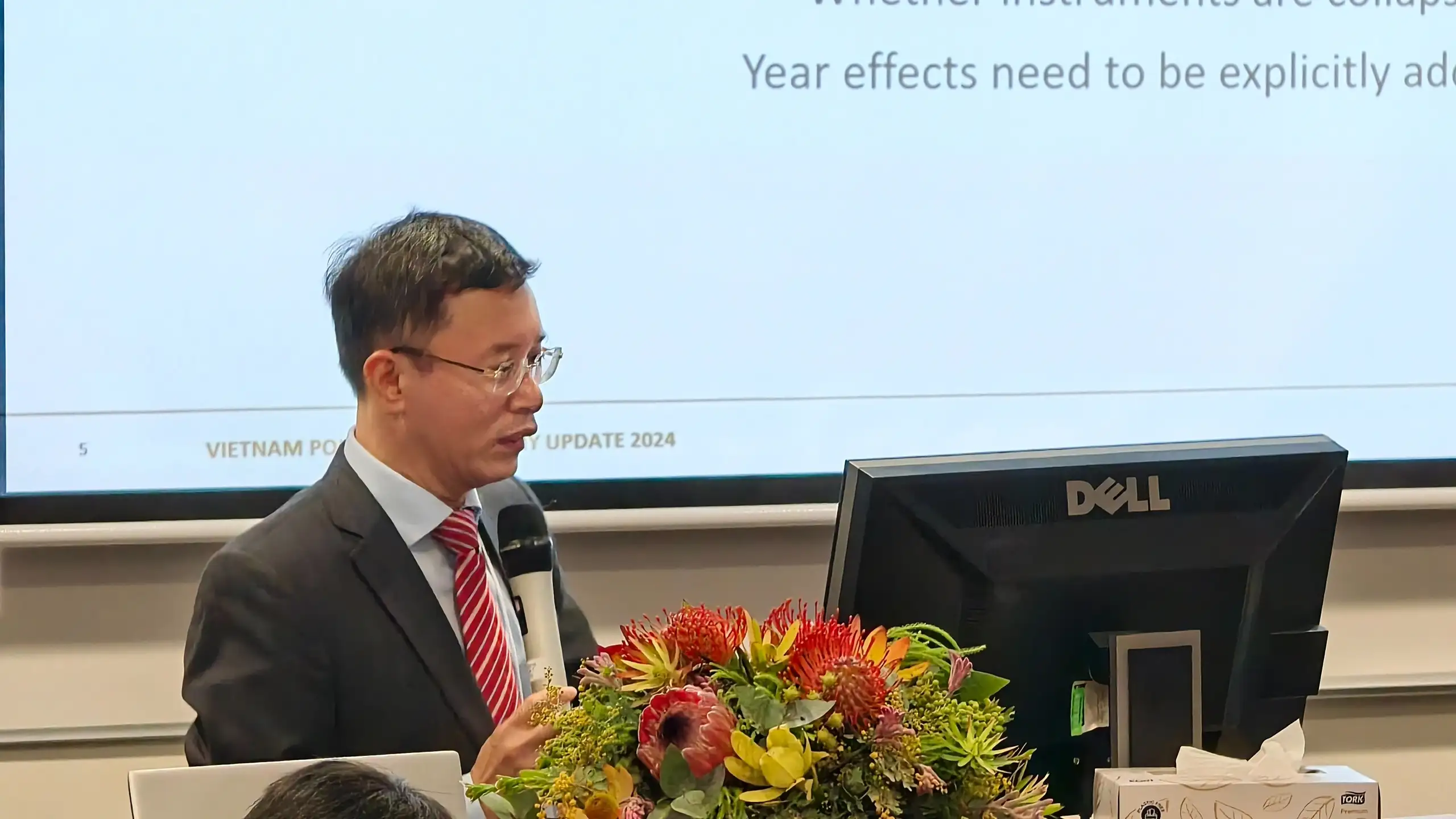
Assoc. Prof. Dr. Le Thanh Tam, NEU, presented research on bank credit growth in Vietnam post-Renovation, using data from listed commercial banks for the period 2016–2025; Prof. Dr. Le Quoc Hoi, NEU, participated as a reviewer
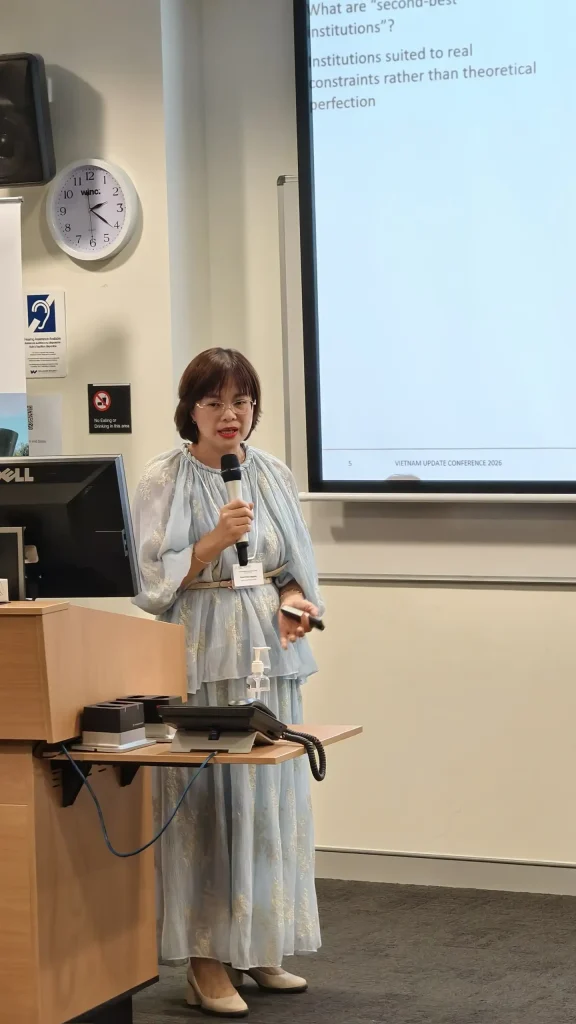
Assoc. Prof. Dr. Nguyen Thanh Hieu, NEU, presented research questioning whether “second-best institutions” are sufficient for Vietnam to overcome the middle-income trap
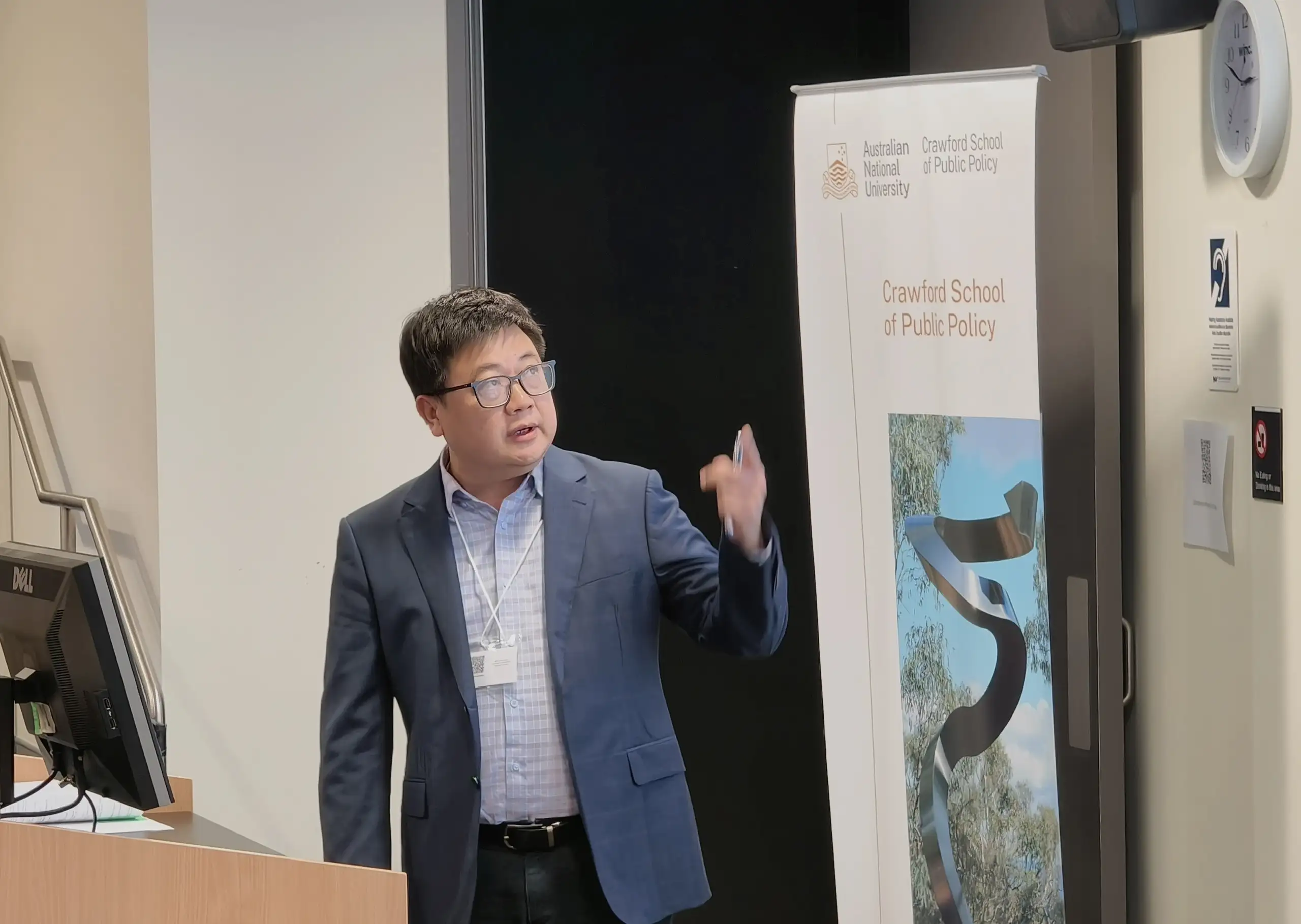
Assoc. Prof. Dr. Le Duc Hoang, NEU, presented research on the relationship between FDI dominance and the capacity for domestic capability upgrading in Vietnam’s high-tech industries
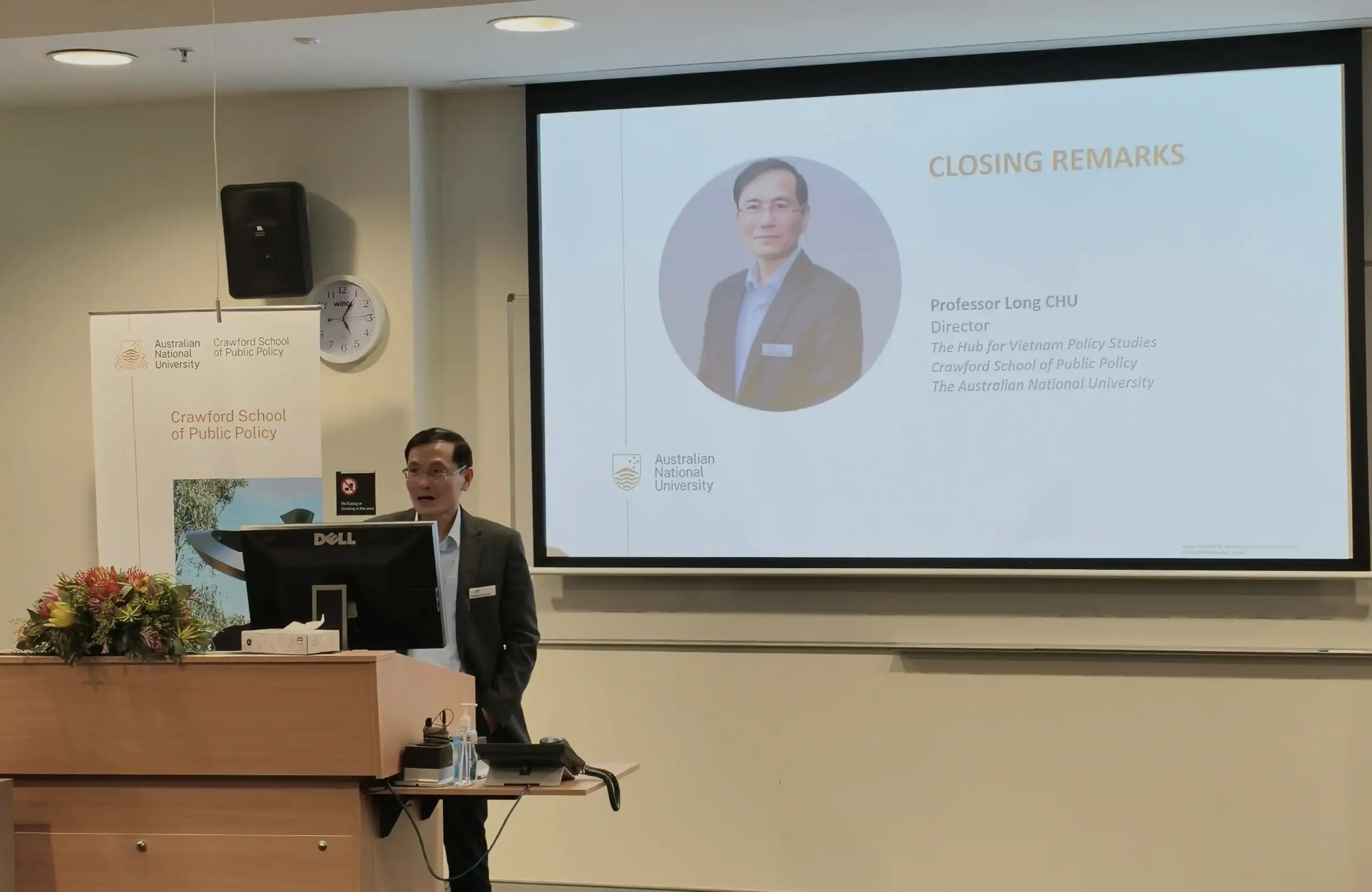
The conference concluded with remarks from Prof. Long Chu – Director of the Vietnam Policy Research Centre, Crawford School of Public Policy, ANU
The Academic Legacy of the National Economics University
A highlight of Vietnam Update 2026 was the extensive and diverse participation of NEU scientists in the academic program of the conference, from the first plenary session to specialized sessions on sustainable development, green transition, institutions, private economy, innovation, finance, and foreign investment.
NEU scientists not only participated as speakers but also took on roles as reviewers, engaging in academic exchanges and connecting research perspectives across various fields. The topics presented ranged from sustainable tourism development, urbanization, circular economy, and energy transition to artificial intelligence, FDI, credit, institutions, technological capacity, and private economic development. Through this, NEU’s research strengths were placed within broader discussions on contemporary development issues in Vietnam.
This academic presence facilitated direct exchanges between NEU scientists and international scholars, enabling access to new research directions and expanding professional networks. More importantly, interactions at the conference could serve as a foundation for subsequent activities such as joint research, international publications, scholar exchanges, and the formation of inter-institutional research groups.
In the long term, NEU’s co-organization and deep involvement in a forum like Vietnam Update contribute to enhancing the academic presence and recognition of the University within the international research community on Vietnam and the region. As academic connections are maintained regularly and linked with specific research outputs, they will gradually add value to NEU’s international collaboration network, while also reinforcing the University’s academic reputation on a substantive and sustainable basis.
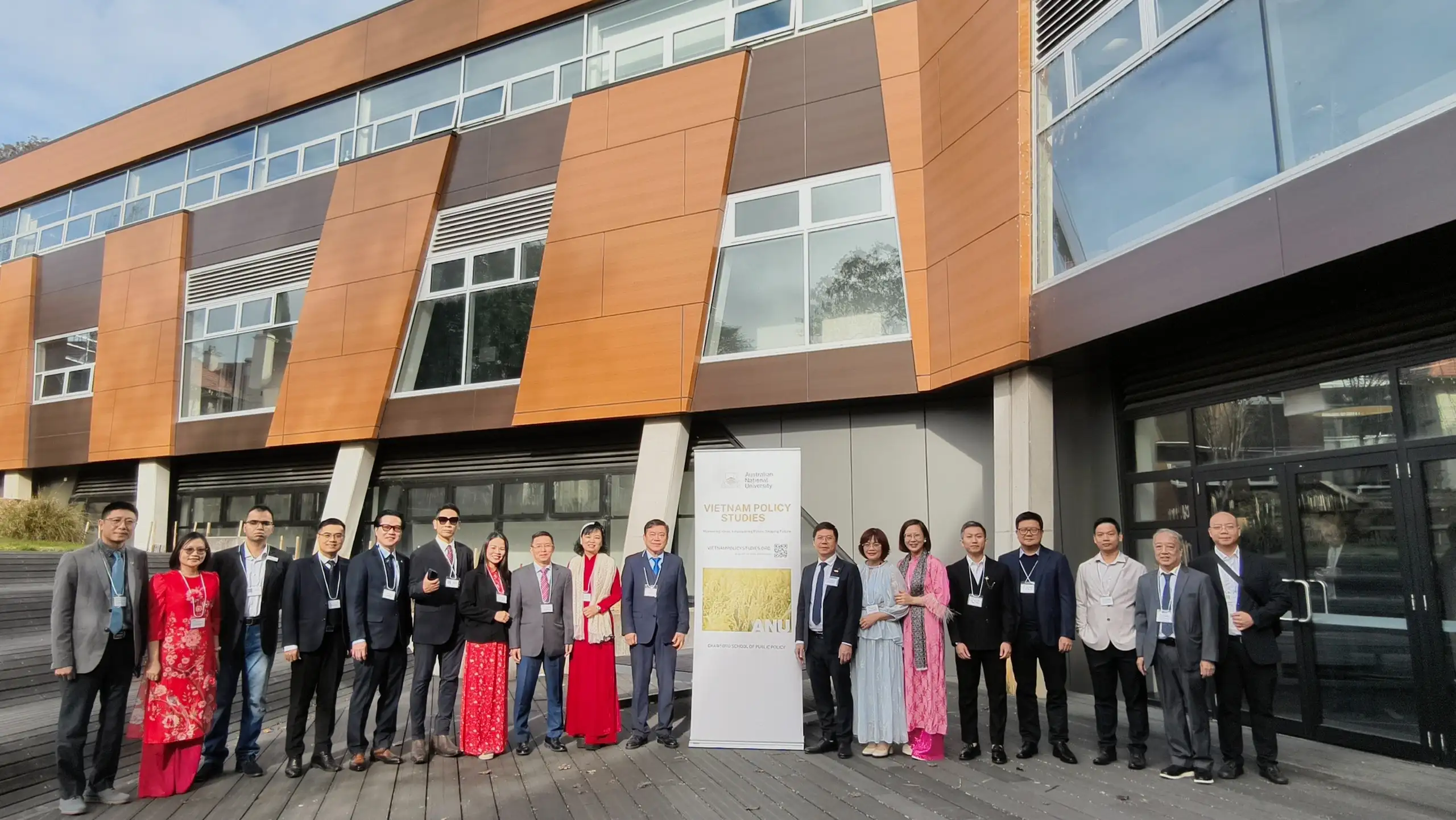
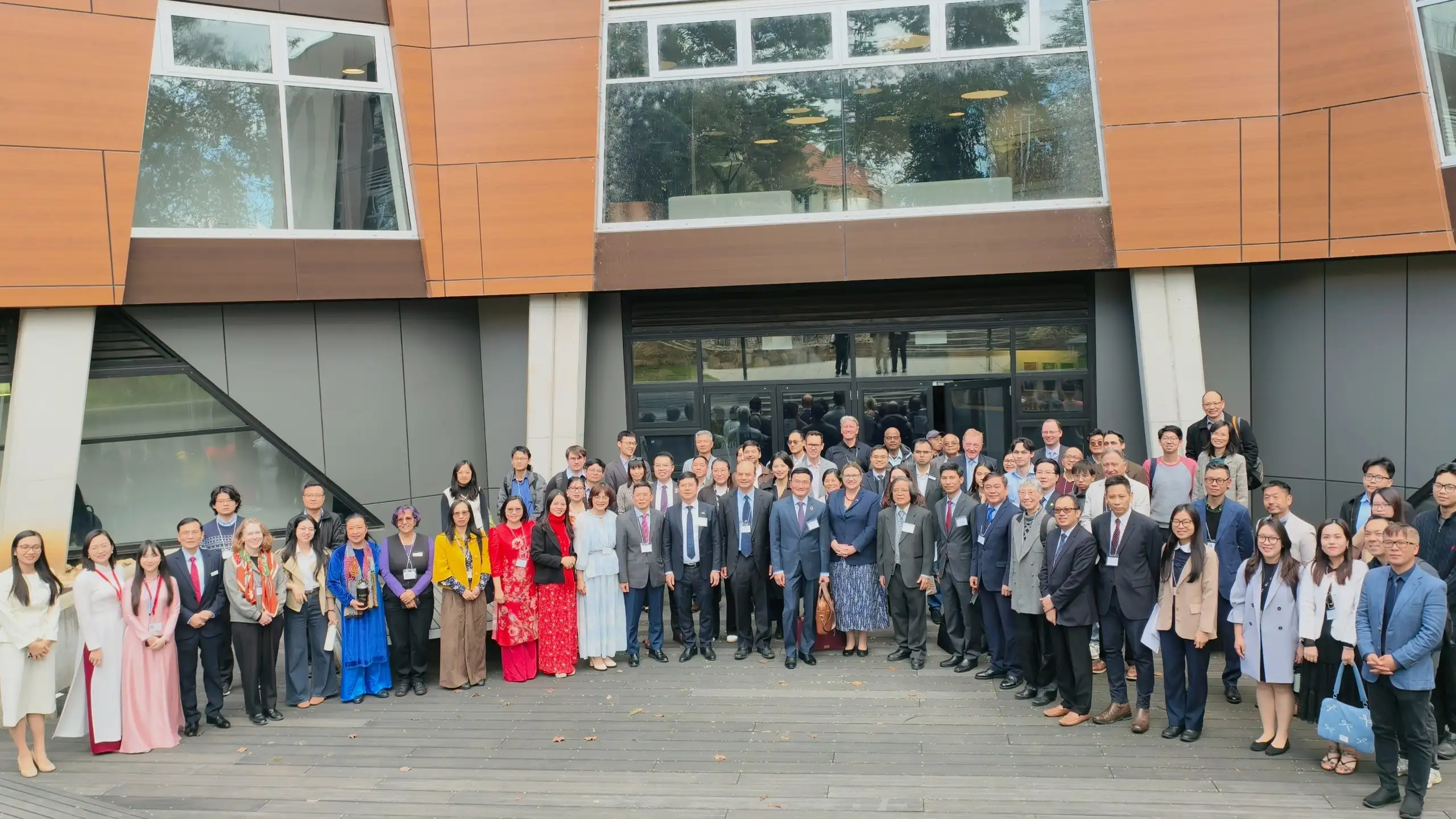
The delegation and scientists from the National Economics University attended Vietnam Update 2026 at the Australian National University.
Enhancing Research Connections and Policy Dialogue between Vietnam and Australia
Vietnam Update 2026 continues the foundation of academic collaboration between the National Economics University and the Australian National University in research on economics, policy, and development issues of Vietnam.
In 2024, NEU and the Crawford School of Public Policy jointly organized the Vietnam Policy and Economy Update conference, bringing together scientists, policymakers, and experts to discuss contemporary development issues in Vietnam. Vietnam Update 2026 will continue to build on this collaborative foundation at a special milestone—40 years since the initiation of the Đổi mới reforms.
The relationship between the two universities has been nurtured over generations of faculty members, scientists, and alumni, creating strong academic connections between the two sides. Prof. Dr. Tran Tho Dat, former Director of the National Economics University, Chairman of the NEU Scientific and Training Council, a distinguished alumnus of ANU, and currently President of the Vietnam-Australia Friendship Association, is one of the key figures promoting academic relations between NEU and ANU, as well as people-to-people exchanges between Vietnam and Australia.
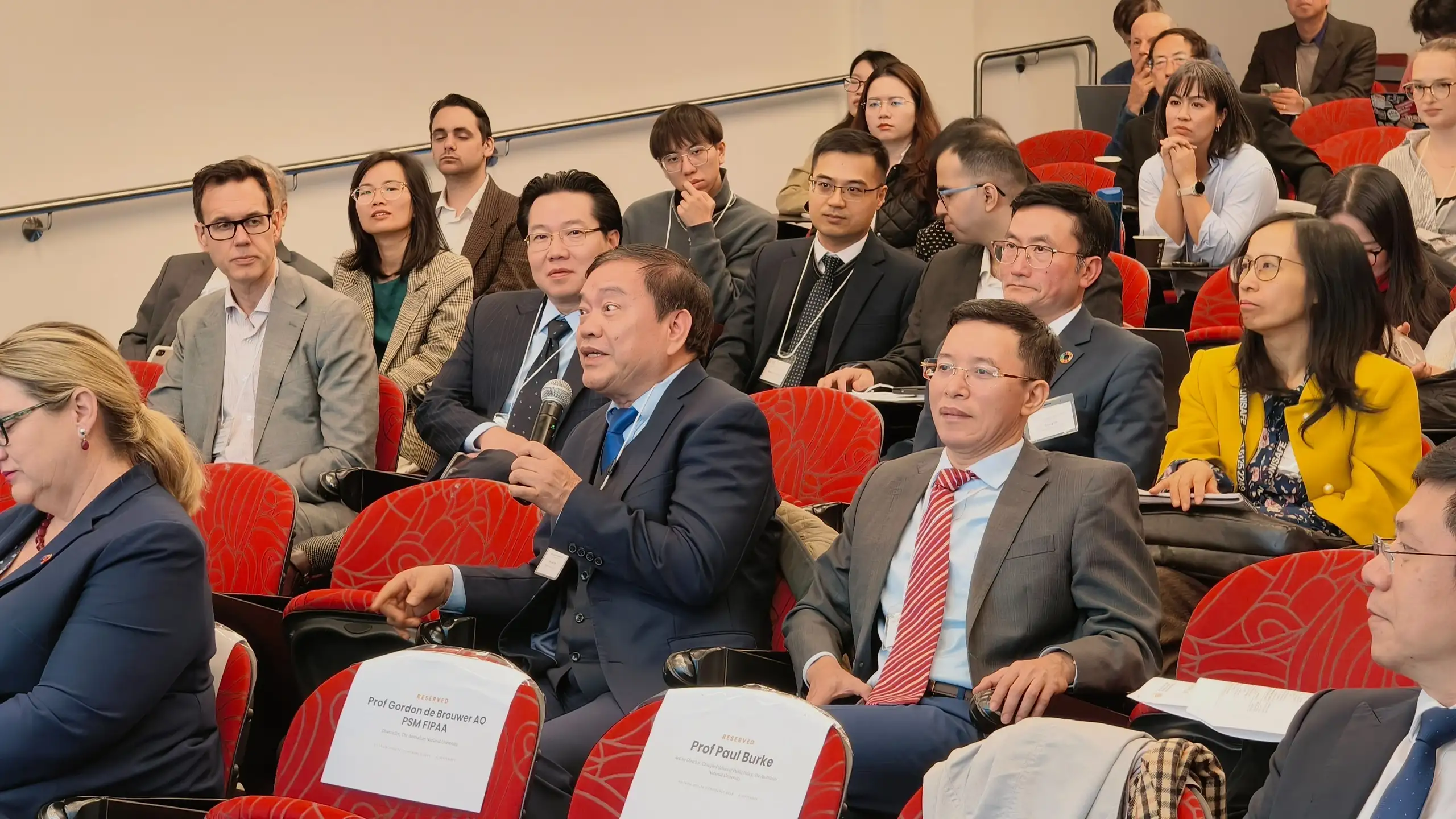
Prof. Dr. Tran Tho Dat, NEU speaking at the Conference
For the National Economics University, Vietnam Update 2026 is not only an academic event but also a demonstration of the University’s commitment to enhancing international research collaboration, promoting knowledge exchange, and contributing evidence-based scientific arguments to Vietnam’s development process.
Building on the established cooperation, NEU and ANU aim to further develop Vietnam Update into a forum for academic exchange, joint research, and policy dialogue, thereby connecting researchers, experts, and policymakers; while expanding opportunities for international publication, developing a network of scholars, and facilitating knowledge exchange between Vietnam and Australia.
For NEU, collaborative activities like Vietnam Update are significant in expanding the network of high-quality academic partners, increasing the presence of NEU scientists in the international research community, and creating additional connections for future research, training, and academic exchange activities. When maintained regularly and linked with specific research outputs, these connections will enhance NEU’s presence and integration into international knowledge networks.
As Vietnam embarks on a new phase of development after four decades of Đổi mới, the value of forums like Vietnam Update lies not only in reflecting on past achievements but also in their ability to pose new questions, establish new evidence, and bring scientific knowledge closer to policy-making and development practice.
As emphasized by Assoc. Prof. Dr. Nguyen Huu Anh, Vice President of the National Economics University, the discussions at Vietnam Update 2026 are expected to help scientists not only gain a deeper understanding of how Vietnam has changed but also think more profoundly about how Vietnam can advance in its next development phase.
Article and photos: International Collaboration Department, Scientific Management Department, and Communications Department



