
Scientific Conference “Social Trust and Quality Assurance in Distance Education at Higher Education Institutions in Vietnam”
01/10/2026 2026-10-20 9:37Scientific Conference “Social Trust and Quality Assurance in Distance Education at Higher Education Institutions in Vietnam”
Scientific Conference “Social Trust and Quality Assurance in Distance Education at Higher Education Institutions in Vietnam”
On September 30, 2026, the National Economics University (NEU) will host the scientific conference “Social Trust and Quality Assurance in Distance Education at Higher Education Institutions in Vietnam.” In the context of digital transformation significantly expanding access to education, the conference focuses on a foundational issue for the development of distance education: genuine quality and social trust. Through discussions among scientists, educational administrators, experts, faculty members, and learners, various perspectives and insights will be shared to aim towards a mode of education that is trusted by learners, recognized by society, and valued by the labor market based on the competencies of graduates.
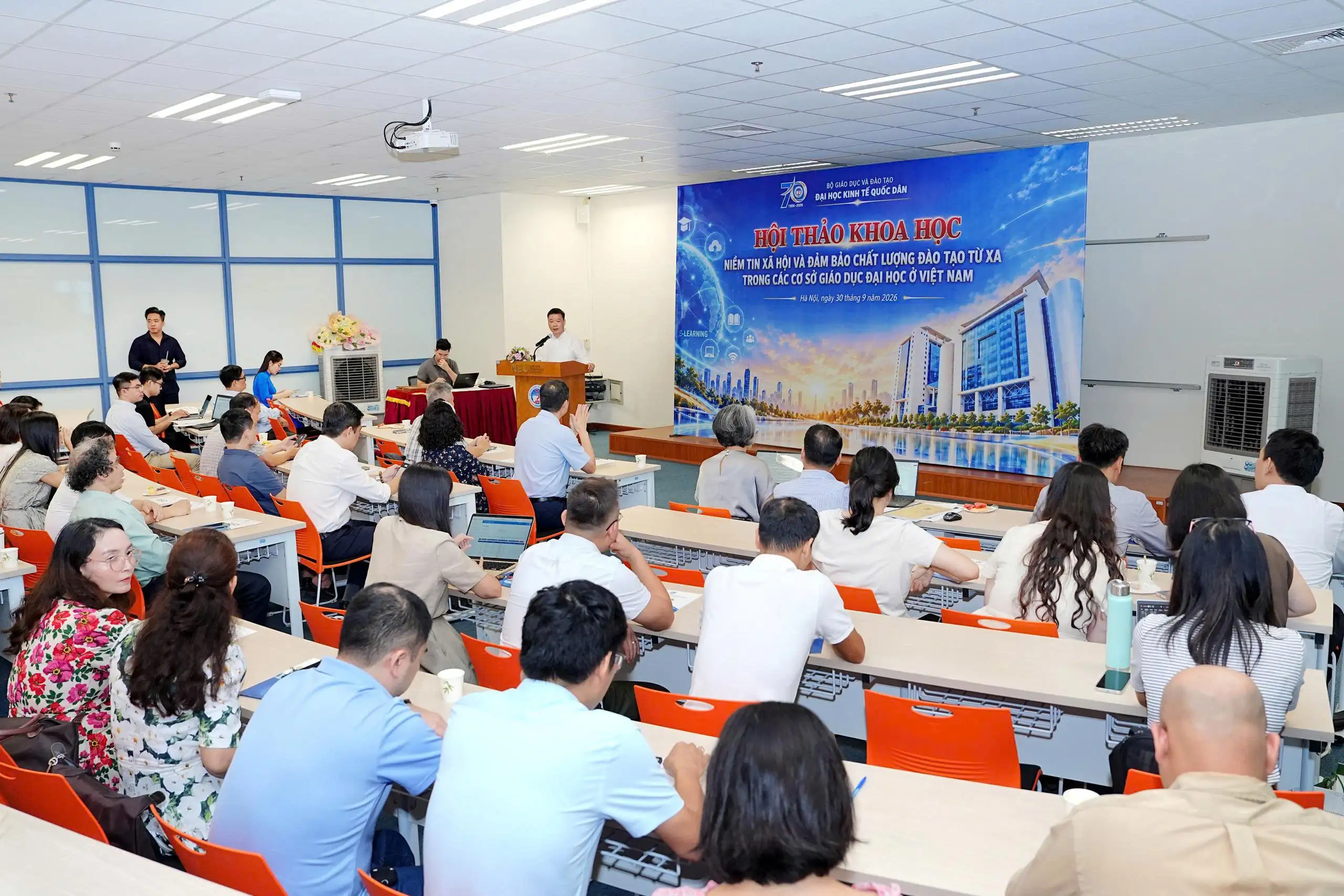
Overview of the Conference
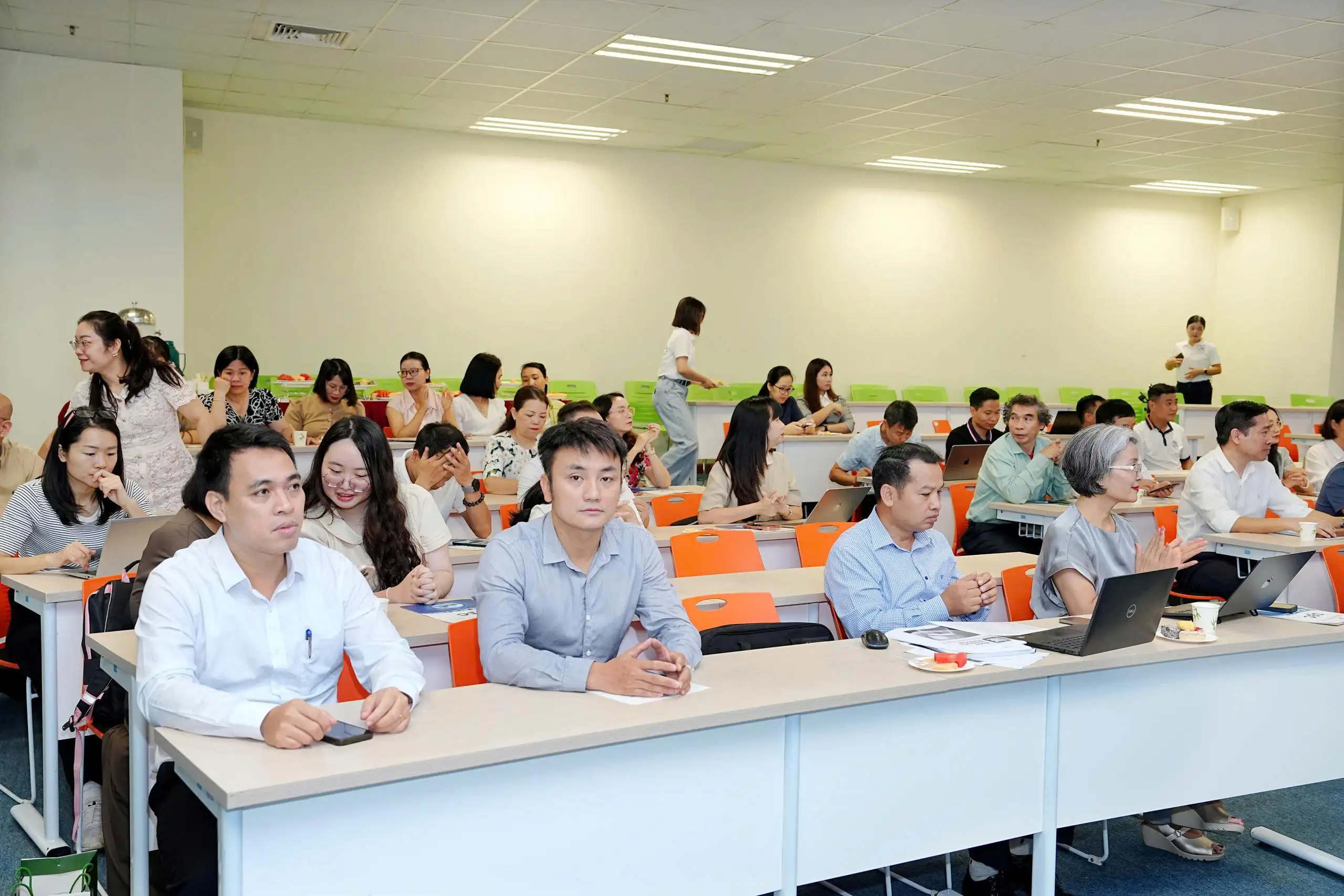
Attending the conference on behalf of the National Economics University were: Assoc. Prof. Dr. Bui Huy Nhuong – Vice President of the University; Assoc. Prof. Dr. Dam Quang Vinh – Director of the Center for Distance Education; along with representatives of leadership from affiliated and subordinate units of the University; scientists, experts, lecturers, students, representatives from higher education institutions, partners, and authors of presentations.
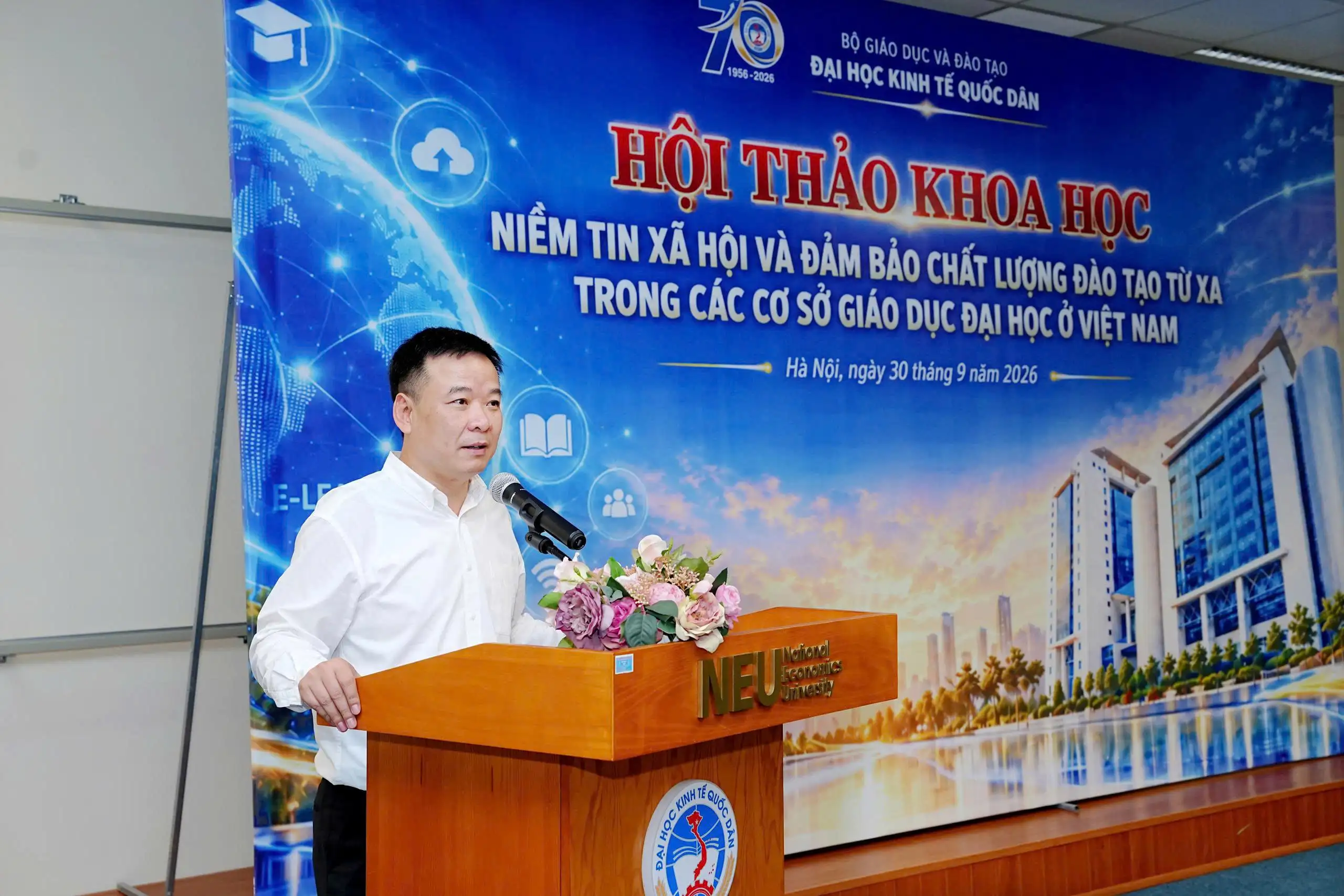
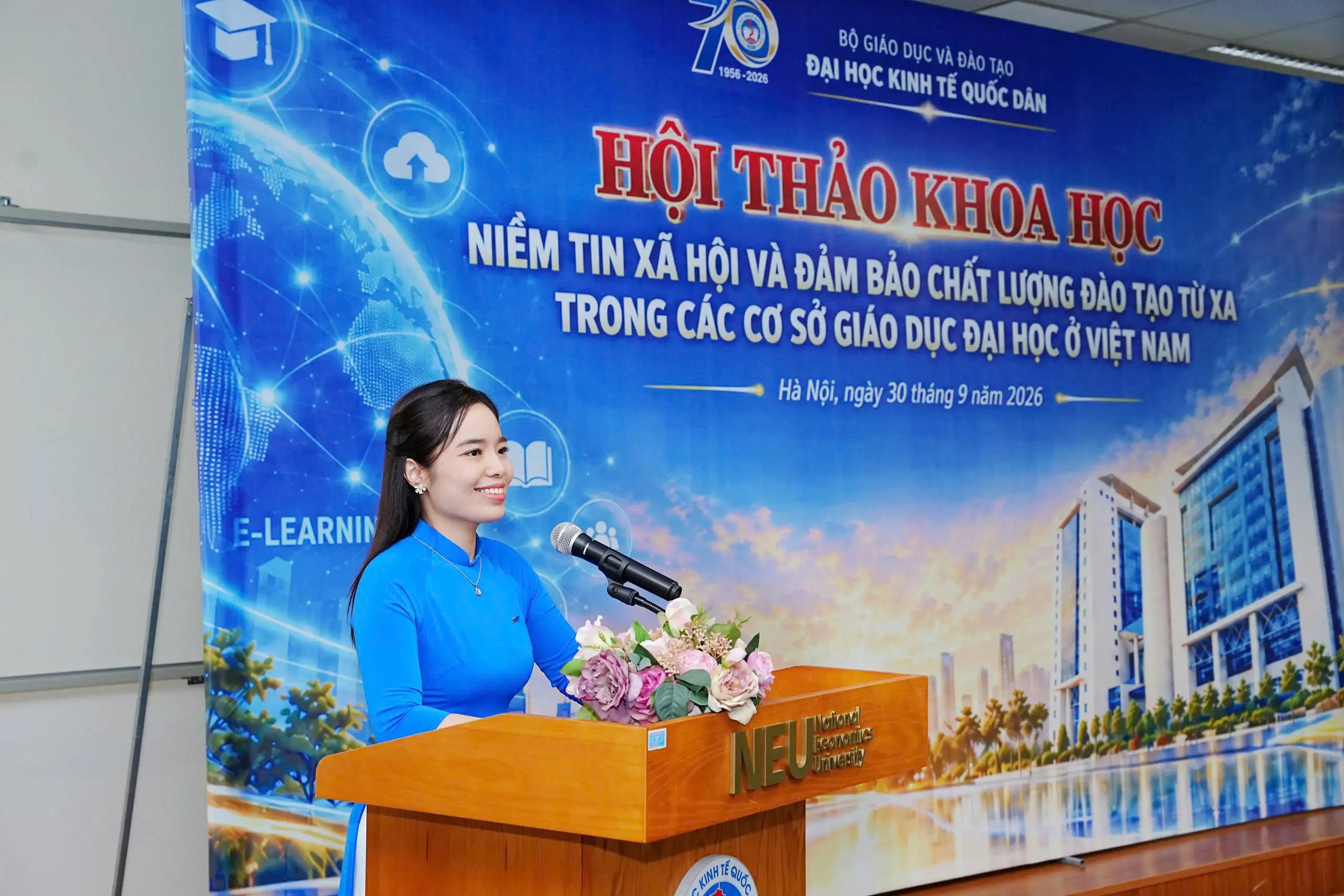
Assoc. Prof. Dr. Bui Huy Nhuong – Vice President of the National Economics University delivers a speech
In his opening remarks and keynote address at the conference, Assoc. Prof. Dr. Bui Huy Nhuong – Vice President of the National Economics University emphasized that in the context of digital transformation and the robust development of the knowledge economy, distance education is increasingly becoming an integral part of the higher education system, contributing to lifelong learning, expanding access to education, and meeting the needs for human resource development. However, the expansion opportunities also pose higher demands on the quality and accountability of higher education institutions.
According to Assoc. Prof. Dr. Bui Huy Nhuong, the major challenge of distance education lies not only in technology but also in social trust. Such trust cannot be built solely through communication or general commitments to quality, but must begin with genuine quality, ensured by systems, verified by results, and recognized by society through the competencies and values that learners create after their training process.
To build trust, the quality of distance education needs to be viewed through a comprehensive approach, from program design, digital learning materials, technological platforms, teaching methods, interaction between lecturers and learners, assessment, support services to data management, information security, and quality monitoring mechanisms. Consequently, quality assurance efforts need to shift from an input control and process compliance approach to focusing on output results, learner experiences, and the value that the academic programs create for society.
In the context of rapid advancements in artificial intelligence, the Vice President of the University believes that educational institutions need to move beyond merely “digitizing distance education” to aim for “transforming educational models on digital platforms.” This requires not just putting lectures online but redesigning learning experiences, interaction methods, assessment, and support for learners to suit the digital environment. Along with the opportunities brought by technology and artificial intelligence come new demands for academic integrity, data privacy, the responsibilities of learners and faculty members, and the governance capabilities of higher education institutions.
“From this conference, we aim not only for a goal of high-quality distance education but also to establish a mode of education that learners trust, society acknowledges, and the labor market evaluates based on the competencies of graduates,” Assoc. Prof. Dr. Bui Huy Nhuong emphasized.
The interest in the conference topic is reflected in the number of submissions received by the Organizing Committee. During the preparation phase, the conference received 79 papers from scientists, experts, educational administrators, lecturers, students, and those directly involved in distance education. After peer review and revisions, 46 papers were selected for publication in the Conference Proceedings. The diversity in perspectives, experiences, and evidence in the research is expected to provide additional scientific and practical arguments for the process of policy improvement, management, and organization of distance education in Vietnam. The program script also notes that the Organizing Committee received 79 submissions and conducted peer reviews to select quality papers for the Proceedings.
The professional exchanges at the conference focused on three approaches: governance and quality assurance; learners’ practical experiences; and the application of technology and data analysis in online education.
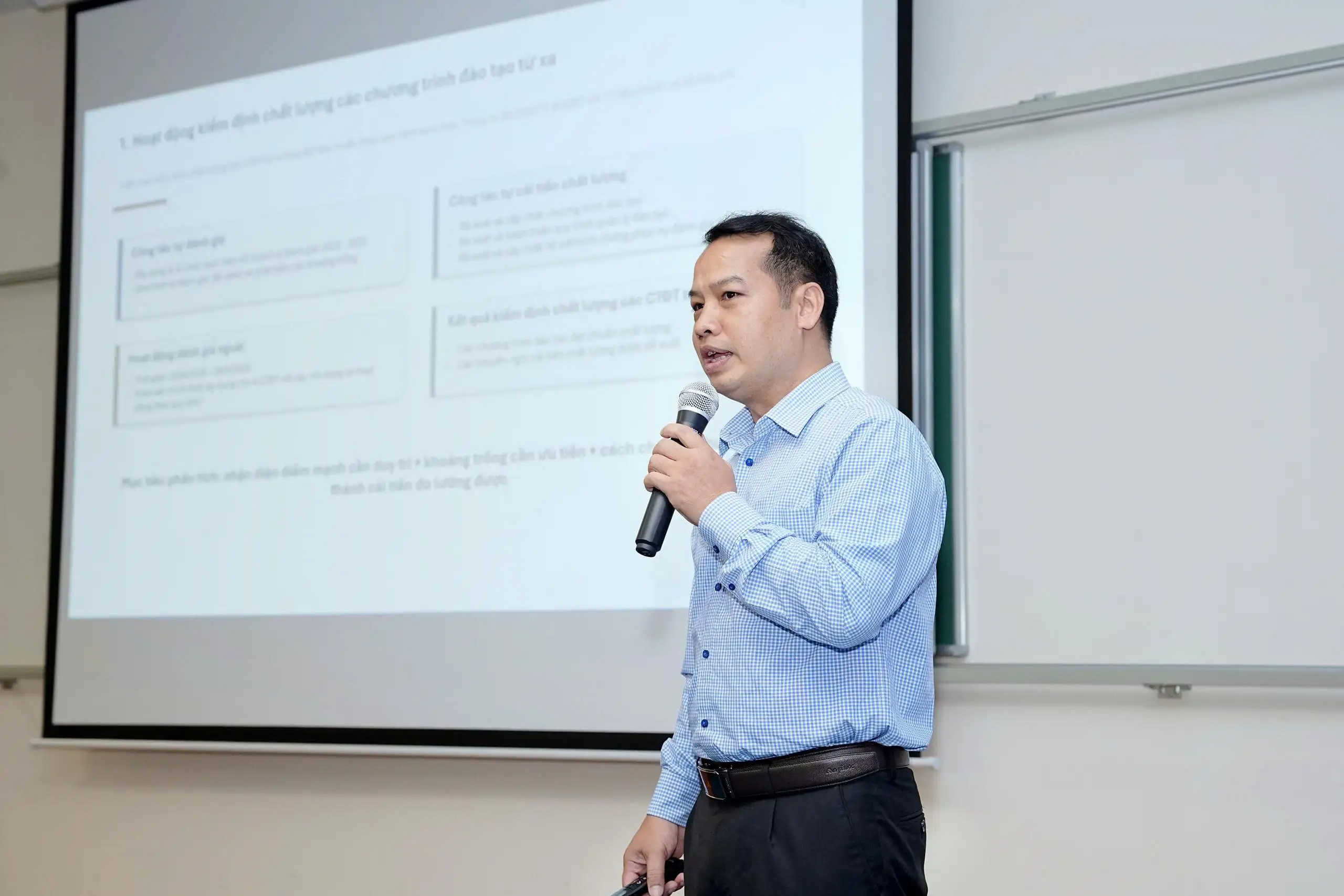
Dr. Dam Son Toai – Head of the Examination and Quality Assurance Department presented a paper at the Conference
From the perspective of quality assurance, Dr. Dam Son Toai – Head of the Examination and Quality Assurance Department at the National Economics University presented a paper titled “Improving Education Quality Based on the Results of Quality Assurance of Distance Education Programs at the National Economics University.” The paper focused on the process of self-assessment, self-improvement, and external evaluation of distance education programs, identifying strengths to maintain, gaps to prioritize, and ways to translate recommendations into measurable improvements.
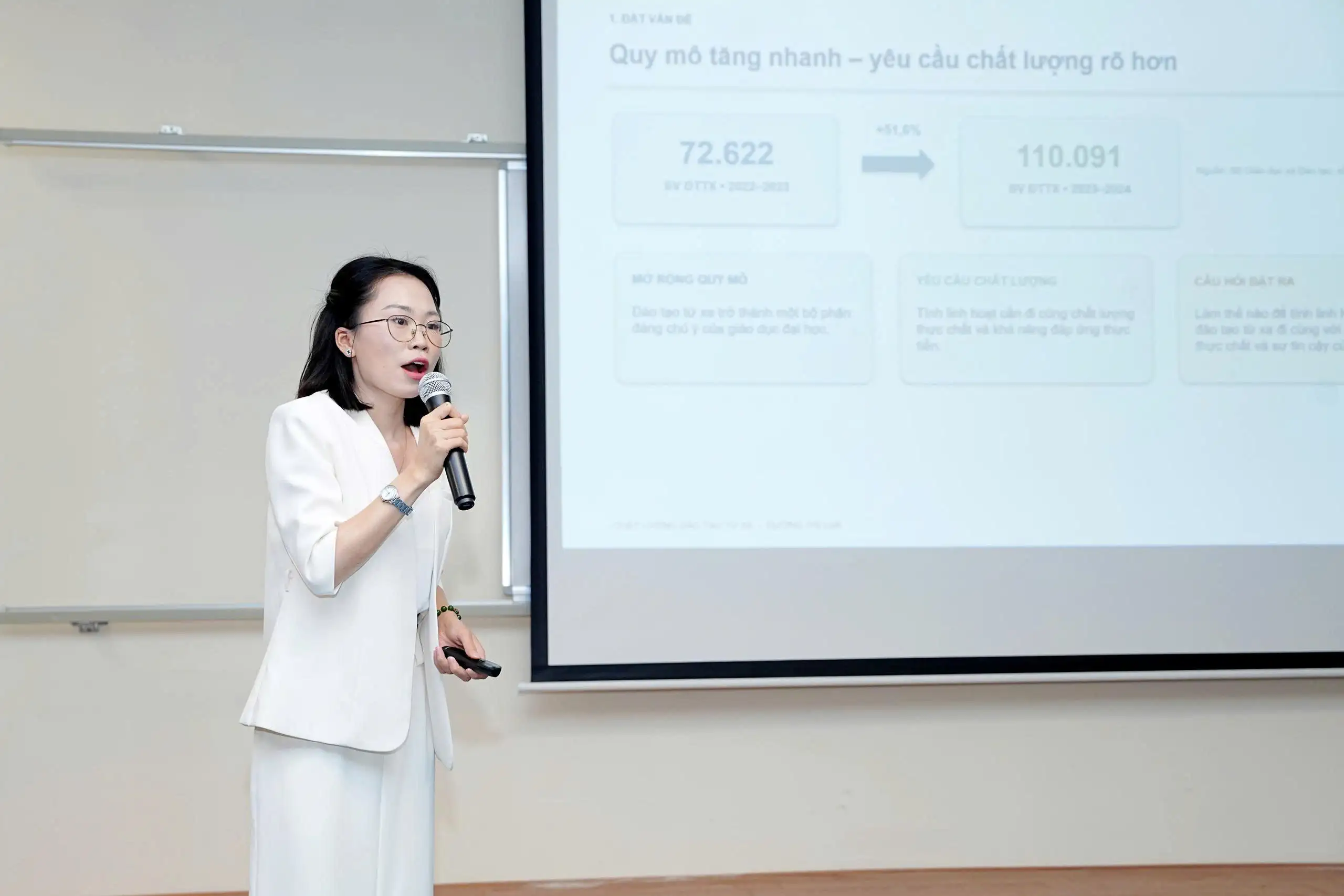
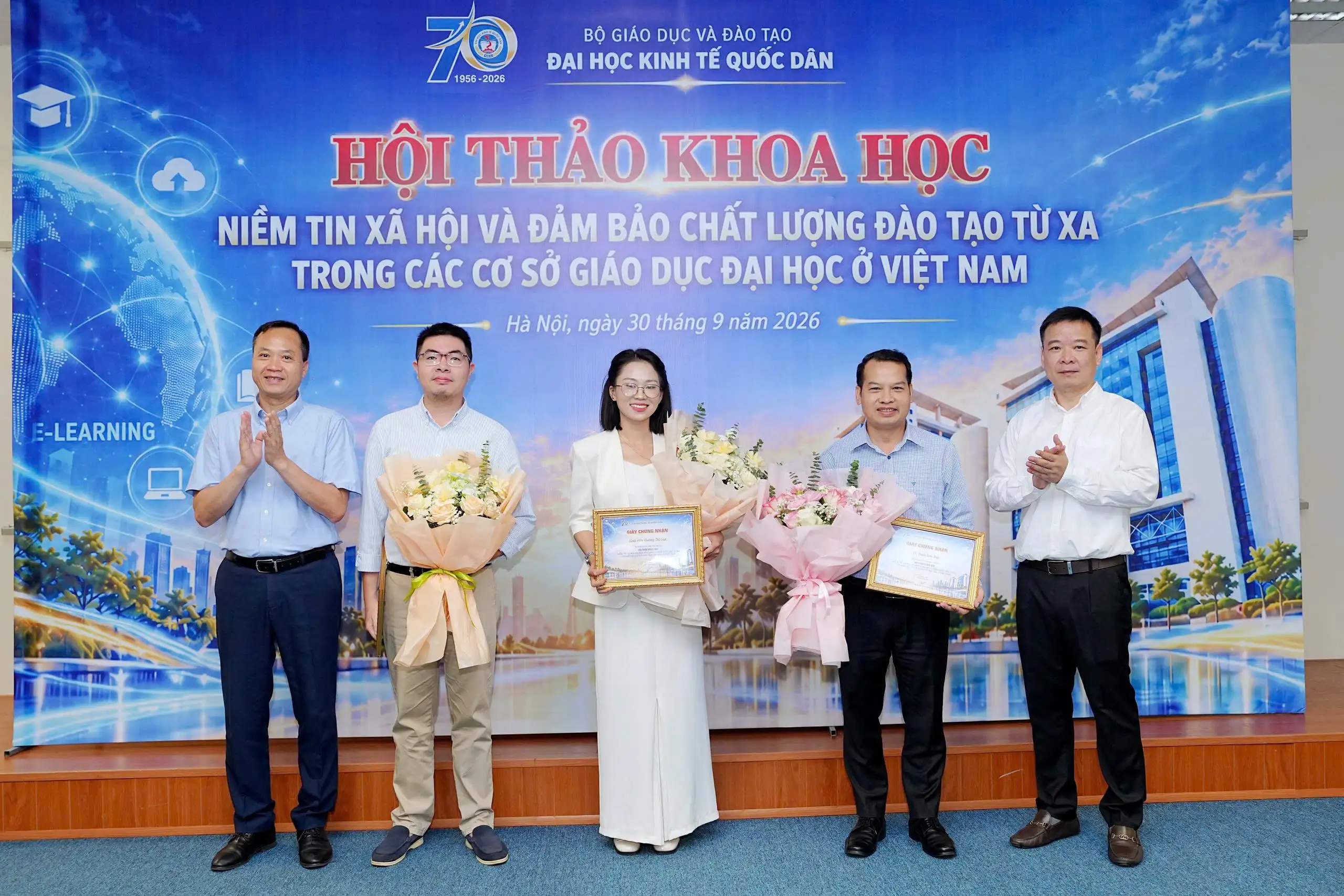
Student Duong Thi Lua – Class Law AUM40, National Economics University presented a paper
Approaching from the learner’s perspective, student Duong Thi Lua – Class Law AUM40, National Economics University presented a paper on the quality of distance education in higher education from the viewpoint of stakeholders. The study examines quality through three entities: the institution, the learners, and employers and society. Accordingly, quality is not only reflected in the curriculum, faculty, learning materials, or technological infrastructure but also in the learning experience, accessibility, and interaction of learners, as well as practical competence, the ability to apply knowledge, and career adaptability after training.
From this approach, the paper argues that the quality of distance education is not a “product” of the institution alone but the result of a process of interaction, transformation, and validation: the institution creates the environment, learners transform resources through the learning process, and the training outcomes are demonstrated by competencies and ultimately validated by employers and society.
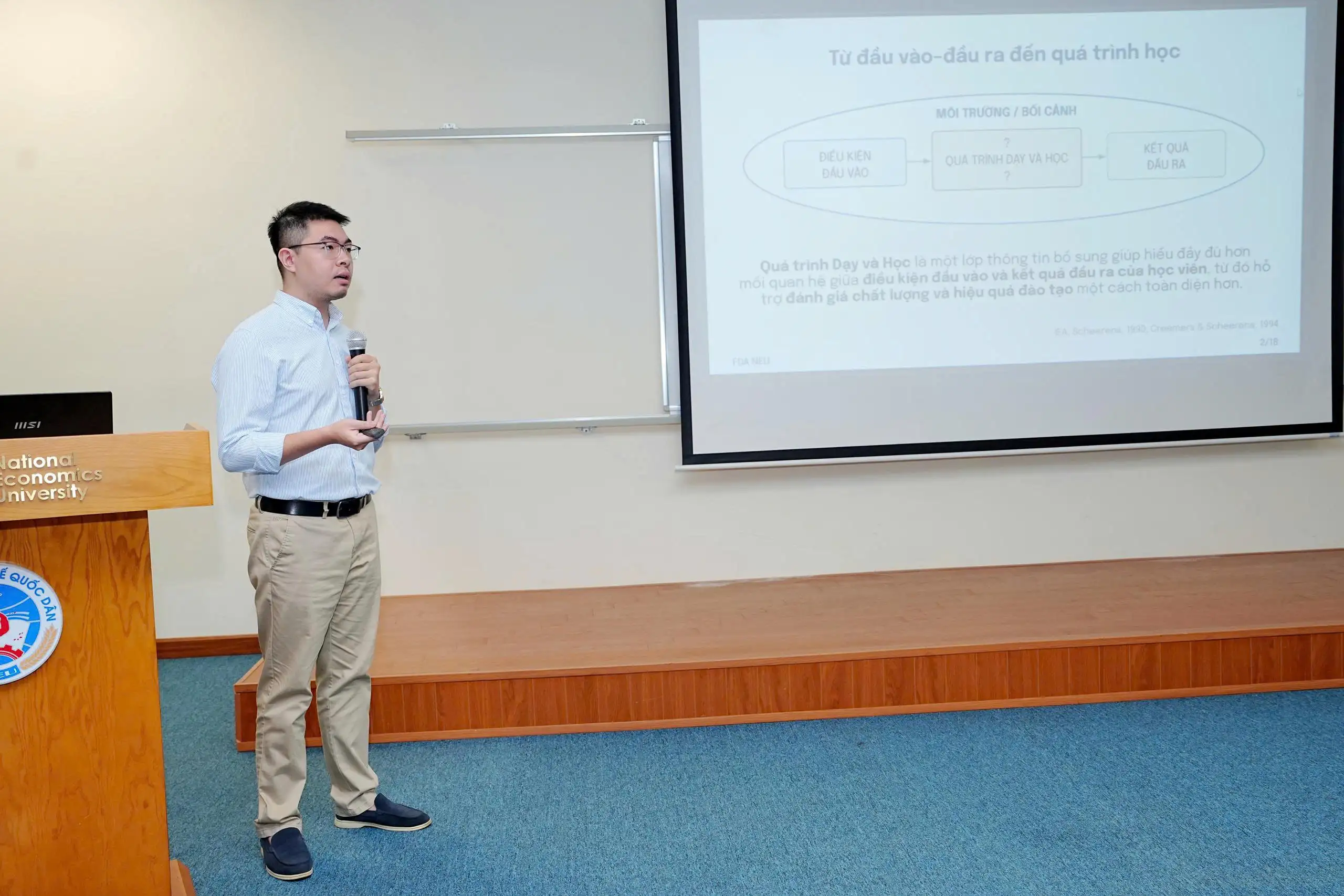
ThS. Ngo Thai Hoa – Lecturer at the Faculty of Data Science and Artificial Intelligence, National Economics University presented a paper
From a technological perspective, ThS. Ngo Thai Hoa – Lecturer at the Faculty of Data Science and Artificial Intelligence, National Economics University presented a paper titled “Learning Data Analysis in MOOC: From Behavior Identification to Learner Support and Quality Improvement – A Structured Literature Overview and Implications for Online Education in Vietnam.” This content adds a perspective on leveraging learning data to support learners and improve the quality of online education.
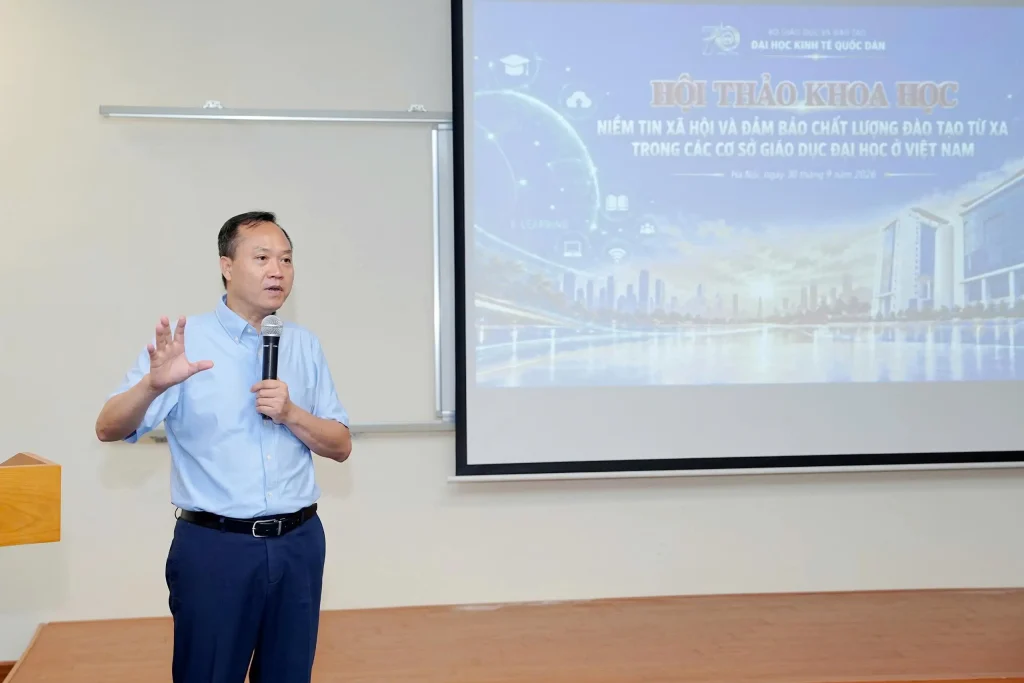
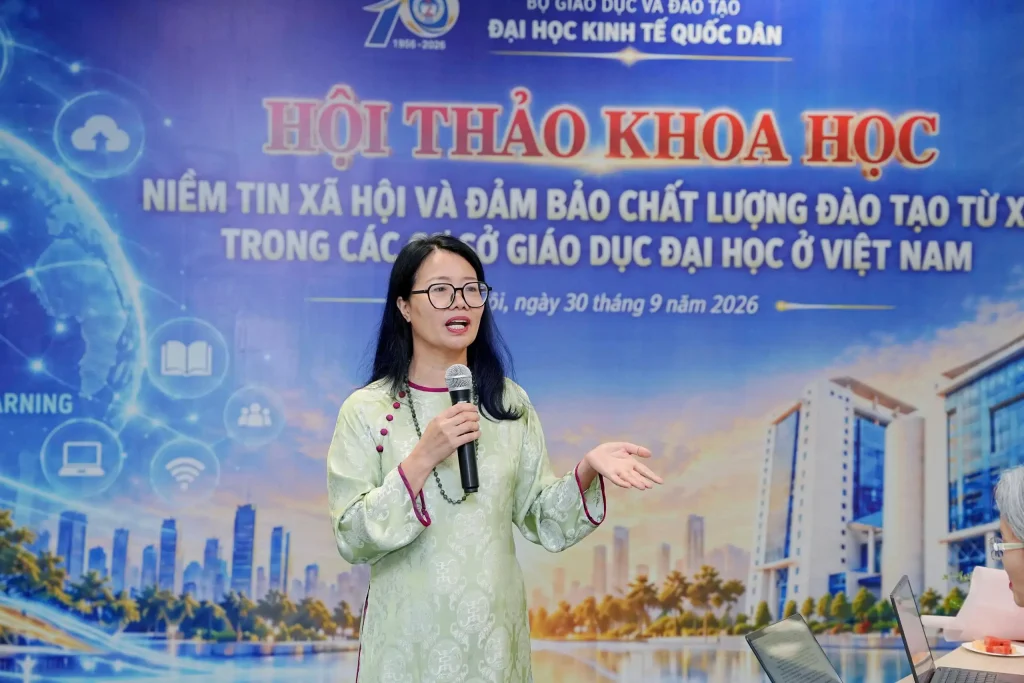
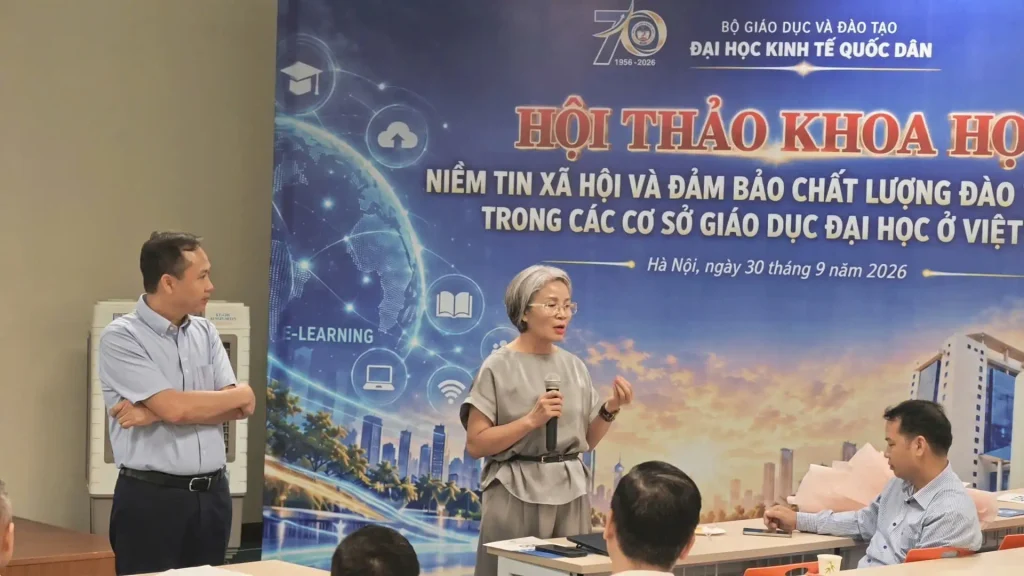
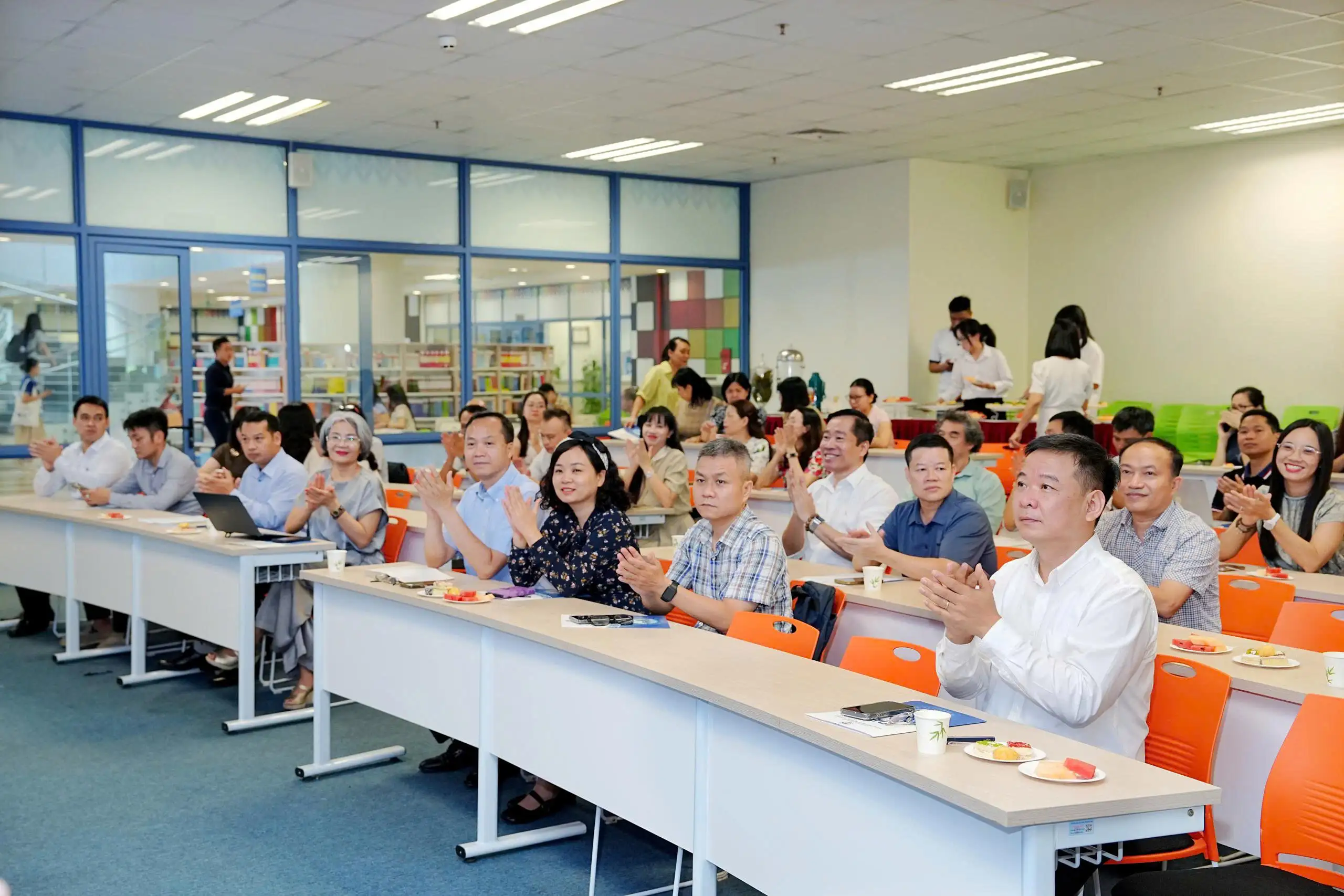
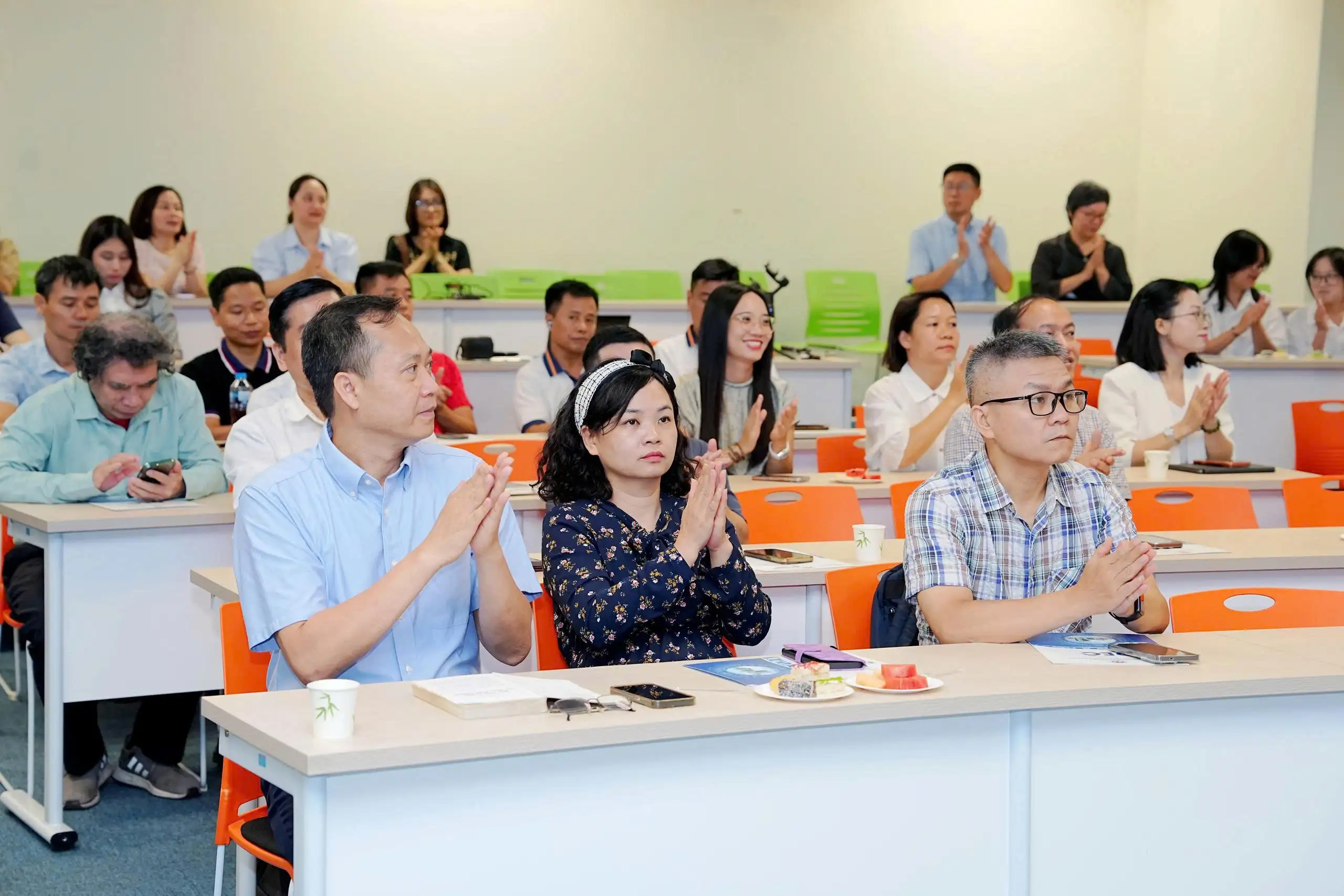
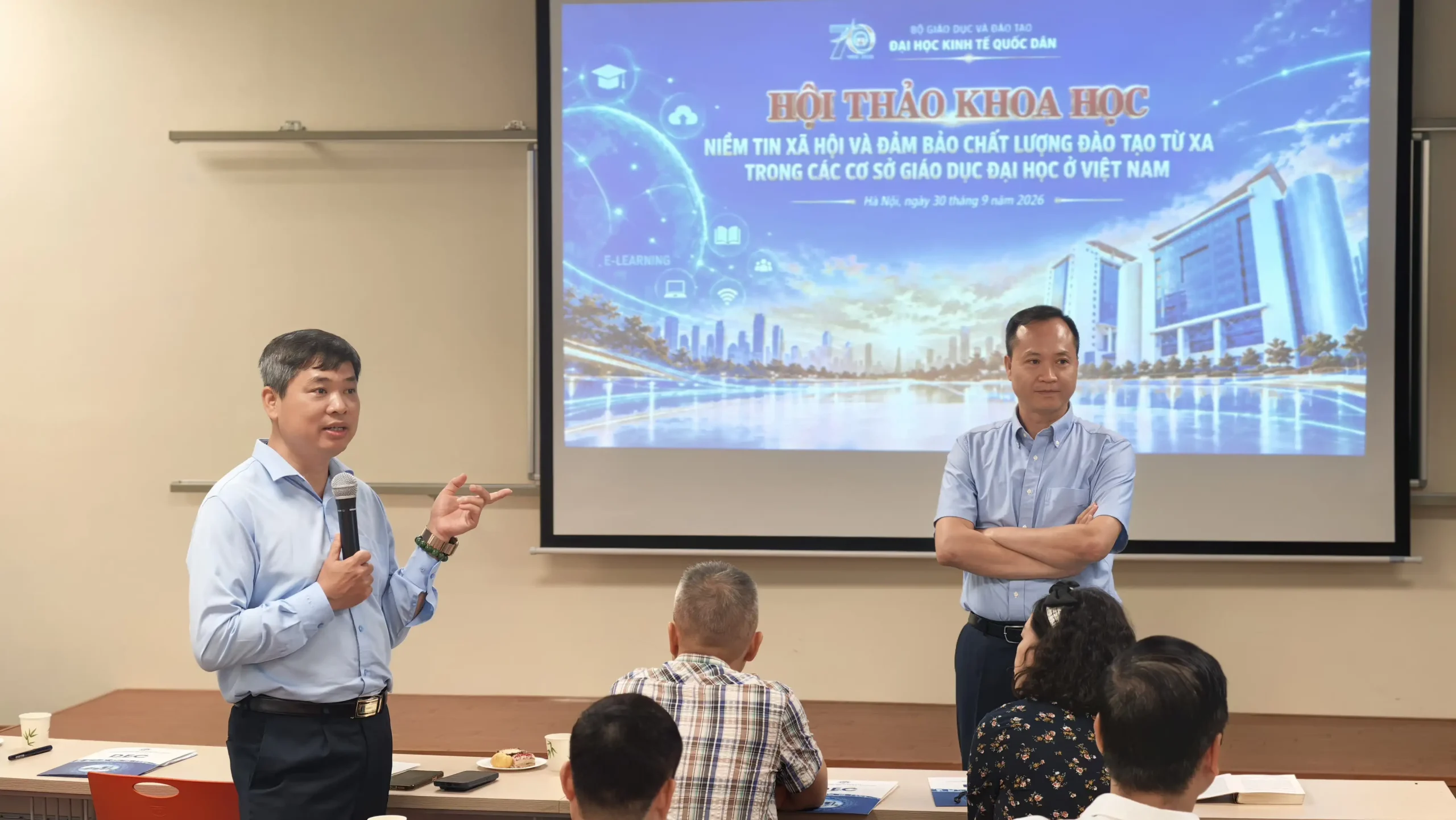
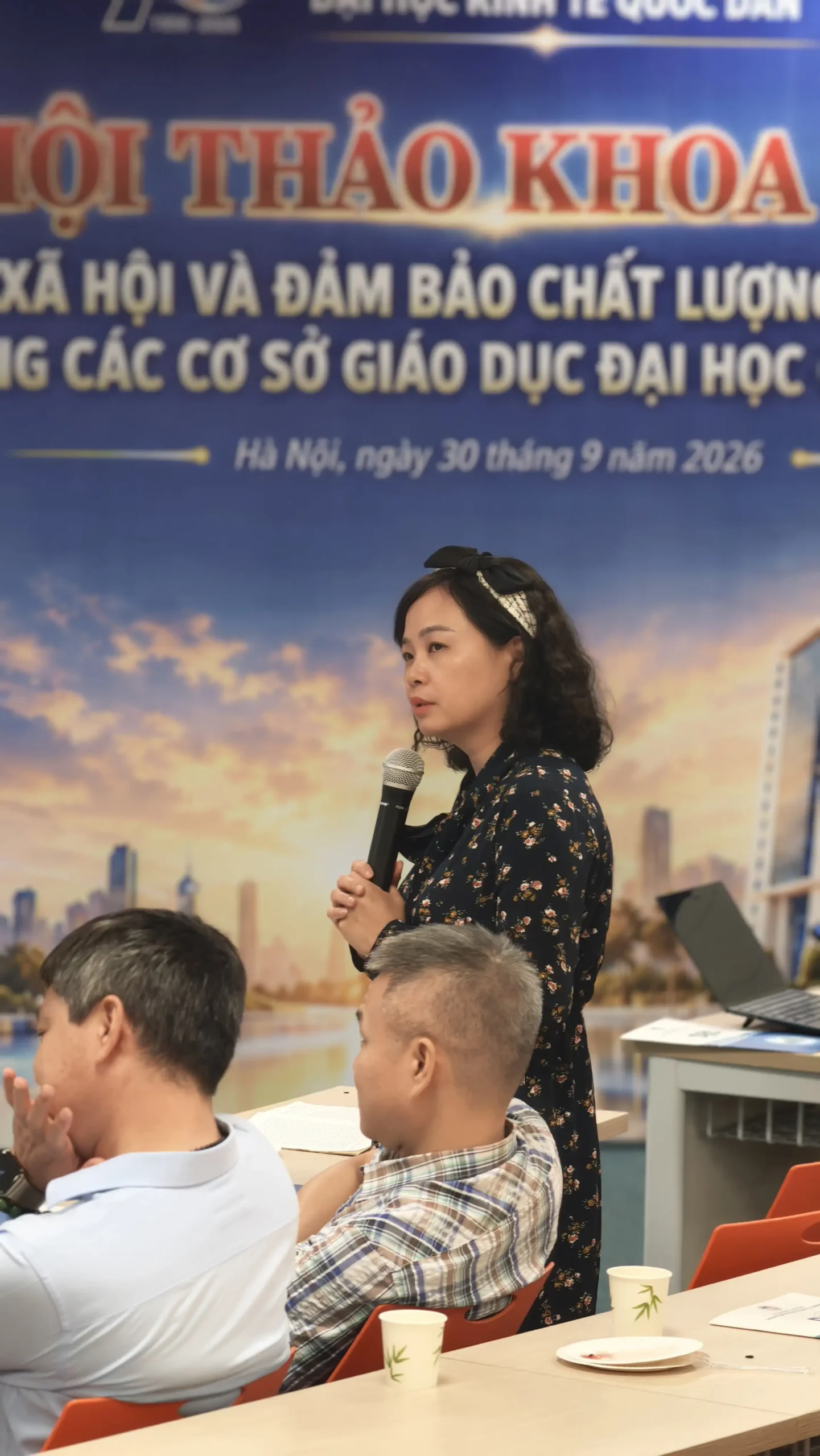
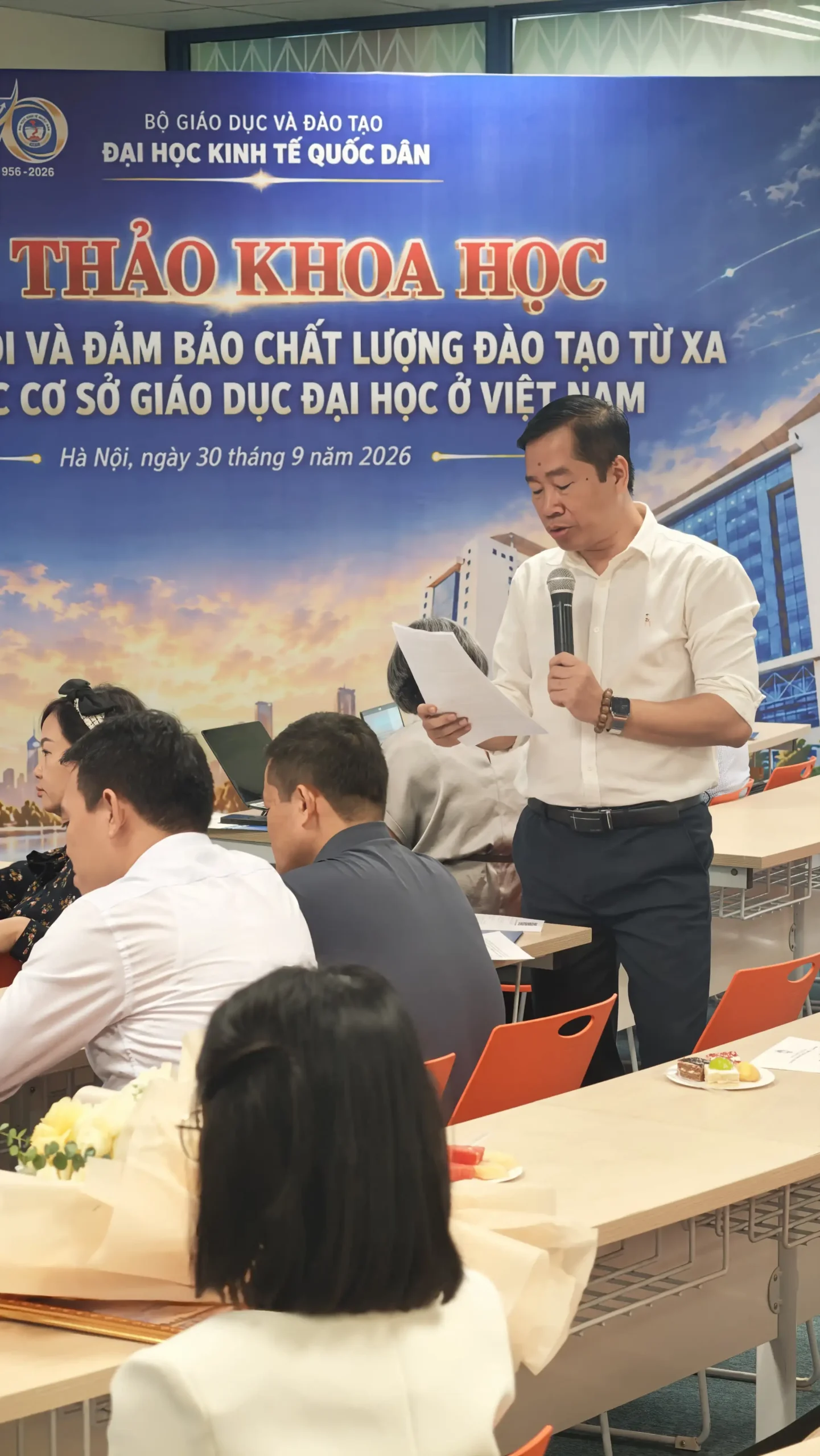
Delegates exchanged and contributed ideas at the Conference
Following the presentations, the conference allocated time for open discussions to create a space for educational administrators, scientists, experts, lecturers, and learners to exchange experiences and clarify issues related to distance education in practice.
The content shared at the conference highlights the increasing integration of quality assurance in distance education with digital transformation, learner experience, outcomes, and societal verifiability. From various perspectives of governance, accreditation, learners, and technology, the conference contributes additional arguments and insights to further enhance the quality, transparency, and substantive value of distance education, thereby reinforcing the trust of learners, society, and the labor market in this educational method.
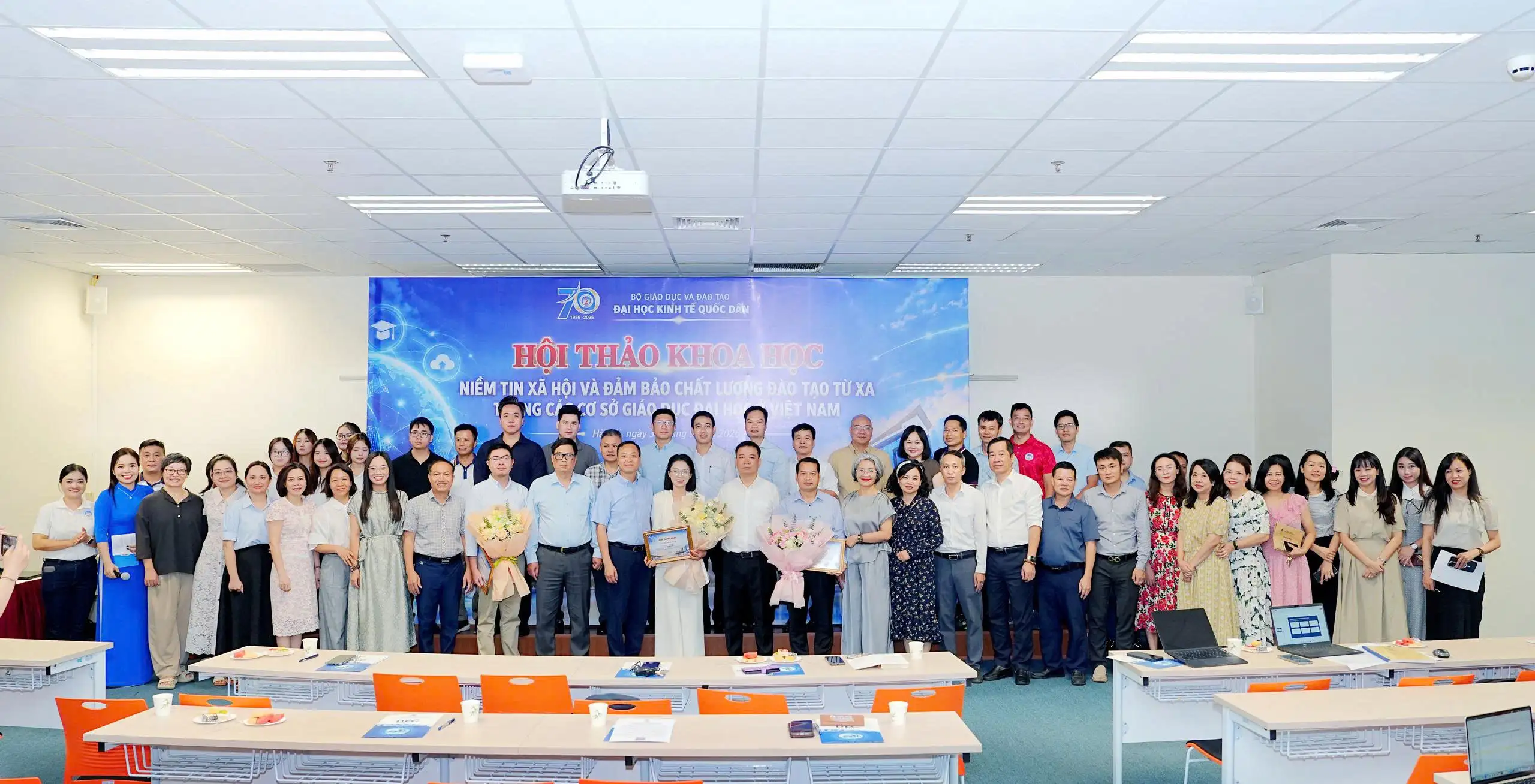
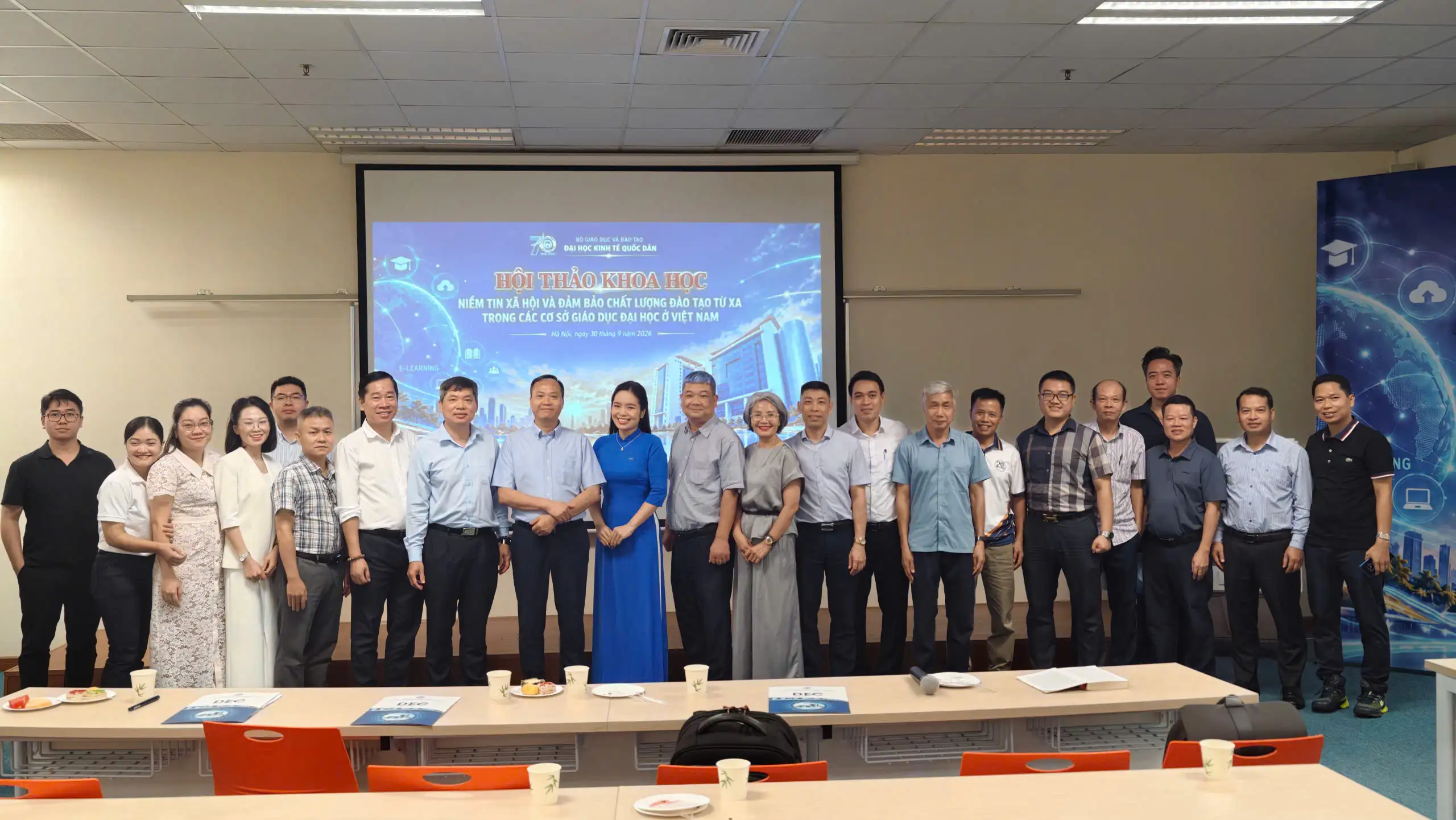
Some images from the conference:



Article and photos: Communications Department



