Scientific Conference “Integrating the Documents of the 14th National Congress of the Communist Party of Vietnam into Teaching, Research, and Study of Political Theory”
25/09/2026 2026-10-20 9:48Scientific Conference “Integrating the Documents of the 14th National Congress of the Communist Party of Vietnam into Teaching, Research, and Study of Political Theory”
Scientific Conference “Integrating the Documents of the 14th National Congress of the Communist Party of Vietnam into Teaching, Research, and Study of Political Theory”
On September 25, the National Economics University organized the scientific conference “Integrating the Documents of the 14th National Congress of the Communist Party of Vietnam into Teaching, Research, and Study of Political Theory,” aiming to create an academic forum to clarify the perspectives and orientations in the 14th Congress Documents and methods of applying them in teaching, research, and study of political theory in the new context.
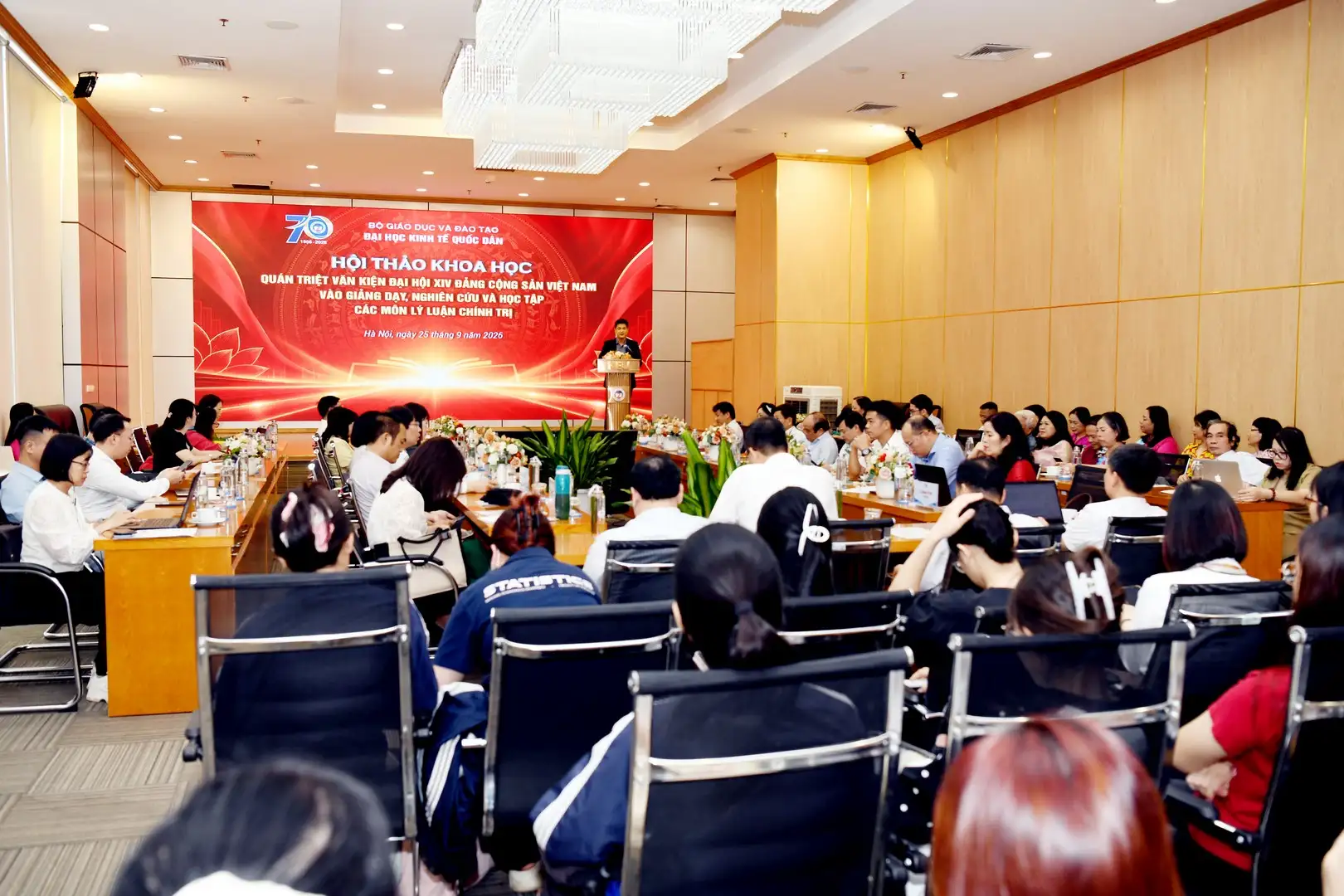
Overview of the Conference
Simultaneously, the scientific conference aims to thoroughly implement Directive No. 10-CT/TW dated July 20, 2026, from the Secretariat on strengthening political theory education, revolutionary ideals, ethics, lifestyle, and civic awareness in the national education system to meet new requirements.
Attending the conference, from external delegates, were: Assoc. Prof. Dr. Nguyen Duc Luan – Deputy Director of the Political Theory Department, Central Propaganda Department; Dr. Vo Van Be – Deputy Director, Deputy Editor-in-Chief of the National Political Publishing House Truth; Dr. Nguyen Ngoc Quynh – Chief of Office, Committee for Catholic Solidarity, Central Committee of the Vietnam Fatherland Front; along with representatives of university and academy leaders.
From the National Economics University, there were: Prof. Dr. To Trung Thanh – Vice President of the University; Assoc. Prof. Dr. Nguyen Ngoc Son – Vice Dean of the School of Economics & Public Management; Dr. Nguyen Thi Hoan – Head of the Faculty of Political Theory; along with representatives of leaders from Schools, Departments, Faculties, Institutes, Centers; staff and lecturers from the Faculty of Political Theory; scientists and experts within and outside the University.
The Mission to Train Generations of High-Quality Human Resources
Prof. Dr. To Trung Thanh – Vice President of the National Economics University stated that the 14th National Congress of the Party was a great success, marking a turning point to lead the country into a new era for the nation and establishing a new development mindset: Solid in theory, clear in strategy, strong in motivation, deep in humanity, and modern in governance. This is considered a “launchpad” to propel the country into a breakthrough era, aiming towards two strategic centennial goals (2030 and 2045).
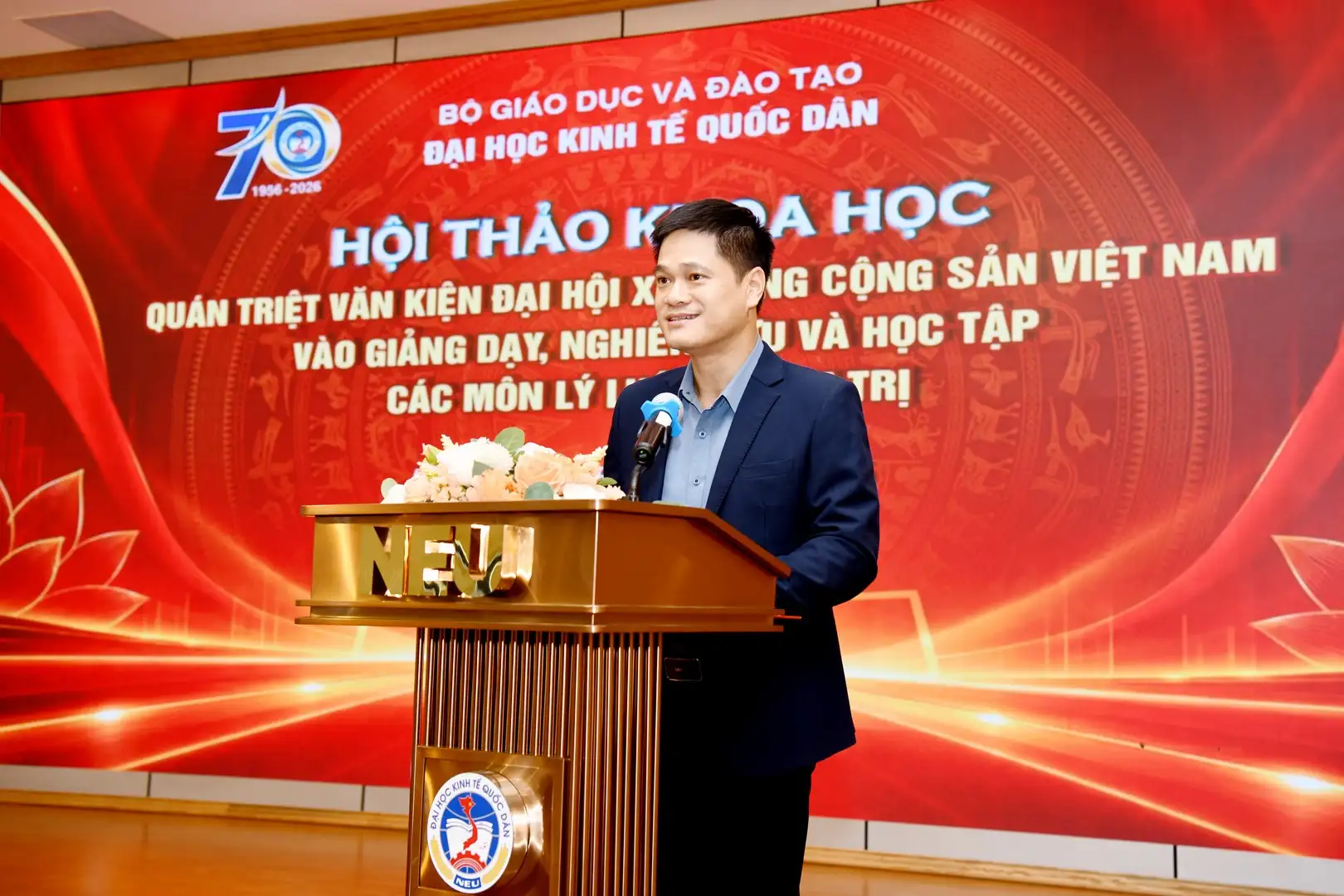
Prof. Dr. To Trung Thanh – Vice President of the National Economics University speaking
According to Prof. Dr. To Trung Thanh, the 14th Congress officially summarized and established the Theory of the Renovation Path as an important component in the ideological foundation of the Party. As one of the leading centers for education and research in the fields of economics, management, and administration in the country, the National Economics University (NEU) is deeply aware that integrating the spirit, mindset, and theoretical breakthroughs of the 14th Congress Documents into the curriculum, research, and study of Political Theory subjects is not only a core political task but also a mission to train generations of high-quality human resources equipped with the competence and knowledge to shoulder the future of the nation.
“Unchanging Principles, Adapting to Change” in Vietnam’s Foreign Policy Implementation
At the Conference, Dr. Nguyen Thuy Linh from the Faculty of Political Theory, National Economics University, addressed the issue: “Applying Ho Chi Minh’s Thought on ‘Unchanging Principles, Adapting to Change’ in the implementation of Vietnam’s foreign policy in the spirit of the 14th Congress.”
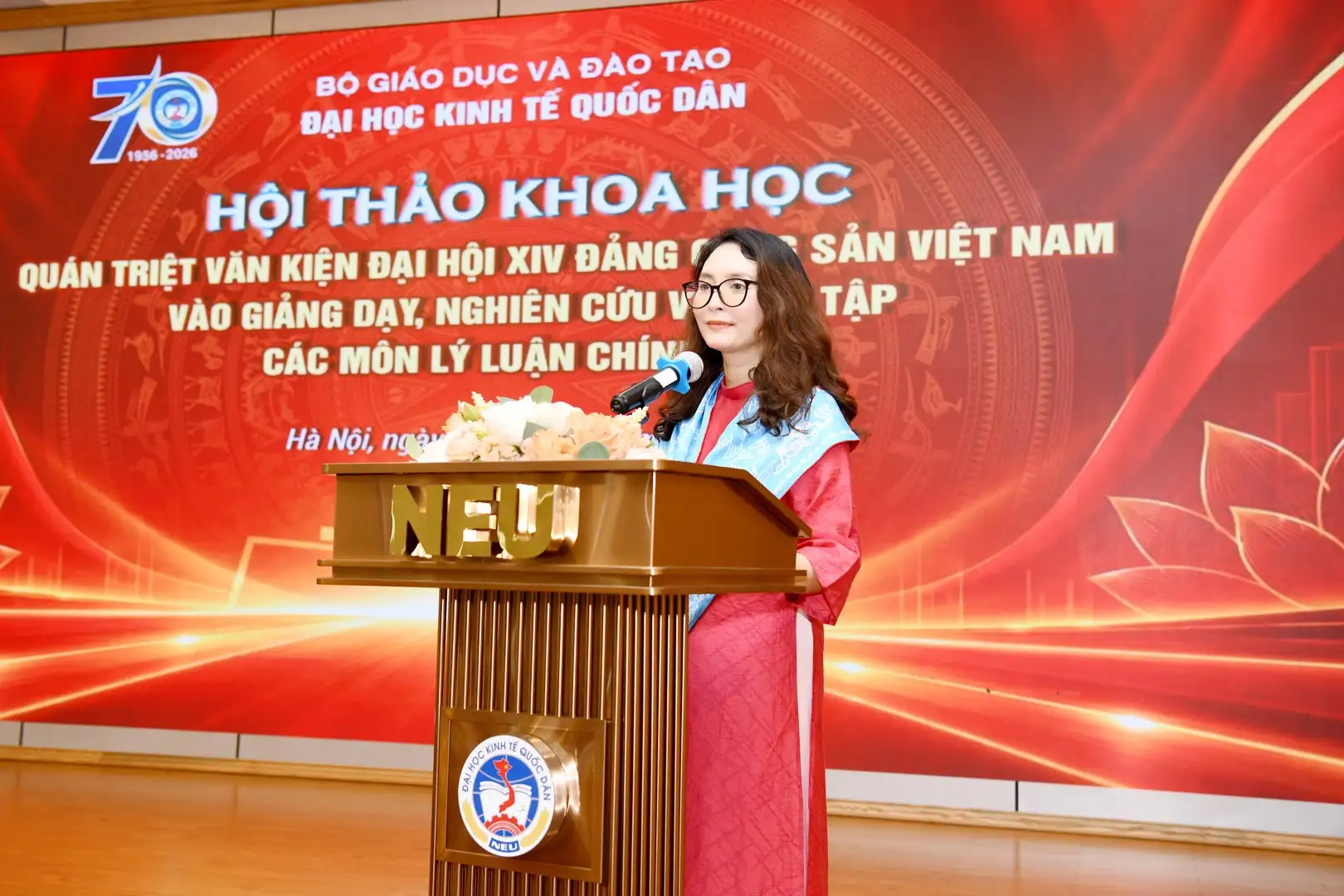
Dr. Nguyen Thuy Linh – Faculty of Political Theory, National Economics University
According to Dr. Nguyen Thuy Linh, the thought of “Unchanging Principles, Adapting to Change” is one of the distinctive theoretical legacies of President Ho Chi Minh, deeply reflecting dialectical thinking and revolutionary leadership art. The core value of this thought is the unity between steadfastness in goals and principles with flexibility and creativity in methods of action to adapt to the continuous changes of reality. Throughout the revolutionary process in Vietnam, this thought has been effectively applied by the Party in the struggle for national liberation, construction, and defense of the Fatherland.
In the current context of profound global changes, the 14th Congress of the Party continues to inherit and develop the thought of “Unchanging Principles, Adapting to Change” in foreign policy formulation. The steadfastness in the goal of national independence linked with socialism, ensuring national interests, firmly protecting territorial sovereignty, while proactively engaging in deep international integration, combining national strength with the strength of the era, clearly reflects this spirit. Particularly, the strategic autonomy mindset identified in the 14th Congress Documents can be seen as a new development in applying Ho Chi Minh’s thought to the practical conditions of the 21st century.
“Continuing to study, thoroughly understand, and creatively apply the thought of ‘Unchanging Principles, Adapting to Change’ is not only significant for foreign affairs but also contributes to enhancing policy-making capacity, strengthening national resilience and position in the context of increasingly deep international integration. This is also an important basis for Vietnam to leverage internal strengths, capitalize on external forces, maintain a peaceful and stable environment, and realize the aspiration for a prosperous and happy nation in the era of national resurgence,” Dr. Nguyen Thuy Linh emphasized.
Developing the Private Economy and Resolution 68 – An Institutional Boost
Assoc. Prof. Dr. Tran Thi Thu Hoai from the Faculty of Political Theory, National Economics University, discussed “The Communist Party of Vietnam’s Perspective on Private Economic Development and Resolution 68 (May 2025) – An Institutional Boost.” According to her, the Communist Party of Vietnam’s thinking on the private economy has evolved throughout the Party’s leadership of the country during the transition to socialism. From the policy of eliminating the private economy before the renovation to the recognition of building a multi-sector economy, accepting the existence of the private economy as an objective necessity during the renovation period, and currently, the Party views the private economy as one of the most important drivers of the economy, marking a continuous adjustment in perception increasingly aligned with the objective developmental laws of the country.
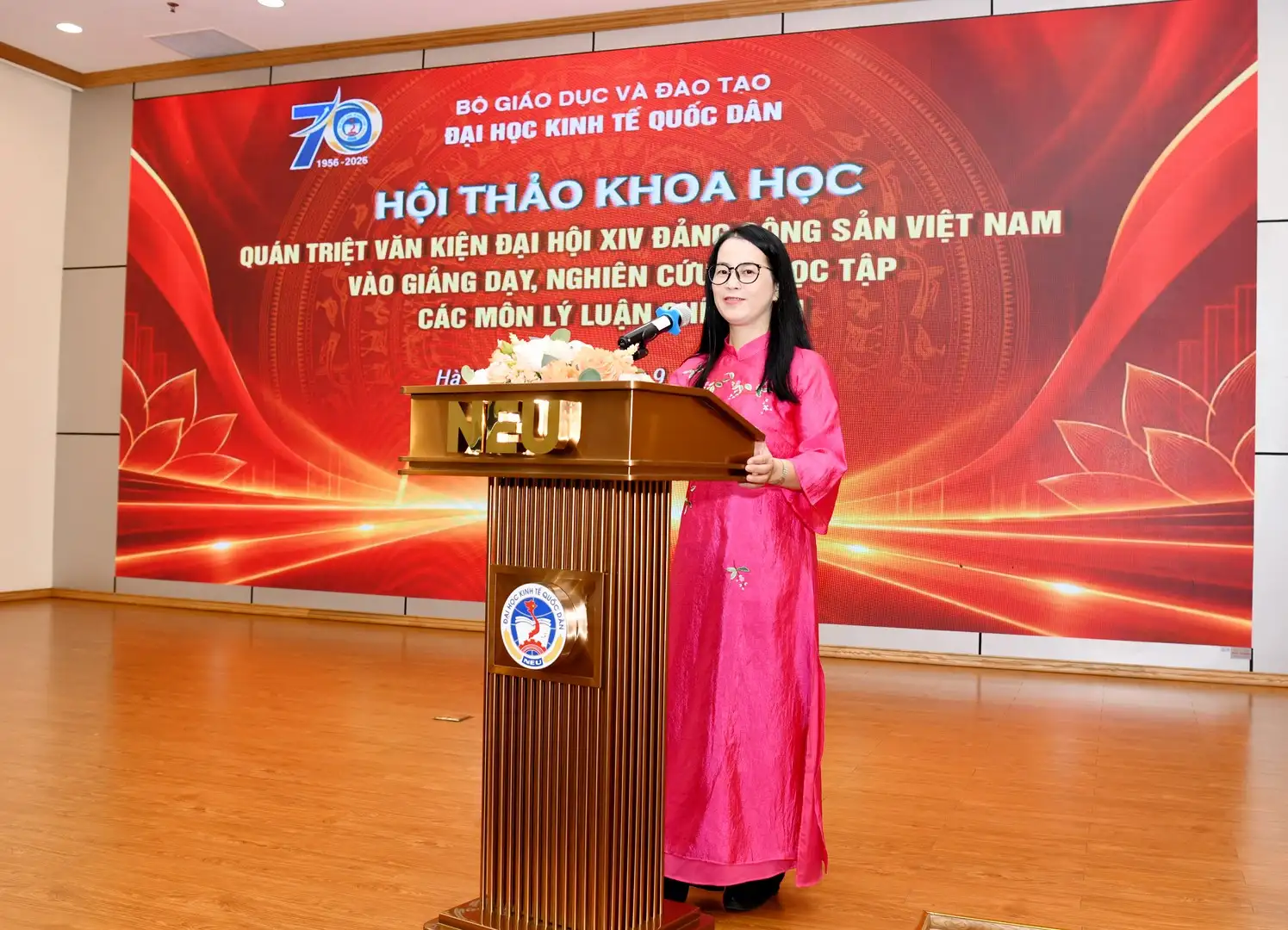
Assoc. Prof. Dr. Tran Thi Thu Hoai – Faculty of Political Theory, National Economics University
Assoc. Prof. Dr. Tran Thi Thu Hoai stated that throughout the history of leadership in building the country, the Communist Party of Vietnam’s perspective on the private economy has undergone many changes. The Party moved from the policy of eliminating the private economy and private ownership to establishing public ownership (before 1986) to gradually and increasingly acknowledging the existence of the private economic sector, creating conditions for its development.
In recent congresses, the Party has taken a significant step forward in its perspective on the private economy, considering it “a driver of the economy” (11th Congress) and “an important driver of the economy” (12th Congress). Prior to the 14th Congress, there was a breakthrough in perception when the Politburo’s Resolution 68 (May 2025) regarded “the private economy as the most important driver of the national economy.” From the change in perception of the private economy, the Party’s policy towards this economic sector has also undergone many adjustments and changes to facilitate its development.
With the question of what is the origin of the changes in the Party’s perspective on the private economy? What are the contents of those changes? What is the impact of these changes on the landscape of the private economy and the overall economy?… Assoc. Prof. Dr. Tran Thi Thu Hoai analyzed Resolution 68 as a “strategic boost” for the development of the private economy. According to her, with Resolution 68, the private economy is not only a “participant” in integration but is also elevated to become a “core force to build an independent and self-reliant economy… associated with deep, substantive, and effective international integration.”
To realize this, Assoc. Prof. Dr. Tran Thi Thu Hoai stated that the Resolution outlined breakthrough policies to enable the private economy to reach the global stage. Previously, the private economy often had to stand behind the state economy in the queue for resource allocation. The core novelty of Resolution 68 is replacing the “request-give, prioritize” mechanism with a “market, auction, open bidding” mechanism. National resources will flow to the most efficient users, regardless of being public or private.
“In Resolution 68, the approach to resource access has been comprehensively elevated, thoroughly eliminating discriminatory barriers that have been bottlenecks for many years. It is evident that the core point of Resolution 68 regarding integration is to eliminate the mindset of “protectionism, closure.” Instead, the State equips the private economy with a “legal armor” meeting international standards, enabling them to confidently compete abroad, proactively engage in fair competition, and position Vietnam in the global value chain,” Assoc. Prof. Dr. Tran Thi Thu Hoai emphasized.
Addressing the issue of digital transformation application in teaching political theory at universities today, Dr. Nguyen Thi Ha Thu stated that digital transformation in teaching political theory at universities is an objective requirement, in line with the development trend of education in the digital era. The application of digital technology contributes to innovating teaching methods, enhancing the quality of political theory education, and increasing students’ proactivity, creativity, and self-learning ability.
However, according to Dr. Nguyen Thi Ha Thu, the implementation process still faces limitations in technology infrastructure, digital learning materials, and the digital capacity of faculty members. To enhance the effectiveness of digital transformation application in teaching political theory, universities need to continue improving digital infrastructure, developing digital learning materials, innovating content and teaching methods, and simultaneously enhancing digital capacity for lecturers and students.
To contribute to improving the quality of political theory education, meeting the requirements for fundamental and comprehensive renovation of education and training in the current period, Dr. Nguyen Thi Ha Thu proposed four specific solutions: enhancing quality and ensuring the quick adaptability of faculty members in the digital transformation era; continuing to innovate content, curriculum, and teaching methods of political theory in digital transformation towards scientific, practical, creative, and modern approaches, meeting the needs for self-learning and lifelong learning; increasing investment in developing information technology infrastructure to serve the digital transformation process in teaching political theory at universities; and forming and developing digital skills and critical thinking for students during the teaching of political theory.
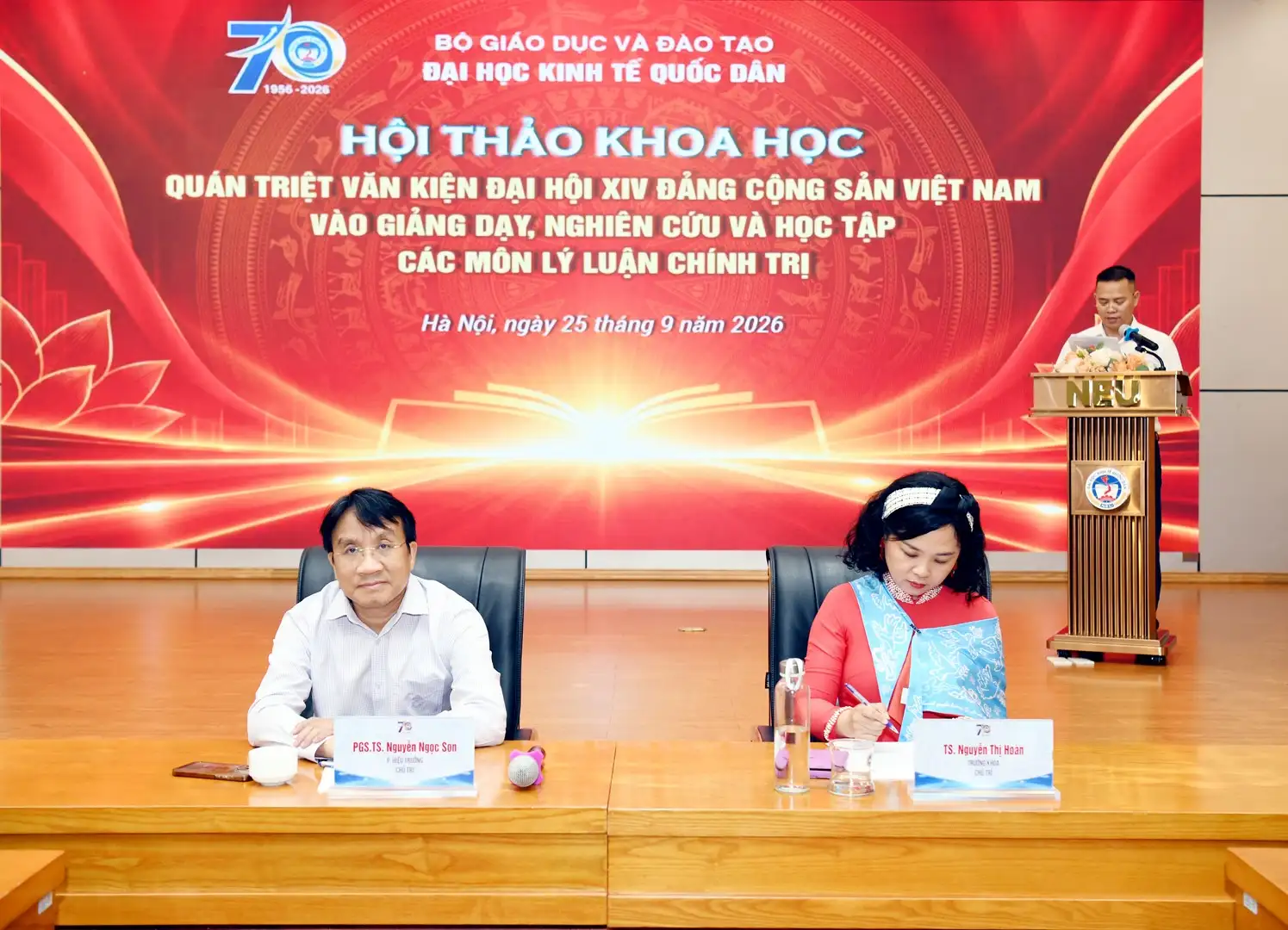
The presidium chaired the discussion session at the Conference
The Conference Organizing Committee received nearly 140 papers from scientists, researchers, lecturers, and students from various universities, academies, and research institutions nationwide, from which 123 papers meeting the requirements were selected.
The papers approached the Conference theme from various perspectives, focusing on two major issues: Researching and elucidating new perspectives and orientations in the XIV Congress Documents on national development in the new era, focusing on the development era and vision to 2045; strategic breakthroughs; economic development and completion of the socialist-oriented market economy institution; building the Party, political system, and socialist rule of law state; national defense, security, foreign affairs; cultural, human development, progress, equity, and social welfare; researching the implementation of the XIV Congress Documents into teaching, research, and study of political theory subjects; from updating the content of the Documents into each subject to innovating teaching, learning, testing, and evaluation methods; applying digital transformation, artificial intelligence, and developing digital capacity for lecturers and students…
The presentations contributed to a comprehensive approach to the issues raised by the XIV Congress Documents, while also proposing many arguments, approaches, and solutions to bring the spirit and perspectives of the Congress into the practical education of political theory.
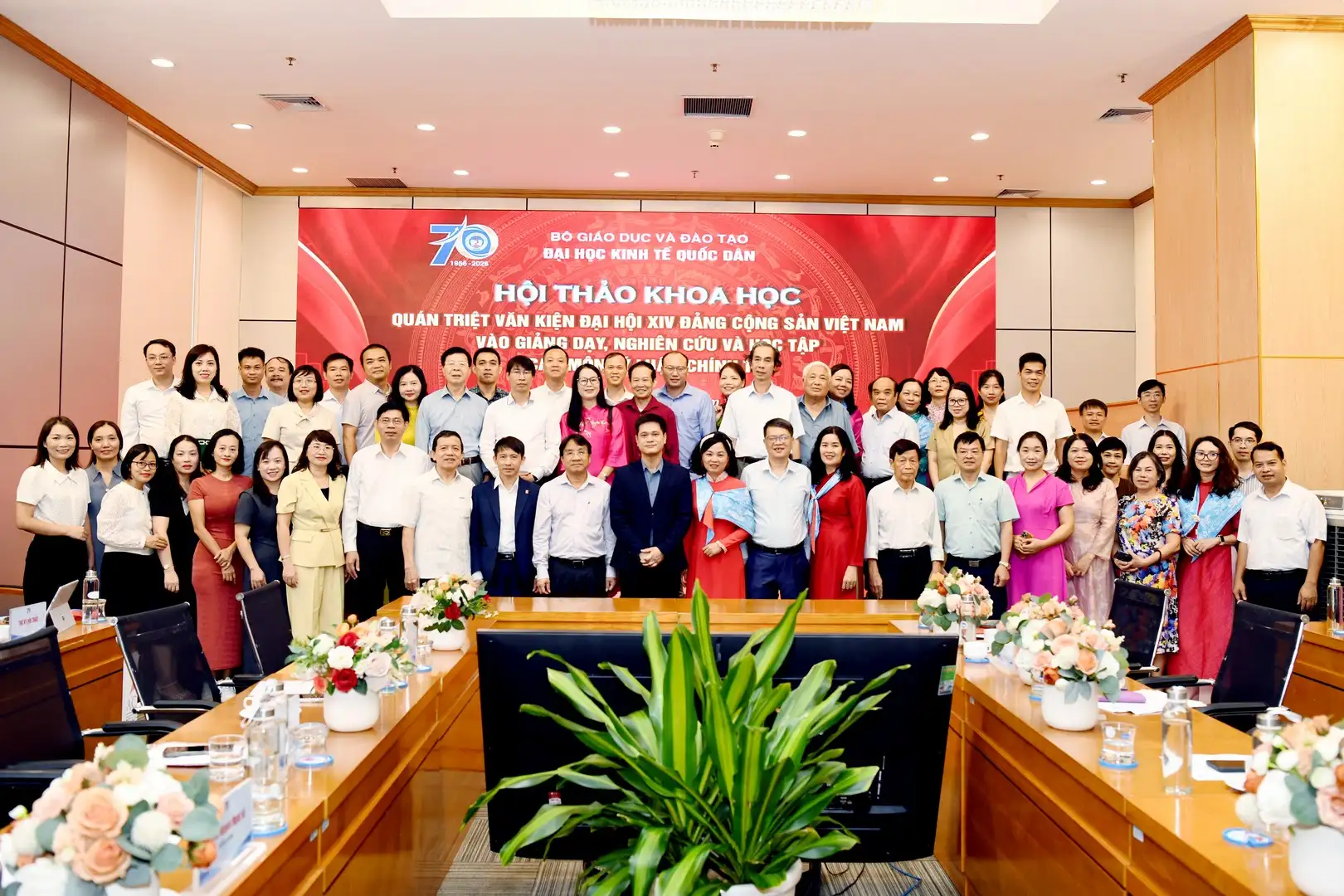
The delegates attending the Conference took commemorative photos
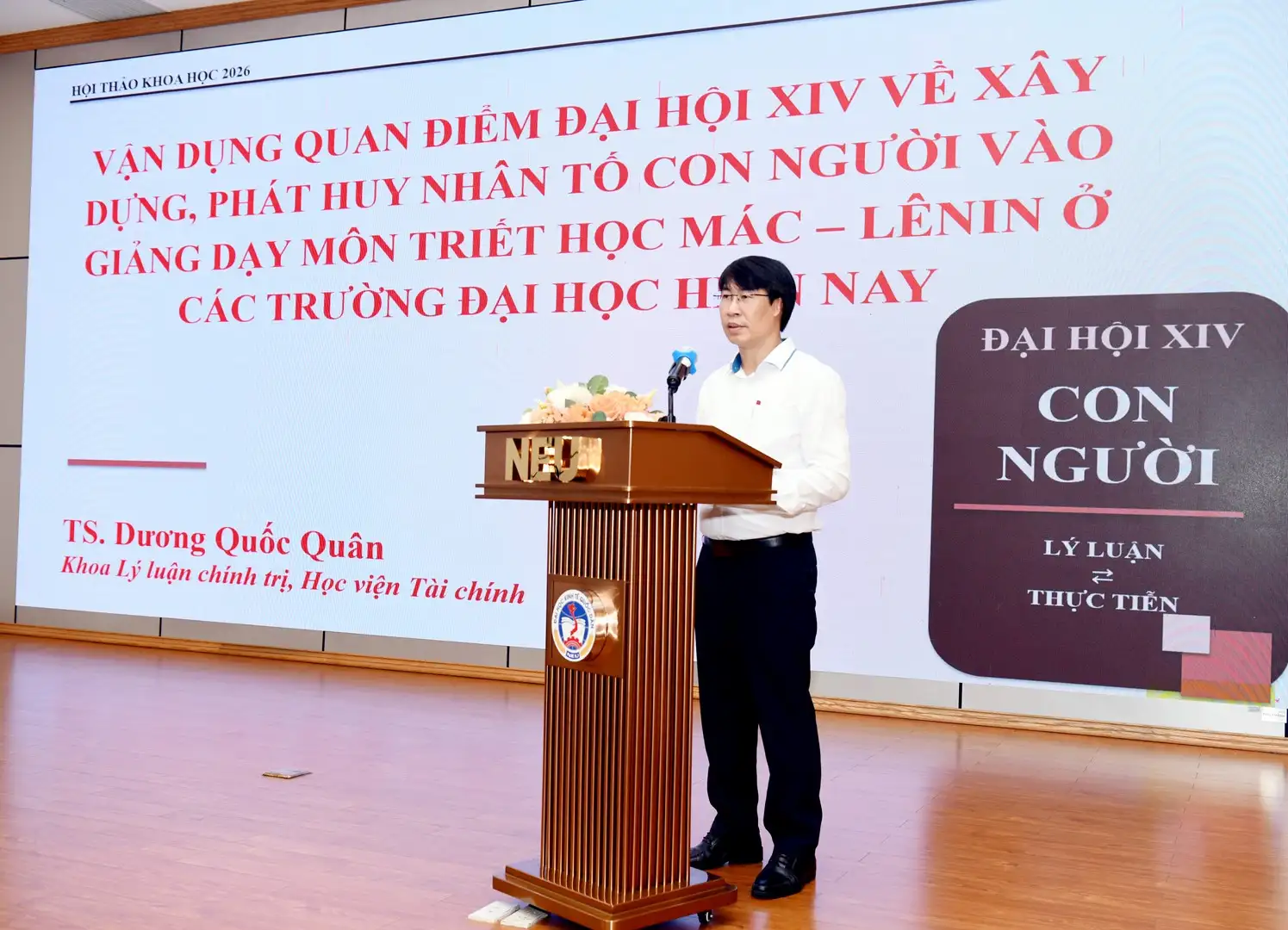
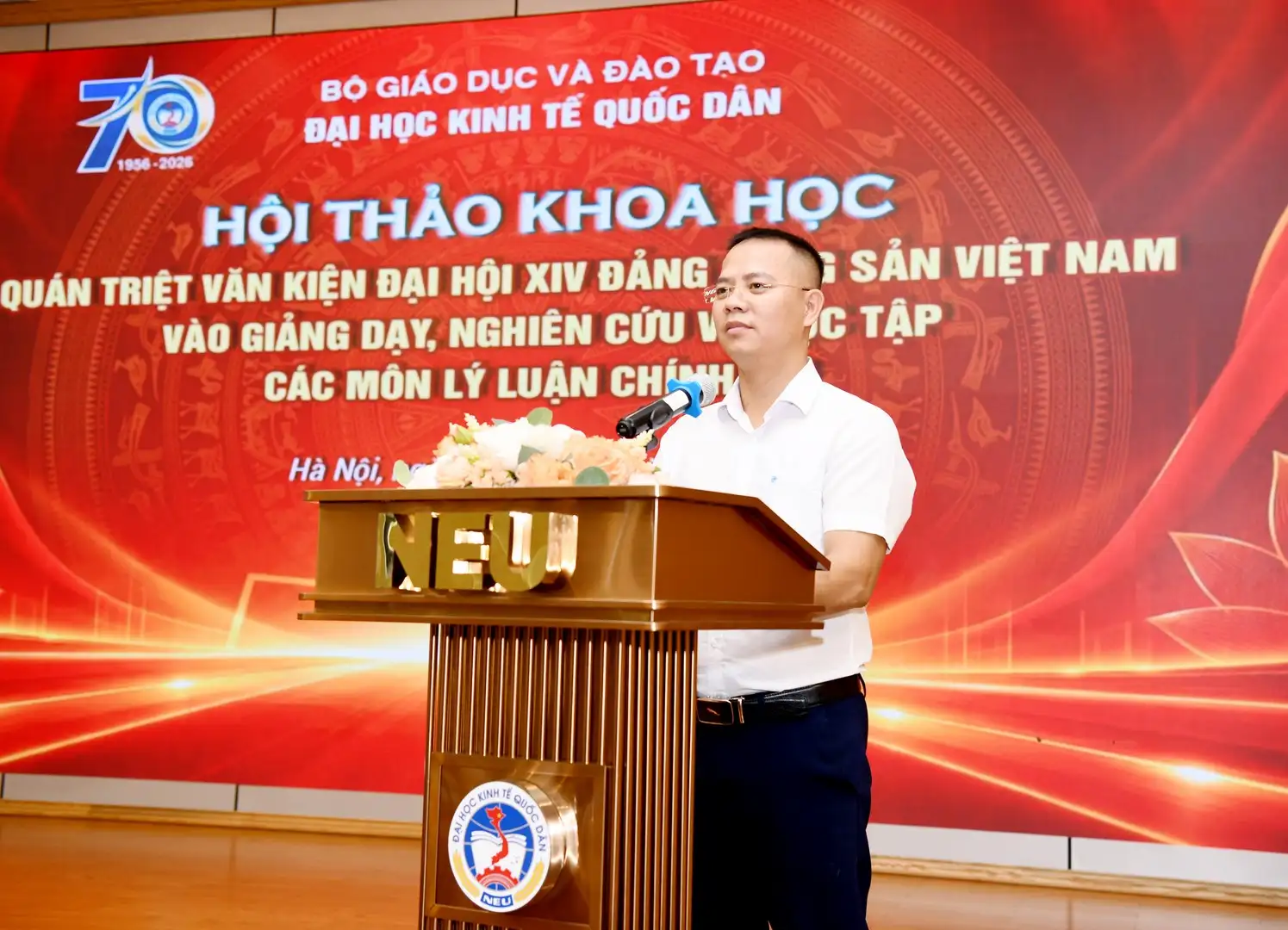
Some images from the Conference:
Article and Photos: Communications Department
Media Coverage of the Conference:
People’s Deputy: Integrating the XIV Congress Documents into Teaching, Research, and Study of Political Theory Subjects as a Core Task
Education & Times Newspaper: Nurturing Patriotism to Empower Students to Step Confidently onto the Global Stage