NEU Strengthens Academic Quality through International Accreditation and Global Engagement
20/08/2026 2026-08-23 9:39NEU Strengthens Academic Quality through International Accreditation and Global Engagement
NEU Strengthens Academic Quality through International Accreditation and Global Engagement
From 18 to 20 August 2026, National Economics University (NEU), in cooperation with the Foundation for International Business Administration Accreditation (FIBAA), conducted the external assessment of five academic programmes under Cluster 6. As the final assessment cluster in NEU’s 2026 international accreditation plan, the exercise marked another important step in strengthening academic quality, advancing the University’s internal quality assurance system, and benchmarking its programs against international standards.
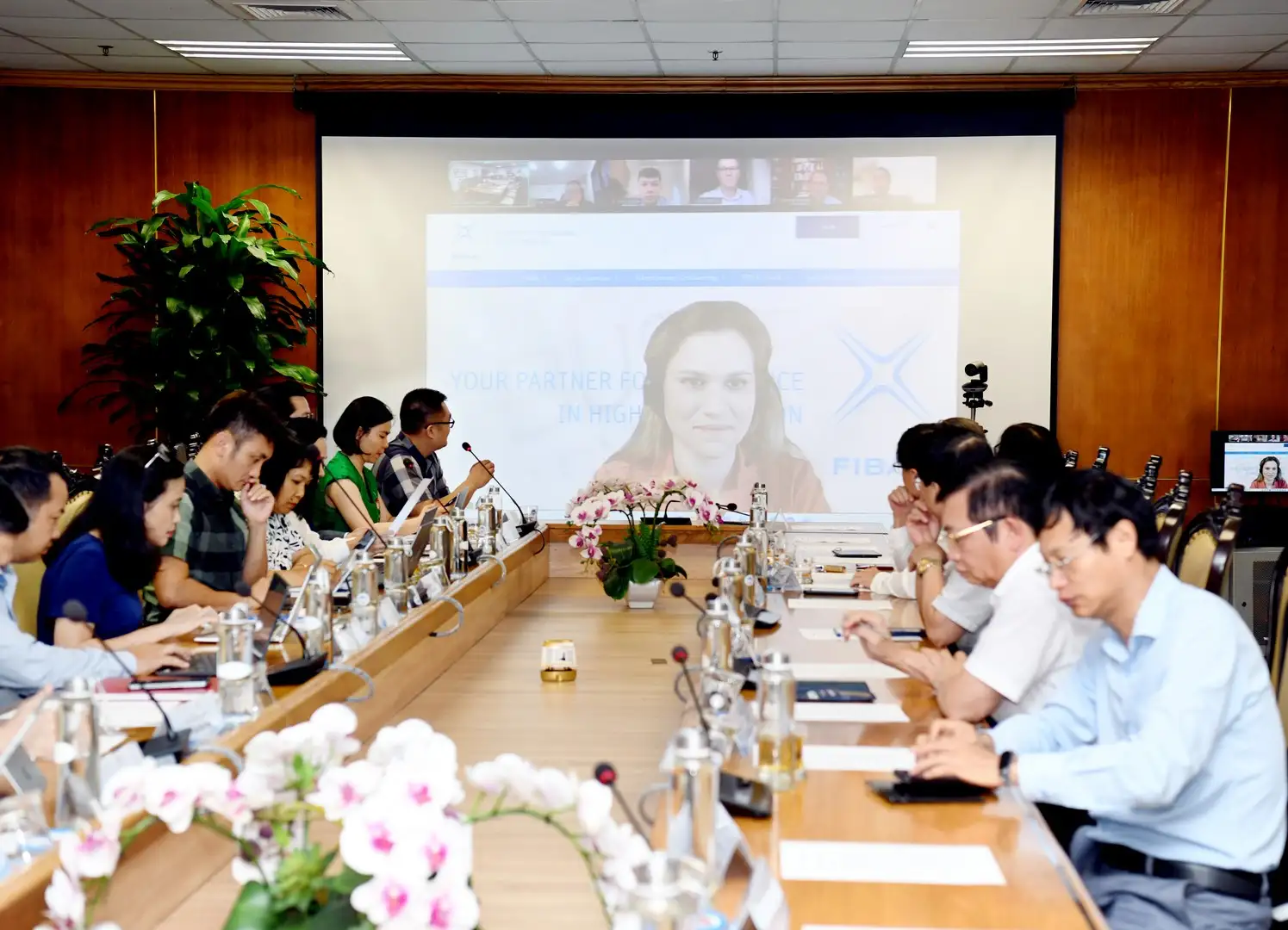
The FIBAA external assessment of NEU academic programmes under Cluster 6 in 2026.
The assessment was conducted online, bringing together the FIBAA expert panel and a broad range of NEU stakeholders, including university leaders, academic and administrative staff, students, alumni, employers, and other relevant stakeholders.
Cluster 6 comprised five postgraduate programs and represented the final group of programs assessed by NEU and FIBAA in 2026. Its completion builds on the cooperation between the two institutions and marks further progress in NEU’s broader roadmap to expand international accreditation across its academic portfolio.
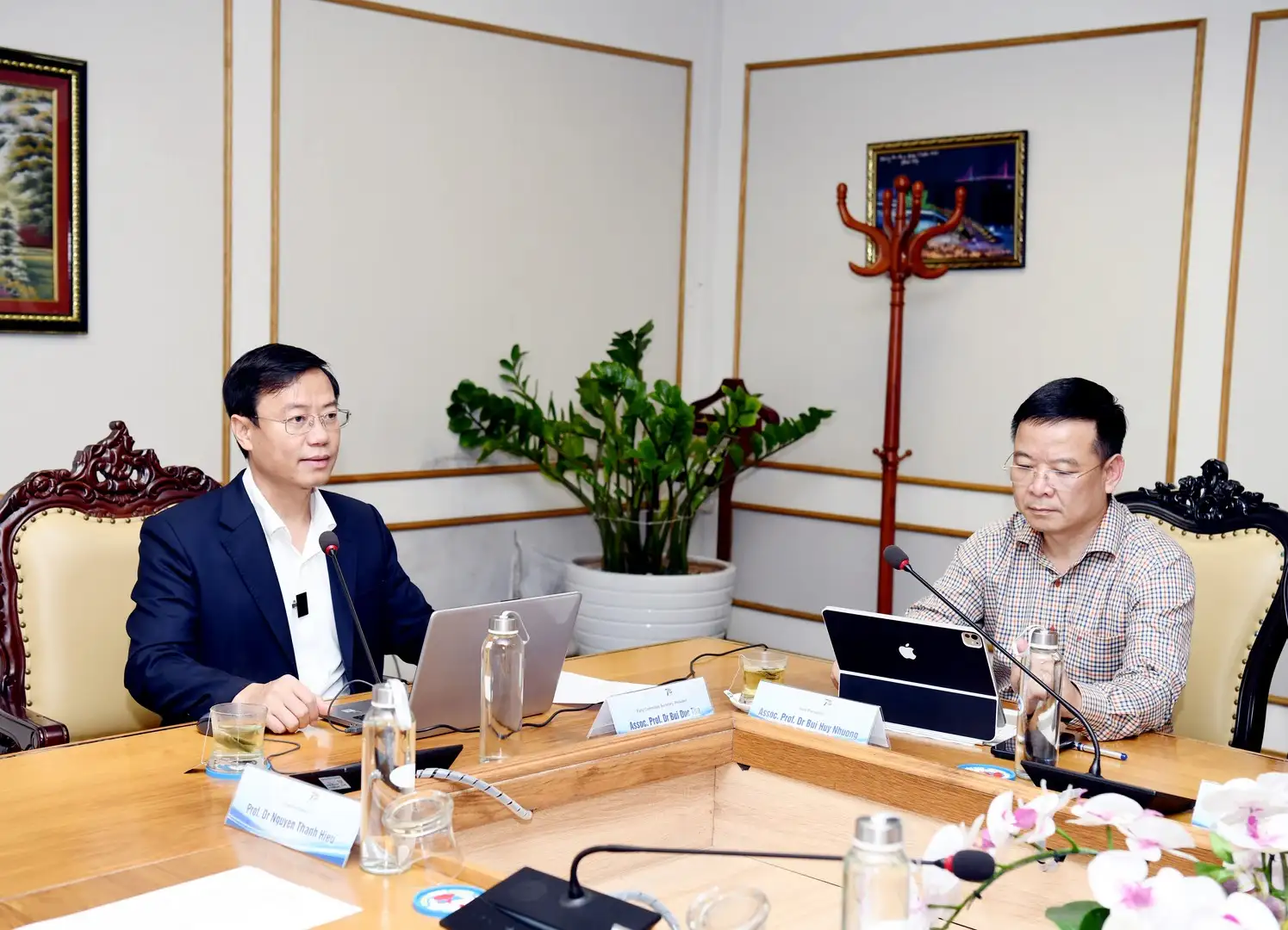
Assoc. Prof. Bui Duc Tho, President of National Economics University, delivers his remarks at the opening session.
Building a Culture of Quality and Continuous Improvement
In his opening remarks, Assoc. Prof. Bui Duc Tho, President of National Economics University, reaffirmed that quality assurance and continuous improvement remain central to NEU’s development strategy. He also highlighted the University’s appreciation of its cooperation with FIBAA and the organization’s contribution to advancing quality and international standards in higher education.
Cooperation between NEU and FIBAA began in 2021. Since then, the University has continued to strengthen its internal quality assurance system while progressively expanding international accreditation across its academic programs. In 2024, NEU achieved FIBAA Institutional Accreditation, while 36 academic programs had been accredited by FIBAA. Building on these achievements, NEU proceeded with the international accreditation of 32 additional programs in 2026.
For NEU, international accreditation is not solely about external recognition. More importantly, it provides a systematic mechanism for academic programs to review their curricula, learning outcomes, teaching and learning practices, and program delivery against recognized international standards and evolving expectations.
Recommendations from international experts also provide valuable external perspectives, enabling academic units to identify areas for improvement and further enhance their programs in response to the changing needs of students, employers, and the wider higher education environment. In this sense, external accreditation forms an important part of NEU’s broader institutional learning and continuous quality enhancement process.





Representatives of NEU academic and administrative units engage with the FIBAA expert panel during the Cluster 6 external assessment.
Global Engagement as a Driver of Academic Quality
Alongside international accreditation, NEU increasingly views global engagement as an important mechanism for enhancing the quality, relevance, and international orientation of its academic programmes.
International cooperation also contributes directly to faculty development and academic exchange. Through faculty mobility, international conferences, joint research, collaborative projects, and wider academic networks, NEU academics gain knowledge and experience that can feed back into teaching, curriculum development, and programme improvement. By connecting faculty members with international academic communities, such collaboration also helps ensure that teaching remains informed by current research and emerging developments in relevant disciplines.
For students, global engagement creates opportunities to experience different academic, professional, and cultural environments through mobility programmes, academic exchanges, international classrooms, and other forms of international learning. At the same time, NEU seeks to ensure that the international dimension becomes increasingly embedded in the learning experience of students who may not participate in physical mobility.
International research collaboration and academic networks provide another important link between internationalization and program quality. By connecting faculty members and academic programs with wider academic communities, such collaboration helps ensure that teaching and curriculum development remain informed by current research, emerging issues, and developments in relevant disciplines.
Connecting International Accreditation and Global Engagement
At NEU, international accreditation and global engagement are increasingly viewed not as separate processes, but as complementary drivers of academic quality and continuous improvement.
External accreditation enables programmes to benchmark themselves systematically against recognised international standards and benefit from independent expert feedback. Global engagement, meanwhile, provides channels through which academic units can access international experience, academic networks, collaborative opportunities, and good practices that support continuous programme development.
This approach also reflects a broader understanding of internationalisation at NEU. The University’s objective is not simply to increase the number of international partnerships or activities, but to ensure that international engagement creates meaningful academic value for programmes, faculty, and students.
As NEU continues its transformation into a comprehensive and multidisciplinary university, international partnerships create opportunities for academic units across economics and public management, business, technology, and related fields to engage with a wider range of universities, professional networks, researchers, and external stakeholders. This increasingly multidisciplinary and internationally connected environment provides an important foundation for curriculum development, research collaboration, faculty development, and enriched student learning experiences.
Advancing Quality with an International Outlook
Building on the outcomes of the 2026 FIBAA assessments, NEU will continue to use recommendations from international experts to strengthen its academic programmes and internal quality assurance practices. At the same time, the University will further leverage international partnerships, academic networks, faculty and student mobility, and research collaboration to support curriculum development, professional development, and internationally oriented learning opportunities.
Through these complementary efforts, NEU aims not only to expand the international recognition and comparability of its academic programmes, but, more importantly, to foster a sustainable culture of quality and continuous improvement—strengthening the relevance of its education, enriching the international engagement of its academic community, and supporting the University’s continued integration into the global higher education landscape.
Article by: Communications Department and International Cooperation Department, NEU