National Scientific Conference “The Impact of AI on Teaching, Academic Research, and University Governance”
11/08/2026 2026-10-20 10:14National Scientific Conference “The Impact of AI on Teaching, Academic Research, and University Governance”
National Scientific Conference “The Impact of AI on Teaching, Academic Research, and University Governance”
Amidst the rapid development of artificial intelligence, particularly generative AI, higher education is presented with numerous opportunities to innovate in teaching, academic research, and governance, while also facing challenges related to academic integrity, data security, intellectual property, and the role of humans. These are the topics that scientists, experts, and lecturers focused on discussing at the National Scientific Conference “The Impact of AI on Teaching, Academic Research, and University Governance” organized by the National Economics University on the morning of August 11.
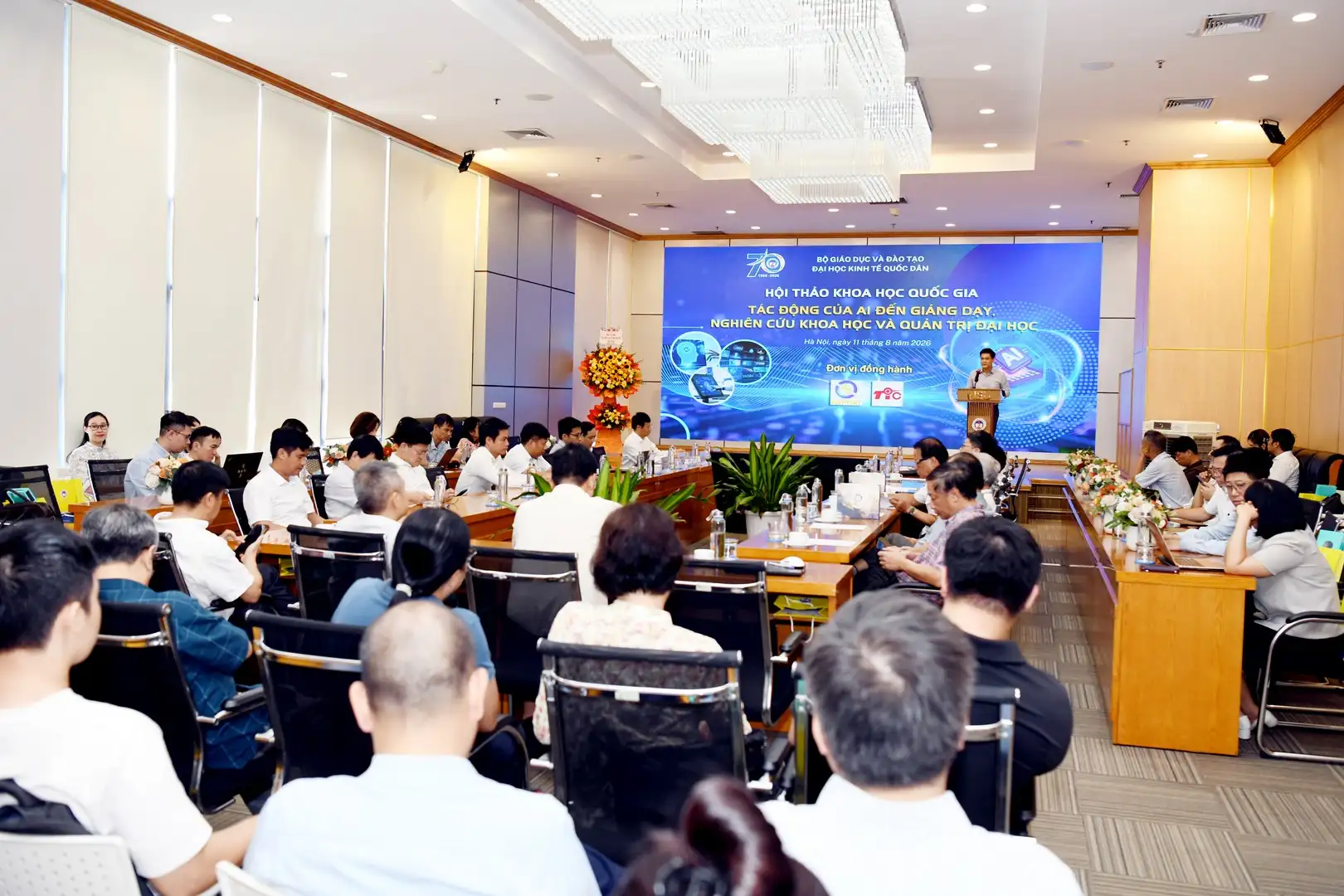
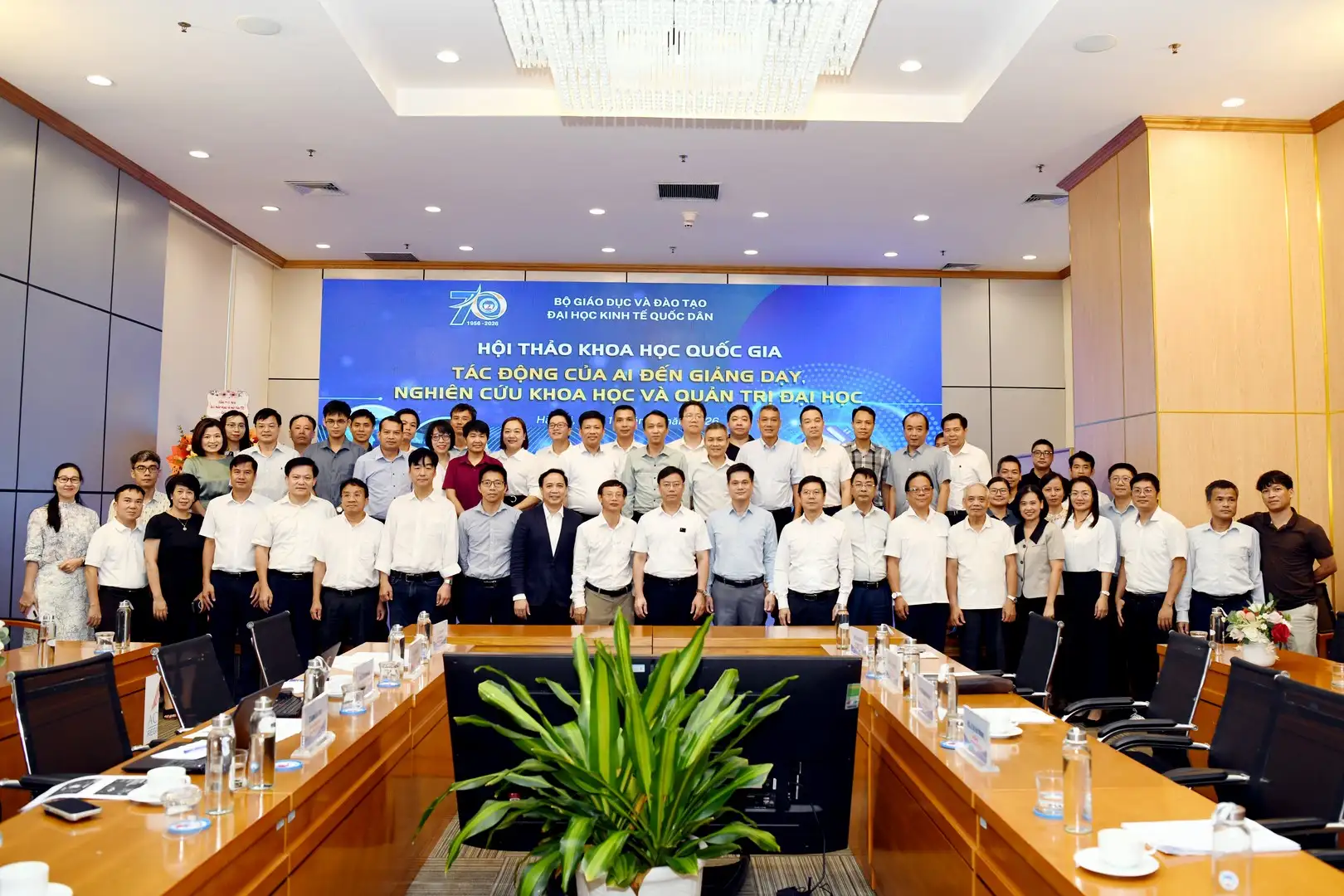
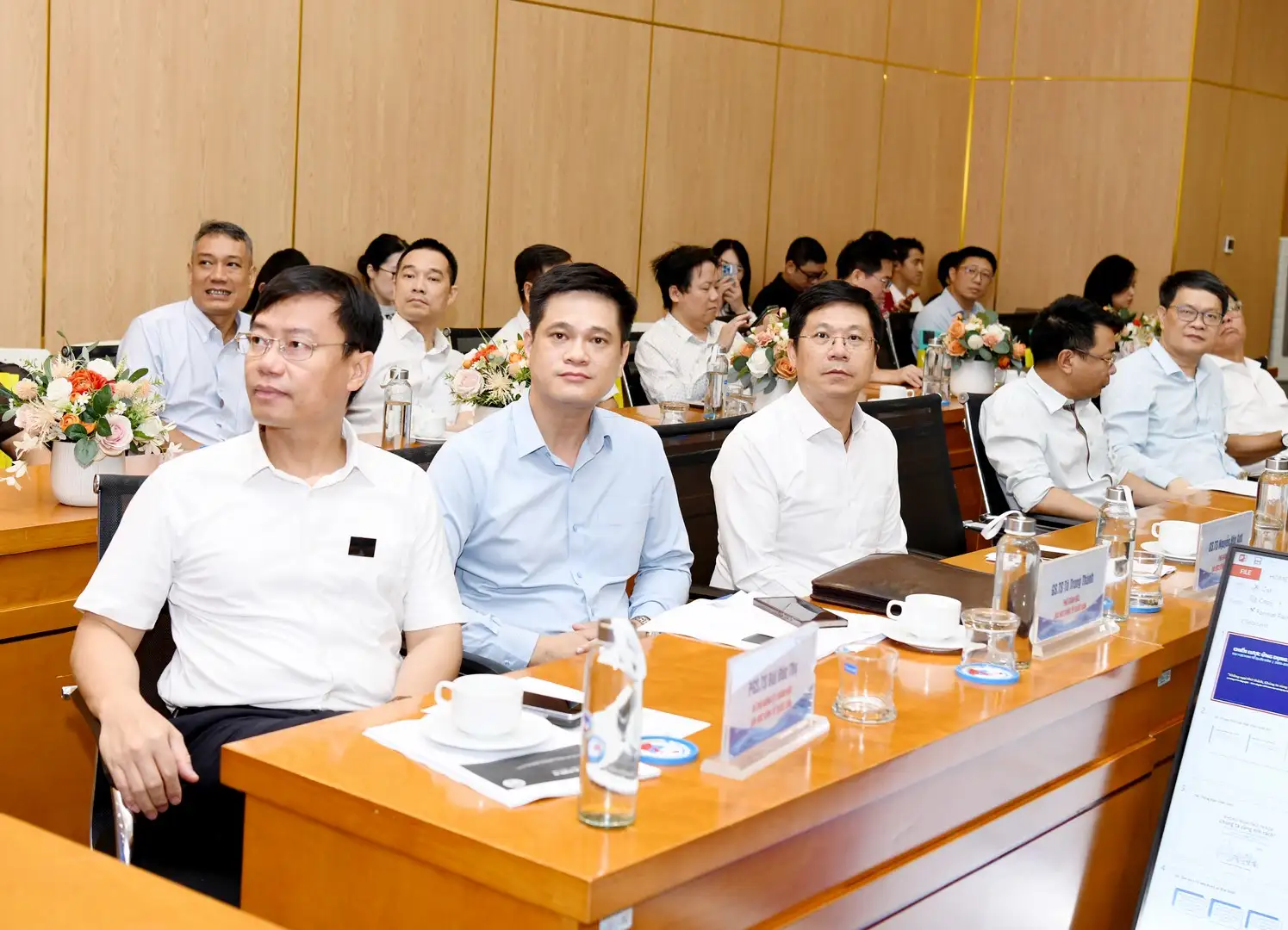
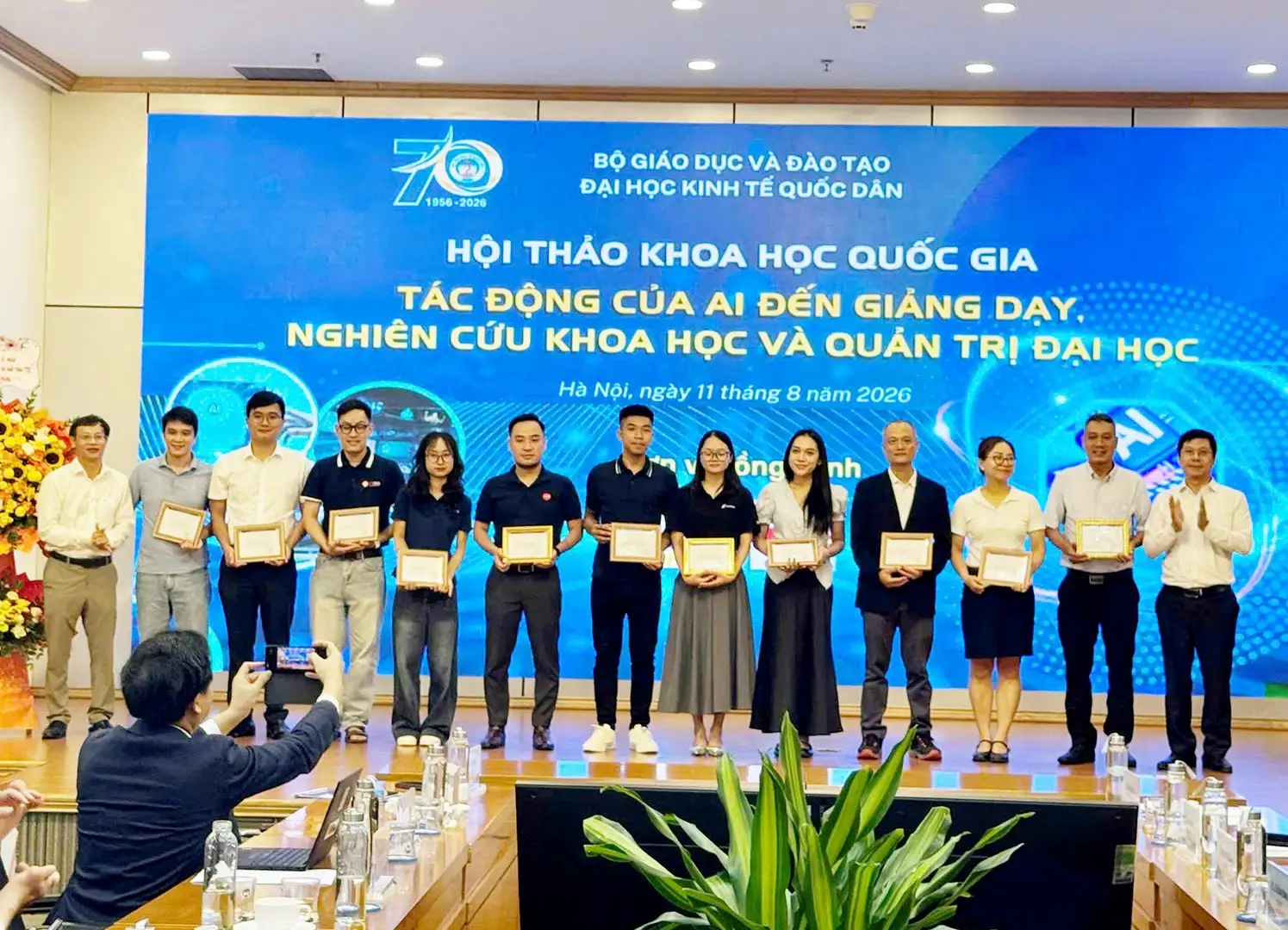
Conference Scene
Attending the conference, from educational institutions, were: Assoc. Prof. Dr. Do Van Hung – Head of the Faculty of Information Management, University of Social Sciences and Humanities, Vietnam National University, Hanoi; Dr. Truong Xuan Nam – Director of the Information Technology Center, Thuy Loi University; Dr. Hoang Ngoc Canh – Director of the IT Center, University of Commerce; MSc. Le Ngoc Anh – Director of the IT Center, University of Medicine; Dr. Nguyen Duy Hai – Chief of Office of the Interdisciplinary Digital Technology School, Phenikaa University. From the accompanying units were: Mr. Truong Manh Toan – Director of TIC Network and Computer Solutions Joint Stock Company; Mr. Nguyen Van Thanh – Deputy General Director of An Phat Computer Trading Joint Stock Company.
From the National Economics University – the organizing unit of the conference, were: Assoc. Prof. Dr. Bui Duc Tho – Party Secretary, Rector; Prof. Dr. To Trung Thanh – Vice Rector; Prof. Dr. Nguyen Huu Anh – Vice Rector; Dr. Le Viet Thuy – Director of the Information Technology Application Center; along with representatives of the leadership of Schools, Departments, Faculties, Institutes, Centers, faculty members; scientists, economic experts, authors of papers, as well as representatives of esteemed educators from higher education institutions, esteemed businesses, and partner organizations.
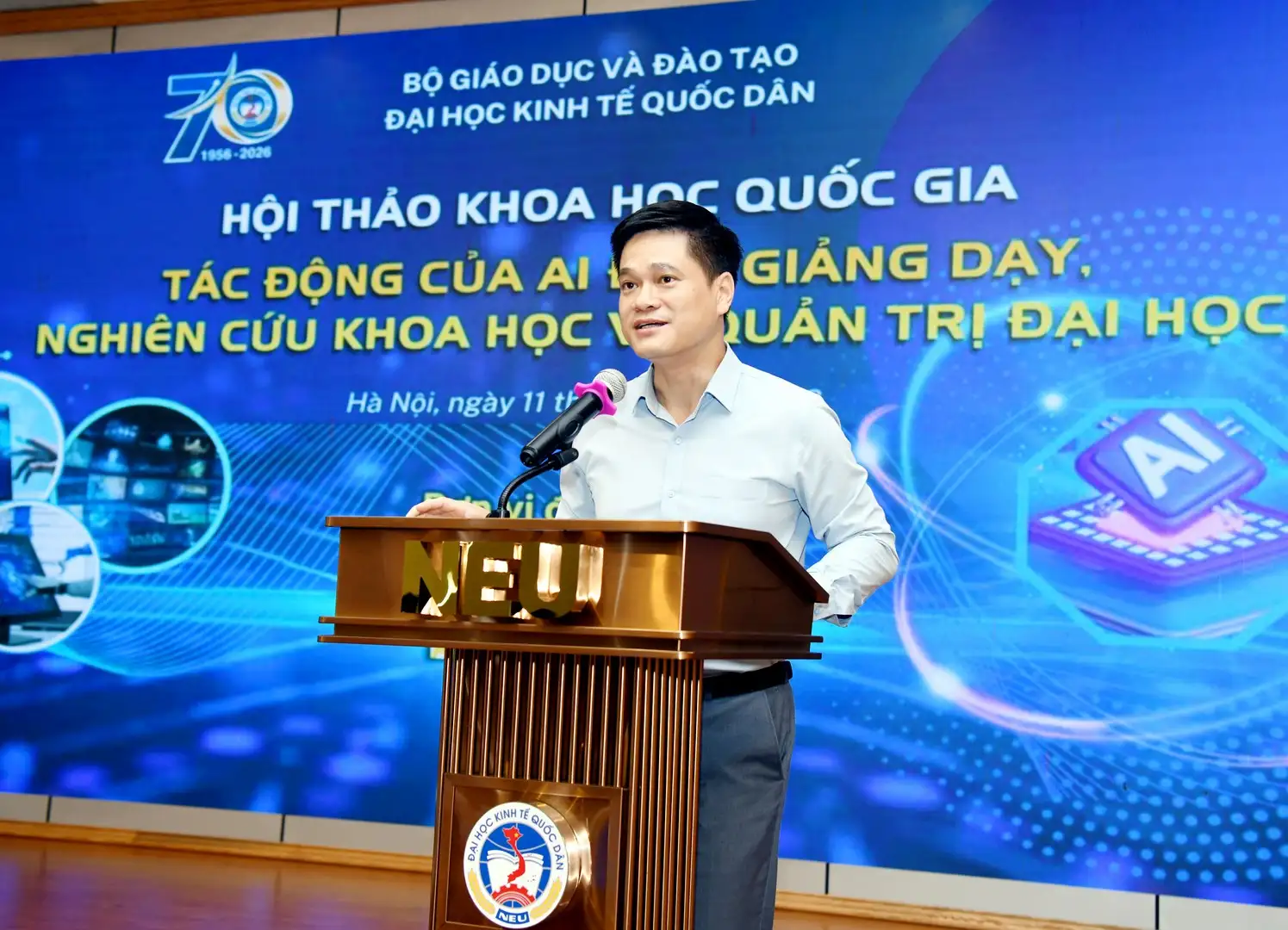
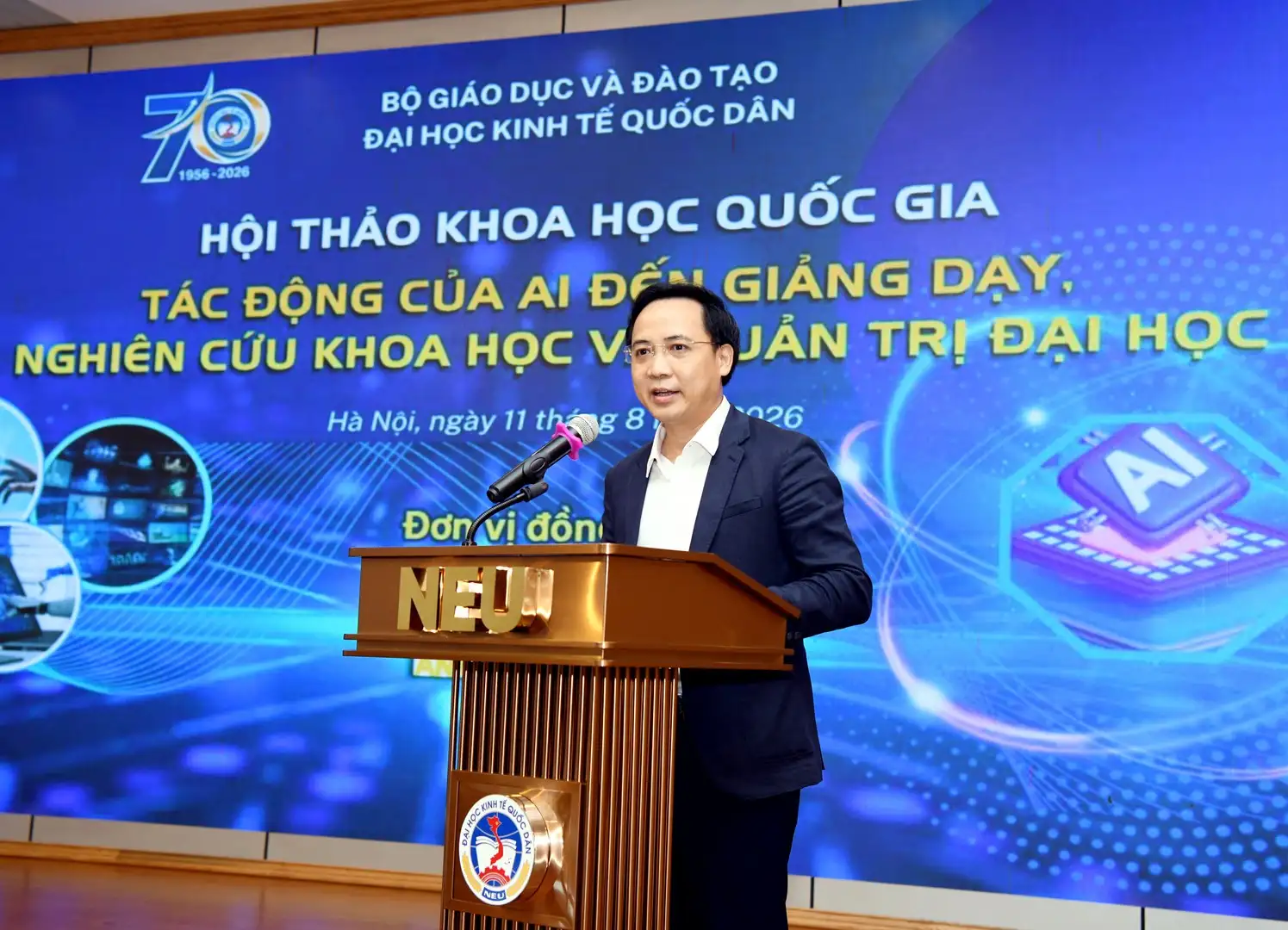
Prof. Dr. To Trung Thanh – Vice Rector of the National Economics University speaking
In his opening remarks at the conference, Prof. Dr. To Trung Thanh – Vice Rector of the National Economics University noted that this is a highly topical and strategic issue for higher education institutions. The rapid development of artificial intelligence, particularly generative AI, indicates that AI is no longer merely a new tool but is increasingly integrating into the processes of teaching, training, academic research, and university governance.
According to Prof. Dr. To Trung Thanh, these changes are prompting higher education institutions to rethink their methods of teaching, training, academic research, and governance to adapt to the new context.
In teaching and learning, AI is altering the relationship between teachers, learners, and knowledge. The ability to access a vast amount of knowledge, along with AI’s support in analysis and personalized learning, is also changing the role of lecturers. Teachers are not only conveyors of knowledge but increasingly need to become designers of the learning process, guiding thinking, and developing students’ analytical, critical, and creative abilities.
In particular, Prof. Dr. To Trung Thanh highlighted the risk of learners losing their ability to think independently when overly reliant on technology. The Vice President of the University emphasized: “It is crucial in higher education that AI supports thinking rather than replaces it. Learners must have questions, arguments, and opinions; AI is used to expand, verify, and refine thinking.”
AI not only impacts academic programs but also opens up new possibilities for academic research. This technology can assist scientists in literature reviews, developing research methodologies, and suggesting new research directions. If used correctly, AI can significantly reduce mechanical tasks, thereby allowing scientists more time to identify and address practical issues.
However, accompanying these opportunities are issues that require special attention regarding academic integrity, data security, and intellectual property. Thus, the application of AI not only raises questions about the ability to leverage technology but also demands appropriate standards and principles to ensure the quality, responsibility, and sustainability of research activities.
From the perspective of university governance, AI is creating significant advancements in data-driven and evidence-based governance models. AI can support learner data analysis, resource management, decision-making, and enhance governance efficiency. However, the deeper the application of AI, the more higher education institutions must focus on privacy, data security, accountability, and especially human decision-making rights.
“AI in university governance is not simply about adding another software to the management system but requires a change in governance methods,” emphasized Prof. Dr. To Trung Thanh.
Given these opportunities and challenges, the Vice President of the National Economics University believes that the issue is no longer simply whether to use AI, but how to use AI to enhance the quality of higher education, promote academic research, improve governance capacity, while controlling the risks that this technology brings.
For the National Economics University, AI is identified as needing a strategic approach. According to Prof. Dr. To Trung Thanh, in the coming time, the University will focus on three main directions.
Firstly, the application of AI in education and learner development, linked with innovation in curriculum, teaching methods, and assessment; while ensuring that learners have the ability to use AI without losing their learning mindset, critical thinking, and creativity.
In academic research, the University aims to leverage AI to enhance the research capacity of faculty members, alongside setting higher standards for academic integrity, data governance, and intellectual property protection.
In terms of university governance, the National Economics University will gradually develop data-driven governance capabilities, using AI to improve decision quality, optimize resources, and provide better services for students, faculty members, and partners.
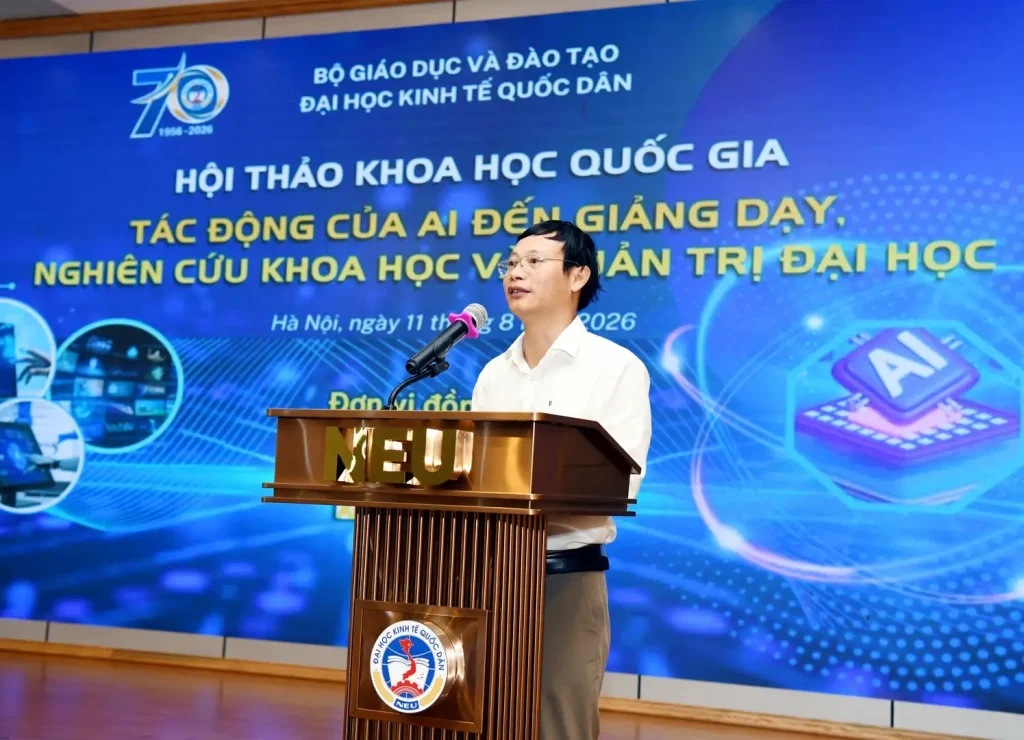
Dr. Le Viet Thuy – Director of the Information Technology Application Center, National Economics University presented a paper on the topic “Strategy and Plan for AI Application at the National Economics University 2026-2030”
Assoc. Prof. Dr. Do Van Hung – Head of the Information Management Faculty, University of Social Sciences and Humanities, Vietnam National University, Hanoi presented a paper on the topic “The Impact of AI on Academic Research in Higher Education Institutions”
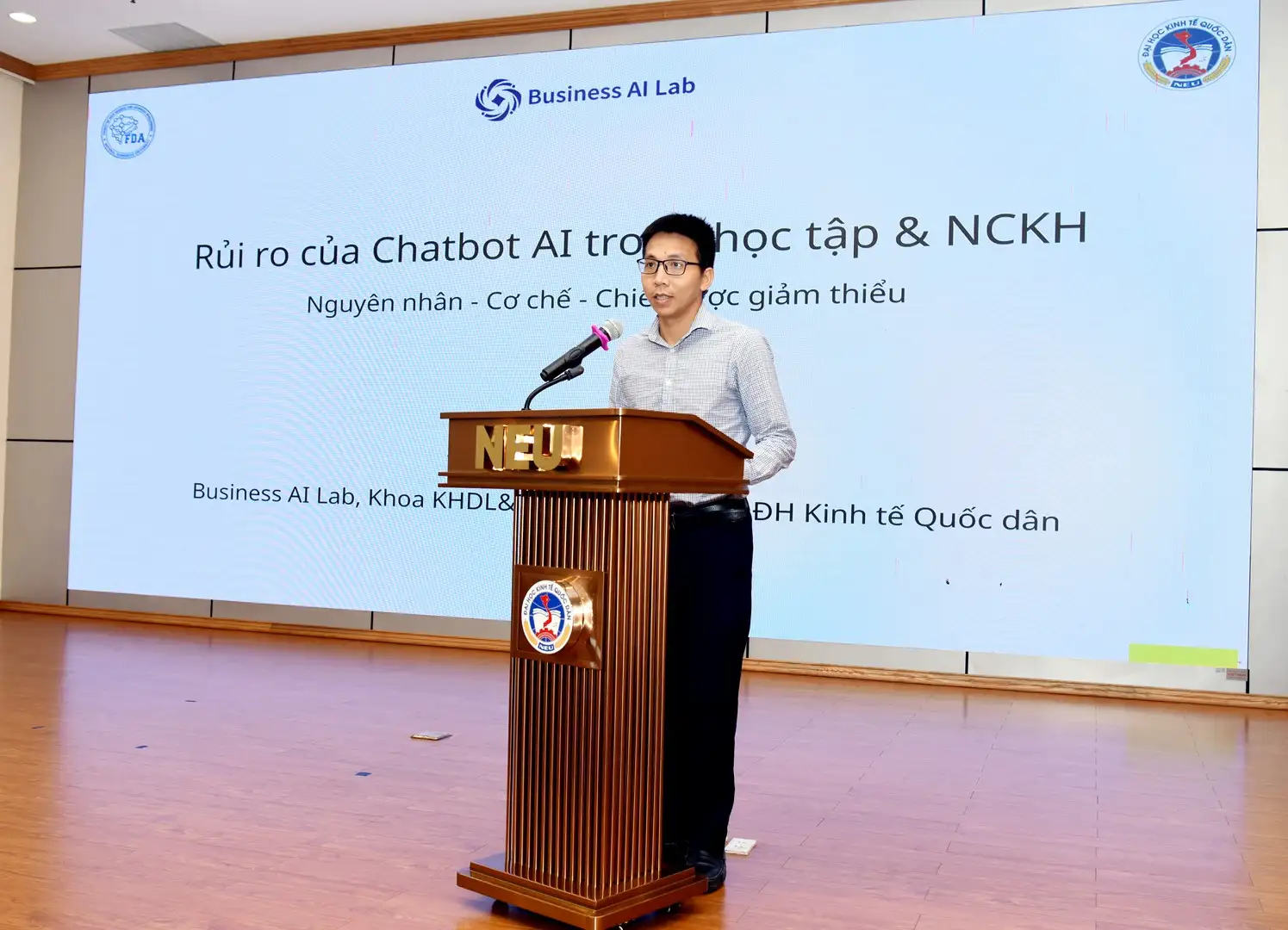
Dr. Luong Van Thien – Faculty of Data Science and Artificial Intelligence, National Economics University presents a paper on the topic “The Impact of AI on University Governance“
Through exchanges and discussions at the Conference, the National Economics University expects that scientists will gain a deeper understanding of how AI is impacting the processes of education, academic research, and governance at higher education institutions. The outcomes of these exchanges are also anticipated to contribute valuable recommendations for AI development policies in higher education, while providing scientific arguments for the formulation of strategies and policies for effective AI application in the near future.
In the context of AI’s increasingly pervasive presence in higher education, the issues raised at the Conference highlight the need for innovation not only in adopting and applying a new technology but also in how higher education institutions proactively shape appropriate methods of education, research, and governance. In this process, AI is utilized as a tool to enhance quality and efficiency, while human thinking, creativity, responsibility, and decision-making continue to play a central role.
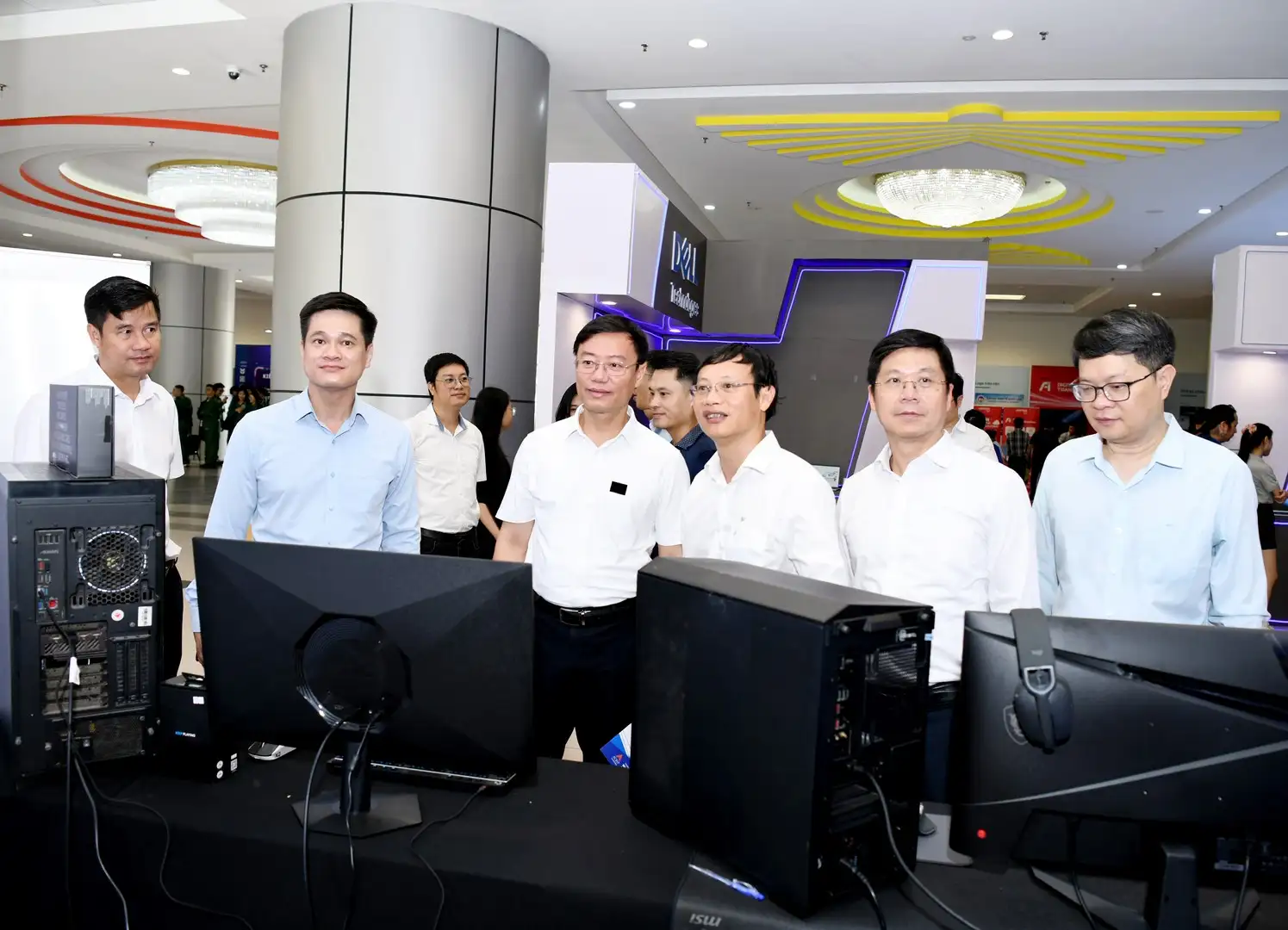
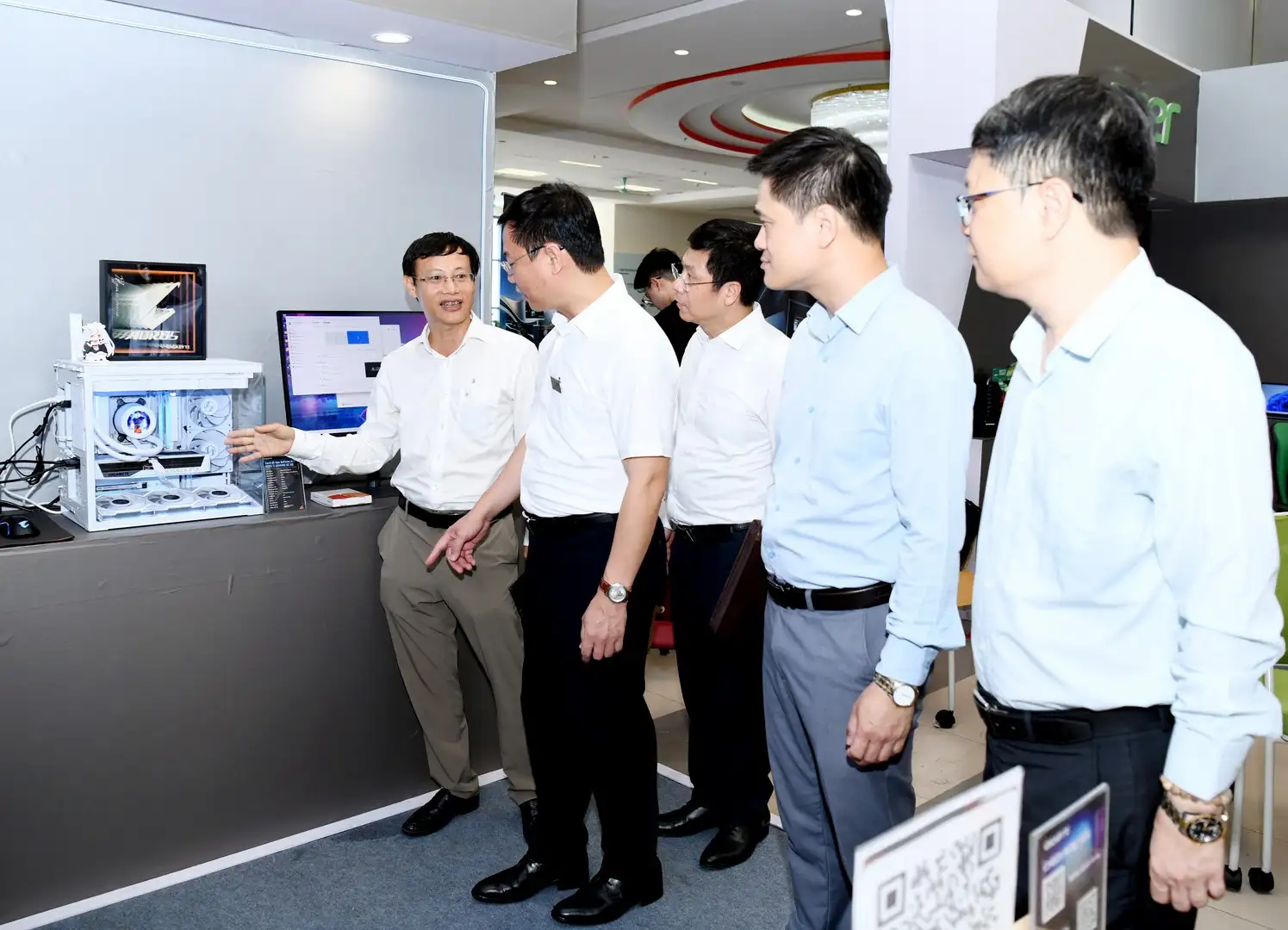
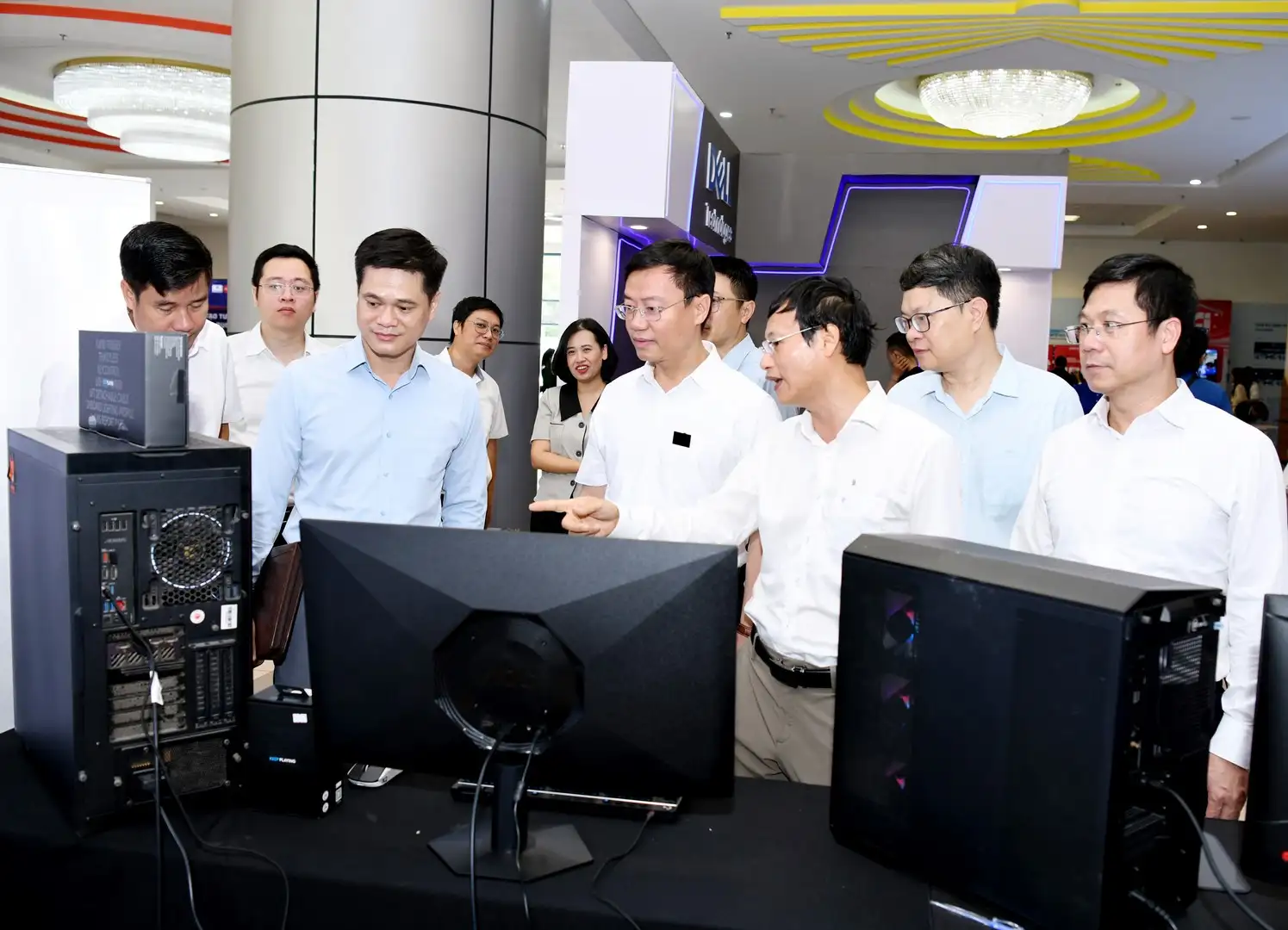
Delegates visit exhibition booths showcasing AI applications on the sidelines of the Conference
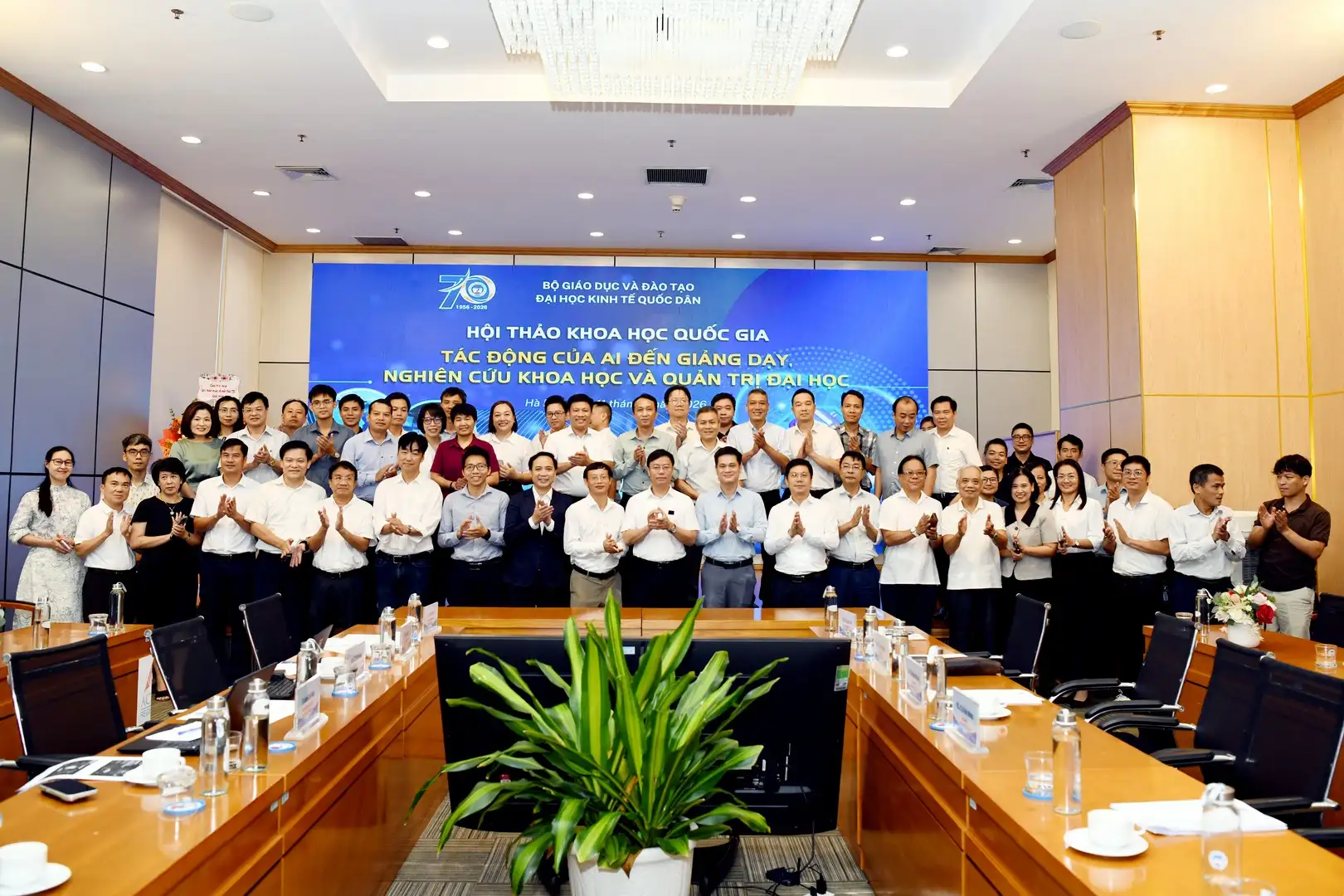
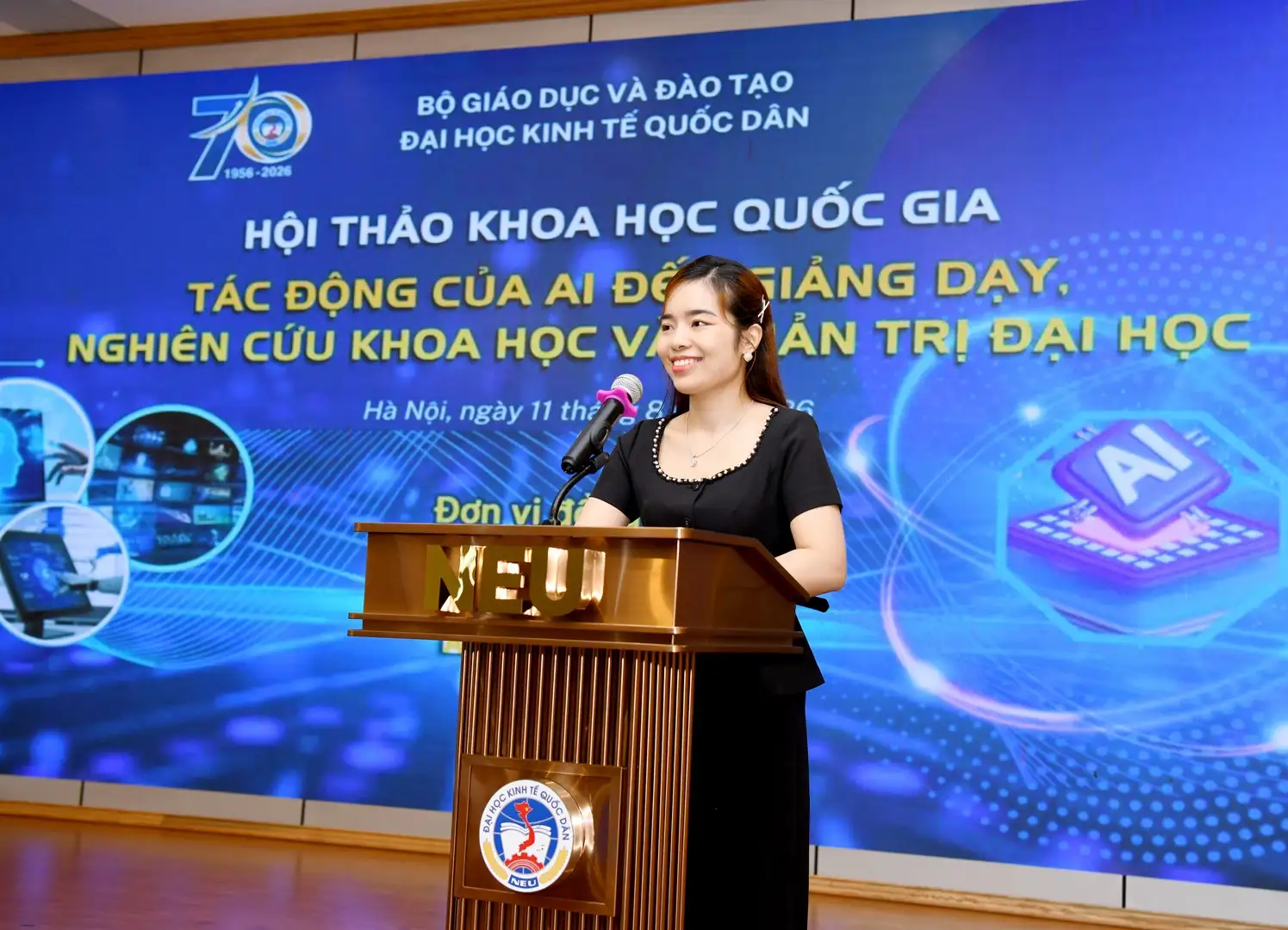
Some images from the Conference:
Article and photos: Communications Department