National Scientific Conference on “Application of Artificial Intelligence in the Social Sciences Sector”
04/08/2026 2026-10-20 10:18National Scientific Conference on “Application of Artificial Intelligence in the Social Sciences Sector”
National Scientific Conference on “Application of Artificial Intelligence in the Social Sciences Sector”
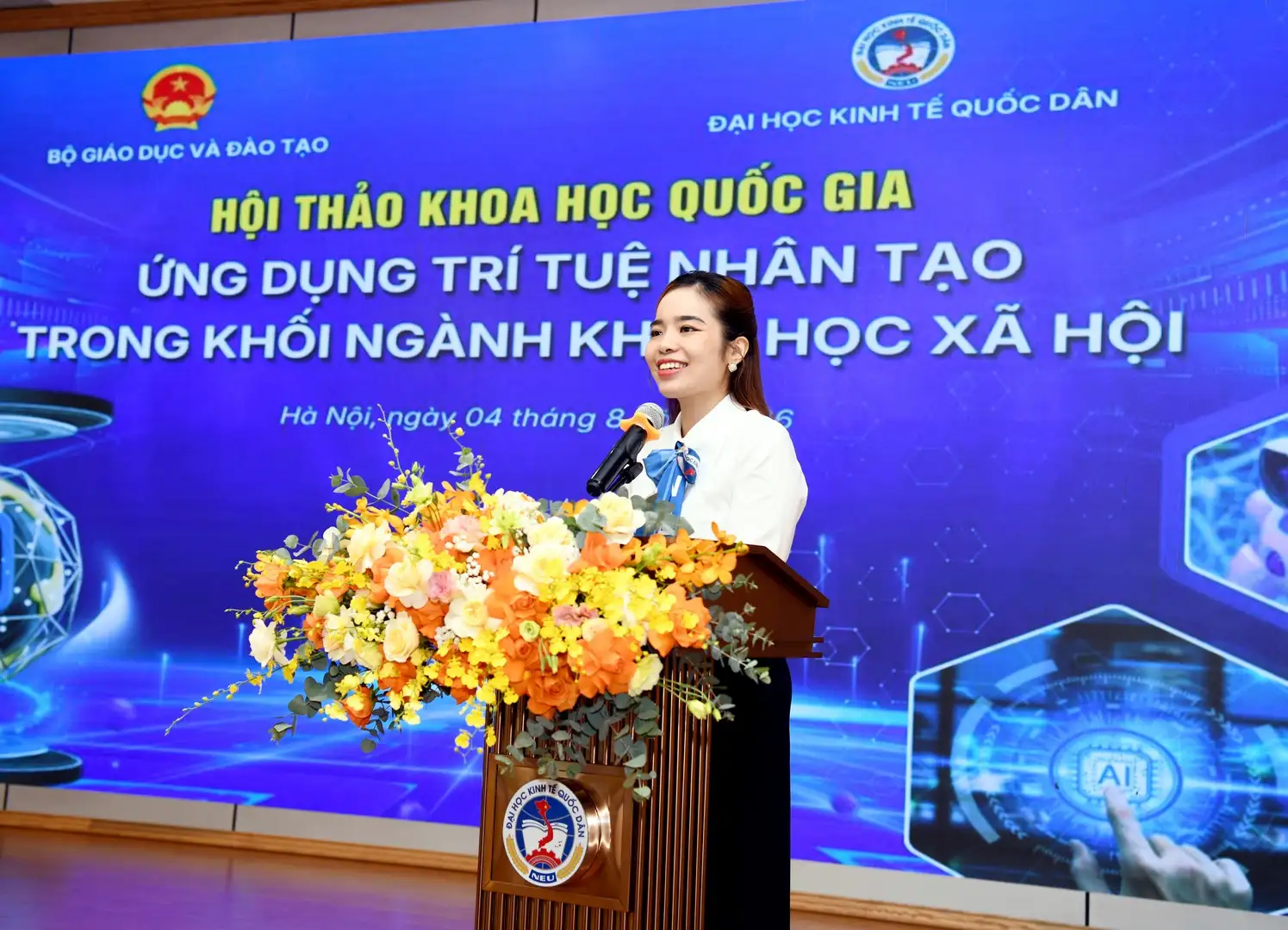
On the morning of August 4, 2026, at the National Economics University, the Ministry of Education and Training in collaboration with the National Economics University organized a national scientific conference with the theme “Application of Artificial Intelligence in the Social Sciences Sector” to implement the educational sector’s tasks according to Resolution No. 57-NQ/TW of the Politburo on breakthroughs in the development of science, technology, innovation, and national digital transformation, along with the Ministry of Education and Training’s plans to execute the Central Steering Committee’s work program on the development of science, technology, innovation, and digital transformation.
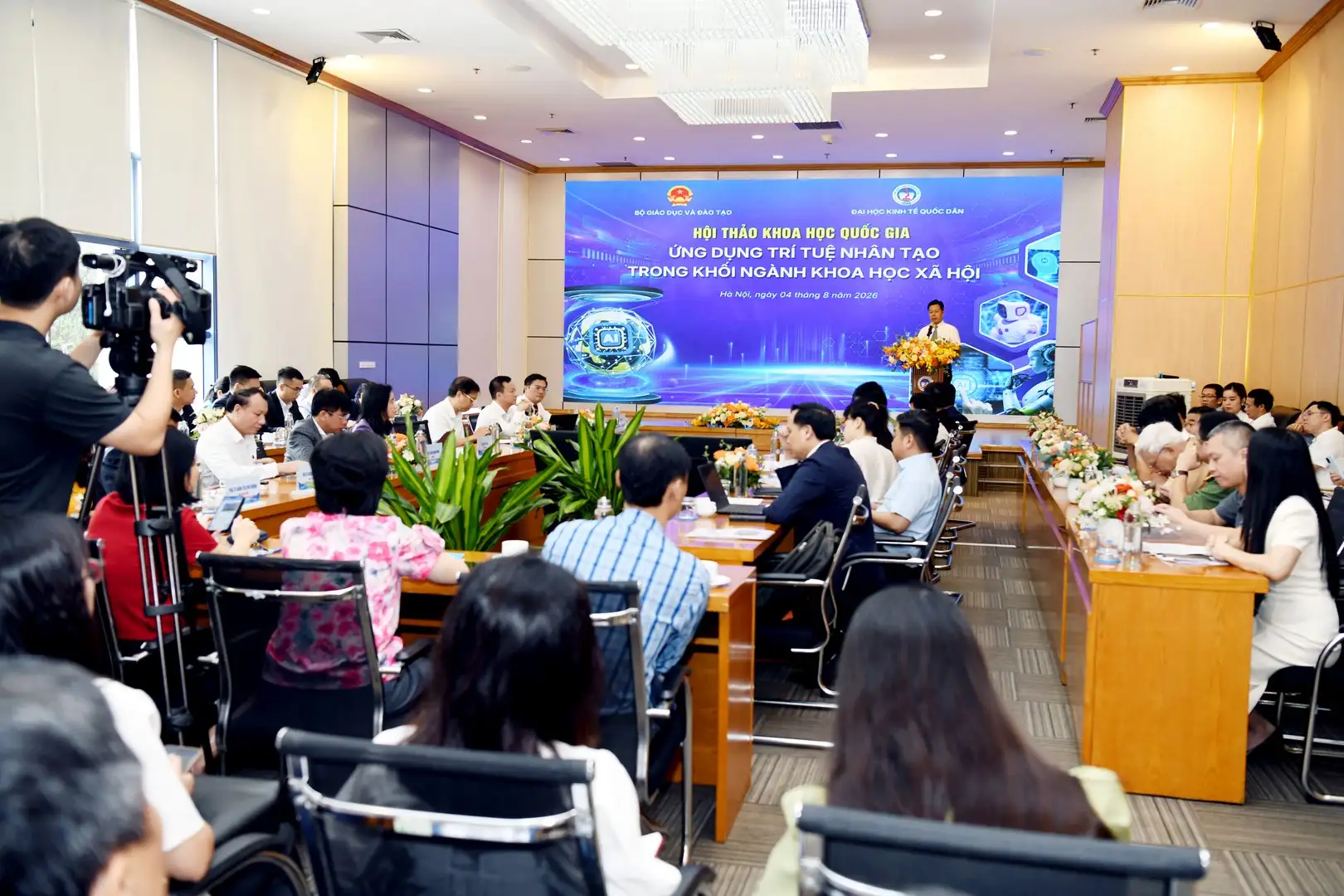
Conference Overview
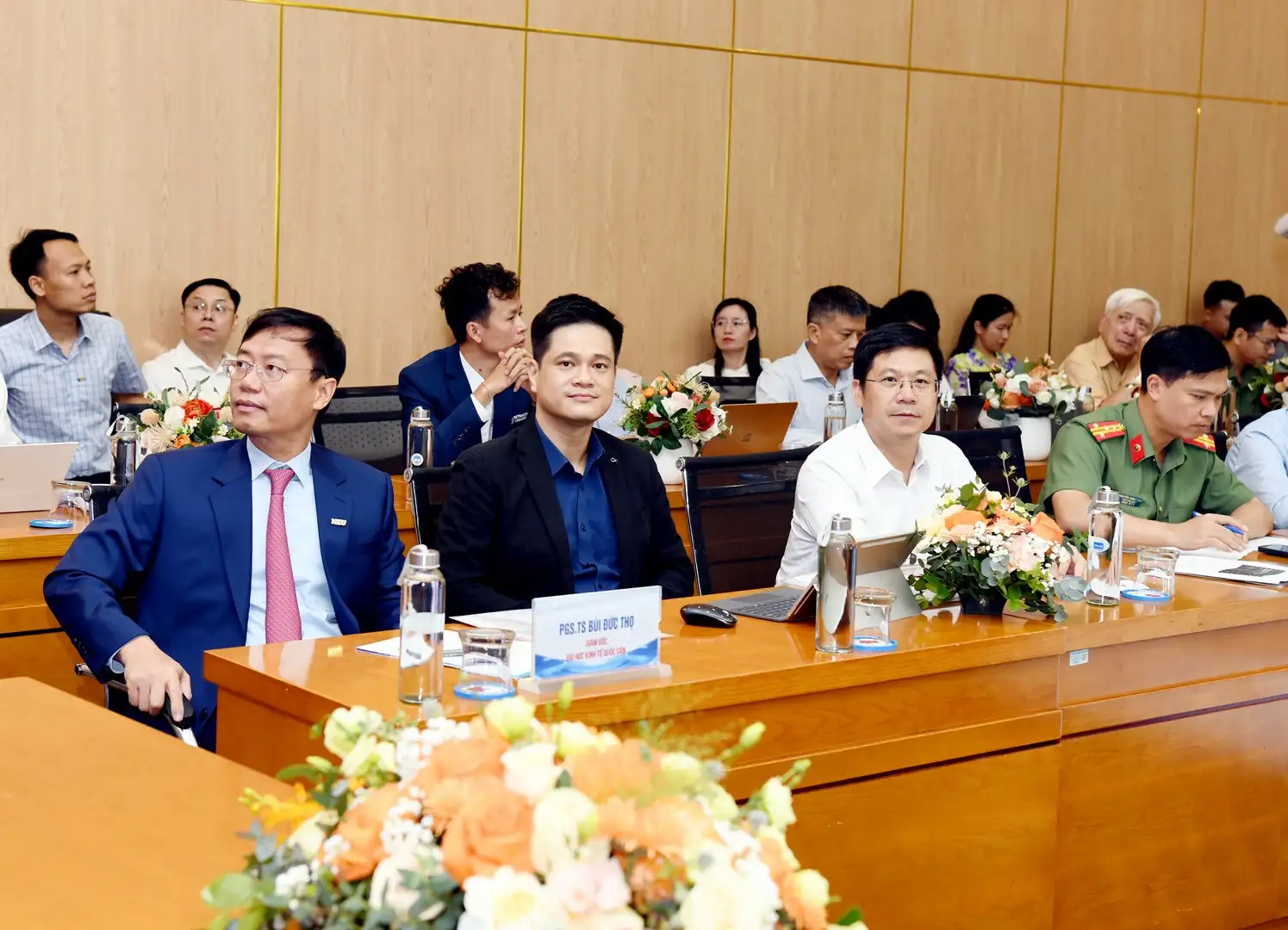
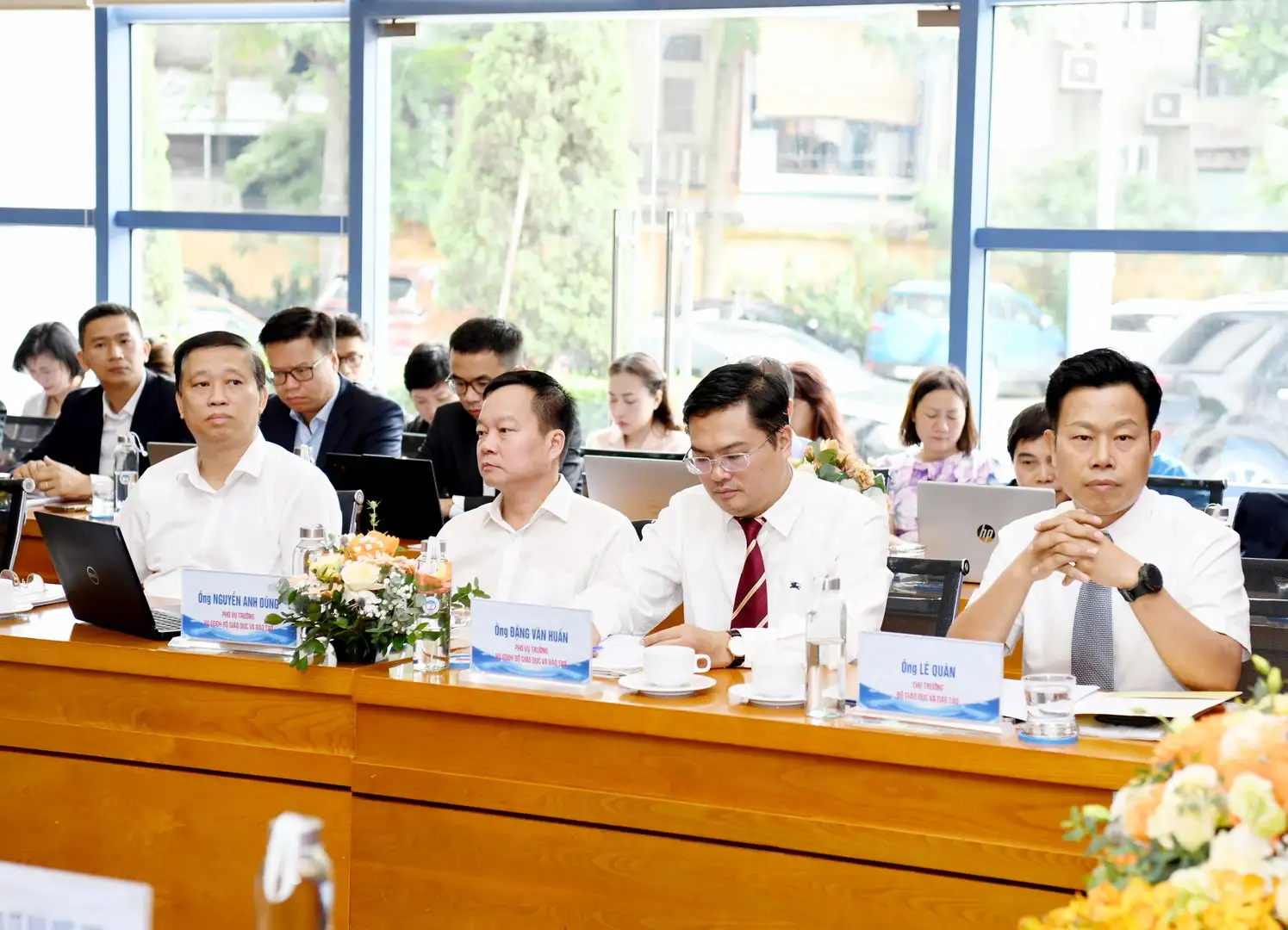
Attending the Conference, from the Ministry of Education and Training were: Prof. Dr. Le Quan – Deputy Minister of Education and Training; Dr. Dang Van Huan – Deputy Director of the Higher Education Department; Assoc. Prof. Dr. Nguyen Anh Dung – Deputy Director of the Higher Education Department; Dr. Hoang Hoa Cuong – Deputy Director of the Department of Science, Technology and Information.
From the National Economics University – the organizing unit were: Assoc. Prof. Dr. Bui Duc Tho – Party Secretary, University President; Prof. Dr. To Trung Thanh – Vice President of the University; Prof. Dr. Nguyen Huu Anh – Vice President of the University. From partner higher education institutions were: Prof. Dr. Tran Dang Hoa – Vice President of Hue University; Assoc. Prof. Dr. Bui Quang Hung – President of the University of Economics Ho Chi Minh City; Prof. Dr. Nguyen Hoang – Rector of the University of Commerce; Assoc. Prof. Dr. Nguyen Duc Son – Rector of Hanoi National University of Education; Assoc. Prof. Dr. Colonel Nguyen Hong Thai – Vice President of the People’s Security Academy; Assoc. Prof. Dr. Dang Thi Thu Huong – Vice Rector of the University of Social Sciences and Humanities (VNU Hanoi).
From Saigon – Hanoi Commercial Joint Stock Bank (SHB) – the accompanying unit were: Mr. Do Quang Vinh – Vice Chairman of the Board of Directors, concurrently Deputy General Director; Ms. Ngo Thu Ha – General Director; along with nearly 400 delegates including scientists, economic experts, authors with presentations, and representatives from higher education institutions and central agencies attending the conference both online and in person at the National Economics University Hall.
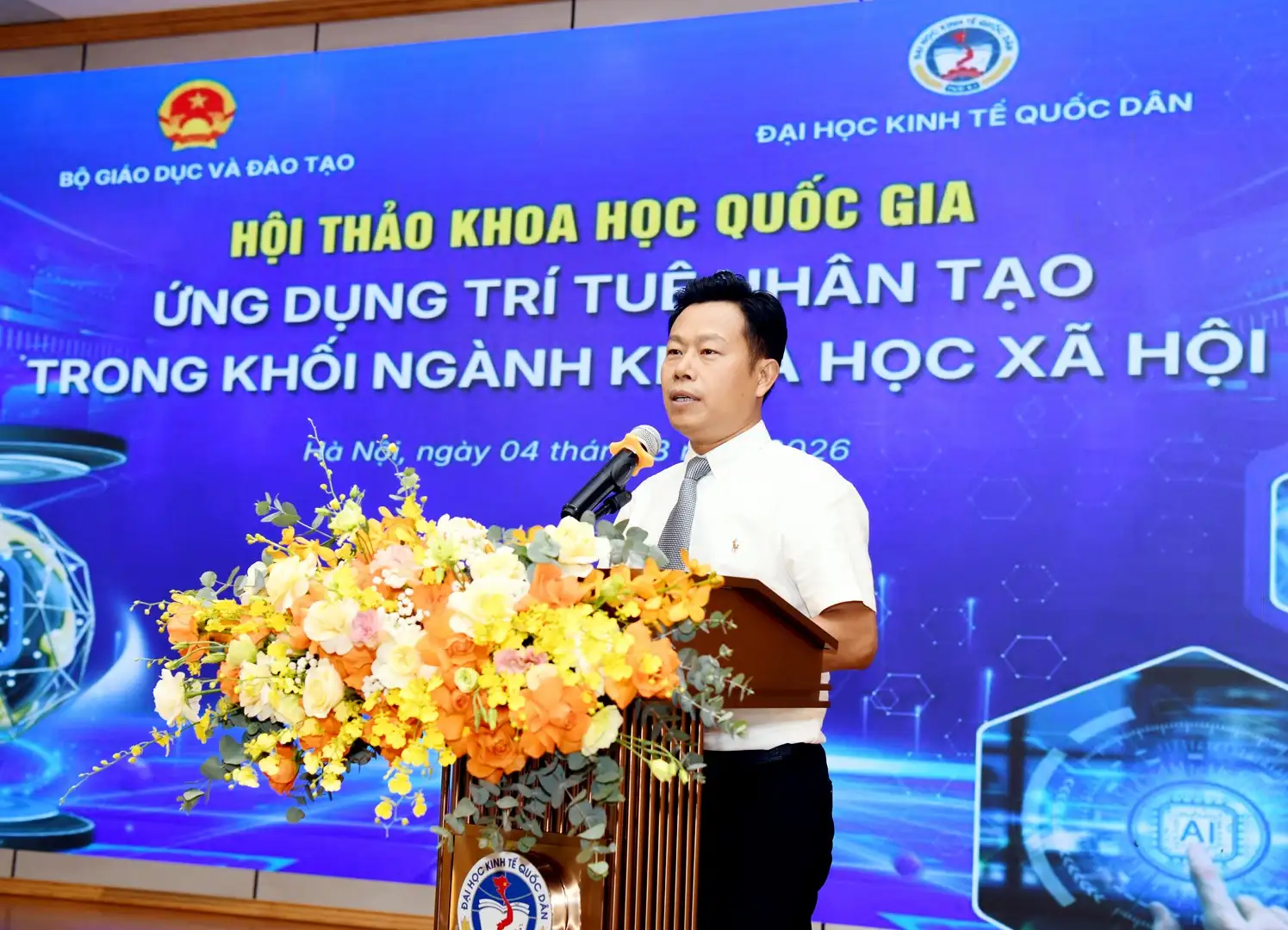
Deputy Minister of Education and Training Le Quan speaking at the Conference
In his opening remarks and orientation for the Conference, Deputy Minister of Education and Training Le Quan stated that, alongside building elite universities and excellent institutions, the education sector is promoting research and application of artificial intelligence (AI), especially in higher education.
According to Deputy Minister Le Quan, the application of AI is not only intended to support teaching activities but also to drive comprehensive innovation in the curriculum, teaching methods, academic research, and university governance. In the context of rapid technological development, higher education institutions need to restructure their programs towards flexibility, interdisciplinarity, and enhance learners’ adaptability to the labor market.
“The notion that students choose a major, study within a narrow specialization, and then work strictly in that field needs to be changed. Students may start in one area but must be equipped with the capacity to adapt and take on various roles. Regardless of the field of study, students need technological competencies, particularly digital skills and AI application capabilities,” emphasized Deputy Minister Le Quan.
According to the Deputy Minister, AI should be integrated into academic programs rather than being treated as a separate subject. Fields such as economics, management, education, law, healthcare, journalism, communications, and traditional social sciences are all significantly impacted by technology and need to innovate to meet new development demands.
Regarding teaching methods, Deputy Minister Le Quan believes that AI can assist in developing learning materials, designing lectures, and organizing learning activities, but it cannot replace the role of educators and the critical thinking of learners. Higher education should aim to develop problem-solving skills, creative thinking, and technological mastery.
“We cannot allow a situation where teachers use AI to create exams, students use AI to complete them, and then AI grades them. The important thing is to change the way teaching and learning are organized, using technology to help learners develop critical thinking, design systems, and solve practical problems,” Deputy Minister Le Quan clearly stated.
The Deputy Minister also urged universities, especially leading training institutions, to establish AI research and application centers aligned with the strengths of each field. Research activities should directly serve the innovation of training, enhance management efficiency, and optimize resources.
Higher education institutions need to develop a plan for AI application over the next five years, clearly defining objectives, tasks, and evaluation indicators. Simultaneously, they should continue to innovate the curriculum, increase flexibility in changing majors, specify digital competency standards, and enhance foreign language proficiency for learners.
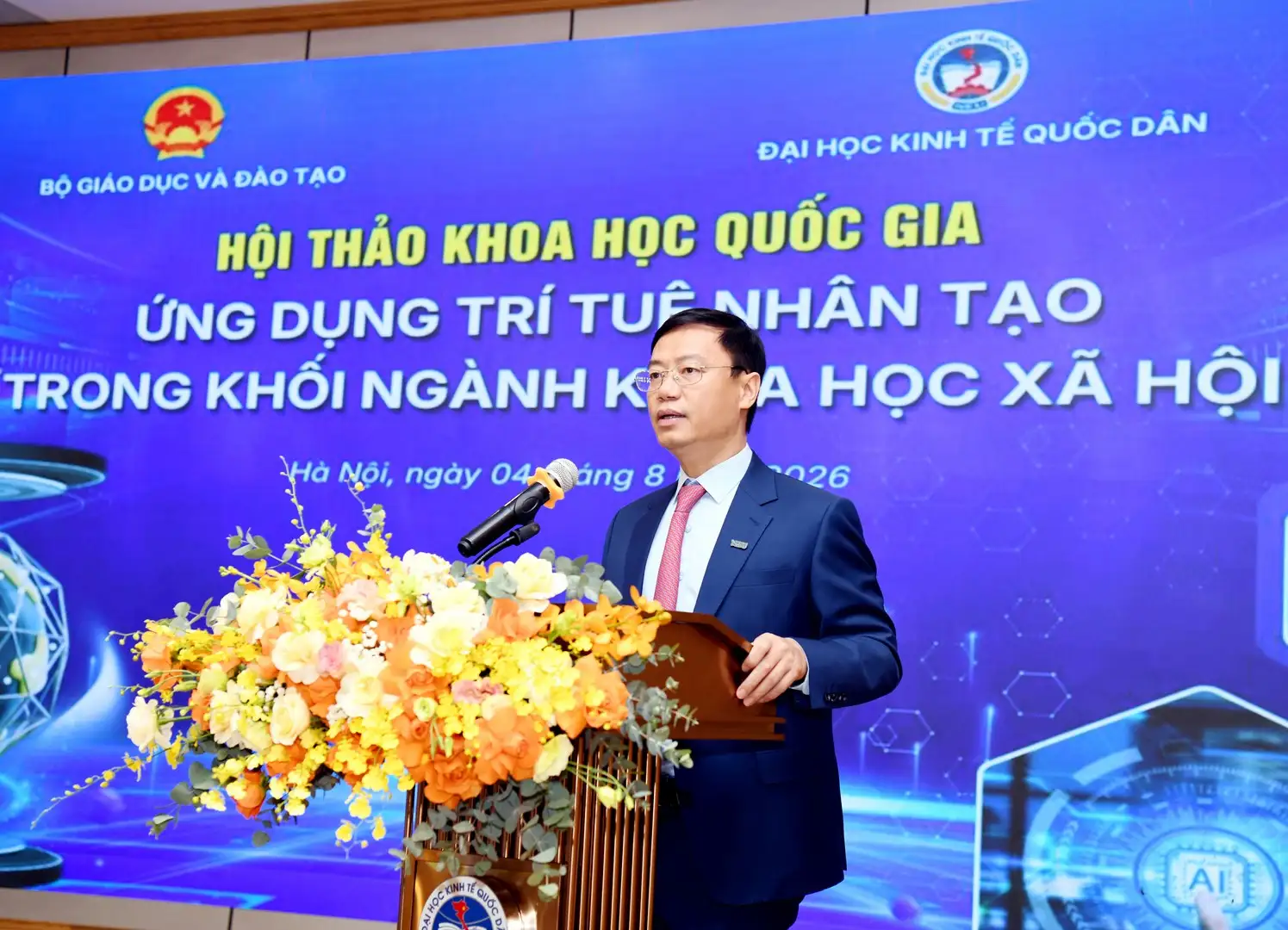
Assoc. Prof. Dr. Bui Duc Tho – Party Secretary, Director of the National Economics University speaks
Also at the Conference, Assoc. Prof. Dr. Bui Duc Tho – Party Secretary, Director of the National Economics University emphasized that in the context of artificial intelligence (AI), especially Generative AI (GenAI), profoundly transforming the methods of learning, working, and knowledge creation, higher education needs to shift from the mindset of “training about AI” to “training in the AI era,” preparing learners with the ability to adapt to changes in the labor market and the digital society.
According to Assoc. Prof. Dr. Bui Duc Tho, AI does not simply replace labor but is becoming a “smart colleague,” supporting humans in analysis, creativity, and decision-making. Therefore, the core role of higher education is to develop competencies that AI cannot replace, such as critical thinking, creativity, empathy, and ethical responsibility.
Sharing the University’s direction, Assoc. Prof. Dr. Bui Duc Tho stated that the National Economics University is proactively redesigning its curriculum to integrate AI at multiple levels, aiming to cultivate a generation of learners with a solid professional foundation, data literacy, critical thinking, and the ability to master AI to create new value for society.
The University Director affirmed that the Conference is an important forum for managers, experts, and lecturers to discuss the competency framework of learners in the AI era, innovate teaching methods, ensure academic integrity, and build assessment models suitable for the requirements of higher education in the digital age.
At the Conference, experts and scientists focused on analyzing opportunities, challenges, and proposing solutions to promote AI application in training and academic research in the field of social sciences and humanities.
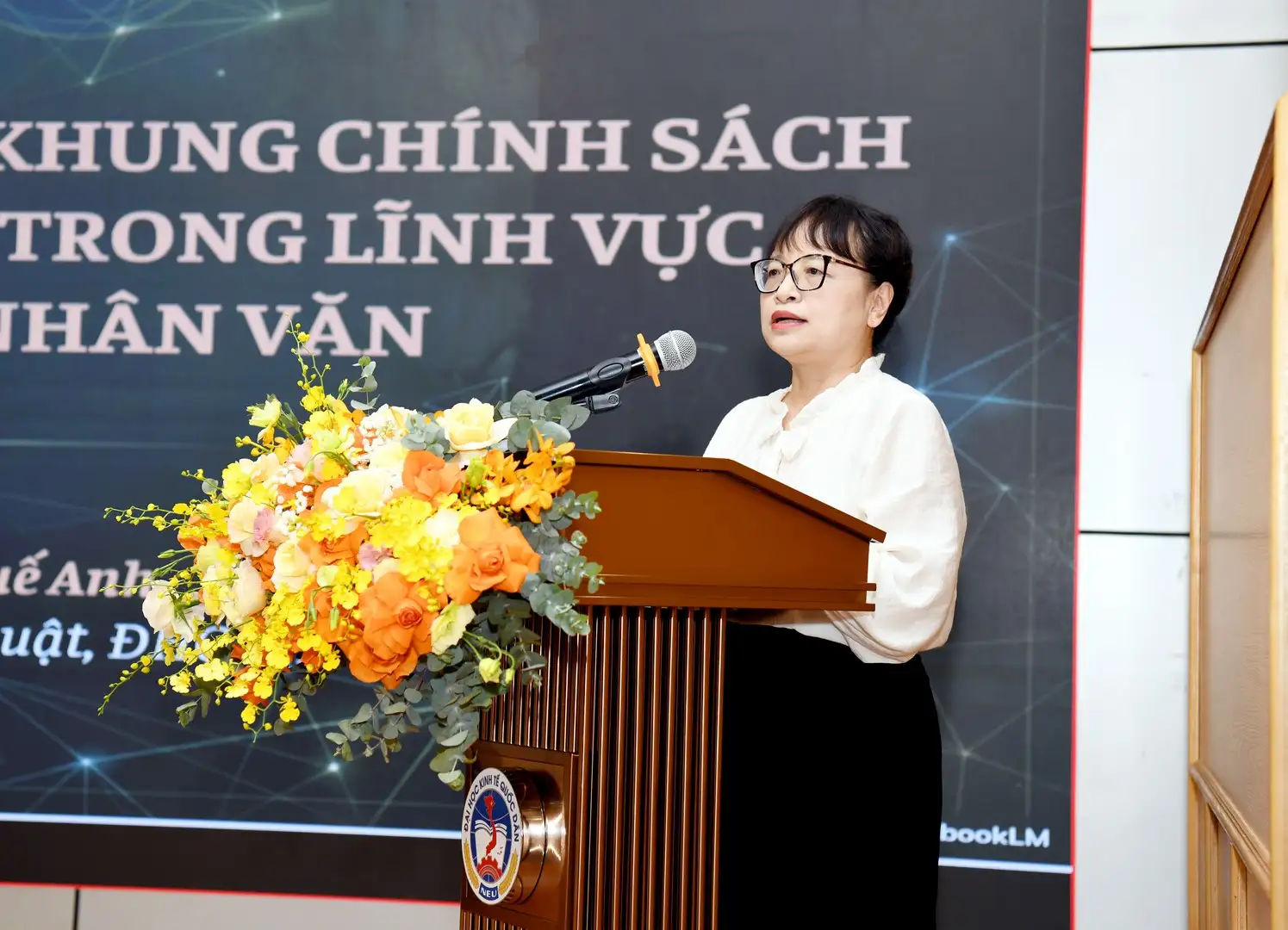
Assoc. Prof. Dr. Nguyen Thi Que Anh – Former Rector of the School of Law, Vietnam National University, Hanoi presented a paper at the Conference
Assoc. Prof. Dr. Nguyen Thi Que Anh – Former Rector of the School of Law, Vietnam National University, Hanoi, emphasized the need to transform educational philosophy in the AI era, from imparting knowledge to fostering higher-order thinking skills; from seeking answers to identifying problems, evaluating information, and assessing value. Education should enhance learners’ critical thinking, creativity, and questioning abilities, while affirming the decisive role of humans in utilizing AI.
According to the “human-in-the-loop” model, humans must retain the final decision-making authority and bear ethical responsibility. Educational institutions should establish AI governance frameworks to ensure academic integrity, authorship rights, and transparency; while also enhancing data governance, protecting personal data, and controlling algorithmic bias risks.
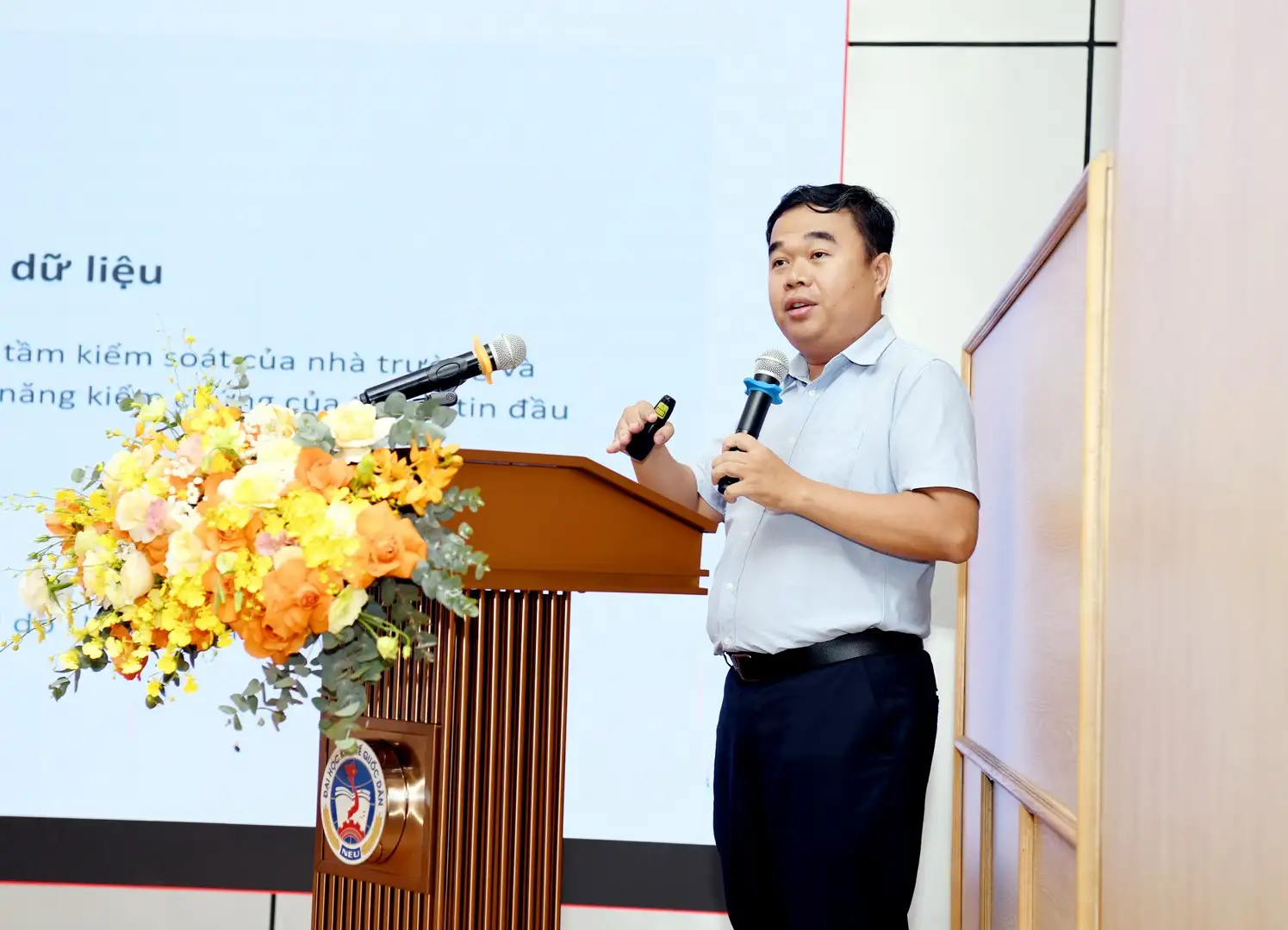
Master Dang Thai Thinh – Deputy Head of the Infrastructure Management Division, University of Economics Ho Chi Minh City presented a paper at the Conference
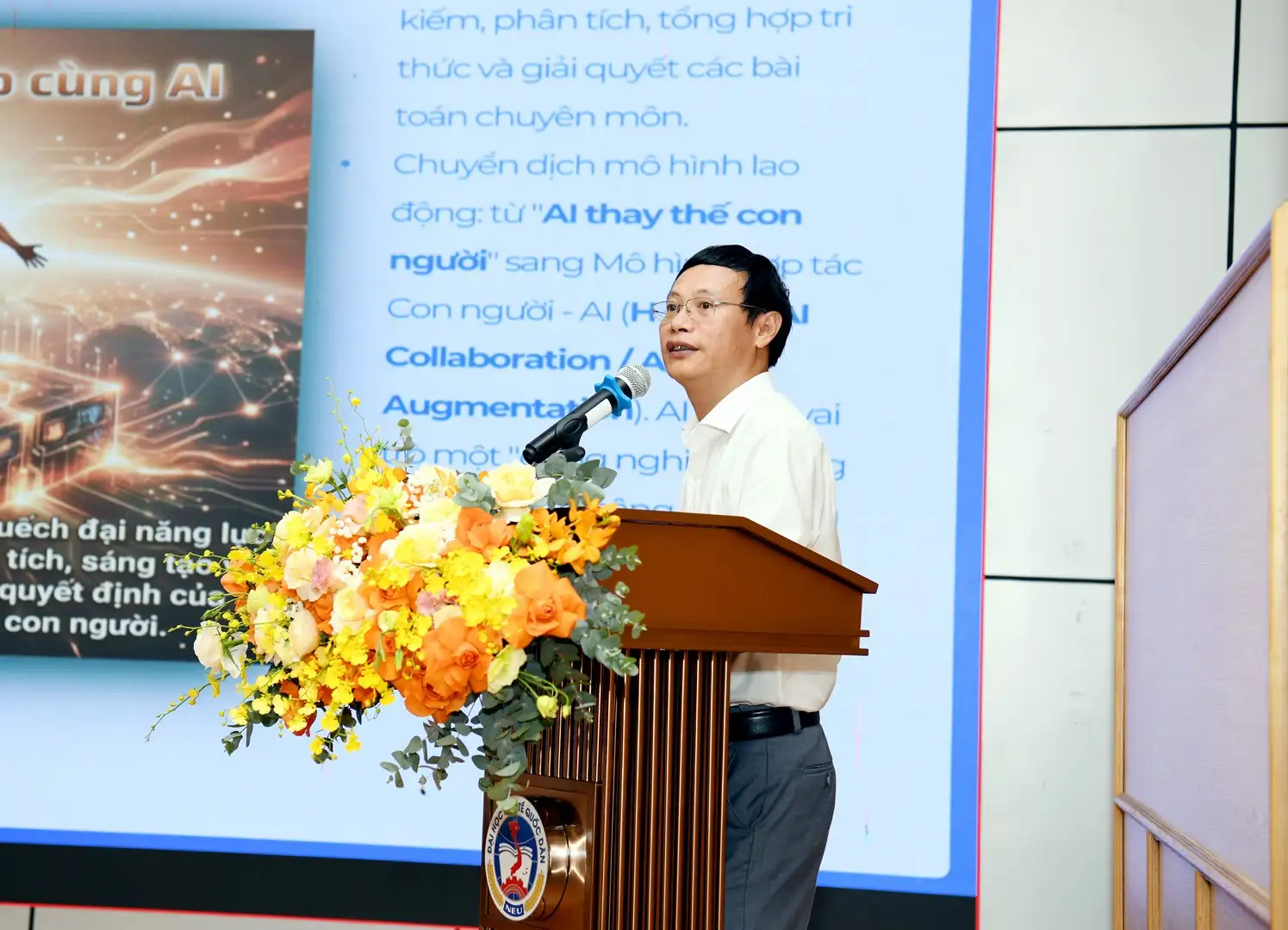
Dr. Le Viet Thuy – Director of the Information Technology Application Center, National Economics University presented a paper at the Conference
Dr. Le Viet Thuy – Director of the Information Technology Application Center, National Economics University, stated: The rapid development of generative AI is transforming how learners approach, analyze, synthesize knowledge, and solve professional problems. Higher education needs to shift from a static knowledge training model to developing dynamic competencies, helping learners adapt to rapid technological changes. Only a small proportion of the workforce needs deep expertise in programming and AI development, while the majority need skills to effectively exploit, evaluate, and apply AI in their professional fields.
On this basis, the National Economics University proposes integrating AI into the curriculum at three levels: disseminating AI knowledge and competencies to all learners; integrating AI tailored to the specifics of each discipline and academic program; and providing specialized training to develop a workforce capable of researching, developing, and mastering AI technology.
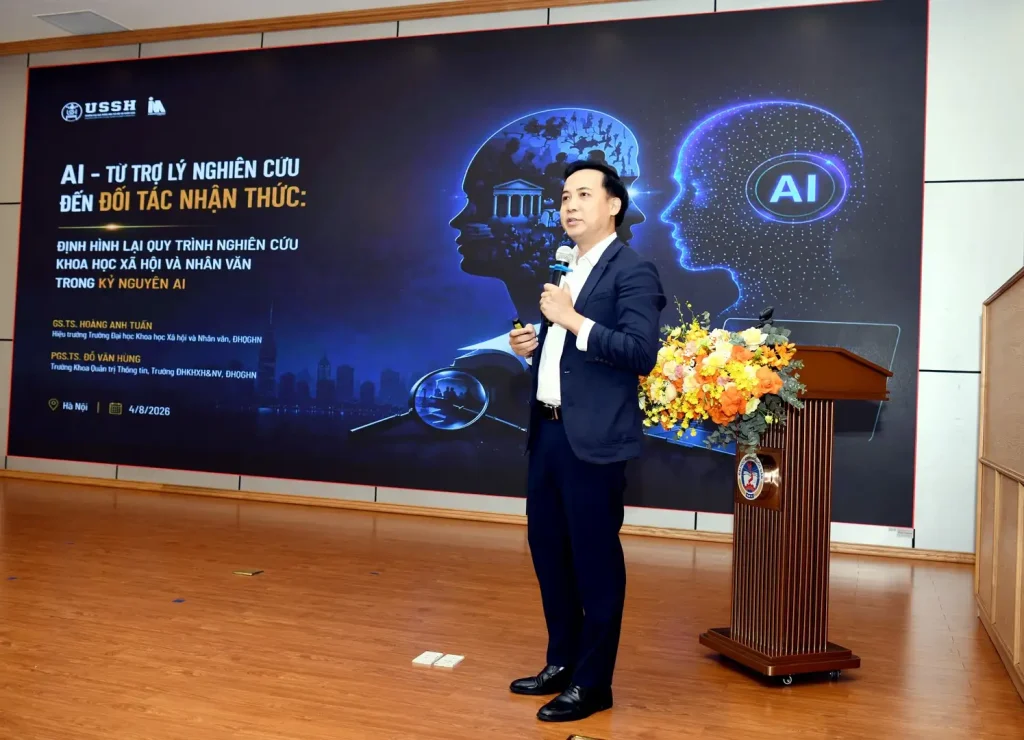
Assoc. Prof. Dr. Do Van Hung – Head of the Information Management Faculty, University of Social Sciences and Humanities, Vietnam National University, Hanoi presented a paper at the Conference
Assoc. Prof. Dr. Do Van Hung – Head of the Information Management Faculty, University of Social Sciences and Humanities, Vietnam National University, Hanoi, shared that AI is transforming the methods of searching, processing information, and organizing research activities in the social sciences and humanities. Researchers must still play a central role in verifying sources, selecting methods, and evaluating the scientific and social significance of research outcomes; while being responsible for the content, citations, and conclusions of their work. AI can participate in many stages but should not be granted decision-making power at any stage.
Experts also caution about risks such as AI generating non-existent sources or citations, oversimplifying cultural, historical, and social contexts, language bias, data leakage risks, and the reliance on technology diminishing critical thinking abilities.
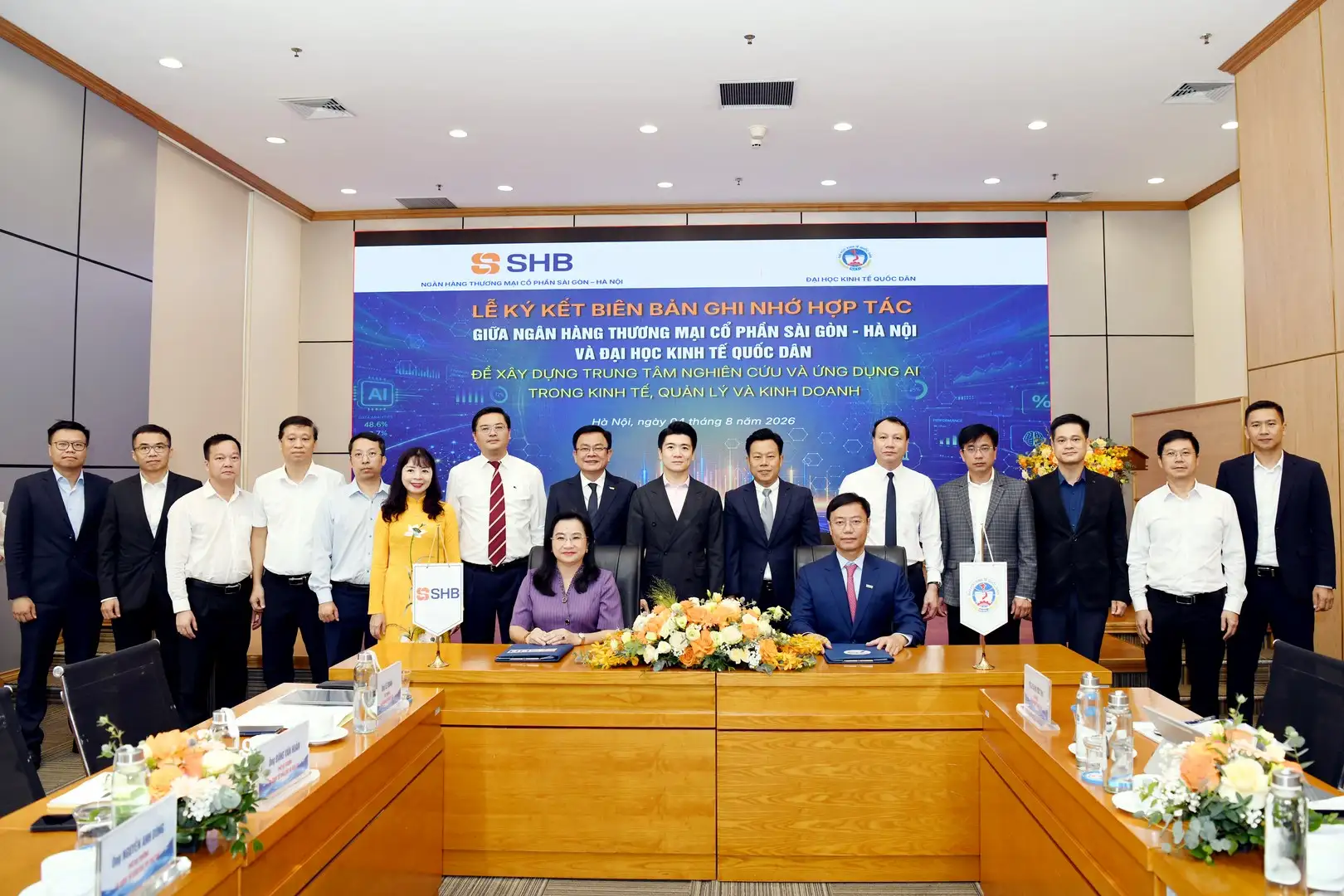
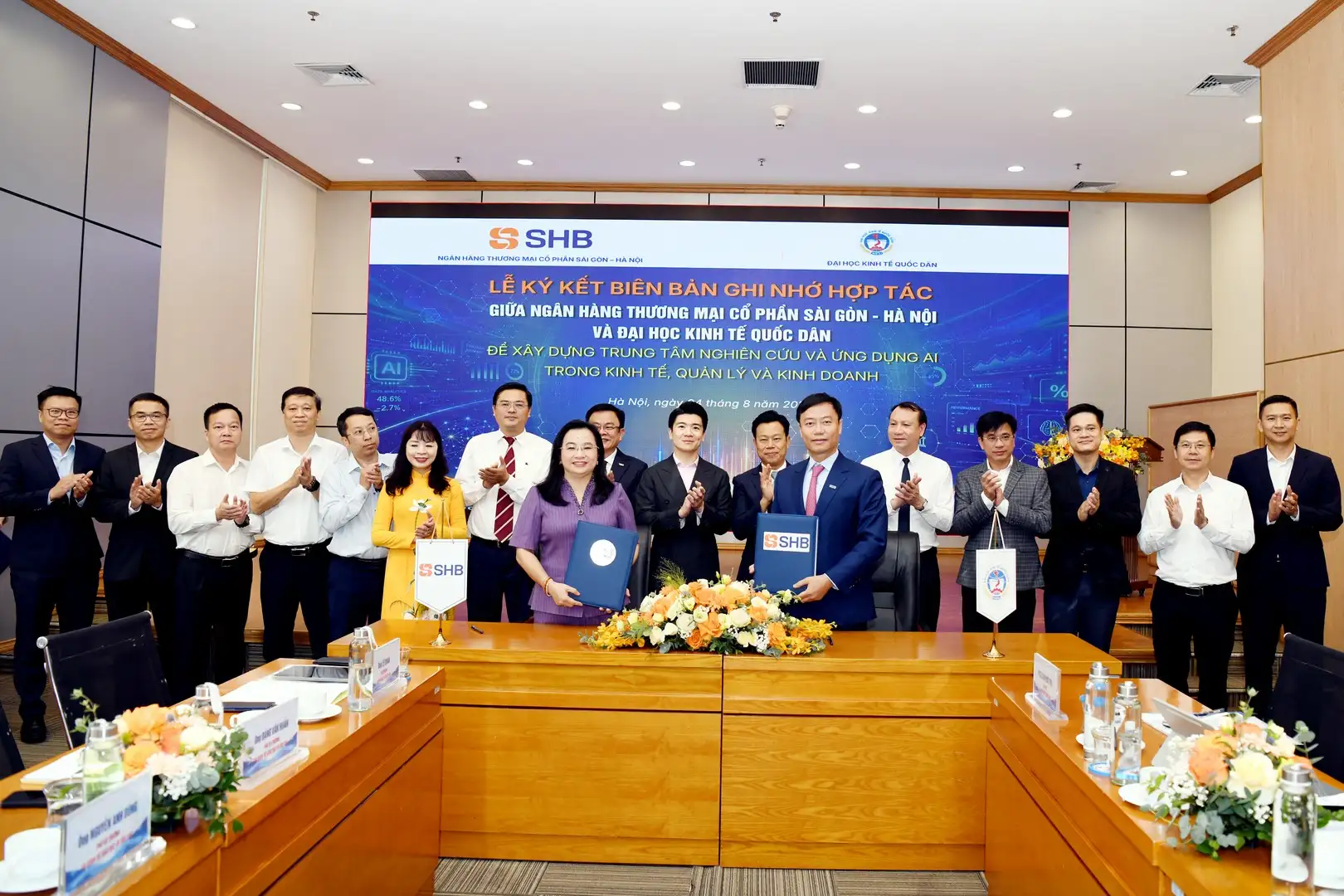
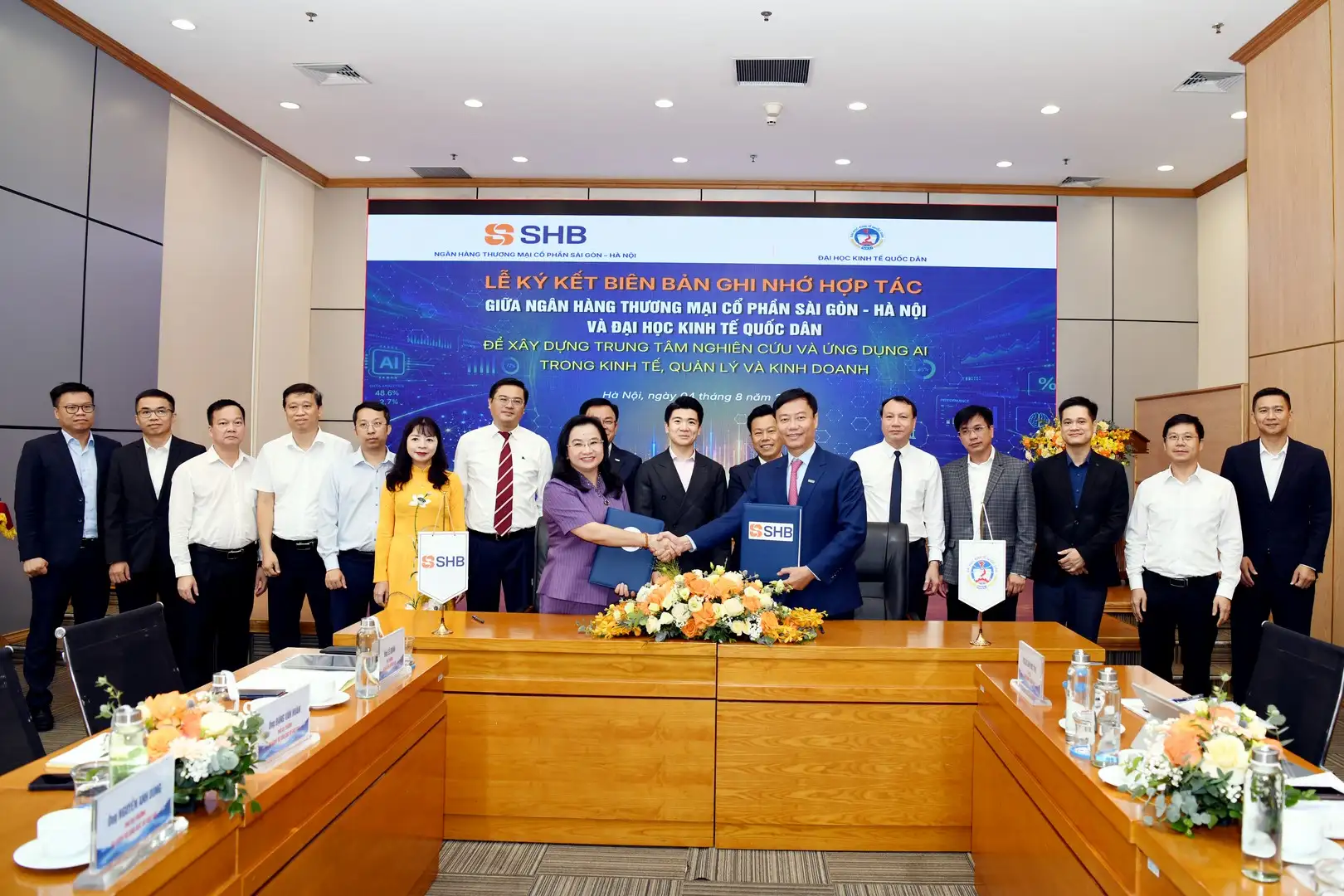
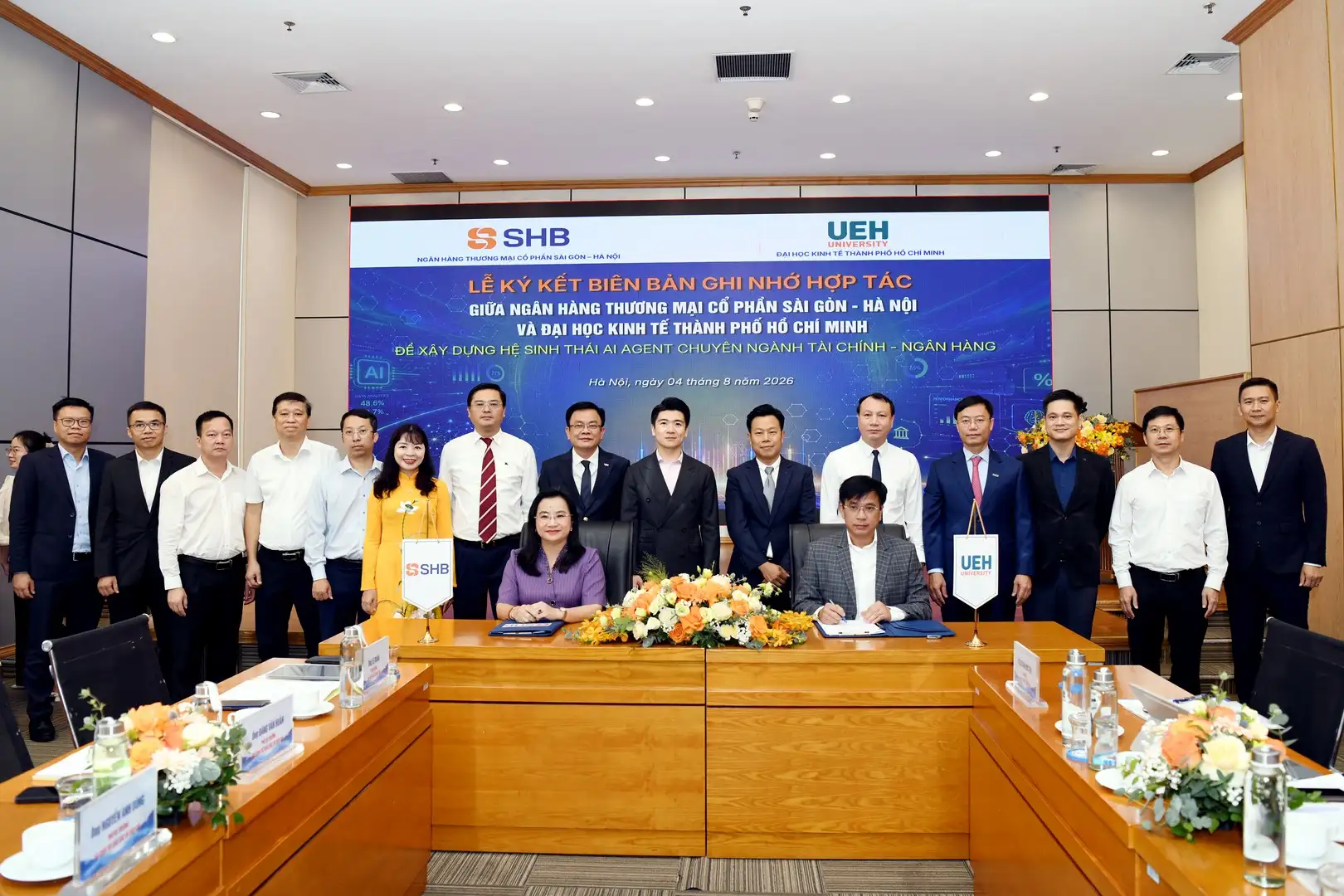
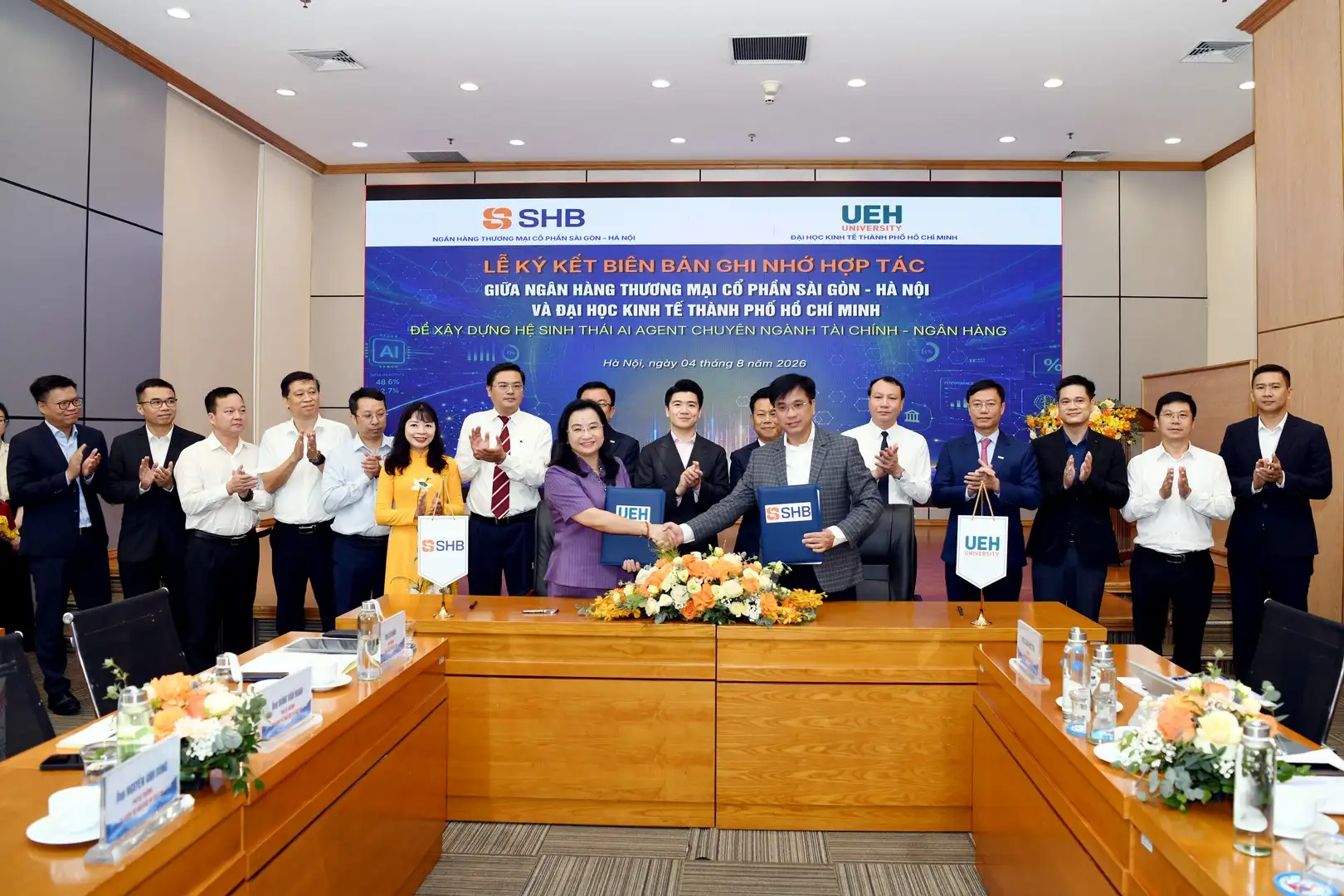
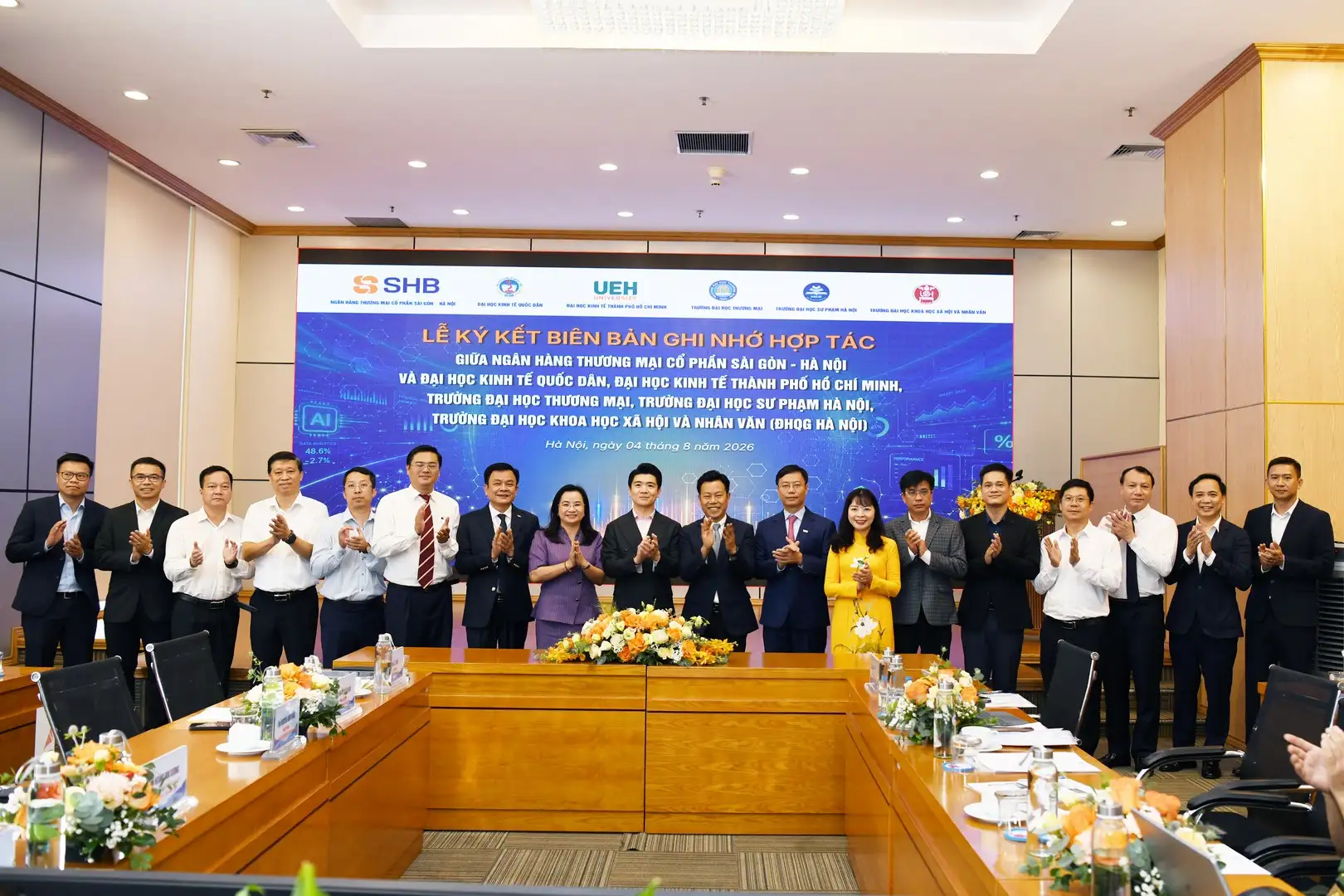
Representatives from higher education institutions and Saigon – Hanoi Commercial Joint Stock Bank (SHB) signed a memorandum of understanding on AI application in the social sciences sector
Also at the Conference, five higher education institutions, including the National Economics University, Hanoi National University of Education, University of Economics Ho Chi Minh City, University of Social Sciences and Humanities (Vietnam National University, Hanoi), VinUniversity, and Saigon – Hanoi Commercial Joint Stock Bank (SHB), signed a collaboration agreement to promote AI applications in the social sciences sector.
This activity contributes to strengthening the connection between higher education institutions and businesses in the research, development, and application of AI, aiming to create products that serve education, research, and meet practical demands.
Some images within the framework of the program:
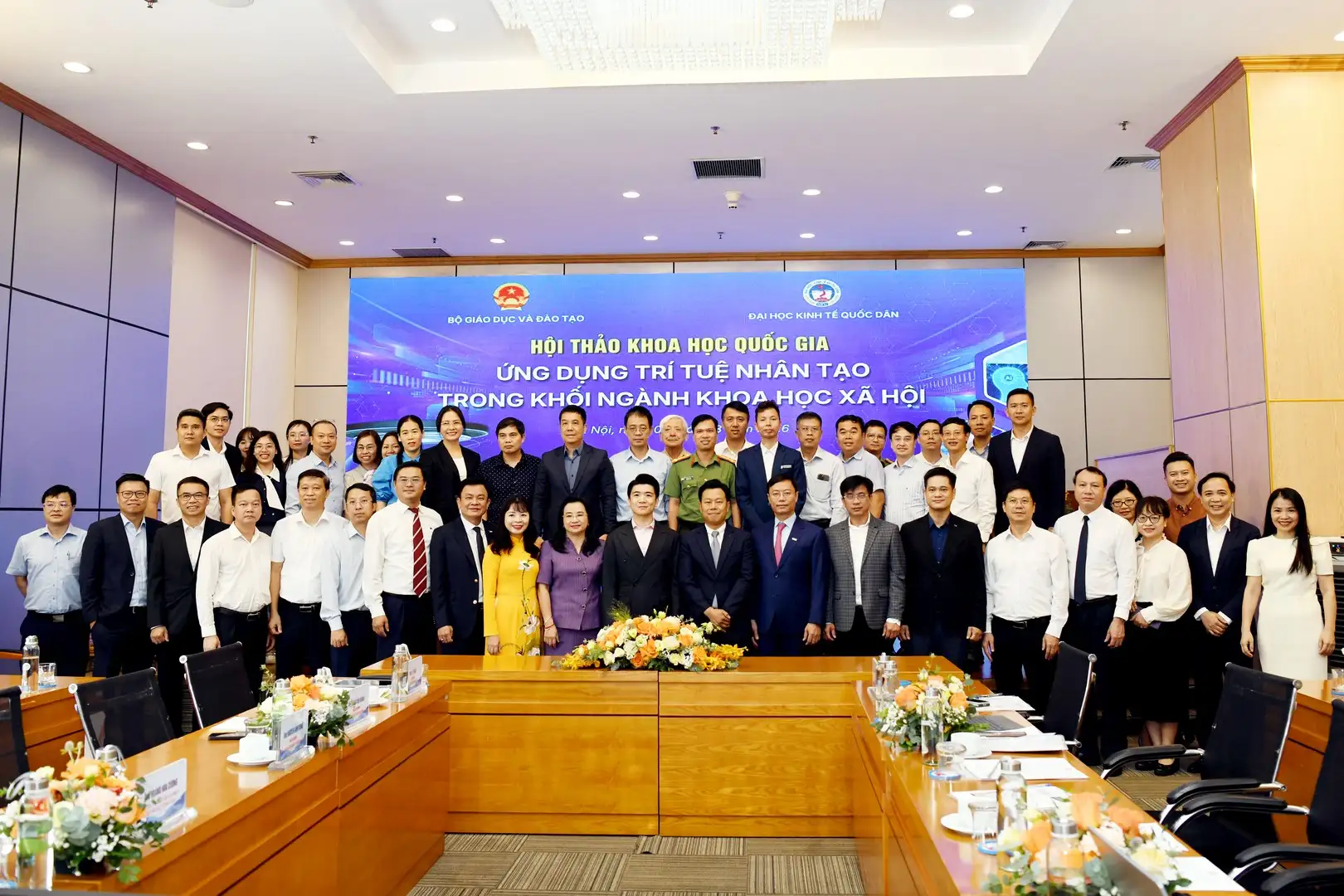
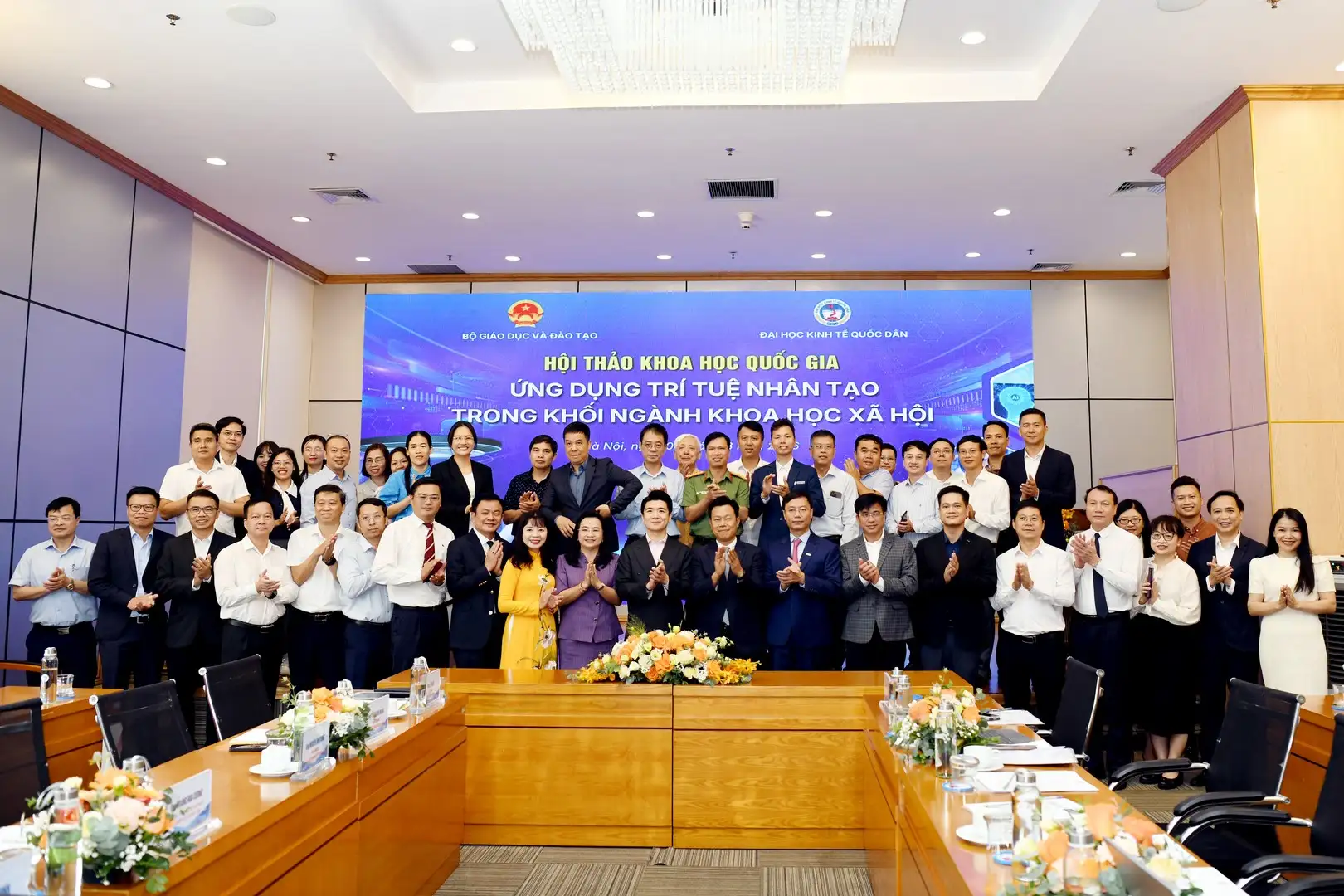
Article and photos: Communications Department
Press coverage of the Conference:
Ministry of Education & Training: Enhancing AI Applications to Innovate Higher Education
Education & Times Newspaper: Promoting AI Applications in the Social Sciences Sector
People’s Newspaper: Integrating AI into Each University Curriculum
People’s Representative:: Incorporating AI into Education, Research, and Solving Practical Problems in the Social Sciences Sector
Vietnam News Agency: National Scientific Conference on “AI Applications in the Social Sciences Sector”
Vietnam Education Magazine: Many Higher Education Institutions Discuss AI Applications in the Social Sciences Sector