
Diendandoanhnghiep.vn: Addressing Year-End Growth Challenges. Prof. Dr. Ngo Thang Loi
28/08/2024 2024-08-28 8:58Diendandoanhnghiep.vn: Addressing Year-End Growth Challenges. Prof. Dr. Ngo Thang Loi
Diendandoanhnghiep.vn: Addressing Year-End Growth Challenges. Prof. Dr. Ngo Thang Loi
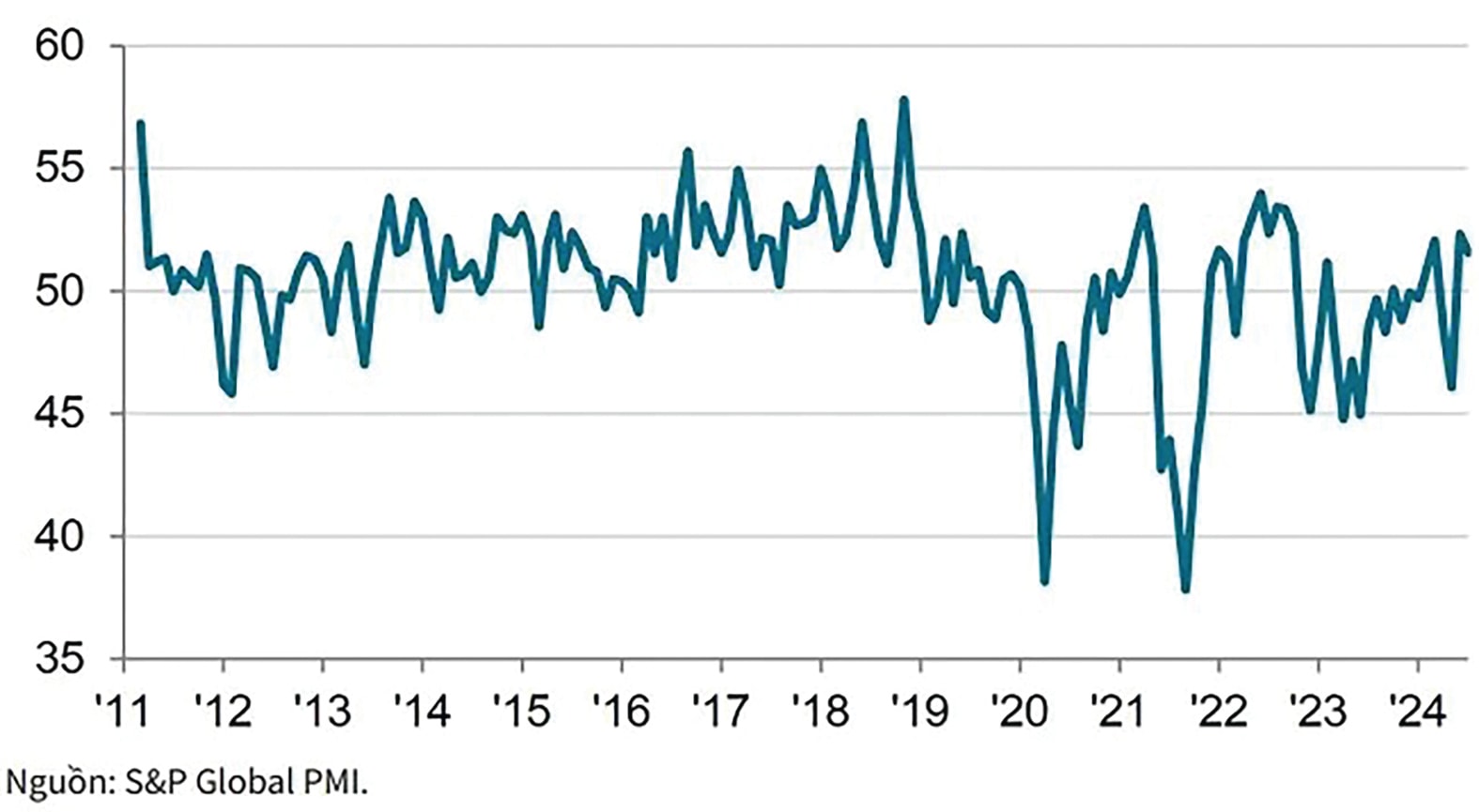
The Purchasing Managers’ Index (PMI), the Index of Industrial Production (IIP), total retail sales of goods and consumer service revenue, among other indicators, are recovering, boosting business confidence. However, sharply rising ocean freight rates are posing numerous challenges for businesses.

DĐDN spoke with Prof. Dr. Ngo Thang Loi, Senior Lecturer at National Economics University (NEU), about this issue.
– Drewry’s Composite World Container Index (WCI) Has Risen 3.3-Fold Over the Past Year. How Does This Affect Export Activities?
According to ocean freight booking platform Freightos, in the week ending June 14, the global average shipping rate for a 40-foot container reached USD 4,119, three times the rate in June last year and the highest level since September 2022.
Meanwhile, ocean freight rates from Vietnam to European countries and the United States have increased by an average of 30% in recent weeks.
Rising ocean freight rates have a major impact on Vietnam’s goods exports. Higher freight rates lead to substantial transportation costs and drive up export prices, “eroding” the profits of many exporting businesses.
In addition, rising ocean freight rates and a shortage of empty containers have affected the competitiveness of Vietnamese goods in international markets.
– Given the Economy’s High Degree of Openness, Do Higher Shipping Costs and Persistently High Global Prices for Many Commodities Put Significant Pressure on Inflation?
According to Federal Reserve research on the relationship between rising freight rates and inflation, a 15% increase in shipping costs leads to a 0.10-percentage-point increase in core inflation after one year.
Thus, if freight rates rise to three times their level in the same period last year and remain there, inflation could rise considerably after a one-year lag, significantly affecting macroeconomic stability in the coming years. This can be explained from two perspectives.
First, monthly, weekly and even daily fluctuations in freight rates not only create difficulties for importers and exporters but also pose a risk of shortages in the supply of export products, as export orders cannot be fulfilled because they are not economically viable. Product scarcity leads to more money being injected into circulation to sustain production. This will increase inflation globally.
Second, on the import side, rising ocean freight rates also increase the cost of importing raw materials, pushing up the prices of products after processing.
– Some Argue That Continued Growth in Inflationary Pressure Will Narrow the Room for Policy Easing, or Even Require a Reversal Toward Tightening. What Is Your View on This?
In principle, if we compare the economy to a “water tank,” high inflation means that the water level is rising, creating a risk of the tank “overflowing.” It is therefore necessary to tighten the “valve” controlling the inflow and open the “valve” controlling the outflow. In other words, tight fiscal and monetary policies must be used to prioritize macroeconomic stability and curb rising inflation.
In this case, however, inflation is rising because ocean freight rates are increasing, not because export value is growing (export value is a component of the inflow).
Thus, the use of tight fiscal and monetary policies needs to be reconsidered, as it could drive export prices even higher (a double adverse effect). Vietnam might then fail to achieve its export value growth target.
– What Solutions Are Needed to Overcome These Challenges and Ensure Year-End Economic Growth?
There are three important courses of action to consider as ocean freight rates continue to rise rapidly.
First, emphasis should be placed on policies to stimulate consumer demand by lowering consumer goods prices, reducing personal and corporate income taxes, expanding consumer lending, deferring debt repayments and placing debts under moratorium, and increasing social welfare support, especially direct assistance to the poor.
In addition, the VAT reduction policy should continue to encourage consumers to make more purchases, helping manufacturing and trading businesses improve capital turnover. At the same time, domestic purchasing power should be strengthened by effectively implementing trade promotion programs in the domestic market, promoting goods distribution through digital platforms, and other measures.
Second, solutions should aim to “cool” high ocean freight rates to limit their adverse impact on growth in the value of goods exports to European and U.S. markets. Specifically, the Vietnam Maritime Administration needs to coordinate with maritime port authorities and local maritime sub-administrations to inspect and monitor service prices at seaports.
Third, exports should be redirected to reduce the impact of rapidly rising ocean freight rates. In practice, freight rates have risen most sharply only on routes from Asia to Europe and the United States, while intra-Asian routes have seen little fluctuation.
Nearby markets such as Singapore, Indonesia, Malaysia, Cambodia, China, South Korea and Japan are highly competitive but offer logistical advantages. This is an option that deserves consideration in the current context.
– Thank You!
Interview by Nguyen Viet
Link: https://diendandoanhnghiep.vn/hoa-giai-thach-thuc-tang-truong-cuoi-nam-10141060.html
This is an automated translation. If you notice any errors, please contact the Department of Communications, National Economics University at phongtruyenthong@neu.edu.vn.