
Thanhnien.vn: A Historic Turning Point for the Gold Market. Recommendations From the NEU Research Team
16/10/2024 2024-10-16 8:02Thanhnien.vn: A Historic Turning Point for the Gold Market. Recommendations From the NEU Research Team
Thanhnien.vn: A Historic Turning Point for the Gold Market. Recommendations From the NEU Research Team
For the First Time in History, Gold Prices Remained Unchanged for an Entire Month. For the First Time in History, Gold Was Sold Only Through Four Banks and SJC in the Country’s Two Largest Cities. Never Before Has Buying and Selling Gold Been as Difficult as in 2024…
Gold Prices Reach an All-Time High
Having accumulated gold as savings for decades, Nguyen Ha of Da Nang City had never encountered a situation like this year’s: having money does not necessarily mean being able to buy gold. Ha recalled that in May, when gold prices surged past VND 90 million per tael, she rushed to buy 2 taels for fear of missing out. When prices rose above VND 92 million per tael, she was delighted, especially as all forecasts indicated that gold would continue to rise. However, everything suddenly took a 180-degree turn when gold prices plunged to VND 75 million per tael, an immediate loss of VND 15 million per tael. With her 2 taels of gold, Ha’s total loss reached VND 30 million within just three weeks after the State Bank of Vietnam (SBV) introduced gold sales through four state-owned commercial banks and SJC. By the time we prepared this article, Ha’s loss had fallen to just over VND 20 million, but that was not enough to console an elderly woman who had spent years setting aside savings to buy gold.
“The loss still amounts to three to four months of my pension—that is no small sum. But more importantly, buying and selling gold is now so difficult. I have to ask my children and grandchildren to register with the banks to buy it because I don’t know how to use the internet. I don’t know whether gold policies will change again or whether prices will fall further… Whatever happens, gold is still gold, so the tighter the restrictions, the rarer it becomes,” Ha said, consoling herself.

Looking back at 2024, the gold market witnessed record-high prices. SJC gold bars reached VND 92.4 million per tael in mid-May, up VND 21.4 million per tael from the beginning of the year. The surge in domestic gold prices came as the precious metal repeatedly broke price records on the international market, reaching USD 2,534 per ounce in August, equivalent to an increase of 22.7% from the beginning of the year. The main reasons for this rally were concerns about rising inflation, the continuing escalation of the Russia–Ukraine conflict, and market expectations that the U.S. Federal Reserve (Fed) might ease monetary policy… All these factors supported higher gold prices.
Domestically, SJC gold bar prices continued to rise faster than international prices because of limited supply. Since the Government issued Decree 24/2012 on gold market management, the SBV had not supplied any gold to the market for nearly 12 years. The shortage pushed SJC gold bars to a record premium of VND 20 million per tael over world prices. This was the starting point for the historic milestones in the gold market that have continued to this day.
A Series of Firsts
After more than a decade, the SBV officially resumed gold auctions to increase market supply. Despite the shortage, however, the gold auctions held by the SBV from late April were unsuccessful: some were canceled because too few bidders registered, while others attracted very little demand. SJC gold bars remained expensive. In early June, the SBV changed its market intervention approach by designating four state-owned commercial banks (Vietcombank, VietinBank, BIDV, and Agribank) and Saigon Jewelry Company – SJC to purchase gold from it and sell it to the market.
The SBV set selling prices each day, and these institutions were not allowed to sell to the public at more than VND 1 million per tael above the SBV’s price. This was the first time intervention through gold sales at prescribed prices had been used. SJC gold bar prices immediately plunged from nearly VND 91 million per tael to VND 77.98 million per tael. The gold market began to witness developments unprecedented in its history. People flocked to line up from early morning to buy gold at stabilized prices. Then, in another first, the four banks and SJC switched from issuing queue numbers to gold buyers to selling gold online.
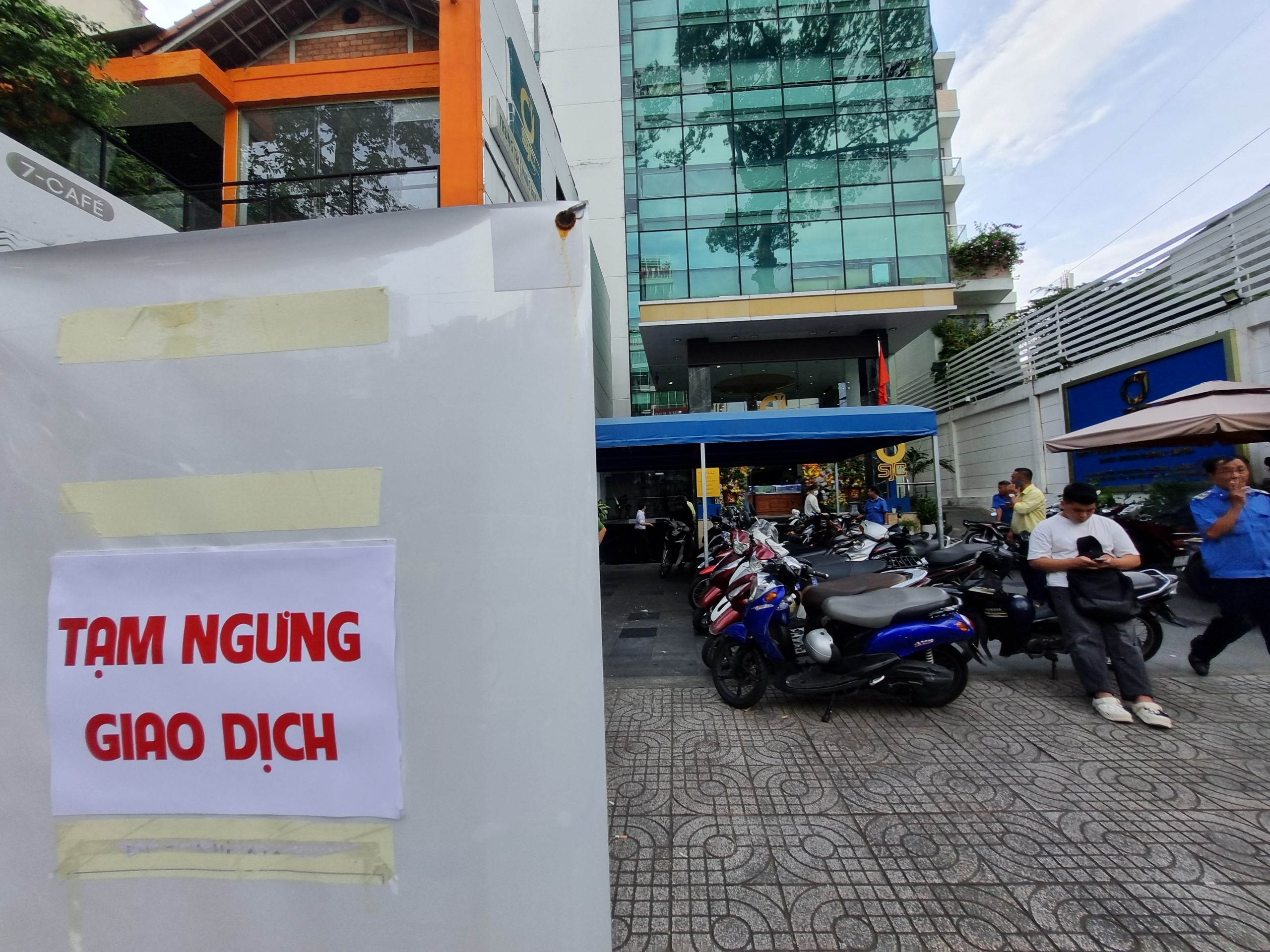
Although gold was once an ordinary commodity, buying it now requires meeting a series of requirements imposed by authorized sellers: providing personal information such as citizen identification details, phone numbers, and email addresses… These institutions also ration sales, allowing each person to buy only 1 tael of gold per registration; each SJC gold bar is identified and linked to the buyer’s citizen identification. Furthermore, Vietcombank and BIDV sell gold only to their own customers; buyers pay upfront, but gold is delivered two to five days after a purchase registration is confirmed, and they must wait one month before registering to buy again…
Also for the first time in history, SJC gold bar prices remained unchanged at VND 76.98 million per tael for one month.
These administrative measures caused SJC gold bar prices to move out of step with international prices, leading to the unusual situation in which buying prices for gold rings sometimes exceeded those for the national-brand gold bars.
A Change in Thinking About the Gold Market Is Needed
Economist Nguyen Tri Hieu observed that the gap between domestic and international gold prices had been brought under control at VND 4–5 million per tael, compared with VND 20 million per tael previously. However, tight controls meant that the market did not clearly reflect supply and demand. Buying and selling gold had become difficult and complicated, resulting in two different prices for SJC gold bars in the market. Individuals and entities not authorized to trade gold bars operated on the unofficial market at prices ranging from several hundred thousand to VND 2 million more per tael, depending on the time. The black market created undercurrents that risked destabilizing the market, especially as gold ring prices were tending to rise above gold bar prices.
According to Nguyen Tri Hieu, a healthy, stable gold market requires supply and demand to meet, bringing gold prices to the desired level. Administrative intervention should not be prolonged; instead, Decree 24 on gold market management should be amended soon.
In an in-depth analysis of the gold market, a research team from National Economics University also recommended that the SBV minimize direct administrative intervention in the gold market and promptly amend Decree 24 so that its role is limited to management, policymaking, and regulating foreign exchange reserves held in gold in accordance with regulations. The SBV should not retain the sole right to produce gold bars but should consider licensing qualified enterprises to import gold and produce gold bars to balance supply and demand and meet people’s investment and savings needs. It should explore strategies and development plans linking the gold market with commodity and financial markets, consistent with efforts to promote economic growth and economic integration. Rather than keeping it separate, the gold market must become a component of the financial market that contributes to the country’s economic development.

The SBV needs to adopt measures to eliminate price gaps, particularly for SJC gold, and move toward liberalizing gold imports and exports. It should consider allowing certain enterprises to produce gold bars to supply the market and permitting gold jewelry manufacturers to import raw gold. With the gold market currently relatively stable, considering import licenses for enterprises is necessary, rather than continuing to prolong the “stopgap measure” applied for more than 10 years. The SBV should develop a plan to help domestic gold enterprises access imported gold, giving them a choice of input sources and helping improve the quality of their finished products. In addition, a policy opening up access to raw gold would create opportunities for domestic enterprises to cooperate with international enterprises, learn from one another, and improve their competitiveness. This would also give private enterprises the confidence to invest in modern machinery and equipment for production, promoting the industry’s sustainable development.
Vietnam’s gold market is currently understood in a narrow sense: only physical gold commodities may be traded, while forward gold trading is not permitted. To develop the gold market, the research team from National Economics University recommended an early transition from a physical gold market to forward gold trading through forward and options contracts. Capital mobilization through the issuance of gold certificates should be permitted. Gold certificates offer advantages in terms of safety and convenience, with no concerns about counterfeit gold, gold of insufficient purity or weight, or fabrication fees for minting gold bars.
A feature of gold mobilized through the issuance of certificates is that depositors are not permitted to withdraw their gold before maturity, unlike previous savings arrangements. To ensure consistency, the SBV will issue gold certificates through commercial banks, with safeguards in place. Gold certificates may be bought and sold under strict SBV regulations, and these investment transactions will be entirely voluntary. Holders of gold certificates also have the right to convert them into physical gold after the term specified on the certificates.
In the long term, the Government should develop a modern gold market that connects the domestic gold market with the global gold market and allows gold held by the public to circulate within the credit system through gold certificates and a national gold exchange. In tandem with these steps, the SBV needs to establish specific conditions and criteria for each type of gold business and ensure its capacity to oversee the gold market through more effective supervisory tools. Research into formally establishing a gold market system with appropriate centralized institutions will be important in unlocking this significant source of physical capital for the economy.
SJC’s status as the national gold brand should be abolished so that gold businesses can compete on an equal footing in the gold market. At the same time, gold businesses should regain the right to import gold, but under the SBV’s guidance.
Economist Nguyen Tri Hieu
“A bold change in regulatory thinking is needed to increase the mobilization of gold resources held by the public. Goldization cannot be curbed through administrative measures; instead, there must be a shift from trading gold bars to trading other gold products (gold certificates, derivatives, etc.) at a centralized trading center.”
To achieve this goal, the Government and the SBV need to create a stable business environment with ample potential to channel the public’s investment assets into more beneficial assets and investment channels. The Commodity Exchange should soon be permitted to trade gold forward contracts, as in advanced countries. Participants must meet strict standards and be permitted to import and export gold (based on the standard gold forward contract specifications issued by the Commodity Exchange). The establishment of gold trust funds (ETF, Exchange Traded Fund) as an international financial instrument should also be permitted. Fund certificates could also be traded on the Commodity Exchange, encouraging people to deposit gold and put capital into production, business activities, and investment rather than holding gold bars. If ETFs are permitted to trade forwards, futures, and options on global exchanges and to import and export gold, their gold reserves could play a role similar to that of a stabilization fund, easing pressure on the SBV during price surges and helping create a stable macroeconomic environment.
National Economics University research team

XUAN THANH
Link: https://thanhnien.vn/buoc-ngoat-lich-su-cua-thi-truong-vang-185241010151558108.htm
This is an automated translation. If you notice any errors, please contact the Department of Communications, National Economics University at phongtruyenthong@neu.edu.vn.