VTV1: World Panorama, June 30, 2024: New Frontiers for Growth. Studio Guest: Assoc. Prof. Dr. Pham The Anh
01/07/2024 2024-07-01 17:57VTV1: World Panorama, June 30, 2024: New Frontiers for Growth. Studio Guest: Assoc. Prof. Dr. Pham The Anh
VTV1: World Panorama, June 30, 2024: New Frontiers for Growth. Studio Guest: Assoc. Prof. Dr. Pham The Anh
VTV.vn – Exploring New Drivers and Finding New Paths for Economic Growth Is the Message of the World Economic Forum’s Annual Meeting of the New Champions.
Toward New Frontiers and New Growth
One of the events attracting leaders and leading economists from around the world last week was the 15th Annual Meeting of the New Champions of the World Economic Forum (WEF), held in Dalian, China, from June 25 to 27.
Under the theme “New Frontiers for Growth,” the event brought together approximately 1,600 leading figures from the public and private sectors in nearly 80 countries and territories to exchange views, seek new drivers and identify ways to renew global economic growth.
Exploring new drivers and finding new paths for economic growth was the message throughout the World Economic Forum’s (WEF) Annual Meeting of the New Champions, recently held in Dalian, China. At the meeting, leaders emphasized that, faced with major challenges from post-pandemic shocks, inflation and other issues, countries need to step up efforts to seek common interests and promote cooperation to create lasting momentum for the world economy and establish a new foundation for development.
Chinese Prime Minister Li Qiang said: “We should maintain an open and cooperative outlook, reject confrontation, oppose decoupling, maintain the stability and smooth operation of industrial and supply chains, and promote trade and investment liberalization.”
Leaders and speakers at the meeting also focused their discussions on advancing the green transition and building foundations for green growth in the future. The meeting also unveiled 10 emerging technologies to address global challenges, focusing on applications in areas such as healthcare, information, infrastructure and sustainable development.
Chen Liming, Chair of the World Economic Forum in China, said: “Despite the complex challenges facing the world, such as climate change, regional conflicts and the energy transition, the rapid development of technologies such as artificial intelligence, quantum technology, genetic technology and materials science offers us new opportunities to overcome these difficulties and achieve sustainable development.”
At the meeting, Prime Minister Pham Minh Chinh contributed to discussions on global issues, sharing insightful assessments of five prominent features of the world economy, three major factors influencing it and three pioneering areas shaping the future world. He also emphasized that Vietnam’s success over nearly 40 years has been closely linked to the key concepts of renewal, innovation and integration.
Prime Minister Pham Minh Chinh remarked: “There is a Chinese proverb: ‘A single tree does not make a forest.’ We have Ho Chi Minh’s teaching: ‘Unity, unity, great unity / Success, success, great success.’ For a better, fair and equal world with harmonious and sustainable development, let us unite, uphold multilateralism and human rights, and move together toward ‘New Frontiers for Growth’ and new frontiers for development, for the flourishing and prosperity of the world and for a happy, better life for all people and all humanity. Let us practice the ‘three togethers’: listen and understand together; share our vision and act together; and work, benefit, win and develop together, in the spirit of ‘harmonized interests and shared risks.’”
Prime Minister Pham Minh Chinh called on all parties to work together to build and strengthen trust, prioritize dialogue, foster solidarity, unity, cooperation and development, and effectively resolve issues on the basis of rules while ensuring a balance of interests among stakeholders. He also called for avoiding politicization of and discrimination against science, technology and innovation that are global in nature.
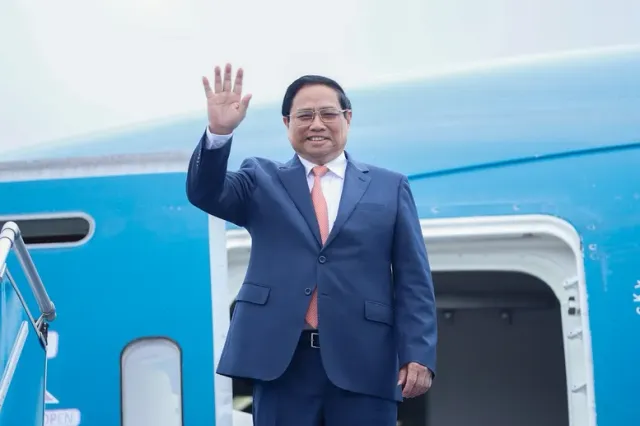
Prime Minister Pham Minh Chinh attends the World Economic Forum’s Annual Meeting of the New Champions
Vietnam Continues to Make Positive Contributions to Addressing International Issues
Assessing the outcomes of the World Economic Forum’s recent Annual Meeting of the New Champions in Dalian, Assoc. Prof. Dr. Pham The Anh, Dean of the Faculty of Economics, National Economics University (NEU), said: “The timing of this annual World Economic Forum meeting is very important. The world has just experienced a pandemic, and countries are showing how their recoveries are progressing. Many new issues have emerged at the global level, and resolving them requires participation and goodwill from all parties. These include rising geopolitical tensions among countries around the world, the Russia–Ukraine war, the war between Israel and Hamas, tensions between Russia and the West, and US–China trade tensions. Many geopolitical issues have emerged. These have, in turn, led to rising protectionism and restricted trade and investment flows worldwide.
A second issue, also very important, is that instability in energy and food prices worldwide is slowing the global recovery, alongside a lack of coordination in economic policies. In particular, climate change is imposing enormous costs on the global economy in general and Vietnam’s economy in particular. This annual World Economic Forum meeting is therefore extremely important. Its message is also very important: we emphasize the future of growth, with countries seeking new growth models that differ greatly from traditional models, which typically focus only on economic growth. The new growth model emphasized by this forum now focuses on renewal and innovation, including applications of new technologies in production as well as healthcare, education and other areas. It then emphasizes inclusiveness, addressing social inequality and the wealth gap between small and large countries, with greater attention directed toward small countries. Third, it emphasizes sustainable development, promoting environmentally friendly activities and protecting the environment for future generations.”
The World Economic Forum’s Annual Meeting of the New Champions in Dalian demonstrated China’s efforts and important role in promoting global growth.
With its largest-ever scale and number of delegates, the World Economic Forum’s Annual Meeting of the New Champions, also known as the “Summer Davos forum,” was considered a success and left a positive impression on international delegates. Over its 15 editions, the forum has not only provided an occasion for China to showcase its national image and standing but also served as an important bridge for economic and trade cooperation and connections between China and the world.
According to experts, amid the current trend of rising protectionism and trade barriers, the forum is an important opportunity for China to signal its commitment to cooperation and openness, thereby continuing to expand its “circle of friends,” improve foreign investor confidence and promote the healthy development of globalization. It is also an opportunity for China to demonstrate leadership and seek cooperation with other countries in emerging areas such as artificial intelligence, the green transition and renewable energy—areas China has placed particular emphasis on promoting recently.
Vietnam continues to make positive contributions to addressing international issues and seek solutions to the world’s major challenges.
Speaking about Vietnam’s role at this forum, Assoc. Prof. Dr. Pham The Anh, Dean of the Faculty of Economics, NEU, added: “I think Vietnam is becoming increasingly deeply involved in global supply chains. Therefore, Vietnam’s presence, including the attendance of its Prime Minister, demonstrates its strong commitment to international cooperation and addressing today’s global issues. This is a very important image for Vietnam to project. Vietnam is a lower-middle-income country, yet it remains willing to commit to transforming its economy to become greener, cleaner and more sustainable. I therefore think this is a major encouragement for middle-income countries, helping draw countries with income levels similar to Vietnam’s into addressing shared global issues. This meeting centers on Asia, including Vietnam. I think this is a very practical and meaningful activity for Vietnam.
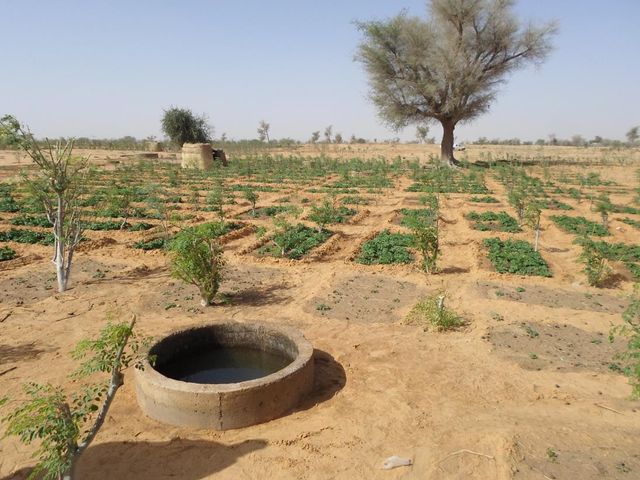
Vietnam is a country heavily affected by climate change
Challenges Facing the World Economy
The world economy is recovering, with positive effects on national economies, including Vietnam’s. However, international financial institutions also forecast that many barriers and challenges remain ahead, including the effects of geopolitical conflicts, the risk of trade fragmentation and the impacts of climate change.
In the Global Risks Report published by the World Economic Forum, environmental challenges, geopolitical polarization and economic fragmentation rank among the leading challenges facing the world economy in 2024. Mirek Dusek, Managing Director of the World Economic Forum, commented: “We are undergoing a major transition in economic models. This involves the impacts of geopolitics and a more competitive economic environment.”
Economic fragmentation and protectionism are increasing, trade routes are being redrawn, and the global financial system is becoming divided as more trade barriers are erected and trade wars unfold. According to the International Monetary Fund, countries imposed 3,000 trade restrictions last year, more than three times the number in 2019. The World Bank considers the period from 2020 to 2024 the slowest five-year period for global economic growth in the past 30 years.
Trade and technological decoupling are having profound effects on businesses and consumers as prices rise and supply chains are disrupted. Fragmentation could affect the global economy by as much as 7% in the long term, with impacts ranging from trade and investment flows to the cost of capital.
Fred Hu, Founder, Chairman and Chief Executive Officer of Primavera Capital Group, commented: “The financial system is now at a crossroads. It is becoming more fragmented. This leads to effects such as higher capital costs, less efficient capital allocation and fewer jobs. Poverty reduction in the Global South and innovation, or even the energy transition, require greater investment.”
The latest edition of the World Economic Forum’s Chief Economists Outlook warns that although the global economic outlook has become more optimistic, many uncertainties remain that could cause economic volatility this year.
Discussing the greatest challenges facing the world economy in the coming period, Assoc. Prof. Dr. Pham The Anh, Dean of the Faculty of Economics at National Economics University (NEU), said: “There are several major challenges facing the world economy. First, geopolitical tensions among major countries are reducing capital flows into the countries involved and disrupting investment flows into trade. This not only directly affects the countries involved but also indirectly affects other countries, including Vietnam. When these capital flows are disrupted, smaller countries struggle to access them and lack the resources to develop infrastructure and create jobs, slowing economic recovery. Second, geopolitical tensions lead to protectionist trade policies that make capital flows less efficient. Previously, when countries participated in international trade, they emphasized the role of specialization in reducing production costs.
However, capital is now tending to return to major countries. As a result, capital is being used far less efficiently. The second challenge, I believe, is the lack of coordination in economic policies among major countries. Trade barriers and tariff barriers are now being erected, raising goods prices in countries, reducing the cost-effectiveness of capital use and increasing production costs. This, in turn, drives up goods prices worldwide. Major countries use tight monetary policies to combat rising inflation, affecting smaller countries such as Vietnam. Smaller countries consequently face difficulties stabilizing exchange rates and lowering domestic interest rates to promote economic recovery. The third challenge is climate change. Its costs are rising and causing enormous economic damage, particularly to economies directly affected, such as Vietnam.”
“ASEAN and East Asia in general, and Vietnam in particular, are experiencing all the impacts of this process. Trade protectionism disrupts capital flows and partially disrupts global supply chains. As a result, Vietnam’s access to international capital flows, along with that of these countries, has declined significantly. The lack of coordination in economic policies has a major impact on the recovery of smaller, export-oriented countries such as Vietnam. Even major countries in East Asia and Asia, such as South Korea and Japan, are affected. One impact is substantial depreciation of domestic currencies. The second is that it hinders the implementation of policies supporting domestic economies during recovery. In particular, during the current recovery, smaller countries that have borrowed internationally face very high borrowing costs on international markets as interest rates in major countries such as the United States remain high, making these countries’ borrowing costs very substantial. This further slows their recovery.
Regarding climate change, Vietnam is heavily affected. According to World Bank estimates, global climate change could currently reduce Vietnam’s GDP by around 32%, and without strong action, this could reach 14-15% by 2050. Vietnam is an agricultural country and is therefore heavily affected. Rising sea levels also affect infrastructure and the livelihoods of people and businesses in coastal provinces. Extreme and erratic weather changes have a major impact on economic sectors related to Vietnam’s tourism industry. I believe all these challenges are creating difficulties and slowing the recovery of Vietnam and all countries in the region,” The Anh added, discussing the impacts of these challenges.
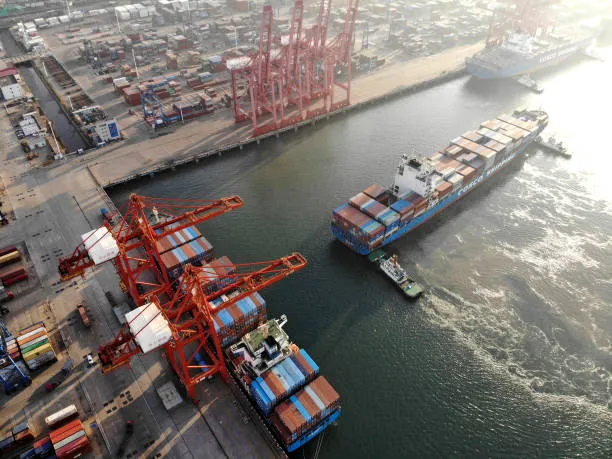
The global economy is also preparing for long-term stability.
Promoting Globalization and Trade Liberalization
Some observers believe that factors such as geopolitical competition and geoeconomic fragmentation have created obstacles to economic globalization, whose pace now appears to have slowed. However, globalization has not ended; it is merely changing direction. Unlike earlier globalization, which was driven by the United States under rules it established, emerging economies such as China and India are becoming the main drivers of a new form of globalization. Cooperation and avoiding decoupling were also messages emphasized by leaders at the World Economic Forum’s Annual Meeting of the New Champions in Dalian, China.
Speaking at the World Economic Forum’s Annual Meeting of the New Champions in Dalian, the Chinese Prime Minister emphasized that, when faced with the dilemma of global economic growth, countries that prioritize maximizing their own interests without considering those of others, or even turn their backs by promoting decoupling and erecting barriers, will drag the world into a vicious cycle of competition.
Chinese Prime Minister Li Qiang commented: “In the current context, the right choice is to approach development issues with a longer-term vision and broader thinking, working together to make the ‘economic pie’ bigger while pursuing our own legitimate interests. This is how we can sustain the growth of the world economy and open new horizons for our own development.”
Leaders at the World Economic Forum continued to emphasize the need for cooperation and for sustaining globalization to address challenges such as trade fragmentation and supply chain decoupling.
Chen Liming, Chair of the World Economic Forum in China, commented: “The international community is currently experiencing turmoil, from trade conflicts to major international conflicts. However, history tells us that violence, trade sanctions or war cannot fundamentally resolve problems. Solutions still require dialogue and negotiation. The international community needs to return to seeking a shared path toward the future through communication and understanding.”
Experts observe that, despite talk of the collapse of globalization, economic integration through cross-border trade has demonstrated resilience in the face of wars, famines and pandemics. Over the past two years, although world trade has weakened, it has largely remained consistent with historical trends.
Meanwhile, reglobalization continues through increased economic cooperation among many countries and multilateral cooperation mechanisms. This process may take years, but it will also bring development opportunities to many economies rather than concentrating them in a single country as before.
Assessing the message of stronger cooperation and a new form of globalization at the World Economic Forum’s Annual Meeting of the New Champions in Dalian, China, Assoc. Prof. Dr. Pham The Anh, Dean of the Faculty of Economics at National Economics University (NEU), said: “The message of cooperation to address global issues is consistent with current trends. It emphasizes green growth, sustainability, inclusiveness and greater attention to the interests of smaller countries in the globalization process. Stronger cooperation is needed to resolve global disagreements. None of these issues can be resolved without the participation of every party; all parties must work together.”
“Vietnam cannot separate itself from global trends. This global economic forum offers Vietnam an opportunity to raise awareness among businesses and the public about globalization and cooperation on climate change and the economy’s green transition. Vietnam needs to go beyond discussions and messages. We need to turn those discussions into concrete action by revising domestic regulations and policies to encourage people and businesses to participate in the economy’s green transition toward a more sustainable economy. Vietnam, for example, depends heavily on production, processing and manufacturing, which use and consume large amounts of energy. Technologies and applications for developing renewable energy are therefore very important. Using bio-based, environmentally friendly materials is also very important for Vietnam. In particular, for consumers, we need to raise public awareness about using environmentally friendly materials instead of traditional ones, such as switching from plastic materials to engineered wood or bamboo. These are inevitable trends in the economy.
If Vietnam introduces regulations and policies to encourage business participation, such as credit incentives and relevant tax policies, it can encourage businesses to participate more extensively in areas of current interest to them. This would open up opportunities for Vietnam to access global funds and investment flows related to renewable energy, the green transition and the application of new technologies in the economy. This is also an opportunity for Vietnam to continue innovating and reskilling workers to match the economy’s new technologies. Finally, Vietnam needs to continue participating in global trade agreements with all parties to capitalize on its advantages in the globalization process,” Assoc. Prof. Dr. Pham The Anh said.
The World Economic Forum’s Annual Meeting of the New Champions has concluded. The global economy is also poised for long-term stability, but growth is still forecast to be slower. Against this backdrop, leaders and economists agree that global cooperation and innovation are key to safeguarding and promoting economic growth, particularly in responding to global challenges such as climate change and escalating geopolitical conflicts. These are also the messages that Vietnam seeks to convey and works to advance for sustainable growth and development worldwide.
News Department
Link: https://vtv.vn/kinh-te/nhung-chan-troi-tang-truong-moi-20240630154102865.htm
This is an automated translation. If you notice any errors, please contact the Department of Communications, National Economics University at phongtruyenthong@neu.edu.vn.