Scientific Conference on “Current Conditions and Solutions for Budget Self-Sufficiency in Mong Cai City”
18/05/2024 2024-05-18 21:52Scientific Conference on “Current Conditions and Solutions for Budget Self-Sufficiency in Mong Cai City”
Scientific Conference on “Current Conditions and Solutions for Budget Self-Sufficiency in Mong Cai City”
On the afternoon of May 17, 2024, in Mong Cai City, the Mong Cai City People’s Committee, in collaboration with National Economics University (NEU), held a scientific conference on “Current Conditions and Solutions for Budget Self-Sufficiency in Mong Cai City.”
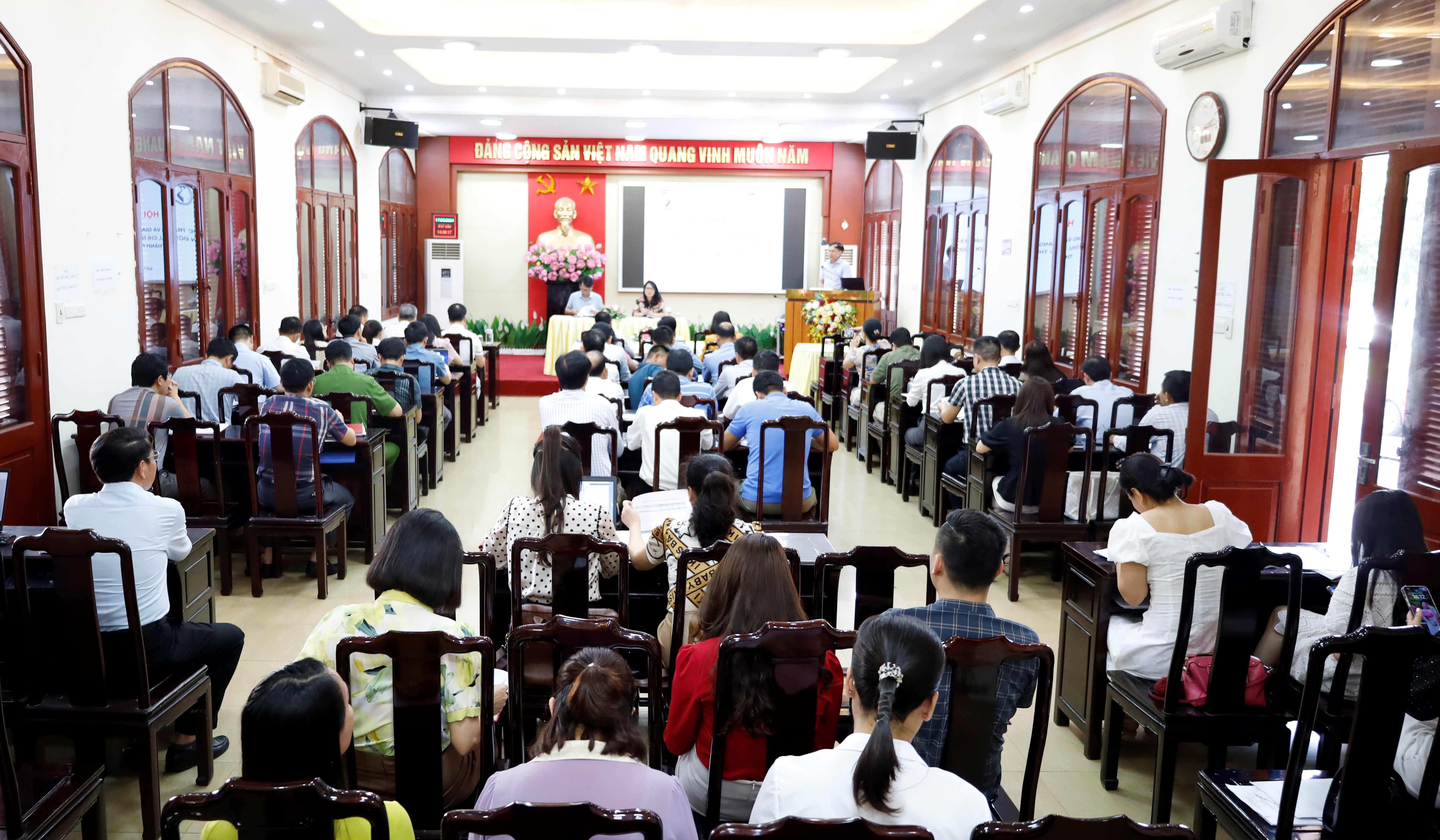
An overview of the conference
Representing the Mong Cai City People’s Committee at the conference were Ho Quang Huy, Deputy Secretary of the City Party Committee and Chairman of the City People’s Committee, and representatives of the leadership of the district’s specialized departments and divisions. Representing NEU were Assoc. Prof. Dr. Ngo Thi Phuong Thao, Dean of the Faculty of Real Estate and Natural Resource Economics, along with experts, researchers, and faculty and staff of the University.
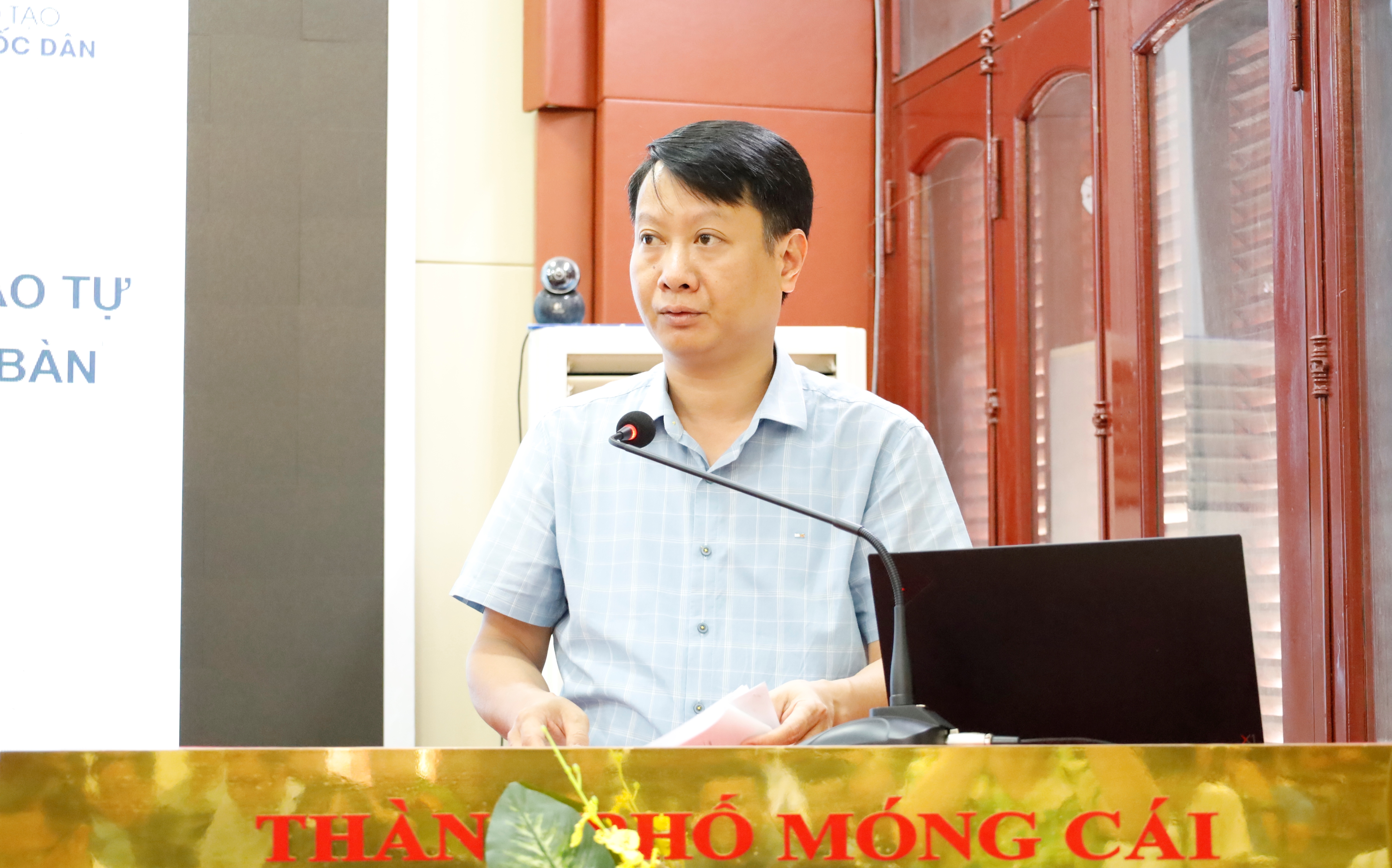
Ho Quang Huy, Deputy Secretary of the City Party Committee and Chairman of the Mong Cai City People’s Committee, delivers remarks.
In his opening remarks, Ho Quang Huy, Deputy Secretary of the City Party Committee and Chairman of the Mong Cai City People’s Committee, noted that the city’s budget revenue collection and expenditure management had achieved certain results in recent years. However, this work remained insufficiently effective given the locality’s potential and advantages. The overall objectives are to strive to achieve fiscal and state budget targets to the fullest extent possible; strengthen budget discipline and compliance; manage and use the local budget effectively; accelerate the restructuring of state budget expenditure, organizational restructuring, payroll streamlining, and reform of the public service sector; and prioritize resources for breakthrough initiatives, key tasks, and the city’s social welfare policies. At the same time, state budget revenue collection must comply with the law and be linked to administrative reform, improvements to the business environment, and greater satisfaction among residents and businesses. It must prevent abuses and harassment of businesses and residents that affect production and business activities. The mobilization of local tax and fee revenues must be based on the Resolutions and Decisions of the provincial People’s Council and People’s Committee, as well as the Resolutions of the City Party Committee and City People’s Council, to provide a basis for identifying and forecasting reasonable revenue sources with breakthrough potential. The city must strive to meet and exceed the state budget revenue estimates assigned by the province and the City People’s Council, ensuring that revenues are collected from the correct liable parties, according to their nature and schedule. Estimated revenue from land use levies must keep pace with the planned schedule, both meeting revenue estimates and satisfying public investment disbursement requirements. Budget revenues must increase gradually to achieve budget self-sufficiency at an early date. Mechanisms and measures for managing budget revenue and expenditure must be implemented strictly and effectively. All revenue sources and revenue bases across Mong Cai City must be fully covered, and state budget revenues must be collected correctly and in full in accordance with regulations. A reasonable and sustainable revenue structure must be maintained, with taxes and fees accounting for an increasing share of total state budget revenue collected in the city. He expressed the hope that the conference would receive feedback from the consulting organization and leaders of the city’s specialized departments and divisions to support effective budget revenue collection and expenditure management in the city in the coming period.
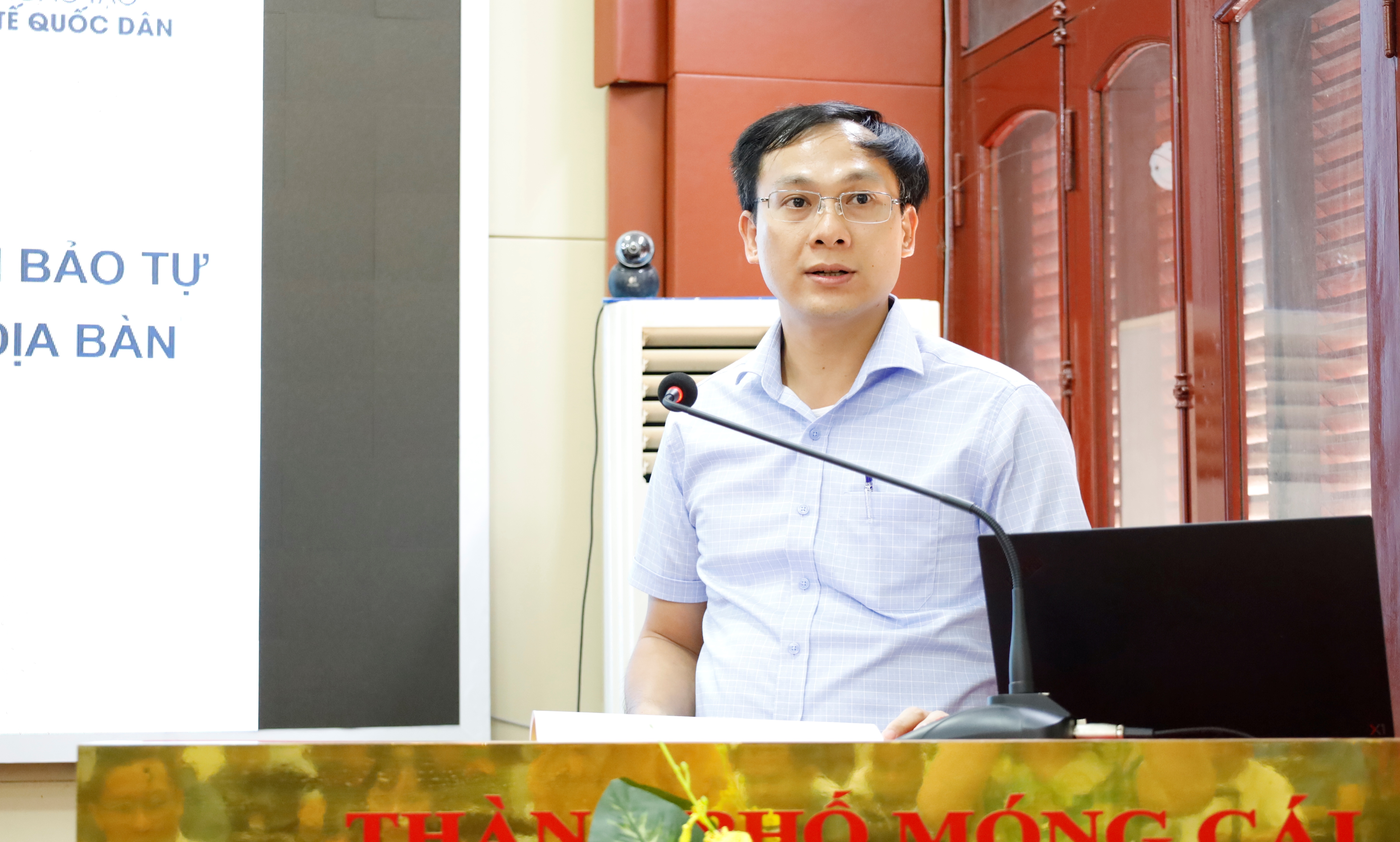
Dr. Nguyen Thanh Lan, representing the consulting team, presents the research findings.
At the conference, a representative of the consulting organization presented a paper titled “Ensuring Budget Self-Sufficiency for Mong Cai City,” reporting the research findings from a project undertaken by a team of NEU experts. The project is both necessary and urgent, seeking to formulate specific plans and identify solutions to improve the effectiveness of the city’s budget revenue collection and expenditure management by leveraging its potential and advantages and addressing current limitations and shortcomings, thereby gradually achieving the goal of local budget self-sufficiency.
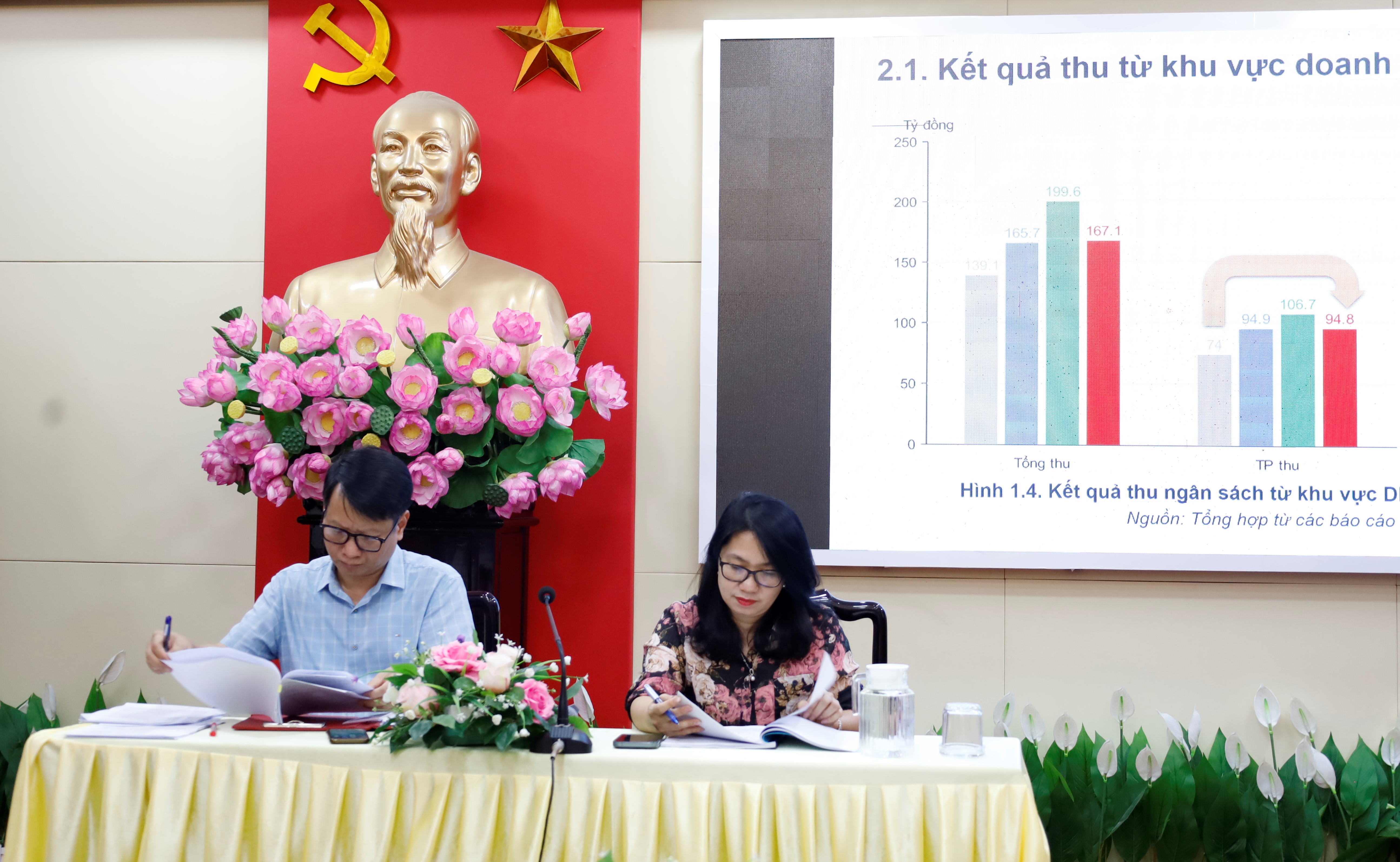
Ho Quang Huy, Deputy Secretary of the City Party Committee and Chairman of the Mong Cai City People’s Committee, and Assoc. Prof. Dr. Ngo Thi Phuong Thao, Dean of the Faculty of Real Estate and Natural Resource Economics at NEU, chair the conference.
The project’s objectives are to assess the current state of the city’s budget revenue collection and expenditure management and analyze Mong Cai City’s budget balance from 2021 through the end of 2023; propose solutions to strengthen the city’s budget revenue collection and expenditure management; and put forward solutions and recommendations for achieving budget self-sufficiency in Mong Cai City according to a roadmap for 2024–2030. The research focuses on Mong Cai City’s budget revenue collection and expenditure management and its capacity to achieve budget self-sufficiency. The research scope covers an assessment of the city’s budget revenue collection and expenditure management during 2021–2023, and proposed solutions to strengthen revenue collection and regulate expenditure, with a view to achieving budget self-sufficiency in Mong Cai City according to a roadmap for 2024–2030. The geographical scope is Mong Cai City.
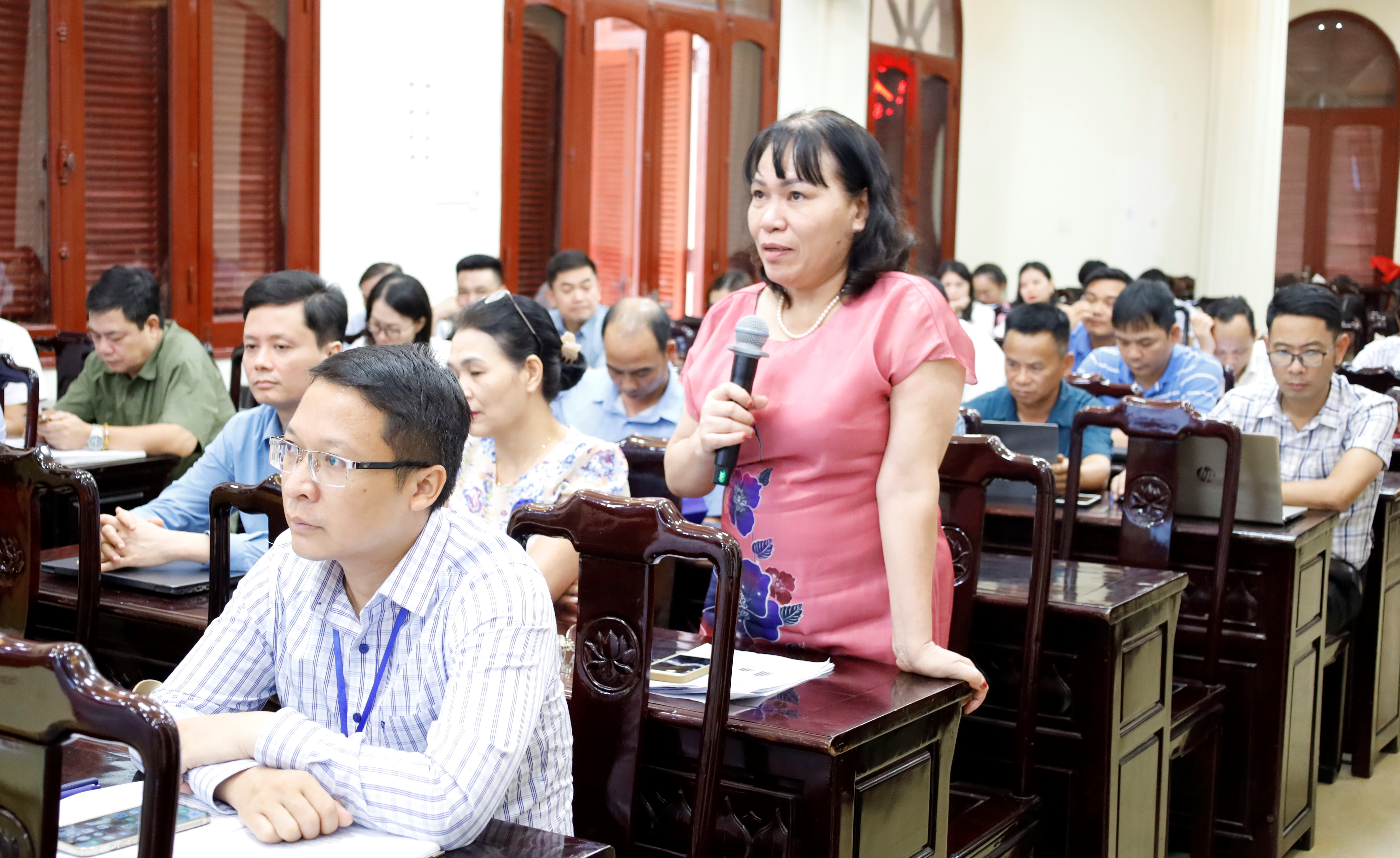
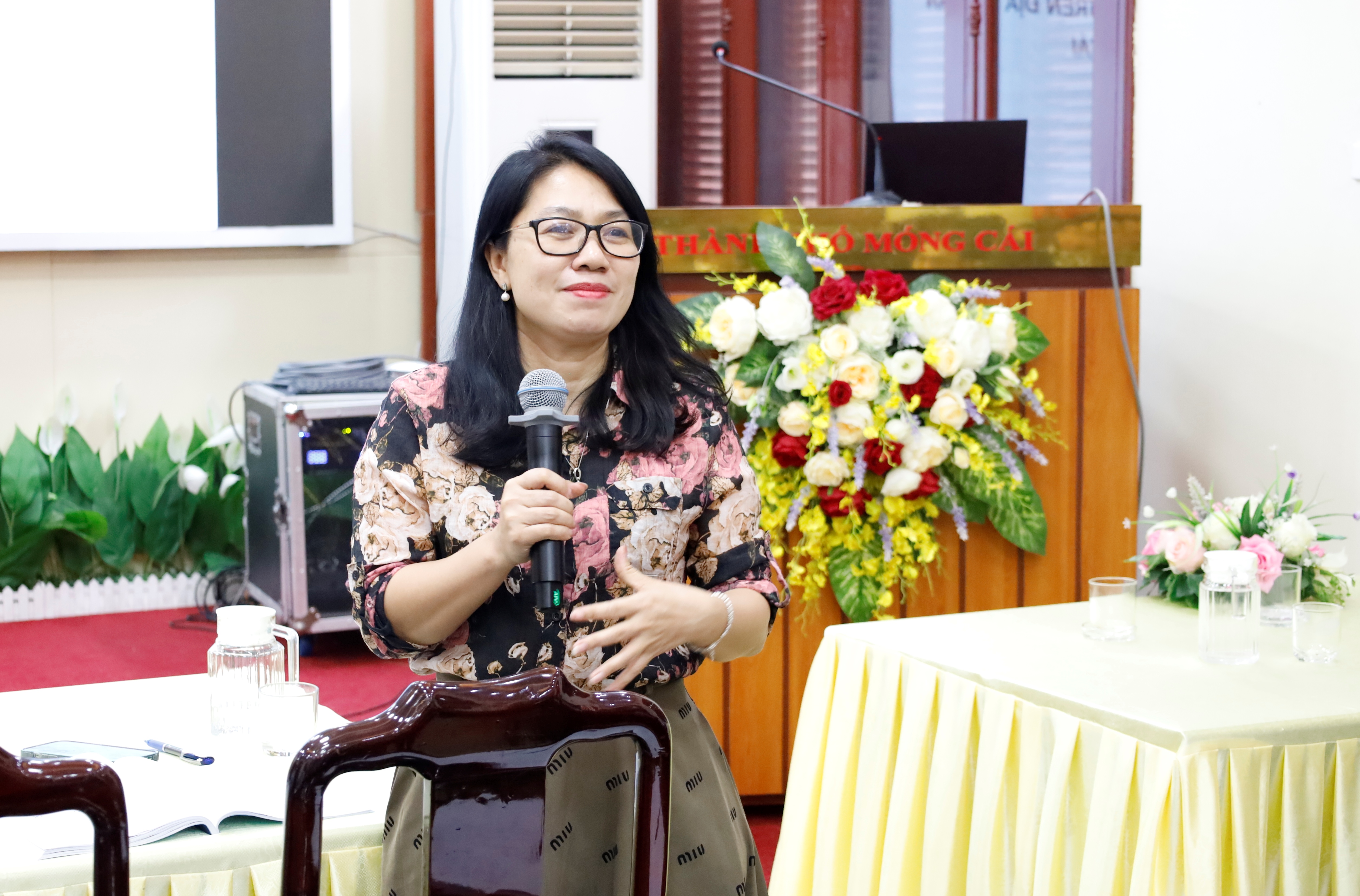
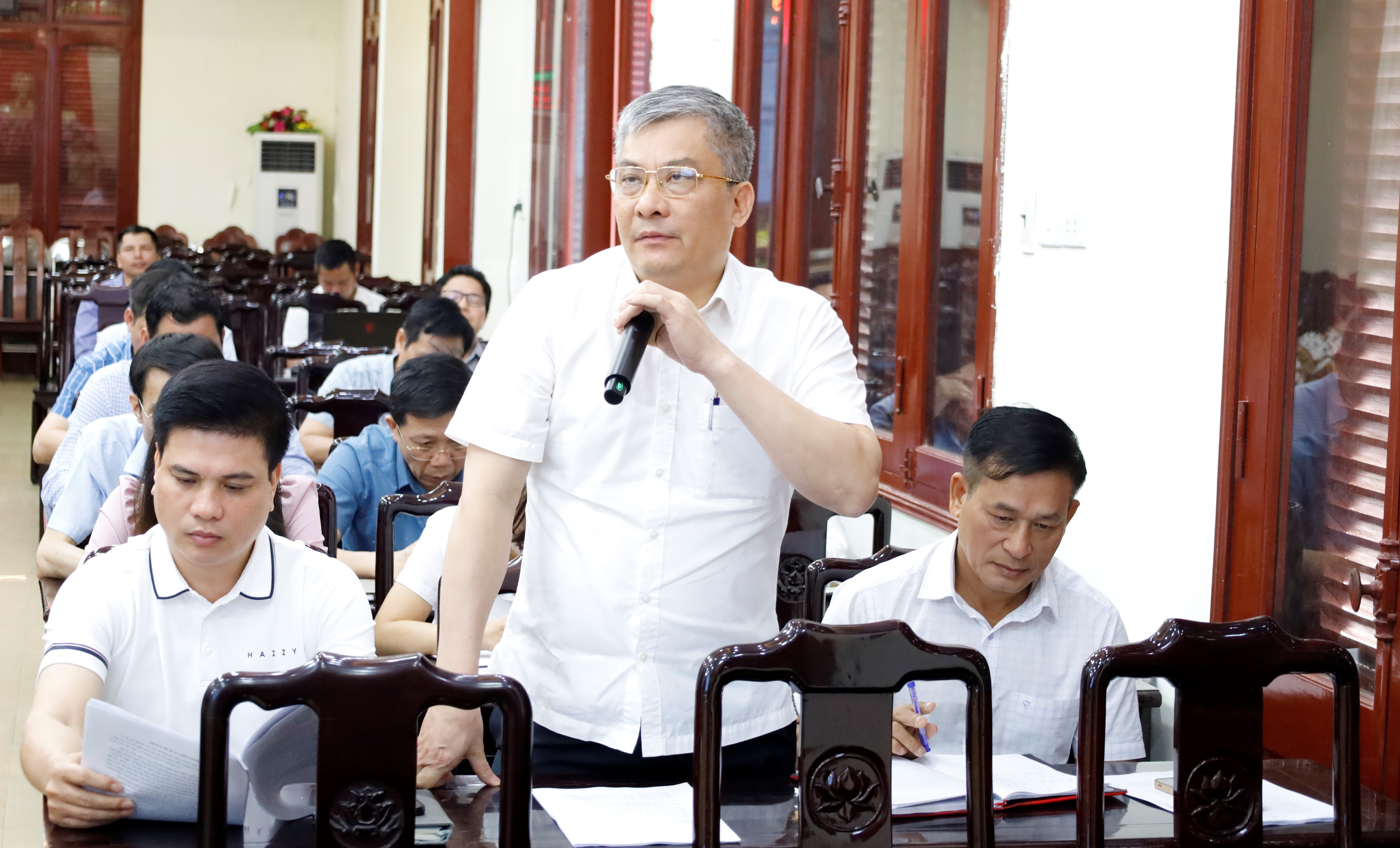
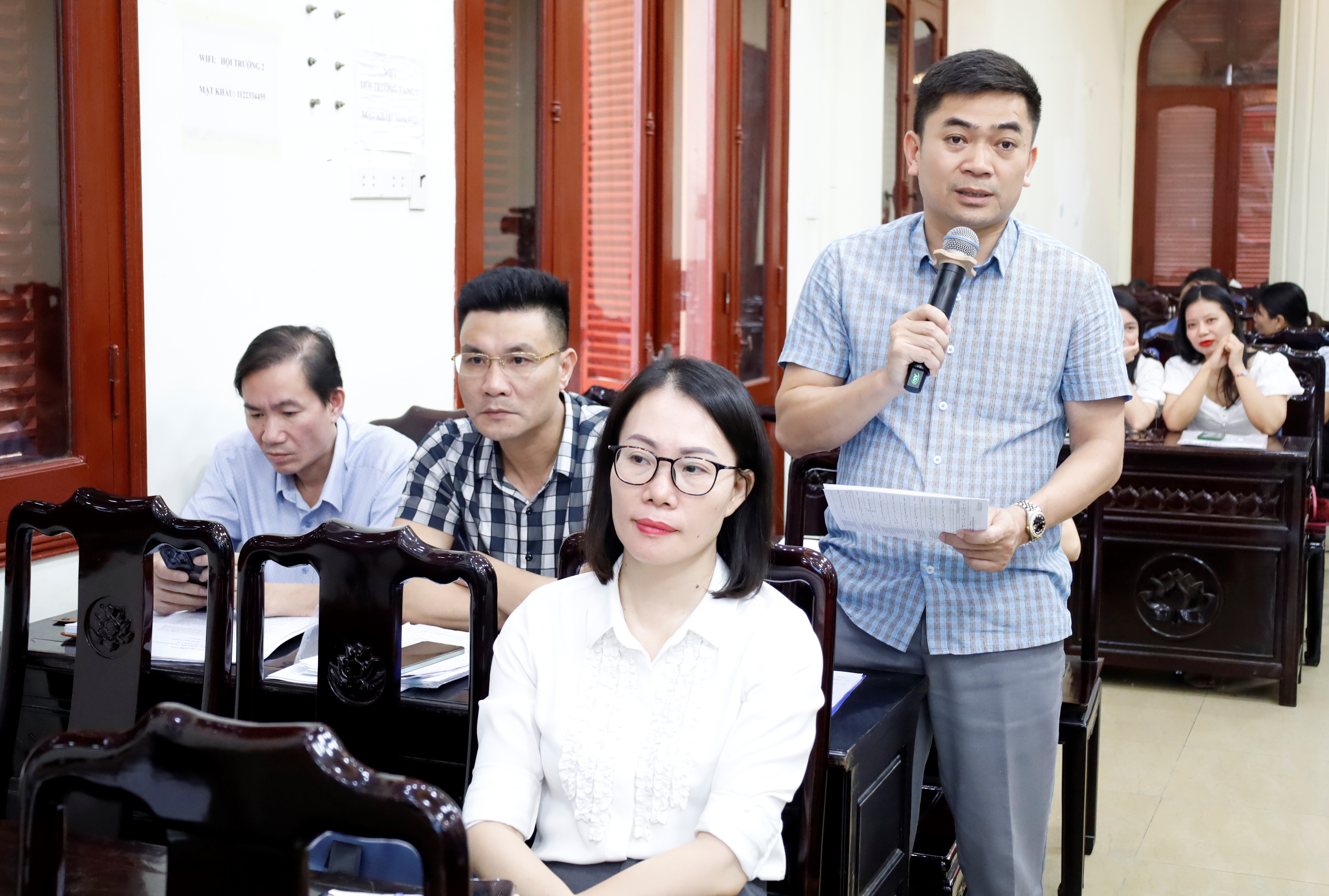
Delegates exchange views and contribute comments at the conference.
At the conference, delegates and researchers offered numerous comments and proposed specific solutions to balance budget revenue and expenditure, improve revenue collection efficiency and economize on expenditure, and increase budget revenue to cover recurrent expenditure and development investment expenditure. They also discussed the current collection of border gate infrastructure fees, identified scope for additional fee revenue, and proposed policy mechanisms to increase revenue from border gate infrastructure fees in the city, as well as greater autonomy for schools, agencies, and other units, among other issues.
Once the project has been finalized and agreed upon, the City People’s Committee will submit it to the standing leadership of the City Party Committee for guidance and proceed with implementation to ensure budget self-sufficiency in Mong Cai City according to a roadmap for 2024–2030.
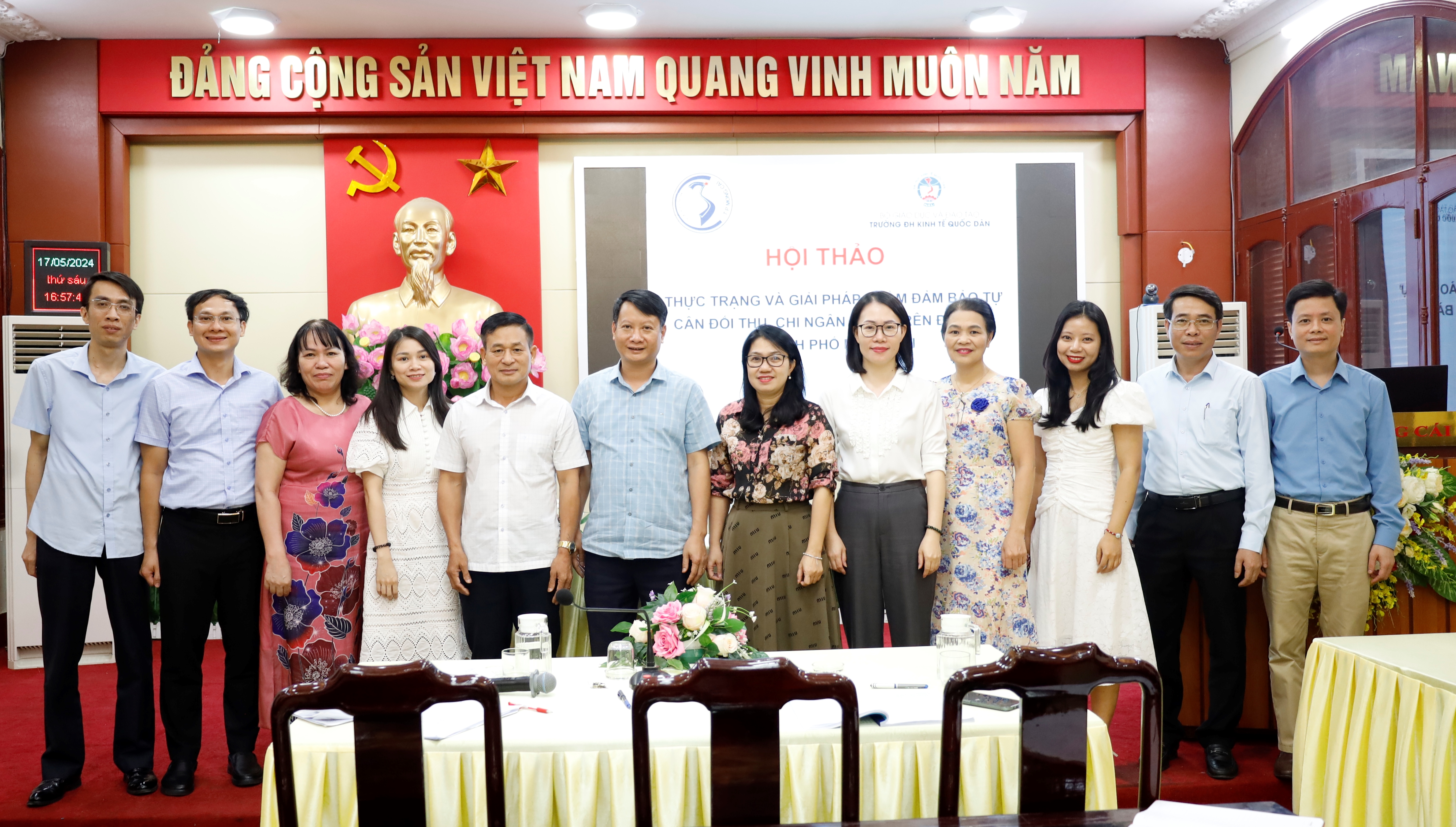
The NEU consulting team poses for a commemorative photograph with local leaders.
Article and photos: Faculty of Real Estate and Natural Resource Economics and Department of Communications
This is an automated translation. If you notice any errors, please contact the Department of Communications, National Economics University at phongtruyenthong@neu.edu.vn.