
Reorganizing the Country and the Power of Unity: Joining Together to Take a Historic Step
01/07/2025 2025-07-01 12:29Reorganizing the Country and the Power of Unity: Joining Together to Take a Historic Step
Reorganizing the Country and the Power of Unity: Joining Together to Take a Historic Step
As of July 1, 2025, all 34 new provincial-level administrative units officially began operating, a reduction of 29 units from before. This momentous “reorganization of the country” has received support from all segments of society—a favorable foundation for success. As General Secretary To Lam reiterated in his June 29, 2025 article, “The Power of Unity”: “Without the people, even the easiest task cannot be accomplished; with their help, even the most difficult task can be done.” When the people agree and all levels stand united, no force can subdue our nation.
Recent public communication efforts by Party committees and government authorities have made clear that the central leadership’s policy of reorganizing administrative units and establishing a two-tier local government model is a major revolution of strategic significance.
On this issue, “the Party’s will” and “the people’s aspirations” have become closely aligned.
The core objective of this policy is to expand development space for provinces and cities and promote the leading role of growth-driving regions, economic corridors, and growth poles. It prioritizes combining mountainous and lowland administrative units with coastal areas and bringing neighboring localities together harmoniously and appropriately in line with development needs and priorities. This will enable them to support one another and jointly advance socioeconomic development while meeting the country’s needs and priorities for rapid, sustainable development in the new period.
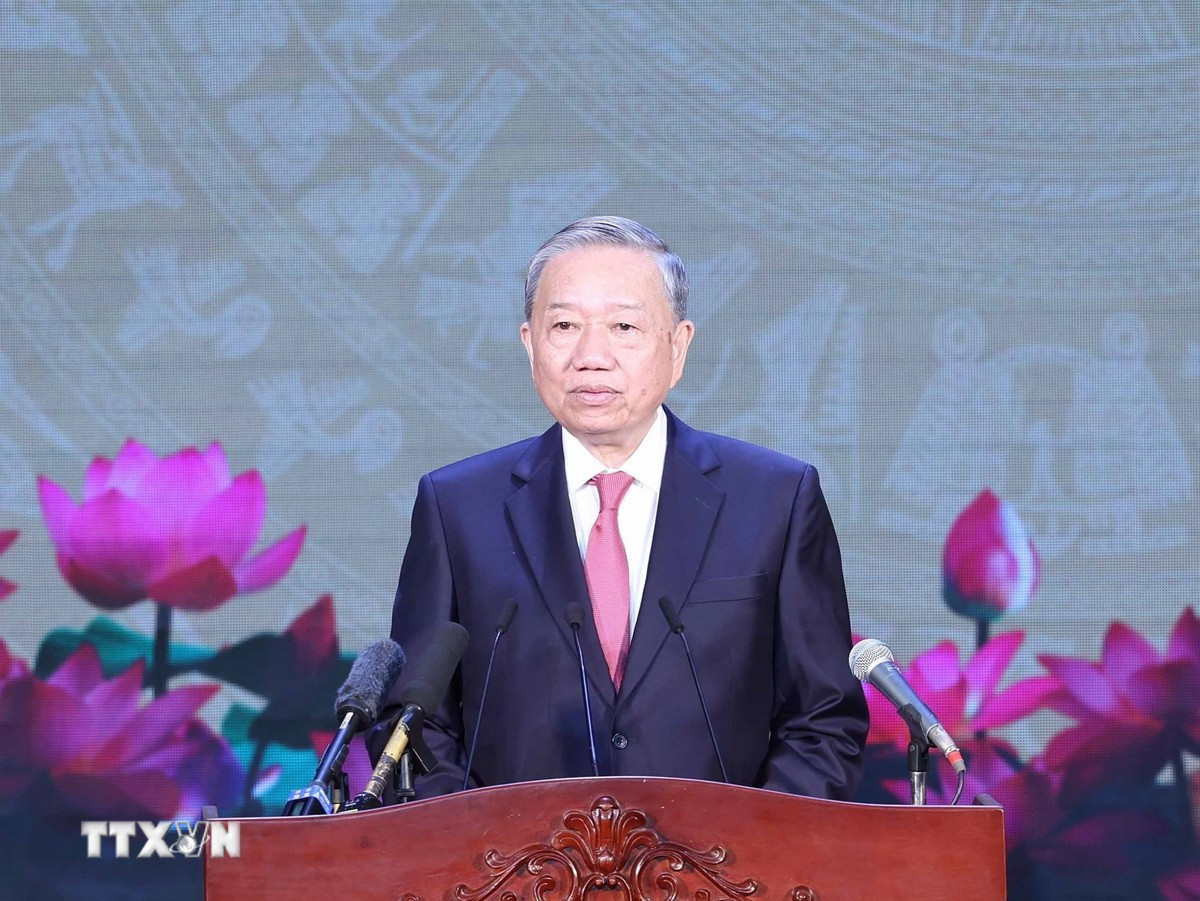
General Secretary To Lam speaks at the ceremony announcing central and local Resolutions and Decisions on merging provincial- and commune-level administrative units, ending the operation of district-level administrative units, establishing Party organizations, and appointing Party committees, People’s Councils, People’s Committees, and Vietnam Fatherland Front Committees for Ho Chi Minh City and its communes, wards, and special zones
In practice, after nearly 40 years of renewal, the spatial organization of the country’s development has begun to reveal limitations. Development space is fragmented along administrative boundaries; regional linkages remain inadequate in many respects; development investment remains dispersed rather than concentrating resources to establish clearly defined growth-driving regions that pioneer and lead national economic growth; and a coordinated, modern national infrastructure framework has yet to take shape…
The main causes of this situation are a dispersed approach to development without clear priorities or focus; a lack of comprehensive national planning to clearly define a spatial development model across the country; a lack of mechanisms and policies to promote cross-sectoral and interregional economic development; and the persistence of parochial local attitudes.
Given its nature and scale, “reorganizing the country” is by no means easy or simple. Success requires, first and foremost, unity and consensus among all the people.
People will support this effort if they clearly understand that it is an urgent and inevitable requirement to reconfigure natural and economic development space and forge historical, cultural, and geographical connections to create administrative-economic entities of sufficient scale. This will broaden development horizons while renewing and strengthening governance capacity, making these entities strong and competitive enough to integrate into national and global value chains.
We have achieved initial success as people have come to understand that reorganizing administrative units enables localities and the country to save funds and develop more evenly, and creates new economic centers. It aims to establish digital government and digital governance and develop smart cities, integrated economic regions, and flexible administration, enabling administrative transactions to be processed quickly and transparently and saving time and costs for people and businesses, in keeping with the principle that businesses and the people must receive better service.
“Reorganizing the country” is a step toward effectively organizing national development space, securing intraregional and interregional linkages, and harnessing each region’s comparative advantages. First, investment will focus on selected areas with favorable geographical locations, economic and social infrastructure, high-quality human resources, and other development potential and advantages to form growth-driving regions and economic corridors. Growth poles will then generate spillover effects that promote rapid, efficient, and sustainable economic development nationwide. At the same time, mechanisms, policies, and resources suited to the economy’s conditions will ensure social welfare in disadvantaged areas and gradually narrow gaps between regions.
Merging provincial-level administrative units is also a way to use the country’s resources efficiently and economically, particularly its land, water, forests, and mineral resources.
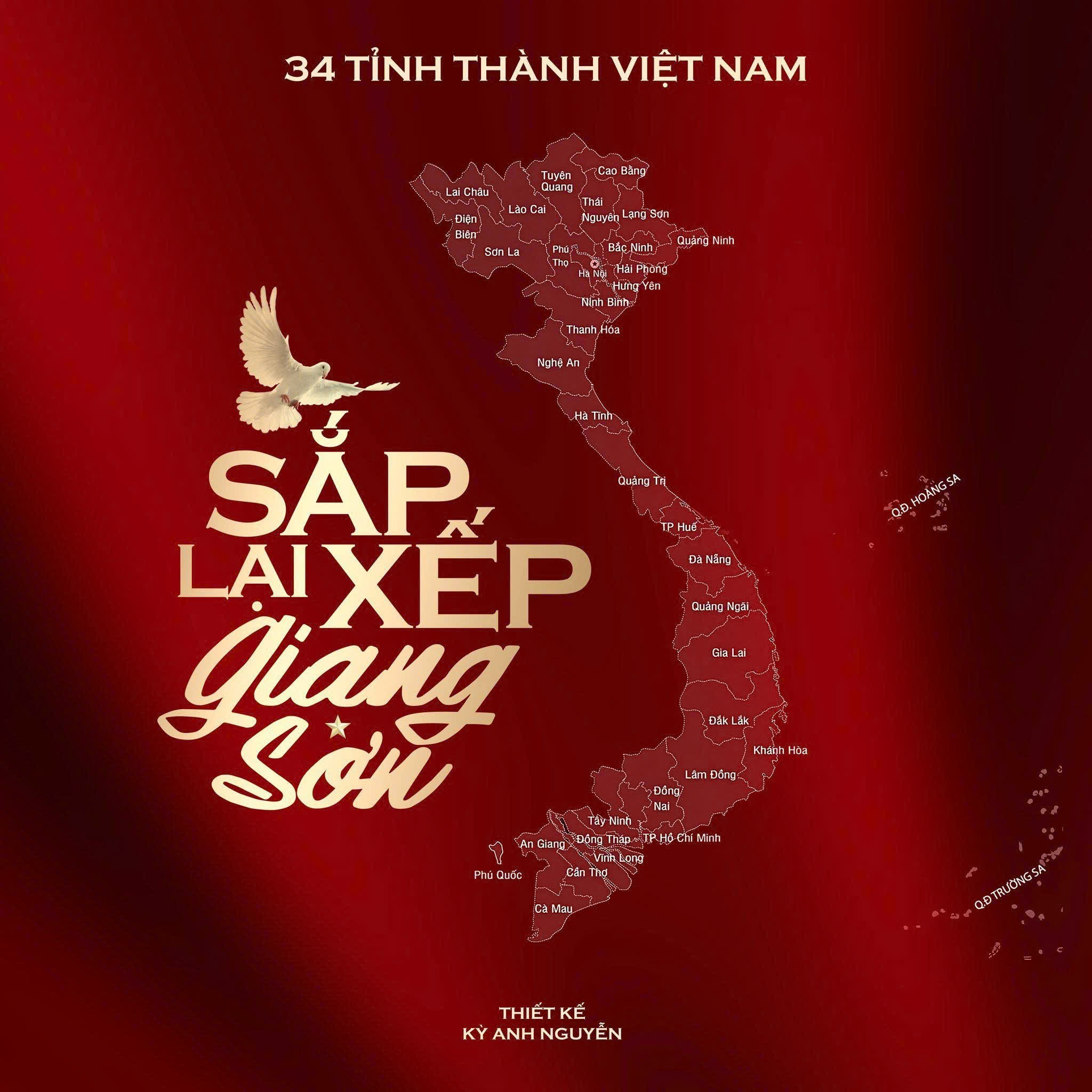
Recent public communication and education efforts have also reached deeply into people’s thoughts and feelings, helping them feel understood and willingly put their love for the country above their affection for their own hometowns. The vast majority of people understand that decisions to merge or consolidate one province with another, and where to locate provincial administrative centers, are thoroughly examined and carefully weighed by the central leadership and relevant agencies, taking many factors into account to achieve sustainable, long-term development.
People also understand that the naming of new administrative units results from thorough study and careful consideration of traditional, historical, and cultural factors. Priority is given to using one of the names of the provinces before their merger or consolidation as the name of the new province, minimizing the impact on people and businesses of having to change documents, geographical indications, and other items…
Concern about “losing the name of one’s home province” is a natural human emotion. Yet the national vision and the country’s paramount interests take precedence over all such “local” concerns.
By now, most people are no longer deeply troubled by thoughts of “losing our province’s name,” “no longer having a district,” or “our commune being absorbed”…
Emphasizing the importance of unity at this time, General Secretary To Lam made this appeal: In the current period, as the entire country has been implementing the policy of reorganizing and streamlining the organizational apparatus of the political system, merging administrative units, “reorganizing the country,” and organizing space for the country’s sustainable development, the spirit of unity must be promoted more strongly than ever. With the Party’s strategic vision and steadfast leadership, we are determined to uphold and promote the strength of great national unity, regarding it as the “lifeblood” and the “common thread” throughout, ensuring that all Party and State guidelines and policies are implemented thoroughly, consistently, and effectively, and meet all the people’s legitimate aspirations to the fullest extent.
Article and photos: Nguyen Ky Anh, Vietnam News Agency, and Department of Communications
This is an automated translation. If you notice any errors, please contact the Department of Communications, National Economics University at phongtruyenthong@neu.edu.vn.



