Prof. Dr. Hoang Van Cuong: Professorial Councils Must Be Worthy of the Intellectual Elite—Fair and Upright
22/05/2024 2024-05-22 8:09Prof. Dr. Hoang Van Cuong: Professorial Councils Must Be Worthy of the Intellectual Elite—Fair and Upright
Prof. Dr. Hoang Van Cuong: Professorial Councils Must Be Worthy of the Intellectual Elite—Fair and Upright
GDVN – Prof. Hoang Van Cuong: “Professorial councils must demonstrate that they represent the intellectual elite, and their decisions must exemplify impartiality and integrity.”
In preparation for the review of candidates for recognition as meeting the standards for the titles of professor and associate professor in 2024, the Standing Committee of the State Professorial Council has asked educational and research institutions, professors, and associate professors to nominate educators and scientists with strong academic reputations to serve as members of the State Professorial Council for the 2024-2029 term, concurrently chairing disciplinary and interdisciplinary councils, and as members of the 28 disciplinary and interdisciplinary professorial councils in 2024.
Each year, the review of candidates for the titles of professor and associate professor attracts considerable attention from intellectuals, scientists, and society as a whole. Establishing professorial councils at all levels—the arbiters at each round of review—is considered an important prerequisite for ensuring that academic titles are conferred impartially and transparently.
A reporter from the Vietnam Education e-magazine spoke about this issue with Prof. Dr. Hoang Van Cuong, newly appointed Vice Chairman of the State Professorial Council for the 2024-2029 term.
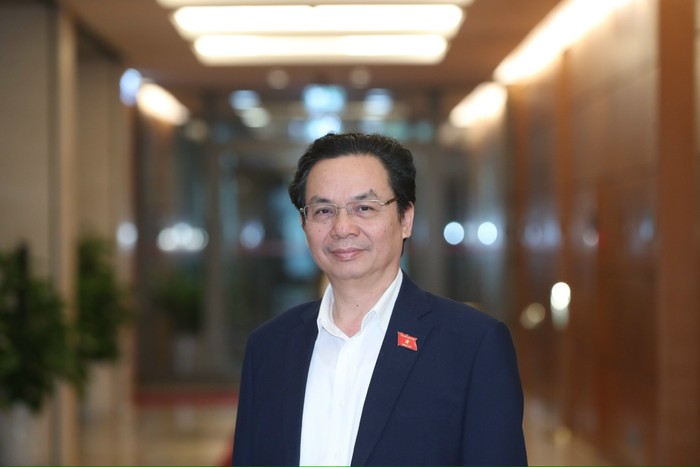
Reporter: Congratulations, Prof. Dr. Hoang Van Cuong, on your recent appointment by the Prime Minister as Vice Chairman of the State Professorial Council for the 2024-2029 term. How do you feel as you take on these new duties in your new position?
Prof. Dr. Hoang Van Cuong: Being appointed Vice Chairman of the State Professorial Council is indeed a tremendous honor, but it also brings considerable challenges and pressure.
As we all know, professor and associate professor are exceptionally esteemed and distinguished titles, recognizing a lifetime of striving and effort devoted to teaching and scientific research. Receiving the title of professor or associate professor is regarded as reaching the pinnacle of an educator’s or scientist’s career.
Professorial councils directly review candidates and decide who meets the standards and receives the title of professor or associate professor. Entrusted with the weighty responsibility of acting as arbiters in selecting recipients of these distinguished titles, the councils are regarded as representing the finest among intellectuals and scientists. Being selected as a council member is therefore a tremendous honor and source of pride.
To fulfill this responsibility and be worthy of this tremendous honor, the councils must demonstrate that they represent the intellectual elite, and their decisions must exemplify impartiality and integrity.
In society, when misconduct or behavior that falls short of accepted standards occurs here and there, people simply regard it as wrongdoing or negative behavior—accepting it as an inevitable part of social life in all its diversity. But if professorial councils, regarded as the intellectual “elite,” fail to uphold proper standards, educators and scientists will lose respect for them, society will lose trust, and the resulting severe damage to their reputation will disgrace the intellectual community. That is precisely the challenge and pressure: preserving the councils’ standing and ensuring that we ourselves deserve to be members of these esteemed councils.
I believe that these thoughts and concerns are shared not only by me but by any educator or scientist selected to serve on a professorial council at any level.
Reporter: In practice, after each review for conferring the academic titles of professor and associate professor in recent years, the public has continued to question the fairness of the process. In some cases, candidates are found not to meet mandatory criteria even at the State Professorial Council’s review stage; in others, candidates who meet all conditions and standards and are considered well respected fail simply because they do not receive enough council votes. As a result, many educators and scientists who meet all the standards and are highly deserving do not apply for the titles of professor and associate professor because they do not want to pass through an opaque “gatekeeping process.” What can be done so that the public no longer raises such questions?
Prof. Dr. Hoang Van Cuong: Overall, in recent years, particularly since the Prime Minister issued Decision 37/2018/QĐ-TTg, the process of reviewing candidates for the titles of professor and associate professor has become increasingly systematic, rigorous, clear, and transparent, earning public support and recognition. The educators and scientists who have received these titles are all deserving individuals who have made and continue to make positive contributions to education, training, and scientific research.
Decision 37 sets out fairly clear and specific mandatory criteria for the titles of professor and associate professor, with increasingly demanding quality requirements, a rigorous evaluation process, and stringent professional requirements, making the review process increasingly sound. This may also be one reason why many people do not achieve their aspirations and react in ways that lead to public misunderstandings.
In isolated cases, some councils, through a lack of diligence or out of deference to personal relationships, shift responsibility to higher-level review councils and include candidates who do not meet mandatory criteria on their review lists. Some council members, driven by improper motives, deliberately fail candidates who fully meet the standards and deserve the academic titles for which they have applied. Although such incidents are very few, they have damaged the collective reputation of professorial title councils at all levels.
To dispel public doubts and concerns about this issue, councils at all levels—the arbiters—must be open, impartial, fair, and upright. Council members must be true intellectuals: they must not pursue fame or personal gain, or be swayed by pressure arising from relationships, bribery, or temptation. They must have the courage to express their assessments and observations about each candidate’s strengths and weaknesses frankly and openly, and vote honestly in the review process. Every council member must recognize their weighty responsibility, understand the significance of their work, and carry out their assigned duties with dedication and accountability. They must always regard preserving the council’s honor as preserving their own honor and that of the intellectual and scientific communities.
Reporter: Under previous legal regulations, professors could extend their working years up to age 70; the current limit is 67. To address public concerns about longstanding, persistent problems, do you think the age limits and length of service for council members at all levels need to change?
Prof. Dr. Hoang Van Cuong: The criteria for membership of professorial councils at all levels are clearly stipulated in Decision 37. It only limits service on the State Professorial Council to no more than two consecutive terms, without specifying age limits or length of service on disciplinary and interdisciplinary councils or Institutional Professorial Councils.
Once the proper motivation for joining professorial councils at all levels is understood as scientists’ responsibility to contribute to the conferral of titles on intellectuals and fulfill the councils’ great mission, it becomes clear that this is service, involving challenges and considerable pressure, rather than fame or personal gain. This responsibility should also be shared among many people. One person should not continually be asked to serve for too long while others have no opportunity to contribute. Decision 37 only limits State Professorial Council members to two consecutive terms and contains no such provisions for disciplinary and interdisciplinary councils. However, if a large number of scientists meet the conditions and standards, members should not serve on a council continuously for more than 10 years.
Members of Institutional Professorial Councils and disciplinary councils must carefully study every page of each candidate’s application dossier to assess the reported achievements against the prescribed standards, and must evaluate the quality of and assign scores to published scientific works. Each candidate’s dossier can run to tens of thousands of pages. On councils with many candidates, each member must evaluate five to 10 dossiers in approximately one month. This is an enormous workload, requiring a strong ability to withstand work pressure to complete it to a high standard.
Therefore, although Decision 37 does not specify age limits, and regulations on the age to which working years may be extended are not mandatory for professorial councils, State Professorial Council members should nevertheless be no older than 70 to foster a new generation of successors, renewal, and a younger membership. Disciplinary and interdisciplinary councils should also bring in younger members as appropriate to actual circumstances.
This would also create opportunities for a broader range of scientists to serve on councils at all levels and contribute their efforts, particularly the next generation of scientists and young scientists, enabling them to demonstrate their dynamism and creativity. It would be an opportunity to encourage younger people to contribute to developing the country’s intellectual community.
Reporter: As Vice Chairman of the State Professorial Council, what hopes would you like to share with candidates applying for the titles of professor and associate professor in the coming period?
Prof. Dr. Hoang Van Cuong: Professor and associate professor are distinguished academic titles that recognize and assess the capabilities and contributions of educators and scientists to education, training, and scientific research.
As the old saying goes, “the habit does not make the monk.” The worth of those awarded these titles lies not in the words professor or associate professor added before their names, but in their actual capabilities.
If their capabilities do not measure up, it is like wearing an ill-fitting borrowed garment: it diminishes their image, as they inevitably become the subject of disparaging comments about people who hold titles without the substance to match.
Therefore, each candidate must first take an honest look at themselves to determine whether they truly deserve such a distinguished title. Those who do not yet meet all the standards or possess the required professional competence should not try to pressure the council or find a way to pass the review at any cost. Instead, they should step back to allow themselves more time to work toward the requirements and address their shortcomings, so that they can enter the review rounds with confidence.
I also hope that educators and scientists who fully meet the standards, possess the necessary capabilities, and deserve the titles of professor and associate professor will apply for recognition with confidence and dignity. They should not demean themselves by doing things incompatible with the honor of an intellectual, nor should they turn their backs on the title recognition process to avoid confronting misconduct. This is an important contribution candidates can make to the success of the review and recognition of professor and associate professor titles at all levels.
Reporter: What expectations would you like to share for the new term?
Prof. Dr. Hoang Van Cuong: As we enter a new term with new councils, I hope that members of professorial councils at all levels will devote themselves fully and work with dedication, responsibility, fairness, and integrity. These are decisive factors in the success of each review cycle and help enhance the standing of the intellectual community, enabling members to take pride in serving on a distinguished professorial titles council.
The councils’ reforms will receive support from an increasing number of deserving candidates who apply for review and are recognized as professors and associate professors, further strengthening the country’s community of intellectuals and scientists.
The review and recognition of professor and associate professor titles always attract the attention and scrutiny of many segments of society and directly affect intellectuals and scientists. Therefore, all conflicting information and concerns should be brought to the Standing Committee of the State Professorial Council in a cultured, civil, and upright manner for resolution and strict, fair handling. People should not disparage others on social media, as this is inconsistent with the character and moral courage of intellectuals and harms the honor of the community of intellectuals, educators, and scientists.
I believe that, with everyone’s collective contributions, the review and recognition of professor and associate professor titles during the new term will improve with each passing year.
Reporter: Thank you, Prof. Dr. Hoang Van Cuong!
This is an automated translation. If you notice any errors, please contact the Department of Communications, National Economics University at phongtruyenthong@neu.edu.vn.