
National Economics University Joins MICRO4ASIA Project – Promoting Higher Education Internationalization Through Micro-Credentials
25/08/2025 2025-08-25 14:18National Economics University Joins MICRO4ASIA Project – Promoting Higher Education Internationalization Through Micro-Credentials
National Economics University Joins MICRO4ASIA Project – Promoting Higher Education Internationalization Through Micro-Credentials
Amid globalization and the rapid development of the knowledge economy, the internationalization of higher education has become an inevitable trend, closely linked to the need to improve education quality, increase competitiveness, and meet the increasingly diverse demands of the labor market. With this goal, MICRO4ASIA is being implemented as an important initiative for capacity building in higher education (Capacity Building in Higher Education – CBHE), funded by the European Union’s Erasmus+ Program. This strategic project aims to support higher education institutions in Vietnam and Laos in strengthening their internationalization strategies through the design, implementation, and mutual recognition of micro-credentials.
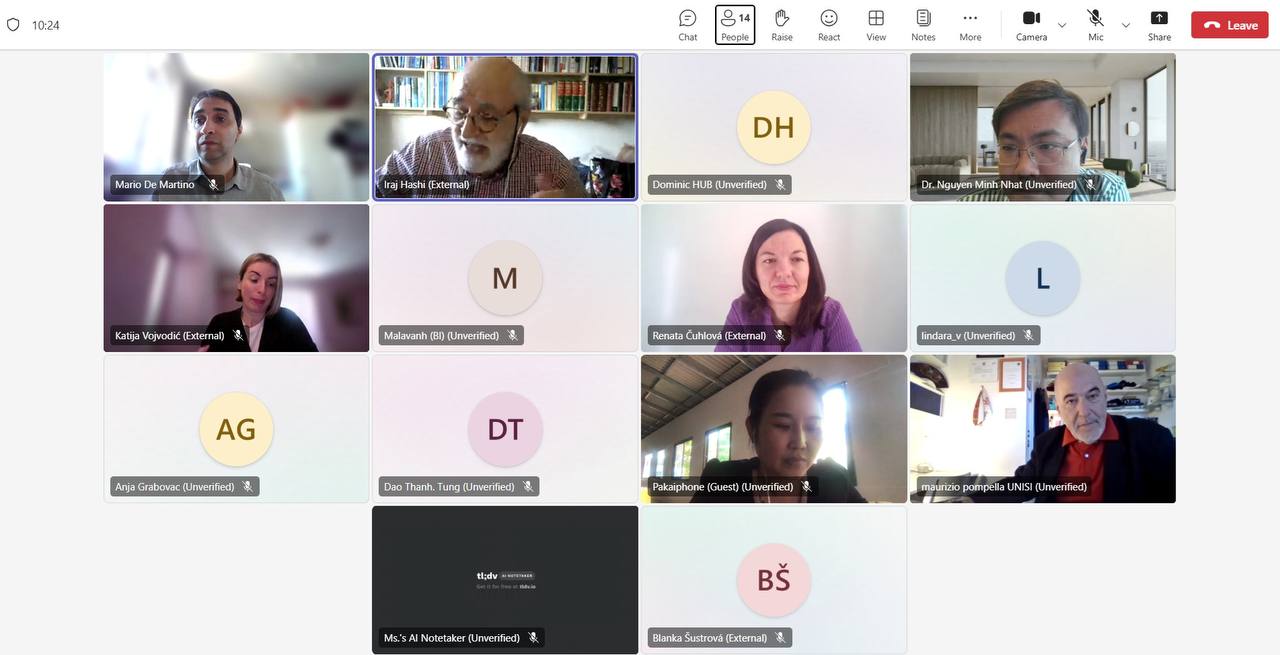
Meeting on the effectiveness of the Micro-Credential Capacity Gap Analysis on April 3, 2025
MICRO4ASIA was established with the overarching goal of promoting the adoption of micro-credentials as an effective tool for internationalization and lifelong learning, developing a total of 36 micro-credentials in fields closely aligned with urgent labor market needs. The project also emphasizes cooperation among higher education institutions to establish a common recognition mechanism for micro-credentials, thereby creating a transparent framework of standards that enhances transfer program pathways and practical applicability. In parallel, MICRO4ASIA focuses on building educational institutions’ capacity to design and deliver curricula and apply digital technologies to improve education quality. In particular, the project emphasizes universities’ role in promoting students’ employability and skills development, enabling learners to access flexible learning pathways that meet the diverse needs of regional and international labor markets.
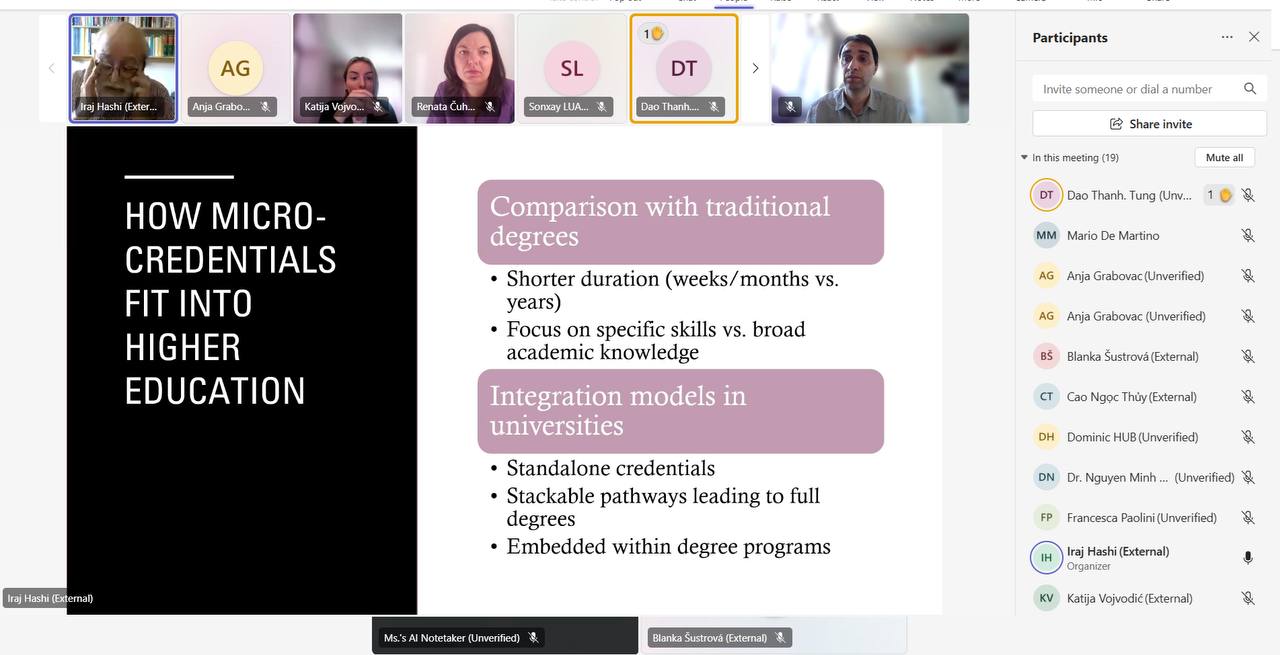
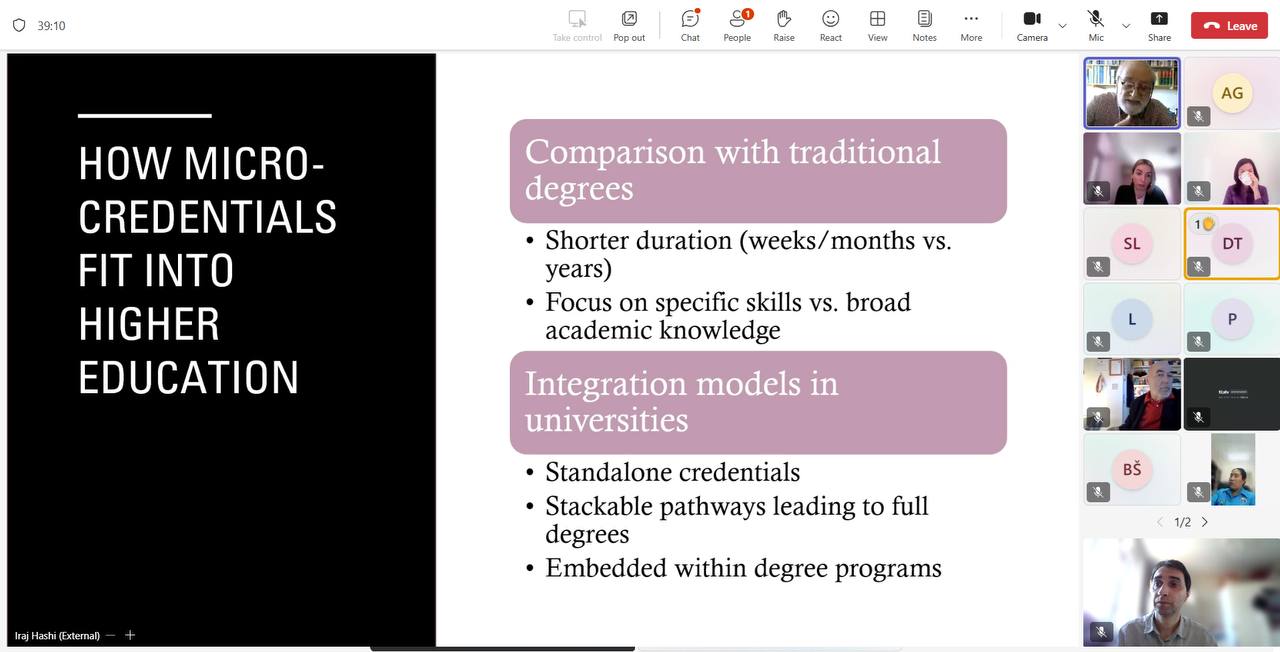
Topics discussed at the meeting
MICRO4ASIA brings together a reputable and diverse network of partners, including European universities such as Masaryk University (MUNI – Czech Republic), the University of Dubrovnik (UNIDU – Croatia), and the University of Siena (UNISI – Italy), along with the Institute for Community Policy Training (IHF – Belgium). In Southeast Asia, higher education institutions in Vietnam and Laos play a pivotal role, including the University of Economics Ho Chi Minh City (UEH), Ho Chi Minh University of Banking (BUH), National Economics University (NEU), the National University of Laos (NUOL), the Banking Institute of Laos (BIBOL), and Champassak University (CU). Connections between universities in Europe and Southeast Asia not only expand opportunities for academic cooperation but also help create flexible learning pathways, promote faculty and staff exchanges and student exchanges, and strengthen links between educational institutions and the labor market.
To achieve its goals, the project is organized into six work packages (Work Packages – WP), each with specific responsibilities that are closely interconnected. The first work package focuses on project management, including planning, establishing cooperation agreements, and organizing regular meetings. The second work package emphasizes capacity building, from refining the assessment of identified gaps, developing content, and delivering training for lecturers to consolidating the results achieved. The third work package focuses on developing micro-credentials, including procuring equipment, providing technical support, designing and approving courses, delivering them to students, and collecting feedback for improvement. The fourth work package aims to establish mutual recognition arrangements through workshops, comparisons of standards, and the development and approval of a common recognition mechanism (Common Recognition Mechanism – CRM). The fifth work package addresses quality assurance, from planning and consulting external evaluators to regular quality monitoring and reporting. Finally, the sixth work package focuses on dissemination and sustainability, implementing communication activities, disseminating results, and developing long-term plans to ensure the project’s impact.
MICRO4ASIA’s expected outcomes are clearly reflected in three areas: successfully developing 36 high-quality micro-credentials; developing a toolkit to guide educational institutions in adopting micro-credentials; and issuing a position paper on the use of micro-credentials in the internationalization of education, while establishing a common recognition mechanism among participating higher education institutions. These outcomes promise to make an important contribution to improving higher education quality, expanding flexible learning opportunities for learners, and strengthening transfer program pathways and mutual recognition among education systems in the region and worldwide.
NEU’s participation in MICRO4ASIA clearly demonstrates the University’s commitment to supporting the internationalization of higher education, improving education quality, and expanding learning opportunities for students. As one of Vietnam’s leading universities, NEU continues to affirm its pioneering mission in renewal, innovation, and international integration, contributing to the development of a high-quality workforce that meets the country’s needs for rapid and sustainable development in an era of global integration.
Article and photos: Department of International Cooperation
This is an automated translation. If you notice any errors, please contact the Department of Communications, National Economics University at phongtruyenthong@neu.edu.vn.



