
Kinhte.congthuong.vn: Proposal to Establish a Petroleum Exchange: An Expert Perspective. Assoc. Prof. Dr. Nguyen Thuong Lang
24/07/2024 2024-07-24 8:15Kinhte.congthuong.vn: Proposal to Establish a Petroleum Exchange: An Expert Perspective. Assoc. Prof. Dr. Nguyen Thuong Lang
Kinhte.congthuong.vn: Proposal to Establish a Petroleum Exchange: An Expert Perspective. Assoc. Prof. Dr. Nguyen Thuong Lang
Recently, the Government Office conveyed Deputy Prime Minister Le Minh Khai’s request for the Ministry of Industry and Trade to study the establishment of a petroleum exchange.
Economist Assoc. Prof. Dr. Nguyen Thuong Lang, School of Trade and International Economics, National Economics University (NEU), shared his perspective on establishing commodity exchanges, including a petroleum exchange.
What is your assessment of the commodity exchange model?
The exchange model in general, and the petroleum exchange model in particular, is widely used and harnesses the effects of market mechanisms. Worldwide, alongside petroleum exchanges such as those in London and New York, there are commodity exchanges (Amsterdam, Chicago), as well as foreign exchange, securities, and gold exchanges (eight global markets and other regional exchanges). These models also operate in similar ways to ensure connectivity, balance supply and demand, provide information transparency, and reflect market conditions as objectively as possible through a range of indicators.
 |
| Assoc. Prof. Dr. Nguyen Thuong Lang |
Vietnam has had a stock exchange operating for 27 years and is seeking an upgrade from frontier market to emerging market status. Experience shows that, alongside positive effects, there have also been cases of stock price manipulation and market manipulation requiring strict criminal penalties, as seen in recent major cases involving Vietnam’s stock exchange.
This shows that information asymmetry is an inherent problem with these exchanges. Participants can exploit it to manipulate the market and evade regulators at times when matters are difficult to clarify. When cases are uncovered and addressed, remedies to compensate other participants for their losses are almost never adequate, causing fluctuations in market confidence indicators. Eliminating this manipulation is not easy, even in the most developed markets.
Vietnam once established a coffee exchange in Dak Lak, but 27 years later it has yet to produce results, and the exchange’s premises have become a coffee museum welcoming tourists.
In that context, would establishing a petroleum exchange in Vietnam be effective?
The idea of a petroleum exchange places considerable emphasis on its anticipated positive effects. However, its impacts on relevant stakeholders have not yet been fully assessed and specifically quantified through a thorough, careful, public, and scientific process. As described above, this model aims to ensure transparency in output, prices, trading volumes, and participants, while operating according to market mechanisms.
In essence, a petroleum exchange has a mission to make information transparent, but it cannot stabilize prices because it would be integrated with the global market to the greatest extent possible. Domestic petroleum prices in Vietnam are determined by global petroleum prices. An exchange would find it difficult to pursue price stabilization because it operates entirely according to market mechanisms. The price stabilization objective would be virtually impossible to achieve, especially with broad participation by international partners in the exchange.
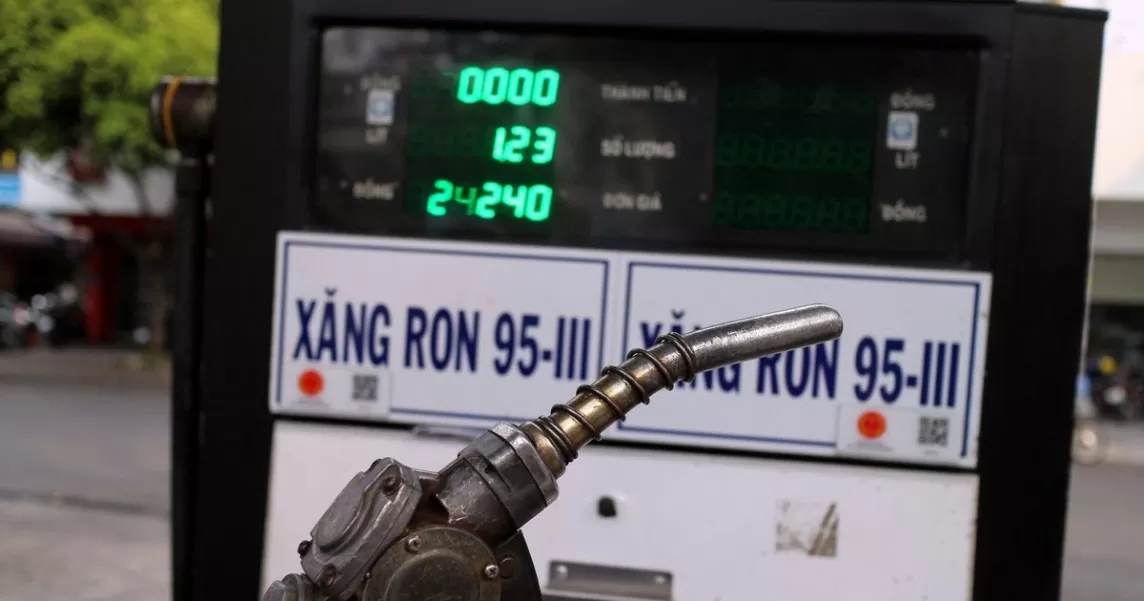 |
| Illustrative photo. |
Article 21 of the Law on Prices No. 16/2023/QH15, Appendix 1, Clause 1, specifies that finished petroleum products are subject to state price stabilization. This means that when price fluctuations exceed a certain threshold (the Law has not yet specified this threshold in detail), the State has a duty to apply tools and measures to stabilize prices to ensure national security and the legitimate and lawful interests of businesses, consumers, and other relevant stakeholders.
Using a petroleum exchange mechanism would make price stabilization difficult to implement and could even substantially neutralize that role, because prices are determined entirely by the international market. Vietnam’s petroleum market is small and cannot determine global prices; it must accept international prices, both proactively and passively. Establishing an exchange under those circumstances would run somewhat counter to current legal provisions, reduce the State’s role in determining prices for this commodity, and potentially create adverse situations.
For example, if petroleum prices suddenly rose to 1.5 to 2 times their previous level—and historically they have risen as high as three to four times their previous level—how would the exchange adjust these prices to stabilize them, when Vietnam cannot stabilize a globally interconnected market? Stabilization to lower domestic prices while prices abroad surge would ultimately mean using Vietnam’s state budget to subsidize prices for the entire world…
Furthermore, a petroleum exchange should not be the only exchange established. Many other commodities also need exchanges that could have a major impact, such as an agricultural commodity exchange, given Vietnam’s potential to become a country with considerable influence over agricultural commodity prices.
Would establishing a petroleum exchange still be necessary?
This model needs a more detailed and specific assessment to establish whether it is a far better alternative to the current operating mechanism, thoroughly eliminating negative effects such as speculation, hoarding, lack of transparency, smuggling, and inflated declarations of import prices from international waters. The methodology and impact assessment results need to be made public to obtain a comprehensive evaluation from policymakers, businesses, and consumers, and to assess the legal provisions governing strict petroleum management, given its link to the Consumer Price Index (CPI). Good practices should also be consulted so that the model can be applied over the long term on a sound basis, rather than remaining a pilot or temporary arrangement that wastes time and money.
Undue emphasis should not be placed on proposing a new petroleum trading mechanism while its measurable impacts remain unclear. The current operating mechanism could instead be improved through decisive efforts to streamline operations, make them smarter, and ensure integrity among the parties involved, under strict, clear, transparent, and predictable legal provisions.
Thank you!
This is an automated translation. If you notice any errors, please contact the Department of Communications, National Economics University at phongtruyenthong@neu.edu.vn.