
Assoc. Prof. Dr. Pham The Anh: In Search of Growth Drivers for 2024
09/01/2024 2024-01-09 15:20Assoc. Prof. Dr. Pham The Anh: In Search of Growth Drivers for 2024
Assoc. Prof. Dr. Pham The Anh: In Search of Growth Drivers for 2024
As 2023 drew to a close, domestic inflation and exchange rates remained relatively stable, an achievement for Vietnam compared with other countries and major economies around the world. We can also identify some bright spots even in indicators that fell short of expectations, such as economic growth, which improved progressively from quarter to quarter.
On the demand side of the economy, exports were affected by global economic conditions, while private-sector investment and consumption demand remained quite weak. There were several reasons for this: in early 2023, businesses faced very high interest rates and tight credit conditions, while their access to credit declined because their financial health was no longer as strong as before, following the effects of the Covid-19 pandemic and the freeze in the real estate market.
Businesses’ access to bank credit remained relatively limited, even in the final months of 2023, when lending rates had become more manageable.
Global economic volatility and anticipated domestic difficulties left many businesses without sufficient confidence to invest for the long term. The same was true of household consumption. Observations at shopping centers and shopping streets showed that consumer shopping activity had declined considerably compared with previous years. This was partly because substantial household assets were tied up in the bond and real estate markets, both of which were experiencing problems.
Exports fell short of their target last year mainly because of external factors, as the global economy continued to face high interest rates and high inflation while growth slowed. In addition, trading partners had imported excessively in 2022 to avoid supply disruptions, while post-pandemic consumption shifted toward services rather than goods. These factors caused exports to decline in the early months of 2023.
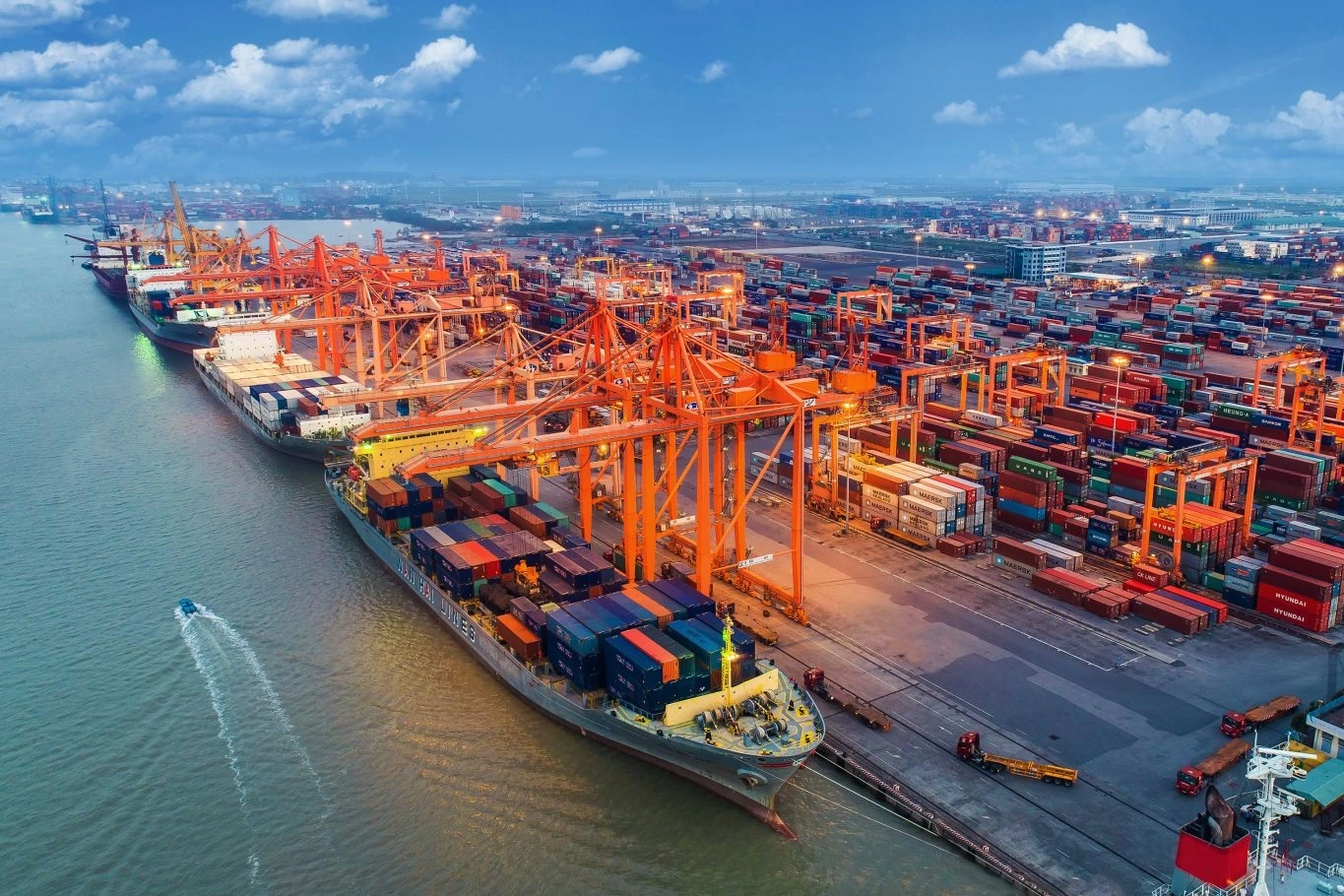
Exports showed some encouraging signs (Photo: Hai Phong Port Authority).
Exports began to show faint signs of optimism in the final quarter of last year. Several product groups showed a clear recovery, although this recovery was not yet assured and might only have been seasonal. This is because the economic growth outlook for 2024 could remain difficult, as countries had maintained high interest rates for a long period and the effects were gradually filtering through their economies. Vietnam’s exports could therefore improve in 2024, but the prospects for a breakthrough and high double-digit growth, as in previous years, remained unclear.
In investment, alongside the difficulties and unresolved issues noted above, there were still bright spots. We continued to maintain relatively substantial foreign direct investment (FDI), in both registered and realized capital. Vietnam’s economy was absorbing capital flows shifting from China relatively well. Hopefully, in the coming period, alongside traditional FDI from East Asia, Vietnam can attract more high-quality FDI from the United States and Western Europe through the upgrade of its comprehensive partnership with the United States or the investment protection agreement with the EU.
FDI in Vietnam is concentrated mainly in processing and manufacturing for export markets. A global economic recovery is therefore expected to help increase Vietnam’s exports and, in turn, draw stronger foreign investment flows into Vietnam. These two factors are closely linked.
Another positive development was that public investment disbursement, although below the desired target, was stronger than in previous years. A concern with public investment is that spreading resources too thinly and placing undue emphasis on reported achievements can undermine project effectiveness. What matters is that Vietnam accelerates key infrastructure investment projects, which provide the foundation for long-term growth and help lift the private sector.
On the supply side, a positive development was that Vietnam’s production capacity had increased significantly in recent years. We had become self-sufficient in many essential goods and services. Another positive consequence was that Vietnam avoided the supply chain disruption shocks and goods shortages experienced by other countries, helping keep domestic goods prices stable.
A shortcoming on the supply side was the freeze in asset markets, concentrated in the real estate market. Persistent blockages in asset markets left economic resources tied up. Real estate businesses currently face both legal difficulties with their projects and difficulties accessing capital, whether through credit or the issuance of shares and bonds. As a result, the supply of properties to the market has been virtually disrupted, particularly in segments serving people’s actual housing needs.
These supply bottlenecks, against a backdrop of very strong demand for housing for actual use, especially in major cities, have led to price surges in some segments. For example, despite economic difficulties, apartment prices in Hanoi and Ho Chi Minh City have risen by 30–40% compared with last year. This abnormal situation remains unresolved, despite the Government and ministries, departments, and agencies working urgently to remove obstacles facing the real estate market and businesses.
Regarding monetary conditions, inflation, exchange rates, and interest rates, a clear positive was that Vietnam’s inflation averaged only approximately 3.2% for the year, while core inflation continued to decline slowly but steadily. This was a positive sign arising from several factors. In part, both external and domestic demand were very weak, while the capacity to supply goods was relatively strong, resulting in excess supply. Prices of most consumer goods remained unchanged or increased only slightly.
Vietnam also benefited from excess production capacity in China, a global manufacturing hub. Low goods prices in China reduced the cost of importing consumer goods and production materials from China, which in turn kept domestic production costs and consumer prices low.
Another positive development was that interest rates, particularly deposit rates, fell to very low levels in the final months of the year, helping support private-sector consumption and investment. Of course, low interest rates also have an undesirable consequence: a resurgence of speculation in asset markets. When interest rates are too low to offset the loss in the value of money through inflation, they encourage asset speculation. We saw this in the unusually sharp increases in gold prices and real estate prices in segments serving actual housing needs in the final months of 2023. This factor requires careful consideration when implementing interest rate reduction policies.
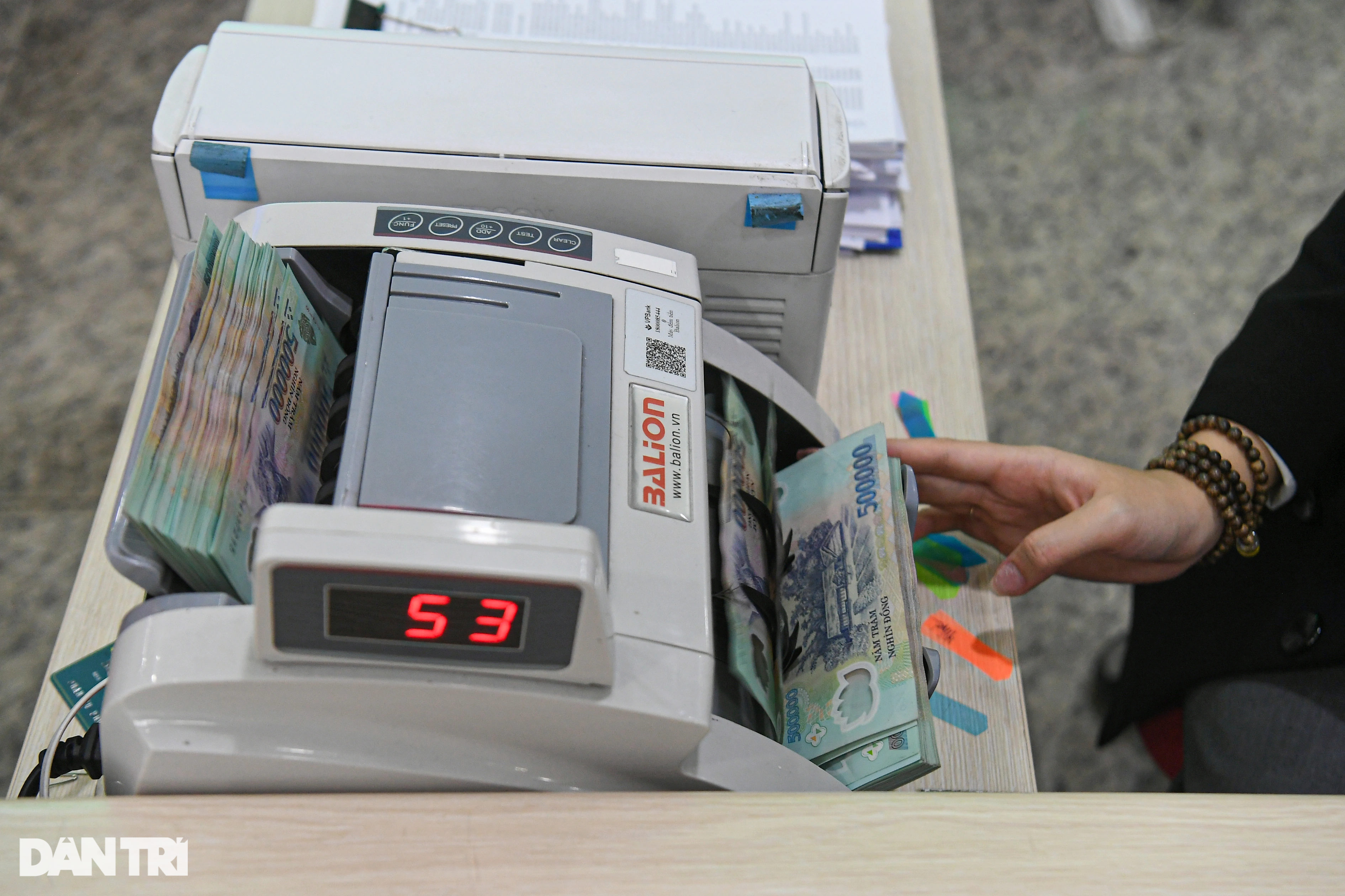
Lending rates remained relatively high (Photo: Manh Quan).
Lending rates remained relatively high, mainly because businesses were in weak financial health and their credit profiles did not meet lenders’ requirements. Banks remained concerned about risks arising from businesses’ financial positions and prospects, so interest rates had to be high enough to compensate for those risks.
Added to this was bad debt. As businesses and individuals faced financial difficulties and assets became illiquid, credit risks rose further, and bad debt increased rapidly over the past year. Many businesses were unable to repay their debts and had to restructure; some organizations and individuals that had borrowed to invest in assets faced even greater difficulties because of low liquidity. Once bad debt is high, interest rates also remain elevated.
One issue of concern to the business community is the business environment. Press coverage of legal cases shows that violations occurred across many localities and industries. Some businesses committed violations, while others did not directly commit violations but had certain connections to those involved, and their production and business operations were adversely affected. This issue needs to be considered in a spirit of respect for the rule of law and transparency, alongside stronger efforts to improve the business environment.
Drivers of the Economy in 2024
In 2024, we must first look to a recovery in the global economy. Vietnam’s economy is now highly open, with combined exports and imports potentially amounting to twice its GDP. Foreign direct investment in Vietnam depends heavily on export activity.
A recovery in Vietnam’s economy therefore cannot take place without a recovery in the global economy, particularly in major markets and major trading partners. The expectation is that the global economy will recover to some extent in 2024, and if central banks begin cutting interest rates from midyear, it may avoid a recession. Vietnam’s exports would then return to growth, attracting stronger foreign investment inflows.
At the same time, the Government is expected to further accelerate public investment disbursement for major projects and key construction works, and continue tax and fee support for individuals and businesses in 2024.
However, for the economy to truly pick up, we cannot rely on public investment alone. As we have seen, despite strong disbursement in 2023, public investment amounted to only about one-third of private sector investment. Reviving the economy therefore requires unlocking private sector investment, which is also the economy’s main growth driver. This requires restoring private sector confidence through an improved investment and business environment.
In short, I believe that stronger growth in Vietnam in the coming years must still depend primarily on the private sector, as state resources cannot indefinitely support the economy through public investment or tax and fee relief.
About the author: Assoc. Prof. Dr. Pham The Anh received his PhD in Economics from the University of Manchester in 2007 and is currently Dean of the Faculty of Economics at National Economics University (NEU). He has many years of experience in macroeconomics and finance and previously served as Head of the Division of Macroeconomics and Vice Dean in charge of the Institute of Public Policy and Management at NEU.
Link: https://dantri.com.vn/tam-diem/di-tim-nhung-dong-luc-tang-truong-nam-2024-20240108103044975.htm
This is an automated translation. If you notice any errors, please contact the Department of Communications, National Economics University at phongtruyenthong@neu.edu.vn.



