
Assoc. Prof. Dr. Nguyen Thuong Lang: Equitization Set to Enter a New Cycle
03/05/2024 2024-05-03 14:27Assoc. Prof. Dr. Nguyen Thuong Lang: Equitization Set to Enter a New Cycle
Assoc. Prof. Dr. Nguyen Thuong Lang: Equitization Set to Enter a New Cycle
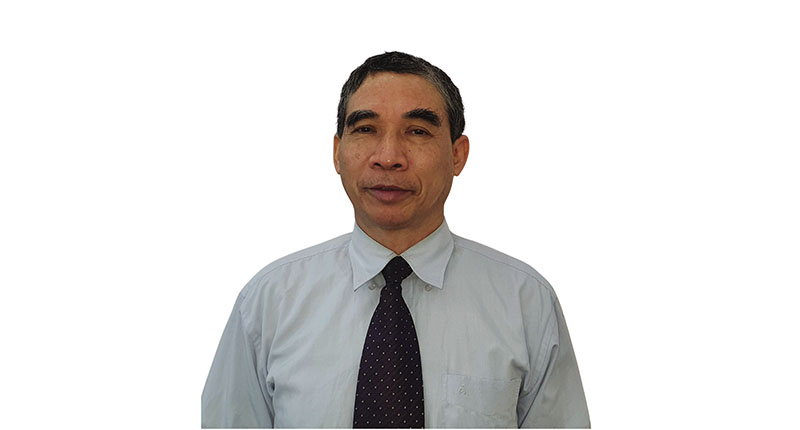 |
| Assoc. Prof. Dr. Nguyen Thuong Lang |
A few years ago, slow progress in equitization and divestment was attributed to the Covid-19 pandemic and economic difficulties. Those two factors are no longer present, so why does the process remain at a standstill?
In 2023, virtually no enterprises were equitized, and divestment took place at only 12 enterprises nationwide, generating VND 229 billion. In the first quarter of this year, competent authorities approved restructuring plans for 77 enterprises under Decision No. 360/QĐ-TTg dated March 17, 2022, including 14 enterprises under central government management.
Experience shows that the pandemic and economic difficulties during 2020-2022 slowed the reform of state-owned enterprises. However, economic difficulties and market volatility are recurring factors, with or without a pandemic. Other external factors have hindered the restructuring of state-owned enterprises: increasingly intense competition, extremely rapid technological advances, changes in economic cycles, and the continuing seasonality of goods and services.
Equitization has also remained virtually “at a standstill” because the authorities directly responsible for supervising enterprises have not fully exercised their role in decisively monitoring, guiding, directing, managing, and urging enterprises to promptly implement equitization and divestment policies.
Do you think the determination to pursue divestment and equitization seems less strong than in previous years?
Not entirely. Rather, divestment and equitization can be said to be preparing to enter a new cycle. The determination to pursue divestment and equitization is strongly demonstrated by Decision No. 360/QĐ-TTg and Decision No. 1479/QĐ-TTg dated November 29, 2022, approving the Plan for the Reorganization of State-Owned Enterprises and Enterprises with State Capital for 2022-2025. These decisions emphasize the requirement for ministries, sectors, and localities to take decisive action on equitization and complete the disclosure of enterprise valuations during 2022-2025 for enterprises on the list subject to equitization. This demonstrates the sustained attention of the Government and the Prime Minister to equitization and divestment.
This process may need additional momentum, as previous drivers have largely become less effective than expected under new conditions. Drivers such as digital transformation, the green transition, innovation, increased productivity and efficiency, improved competitiveness, proactive, active, and substantive integration, and fulfillment of the commitment to net-zero emissions by 2050 need to be added promptly to accelerate this process. This marks the beginning of the “final stretch” of equitization, involving approximately 200 enterprises with 100% state ownership subject to equitization and divestment.
Some argue that state-owned enterprises operating efficiently do not necessarily need to undergo equitization or divestment. What is your view?
This view also has some basis when considering the immediate benefit: contributions to the state budget by enterprises with state capital, particularly enterprises with 100% state ownership. This is perhaps one reason why interest in accelerating divestment has diminished somewhat.
Equitization is an objective process associated with the transition from a centrally planned, command-based mechanism to a socialist-oriented market mechanism. Driven by state policy for more than 30 years, this process has been fully validated in practice as the right approach to preserving and efficiently using capital and assets owned by the entire people and managed by the State.
Equitization improves enterprises’ business efficiency, promotes economic restructuring, and ensures equality in access to resources and in rights and obligations. I believe that the view that efficiently operating state-owned enterprises do not necessarily need equitization or divestment is short-term thinking. A comprehensive, long-term perspective is needed.
What do you mean by a comprehensive, long-term perspective?
Equitization and divestment can increase the efficiency of capital and asset use beyond current levels. Transforming state-owned enterprises benefits not only the state capital in those enterprises but also the capital of other, non-state shareholders. The benefits accrue not only to state-owned shares but are also shared with non-state shareholders, expanding the range of beneficiaries of efficient business performance. This upholds the principle of “harmonized interests and shared risks,” while benefits derived from state privileges will be minimized to move toward market equilibrium.
Equitization will reduce state intervention in the market through administrative decisions, allowing the market to develop according to its own laws. This is the long-term, inclusive approach consistent with the principles of market operation. Equitization and divestment also minimize profiteering and corruption by those appointed to represent state capital in enterprises.
At this stage, should the focus be on addressing enterprises operating in sectors that do not require state investment?
The Law on Management and Use of State Capital Invested in Production and Business at Enterprises clearly specifies the sectors in which the State needs to invest, leaving the rest to private businesses and foreign investors. The Ministry of Finance is currently studying a comprehensive revision of the Law on Management and Use of State Capital, precisely as a preparatory step for equitization and divestment to enter a new phase.
Investing in sectors that do not require state investment disperses public investment capital that should instead be concentrated on key projects with substantial spillover effects and the greatest national benefits. Rather than investing “across multiple industries and sectors,” state capital needs to focus on spearhead industries and infant industries with strong prospects. Dispersed investment yields only short-term benefits and, overall, is unlikely to offset the long-term opportunity costs for the entire economy.
Link: https://baodautu.vn/co-phan-hoa-chuan-bi-chuyen-sang-chu-ky-moi-d214256.html
This is an automated translation. If you notice any errors, please contact the Department of Communications, National Economics University at phongtruyenthong@neu.edu.vn.