
State Audit Office Web Portal: How Is Forensic Auditing Conducted? Assoc. Prof. Dr. Nguyen Thi Phuong Hoa
15/06/2024 2024-06-15 14:01State Audit Office Web Portal: How Is Forensic Auditing Conducted? Assoc. Prof. Dr. Nguyen Thi Phuong Hoa
State Audit Office Web Portal: How Is Forensic Auditing Conducted? Assoc. Prof. Dr. Nguyen Thi Phuong Hoa
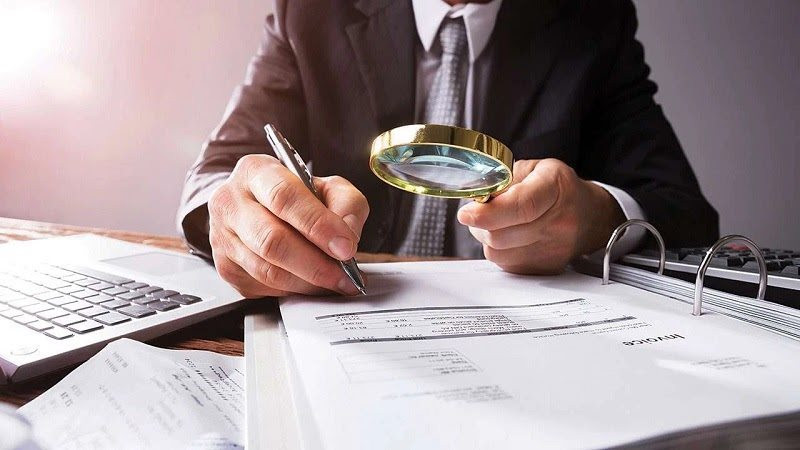
The Concept and Characteristics of Forensic Auditing
Forensic auditing is a new term in the auditing field. There are various definitions of forensic auditing.
In an early definition, William Thornhill stated that forensic auditing focuses on verifying wrongdoing, with a clear and detailed audit plan needed to gather information on who committed the wrongdoing, when, where, and how it was carried out (Thornhill, 1995).
Grippo and Ibex (2003) argue that forensic audits are far more complex than conventional audits, involving multiple steps to determine whether allegations of wrongdoing are substantiated.
Akenbor and Ironkwe (2014) argue that forensic audits generally investigate allegations and complaints concerning material misuse of public funds and assets. Audit procedures ensure that evidence of wrongdoing can be used in administrative, civil, or criminal proceedings.
Cicchella (2005); Crumbley, Heitger and Smith (2007); Russell and Gordon (2017) view forensic auditing as the application of auditing methods to gather evidence for the prosecution of serious crimes such as embezzlement or fraud.
ACCA (2023) defines forensic auditing as auditing undertaken to verify fraud, including specific procedures to gather evidence establishing how long the fraud has continued and how the perpetrator carried it out and concealed it. Evidence may support other matters in court, such as the suspect’s motive and opportunity to commit fraud; whether the fraud involved collusion among suspects; photographic or documentary evidence; the suspect’s explanations during questioning and detention; and attempts to destroy evidence. Fraud includes corruption, asset misappropriation, and financial statement fraud.
These definitions indicate that forensic auditing is a specialized type of auditing.
First, the objective of a forensic audit is to obtain a confession from the perpetrator (if fraud has actually occurred). Auditors should therefore avoid deliberately confronting the perpetrator unless they have sufficient evidence to compel a confession.
Second, the complexity of the subject of the audit (fraudulent conduct) requires auditors to have extensive experience and in-depth knowledge of accounting and auditing regulations and relevant laws. Auditors must understand fraud investigation techniques and the legal framework. They need training in questioning, questioning techniques, psychology, and the secure preservation of collected evidence. Computer-assisted audit techniques (CAATs) are widely used in forensic auditing, partly because of the increasing incidence of criminal activities involving information technology.
Third, because the purpose is to establish legal liability, forensic auditing requires absolute assurance and sets very high requirements for the sufficiency and appropriateness of audit evidence. Audit evidence must be sufficient to establish the perpetrator’s identity, the fraud scheme, and the extent of financial loss.
Fourth, the audit must be planned and conducted thoroughly. Auditors need to define the objectives of the forensic audit: identifying the type of fraud, how long it has continued, how it has been concealed, and who committed it; quantifying the financial loss; gathering evidence for use in court proceedings; and making recommendations to prevent the fraud from recurring. Auditors must remain alert to the risk that the perpetrator may falsify or destroy documents.
Fifth, a forensic audit may lead to the perpetrator being tried in court. The evidence gathered will be used during the trial, and auditors may be summoned to court to describe how the evidence was collected and the suspect identified. Auditors must ensure that they explain their evidence clearly and professionally.
Forensic audits may be conducted by state audit institutions, independent auditors, and internal auditors. State audit institutions conduct forensic audits into suspected fraud in the management of state funds, assets, and budgets. Whether responsibility for attributing criminal liability or trying offenses detected through forensic auditing lies with the state audit institution or judicial authorities depends on each country’s legal provisions.
France’s Court of Accounts and the Federal Court of Audit of Germany have adjudicatory powers comparable to those of judges, whereas supreme audit institutions in other countries do not have these powers. To conduct forensic audits, state audit institutions need appropriate resources and the authority to investigate fraud and suspected corruption.
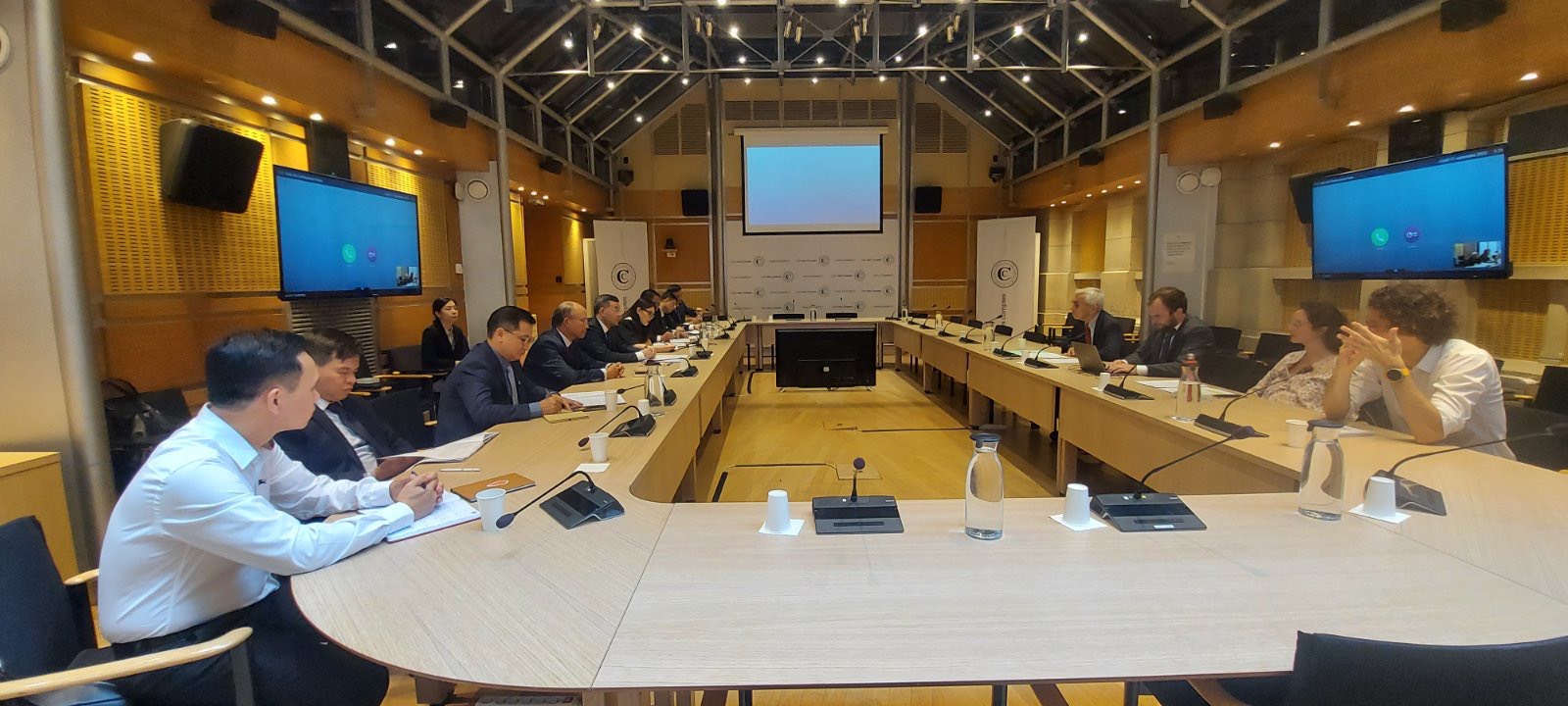
State Audit Institutions That Conduct Forensic Audits
To date, INTOSAI has not issued specific guidance on forensic auditing for state audit institutions. Dobrowolski (2020) argues that INTOSAI should develop standards and guidance for forensic auditing, and that if state audit institutions do not conduct forensic audits, INTOSAI’s strategic plan1 will be unlikely to succeed.
Literature on combating corruption and money laundering indicates that current auditing practices at state audit institutions are not truly effective.
State audit institutions that have confirmed that they investigate corruption include those of South Korea, India, the United States, Indonesia, the Philippines, Malaysia, Thailand, Brazil, Iran, Tanzania, and Zambia. However, these institutions have shared very limited experience in forensic auditing.
Specifically, South Korea’s state audit institution has an inspection function and a direct role in combating corruption, as well as an anti-corruption strategy.
India’s state audit institution plays a role in preventing corruption by strengthening accountability, financial governance, and internal controls. It also conducts forensic audits when fraud is suspected or detected.
In 2005, the United States’ state audit institution (GAO) established the Forensic Audit and Special Investigations Unit – FSI. Compared with other GAO audit units, FSI has stronger data analysis capabilities and uses more innovative techniques to detect financial crime.
Indonesia’s state audit institution may conduct forensic audits to clarify suspected criminal violations or losses of budget funds. Indonesia has established a forensic auditing task force. Its state audit institution may also appoint state auditors as expert witnesses in court proceedings concerning losses of budget funds.
The Philippines has established the Fraud Audit Office to audit Government agencies with potentially fraudulent transactions, protect government assets from misuse or loss, and report in response to growing public demand for integrity in the use of public funds and assets.
In Malaysia, forensic auditing forms part of conventional audits. If signs of fraud emerge during an audit, auditors conduct an investigation.
Thailand has also established a Forensic Audit Unit and conducts forensic audits.
Brazil’s state audit institution has the functions of preventing, investigating, and imposing penalties for corruption and misconduct involving public funds.
In Iran, the General Inspection Organization performs forensic auditing functions.
References:
ACCA (2024) Forensic auditing, available at: Forensic auditing | P7 Advanced Audit and Assurance | ACCA Qualification | Students | ACCA Global
Akenbor, C.O., Ironkwe, U. (2014) Forensic Auditing Techniques and Fraudulent Practices of Public Institutions in Nigeria, Journal of Modern Accounting and Auditing, 10(4), 451-459
Cicchella, D. (2005) Construction audit guide: overview, monitoring, and auditing, IIA Audit Foundation, Altamonte Springs, FL, USA
Crumbley, D.L., Heitger, L.E., Smith, G.S. (2007) Forensic and Investigative Accounting. CCH Group, Wolters Kluwer, Chicago
Dobrowolski, Z (2020) Forensic Auditing and Weak Signals: A Cognitive Approach and Practical Tips, European Research Studies Journal, Volume ΧΧΙΙΙ, Special Issue 2, 2020, pp. 247-259
Grippo, F.J., Ibex, J.W. (2003) Introduction to forensic accounting. The National Public Accountant, Washington D.C., USA
Assoc. Prof. Dr. Nguyen Thi Phuong Hoa – National Economics University
Link: https://sav.gov.vn/Pages/chi-tiet-tin.aspx?ItemID=219&l=Chuyenmuchuongtoiky
This is an automated translation. If you notice any errors, please contact the Department of Communications, National Economics University at phongtruyenthong@neu.edu.vn.