
Proposal to Give Hanoi Mechanisms to Redevelop Old Neighborhoods and Prevent Tragic House Fires. Prof. Dr. Hoang Van Cuong
18/07/2024 2024-07-18 3:45Proposal to Give Hanoi Mechanisms to Redevelop Old Neighborhoods and Prevent Tragic House Fires. Prof. Dr. Hoang Van Cuong
Proposal to Give Hanoi Mechanisms to Redevelop Old Neighborhoods and Prevent Tragic House Fires. Prof. Dr. Hoang Van Cuong
(PLO)- National Assembly deputy Hoang Van Cuong said Hanoi needs mechanisms and policies to invest in and redevelop run-down inner-city neighborhoods to prevent disastrous house fires like those seen recently.
Tomorrow (May 28, 2024), the National Assembly is scheduled to discuss, in a plenary session, several provisions of the draft revised Law on the Capital on which opinions still differ.
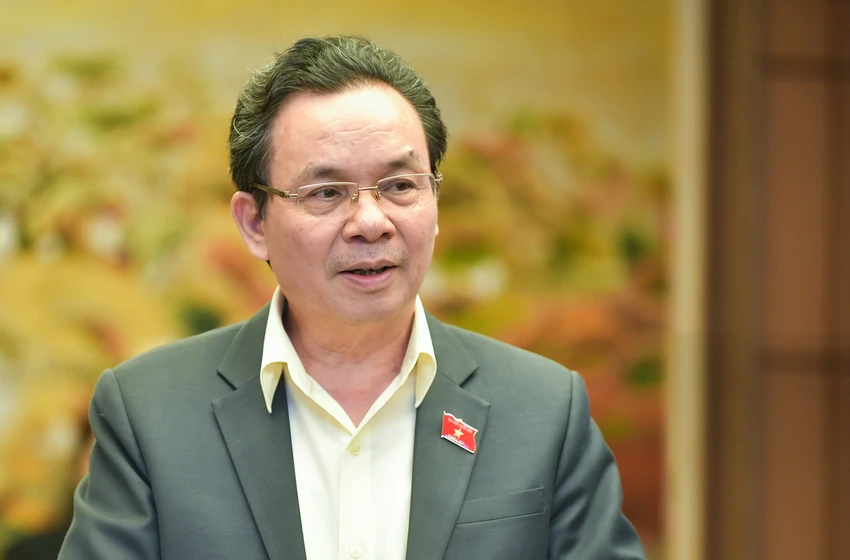
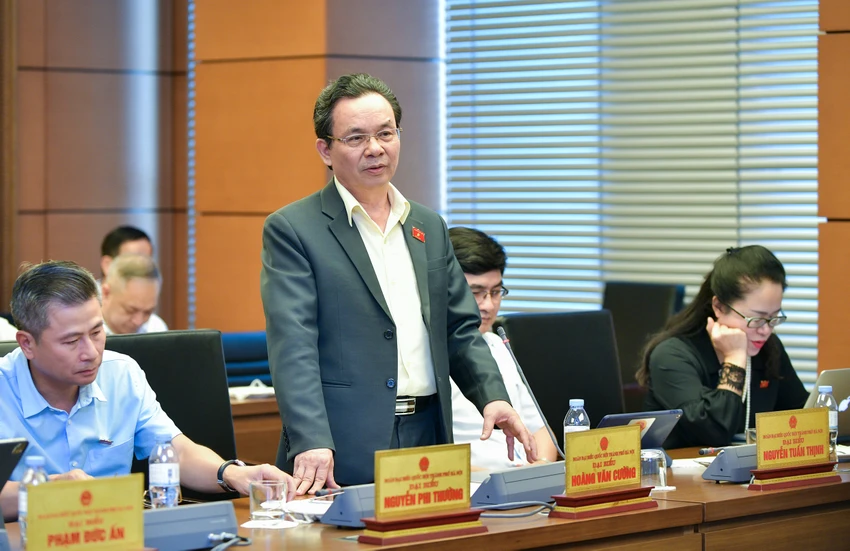
Deputy Hoang Van Cuong (Hanoi delegation) spoke to the press about several suggestions for the draft law.
A Legal Framework for the “Historic Inner City”
. Reporter: A recent fire in Hanoi killed 14 people. After visiting the scene, Tran Quang Phuong, Vice Chairman of the National Assembly, said it was a consequence of “villages becoming urban neighborhoods.” What suggestions do you have for this draft revised Law on the Capital to address these shortcomings?
+ Deputy Hoang Van Cuong: Clearly, we have all seen the shortcomings in Hanoi’s urban development. These shortcomings have also had deeply regrettable consequences whose full extent is difficult to predict.
I believe the revised Law on the Capital, as well as the capital’s plans, must focus on resolving today’s pressing problems.
For example, under previous regulations, many areas within the boundaries of what is called the “historic inner city” were subject to strict limits on renovation and investment. These limits on development investment have left many old apartment complexes unrenovated for years, while many so-called self-built homes fail to meet technical, safety, fire and explosion prevention requirements, as well as requirements for the living environment.
However, there is currently no mechanism to change these conditions. This draft Law on the Capital must therefore establish a legal framework clearly identifying areas that require preservation, such as the Old Quarter, areas with important architectural structures, and areas with historical elements…
For other areas, we must introduce investment and redevelopment models based on modern urban planning. We cannot allow the capital to develop spontaneously, with residents building as they see fit rather than following the standards and plans of major cities…
If we can do this, I believe we will resolve current pressing problems, such as unplanned urban development, residential areas that fail to meet standards, or areas of “shabby urban development” unworthy of the capital.
. In your view, what do we need to do to address fire prevention and firefighting in the winding alleyways we have today?
+ Clearly, many areas currently fail to meet requirements for fire safety, firefighting, search and rescue, and lack space for communal activities. We must therefore introduce renovation and transformation plans to turn these areas into some of the most advanced and modern developments in the world.
In my view, this is entirely achievable, because most of the areas we describe as chaotic and run-down are in the most central parts of the capital, in locations that could become places of high economic value if redeveloped well.
The issue here is that we need a legal framework permitting change, allowing us to use both underground and overhead space and establish a modern public infrastructure system. Particularly important is a high-capacity public transportation system, such as urban rail.
Both the plans and the Law on the Capital have therefore already prioritized the development of public transportation systems, particularly rail transportation.
If we can do this, densely populated areas of low-rise housing could be transformed into areas of very tall buildings. Space for daily activities and living space would then move upward, while ground-level space would be reserved for green and public spaces; underground space would be used for transportation and service development.
Planning Modern Developments in Central Hanoi
. But wouldn’t redeveloping old inner-city residential areas affect a great many households?
+ Yes. First, I believe we must change residents’ attitudes and habits in their everyday lives. Most people want to live in a house at ground level rather than an apartment, even though living conditions in apartments may be many times better than those at ground level.
Second, we must also change the mechanisms. Urban redevelopment is not only about addressing residents’ pressing concerns and improving their lives; it must also be recognized as a responsibility of the State and government authorities.
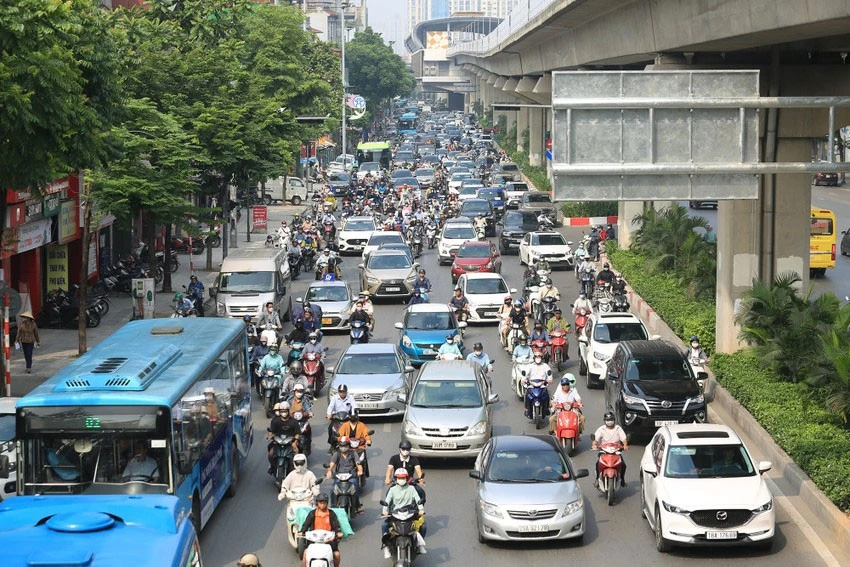
For example, the State must invest in public transportation infrastructure; otherwise, we cannot address the issue of population concentration. If we invest in an urban rail line with a station at a given location, many high-rise buildings can be built there, and traffic congestion will also be resolved.
Those willing to move from run-down houses to homes in high-rise buildings can relocate. Those who still want to live in ground-level houses can move to areas farther from the center.
We must plan the central areas as modern developments, creating open space for public and green activities in the city.
. With the Law on the Capital, how long do you predict it will take Hanoi to transform its appearance?
+ Developing the capital is a long-term process, and no precise timeframe can be given.
We have set a goal for Vietnam to become a high-income country by 2045, on a par with developed countries. The capital’s plan also sets a goal for Hanoi to become one of the region’s leading capitals by 2050, on a par with the capitals of advanced countries around the world.
Clearly, that is the roadmap we have set, but whether we achieve it depends on how we make use of the mechanisms, regulations, and other provisions described as special and exceptional for the capital.
This also requires not only very strong determination from Hanoi’s authorities in carrying out the transformation, but also a massive mobilization of resources from all of society, so that we can create a truly transformed image for the country, on a par with developed countries by 2045.
This is an automated translation. If you notice any errors, please contact the Department of Communications, National Economics University at phongtruyenthong@neu.edu.vn.