Outlining a Roadmap Toward Sustainable Tourism in Vietnam. Prof. Dr. Ngo Thang Loi
21/08/2024 2024-08-21 7:55Outlining a Roadmap Toward Sustainable Tourism in Vietnam. Prof. Dr. Ngo Thang Loi
Outlining a Roadmap Toward Sustainable Tourism in Vietnam. Prof. Dr. Ngo Thang Loi
(KTSG) – Opposition to “excessive tourism development” in some countries presents a valuable opportunity that Vietnam needs to study and capitalize on.
Overtourism Is a Trend
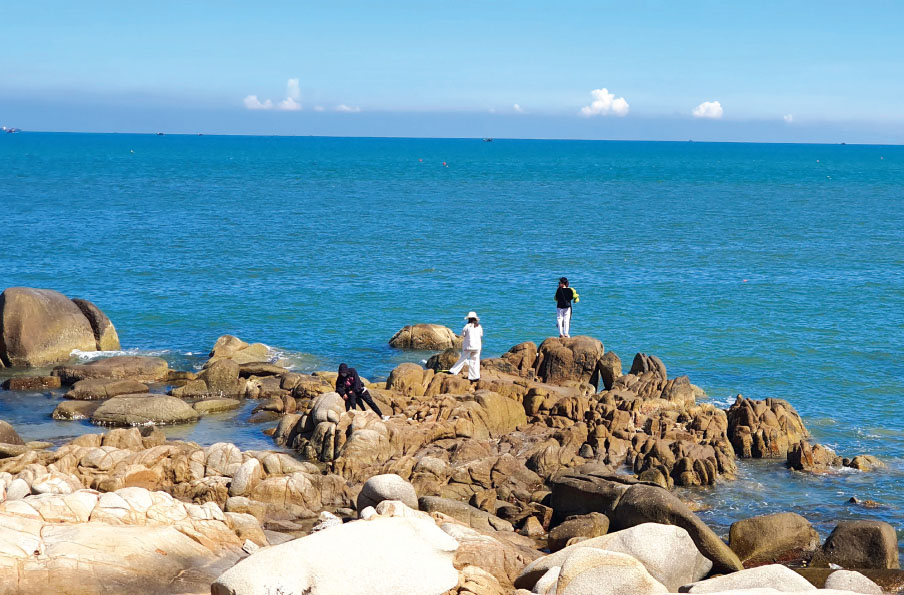
“Overtourism” is occurring at some famous destinations and will continue in the future as demand for travel increases. Economic development strategies in countries around the world also position tourism as a spearhead sector, aiming to increase tourism’s share of the economy’s total GDP. Both current data and forecasts indicate that as many as 80% of all tourists will visit just 10% of the world’s tourist destinations. Travel demand is rising but is concentrated in a very small number of destinations in each country—those that are famous worldwide.
These arguments explain tourism overcrowding at 10% of the world’s tourist destinations. The United Nations World Tourism Organization (UNWTO) has reported that transport-related carbon emissions from tourism are projected to increase by 25% by 2030 compared with 2016 levels. Local residents’ living environments are also significantly affected. More and more businesses want to invest in tourism, building resorts, hotels and other facilities, driving housing prices ever higher and leaving residents unable to afford homes. Public places are marked by long lines of tourists, crowded beaches and excessive noise. This situation leads to tourists and rental properties outnumbering local residents, gradually eroding traditional characteristics. Moreover, overtourism places considerable pressure on conservation efforts and even risks altering heritage sites.
With tourism overcrowding affecting 10% of all tourist destinations, a trend of “opposition to overtourism” inevitably emerges among local authorities or residents. Such action is necessary to restore sustainable tourism development in these localities and countries.
Vietnam Can Seize the Opportunity
In the economic development strategy through 2030, tourism is identified as a growth pole and a leading economic sector. In 2023, tourism accounted for 6.6% of GDP. In 2024, the sector set targets of welcoming 17–18 million international visitor arrivals, serving 110 million domestic tourist trips and generating approximately VND 840,000 billion in total tourism revenue. Under the targets for 2030, tourism will account for as much as 13–14% of the economy’s total GDP. Investment in tourism development has therefore become a top priority in development policies.
Another advantage is Vietnam’s increasingly positive image among international audiences. For four consecutive years, from 2019 to 2022, Vietnam was named the “World’s Leading Heritage Destination” at the World Travel Awards.
Viewed from this positive perspective, opposition among residents of some countries to “excessive tourism development” presents a valuable opportunity that we need to study and capitalize on. This would enable Vietnam to continue attracting the attention of international tourists who are turning away from destinations subject to restrictions, drawing international visitor flows to attractive destinations in Vietnam.
However, to truly seize this opportunity, we need to consider how to strengthen tourism promotion efforts further so that Vietnamese tourism can reach major markets.
At the same time, Vietnam’s image must be enhanced further. In particular, we will need to build Vietnam’s image as a destination that offers tourists abundant joy, happiness and comfort.
The Path to Sustainable Tourism Development in Vietnam
Under the definition in the 2017 Law on Tourism, sustainable tourism development is tourism development that simultaneously meets socioeconomic and environmental requirements, harmonizes the interests of stakeholders participating in tourism activities and does not compromise the ability to meet tourism needs in the future.
First, Vietnam needs to develop famous, distinctive tourist destinations of international stature, as many countries that prioritize tourism as an economic sector and growth pole have done. To achieve this, we need to:
(i) Conduct a comprehensive inventory of tourism resources, then assess, classify and rank them, and establish tourism regions and destinations based on their distinctive tourism advantages to guide plans for sustainable, effective investment, construction and management of these resources;
(ii) Develop branded tourism products in these tourism regions and destinations. Accordingly, Vietnam’s branded tourism products must offer novelty and match tourists’ preferences amid rapidly changing demand. They must incorporate added value, feature innovative forms, reflect distinctive local and regional characteristics, and be capable of joining national tourism networks, with the further aim of joining regional or global tourism networks;
(iii) Alongside products and destinations whose brands are built primarily on the use of existing resources, develop a wide range of complementary products to attract tourists, stimulate their spending, increase local revenue and create opportunities for return visits.
The next step is to implement a professional strategy for promoting tourism regions, destinations and products.
At the same time, favorable conditions must be ensured for developing distinctive tourism regions, destinations and products. Specifically, modern, integrated infrastructure providing access to destinations must be established, with security, safety and a clean environment ensured. Practices that damage a destination’s image, such as soliciting tourists, street vending, fraud and pressuring tourists, must be eliminated, particularly during peak seasons.
Finally, regarding development management, the following issues need to be addressed effectively:
(i) Decentralize management, avoid conflicts of economic interest among economic actors and sectors, and adopt a long-term vision to prevent the destruction or misuse of tourism resources and negative impacts on sustainable tourism development;
(ii) Based on the master plan, prepare detailed plans for each key tourism area, destination, cluster and region. Pay attention to properly addressing the interests of the State, workers and businesses to build confidence and attract resources from across society to improve existing tourism areas, destinations and clusters of regional and international stature, thereby generating appeal and spillover effects;
(iii) Develop genuinely enabling and appropriate mechanisms, policies and legal frameworks that ensure balance and harmony between tourism development, environmental protection and the preservation of traditional cultural values.
To prevent potential “opposition to excessive tourism development,” specific regulations need to be prepared and issued from the outset for tourism regions and destinations experiencing overcrowding or opposition from local residents. These include: (i) encouraging more trips during the low season, limiting visitor numbers where possible and introducing stricter regulations for the sector; (ii) actively promoting alternative, less-visited destinations to redirect tourists, with an emphasis on developing a clear strategy and consulting local residents about what they want or need from tourism; (iii) introducing regulations to levy taxes or fees at overcrowded destinations, or increasing parking fees during peak seasons, raising admission prices and managing entry and exit flows by time slot; (iv) promoting slow tourism or sustainable tourism to encourage tourists to immerse themselves in local culture, cuisine and traditions while reducing tourism’s negative impacts on the environment and local communities.
Slow tourism also encourages more responsible experiential activities, such as actively using public transportation, being mindful of nature conservation and refraining from abusing animals.
Prof. Dr. Ngo Thang Loi – Senior Lecturer at National Economics University (NEU)
Link: https://thesaigontimes.vn/phac-thao-lo-trinh-huong-toi-du-lich-ben-vung-cua-viet-nam/
This is an automated translation. If you notice any errors, please contact the Department of Communications, National Economics University at phongtruyenthong@neu.edu.vn.