
Diendandoanhnghiep.vn: Excise Tax on Gasoline No Longer Appropriate. Interview With Assoc. Prof. Dr. Pham The Anh
06/08/2024 2024-08-06 8:52Diendandoanhnghiep.vn: Excise Tax on Gasoline No Longer Appropriate. Interview With Assoc. Prof. Dr. Pham The Anh
Diendandoanhnghiep.vn: Excise Tax on Gasoline No Longer Appropriate. Interview With Assoc. Prof. Dr. Pham The Anh
Although the regulatory authorities have explained the imposition of excise tax on gasoline, many argue that this practice is no longer appropriate…
In response to proposals from the Vietnam Chamber of Commerce and Industry (VCCI) and ministries and agencies to abolish excise tax on gasoline, the Ministry of Finance affirmed that the current collection of excise tax on this product is appropriate.
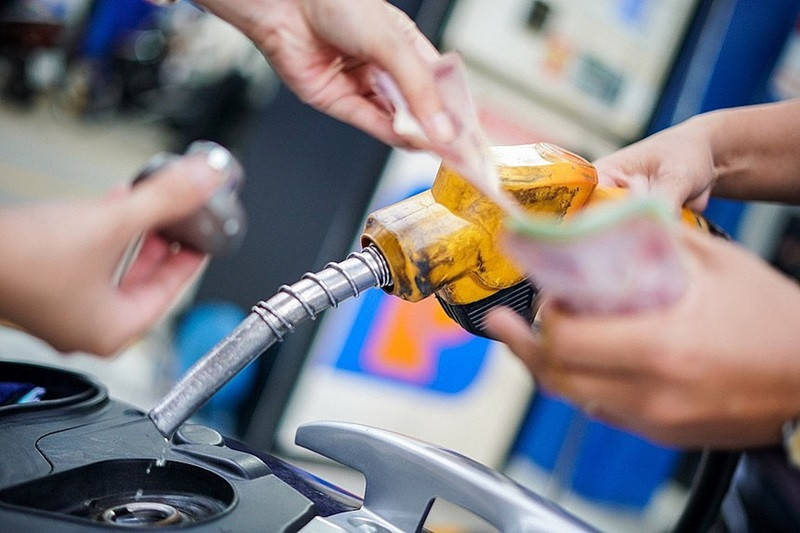
The ministry said that, under current regulations, excise tax applies only to gasoline of various types, not to oil products. The excise tax rate is 10% for gasoline, 8% for E5 gasoline and 7% for E10 gasoline. The Law on Excise Tax does not provide for tax reductions or exemptions for goods and services subject to excise tax. Adjustments to excise tax rates fall within the authority of the National Assembly and must therefore be submitted to the National Assembly for consideration and decision.
According to the Ministry of Finance, excise tax is levied on goods and services whose consumption the State discourages (tobacco, liquor, beer, etc.), those that should be consumed sparingly (fossil-based gasoline), and groups of goods and services consumed by high-income earners whose income needs to be regulated through taxation (cars, aircraft, yachts, golf, etc.).
As gasoline is a nonrenewable fossil fuel that must be used sparingly, most countries levy excise tax on it, including France, Germany, Italy, the United Kingdom, South Korea, Australia, Thailand, Singapore, China, Cambodia and Laos. In Vietnam, gasoline has been subject to excise tax since 1995.
“This provision is consistent with the objectives of excise tax and with international practice. Moreover, with environmental pollution and climate change posing global challenges, and given the Vietnamese Government’s commitment at COP26 to achieve net-zero emissions by 2050, the current collection of excise tax on gasoline, alongside other measures, is appropriate and contributes to reducing emissions,” the Ministry of Finance emphasized.
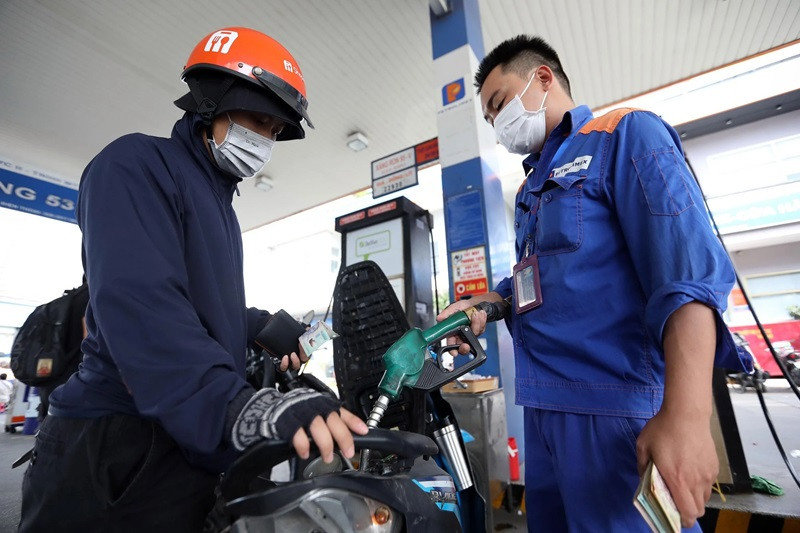
However, despite the Ministry of Finance’s explanations, many experts argue that imposing excise tax on gasoline is no longer appropriate because gasoline is essential for production and consumption, rather than a luxury good whose consumption should be restricted. As for its environmental impact, an environmental tax is already in place. Abolishing excise tax on this product should therefore be considered.
According to Assoc. Prof. Dr. Pham The Anh, Dean of the Faculty of Economics at National Economics University (NEU), imposing excise tax on gasoline products is no longer appropriate because they are not luxury goods. As for environmental pollution, gasoline and oil products have long been subject to environmental protection tax. Excise tax is levied on goods and services whose consumption the State discourages or that should be consumed sparingly.
Using the reduction of environmental pollution as a basis for imposing excise tax on gasoline is fundamentally incorrect and unsound because Vietnam currently has no alternative to this fuel. Moreover, gasoline and oil products cannot be described as nonessential goods in order to levy excise tax when they are already subject to environmental protection tax, as excise tax applies only to luxury goods whose consumption is discouraged.
“There is therefore no reason to impose excise tax on gasoline, whether its price falls below VND 20,000 per liter or rises above VND 30,000 per liter,” the expert said.
Meanwhile, trade expert Vu Vinh Phu said that excise tax on gasoline is unreasonable because gasoline already bears environmental protection tax and cannot be treated like liquor, beer or tobacco. In addition, businesses and people are currently facing considerable difficulties, and businesses’ price competitiveness is very weak because of rising input costs, while taxes and fees account for a very high 17–20% of gasoline and oil prices.
“If the argument is that excise tax must be imposed to safeguard revenue, in practice, policies that reduce taxes and fees greatly improve businesses’ competitiveness while also helping consumers increase spending by enabling them to buy goods at more reasonable prices,” the expert said.
He also argued that reducing excise tax would stimulate demand, encouraging businesses to increase production and profits, thereby increasing their tax payments and benefiting the state budget more than before. This is also the policy of easing the burden on people and businesses that we often discuss…
On this issue, some had previously noted that amending tax policies has never been easy. Abolishing, reducing or imposing a tax on any product always has two sides: some benefit, while others are affected by the adjustment. In this particular case, gasoline is an essential product used throughout society, making it all the more necessary to conduct a thorough analysis and develop persuasive arguments based on practical factors and legal provisions to reach an appropriate decision.
GIA NGUYEN
Link: https://diendandoanhnghiep.vn/ap-thue-tieu-thu-dac-biet-voi-xang-khong-con-phu-hop-10140000.html
This is an automated translation. If you notice any errors, please contact the Department of Communications, National Economics University at phongtruyenthong@neu.edu.vn.



