National Scientific Conference on “Efficient and Sustainable Management, Exploitation, and Use of Resources in an Integrating Economy”
12/11/2024 2024-11-12 21:33National Scientific Conference on “Efficient and Sustainable Management, Exploitation, and Use of Resources in an Integrating Economy”
National Scientific Conference on “Efficient and Sustainable Management, Exploitation, and Use of Resources in an Integrating Economy”
This morning, November 12, 2024, National Economics University (NEU), in collaboration with Hanoi University of Mining and Geology, held a national scientific conference on “Efficient and Sustainable Management, Exploitation, and Use of Resources in an Integrating Economy”.
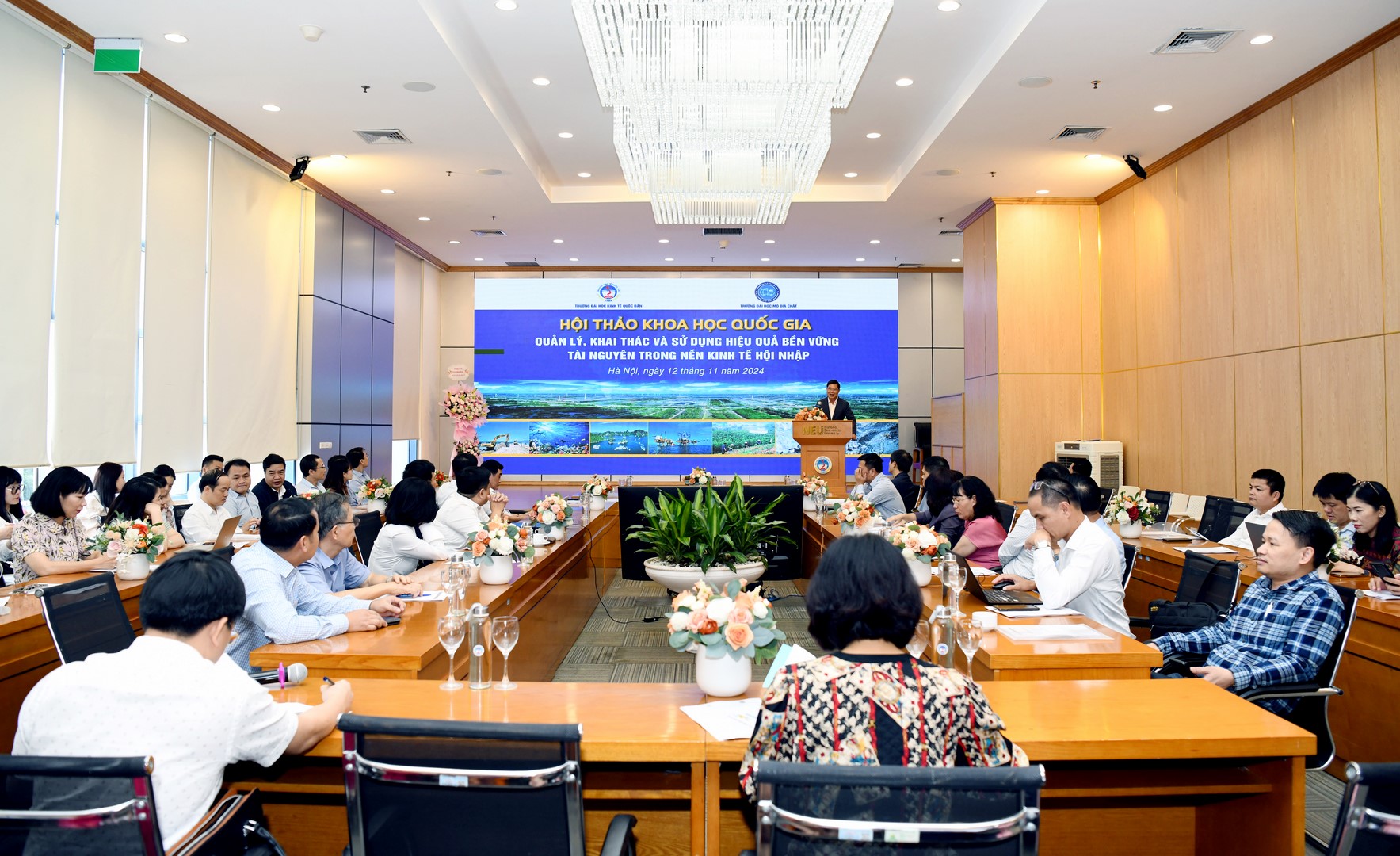
An overview of the conference
External delegates attending the conference included Nguyen Quang Thuc and Nguyen Quang Huy, Vietnam National Oil and Gas Group; and Dr. Nguyen Dinh Dap, Information Center, Ministry of Natural Resources and Environment. Representing Hanoi University of Mining and Geology were Prof. Dr. Tran Thanh Hai, Rector; and Assoc. Prof. Dr. Nguyen The Vinh, Party Committee Secretary, Faculty of Oil and Gas.
Representing NEU were Prof. Dr. Pham Hong Chuong, President; Assoc. Prof. Dr. Nguyen Thanh Hieu, Vice President; and Assoc. Prof. Dr. Ngo Thi Phuong Thao, Dean of the Faculty of Real Estate and Resource Economics. Also attending were representatives of the leadership of departments, faculties, institutes, and centers at both universities, along with experts, scientists, and managers in resource management, exploitation, and use from regulatory agencies, research institutes, universities, and academies.
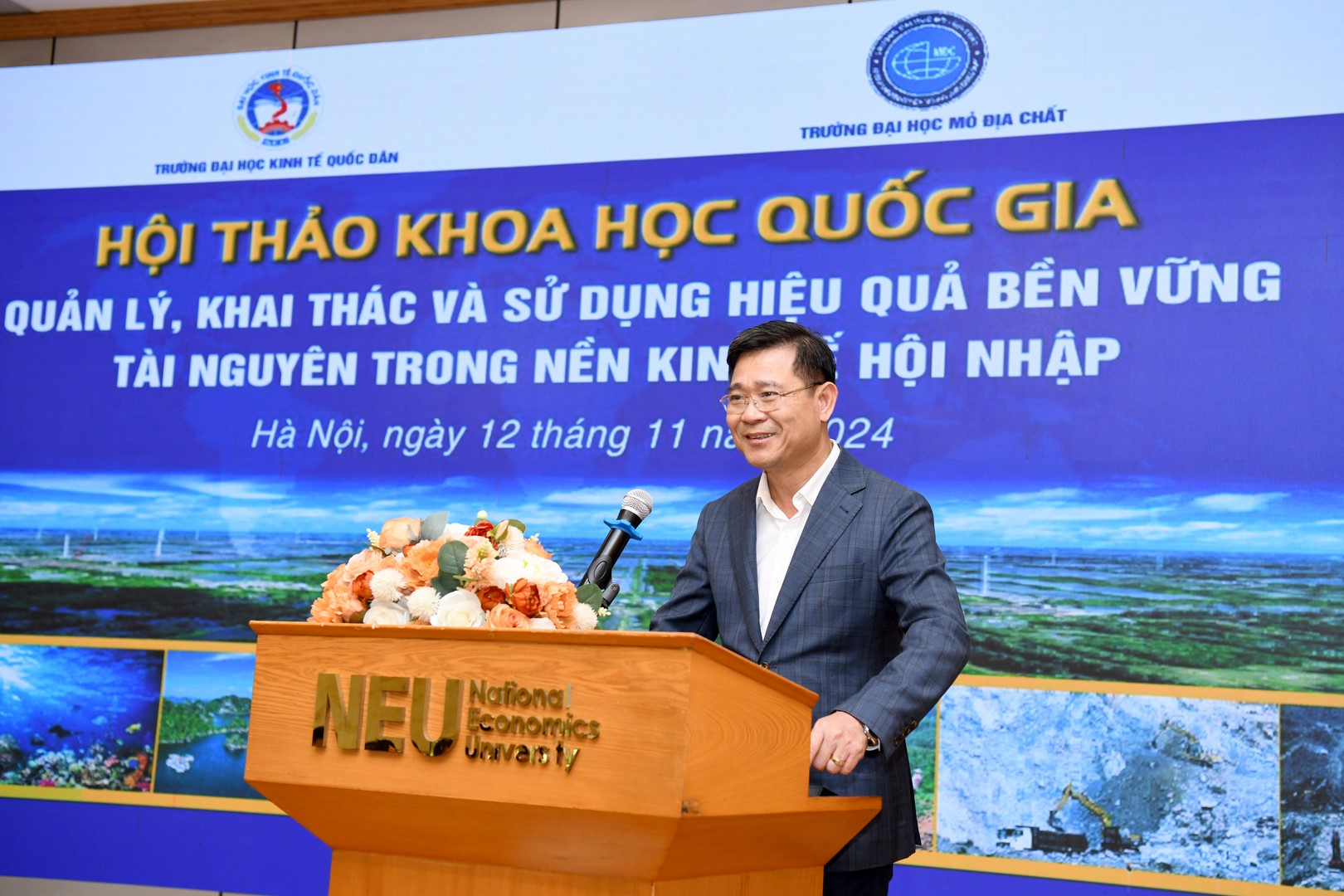
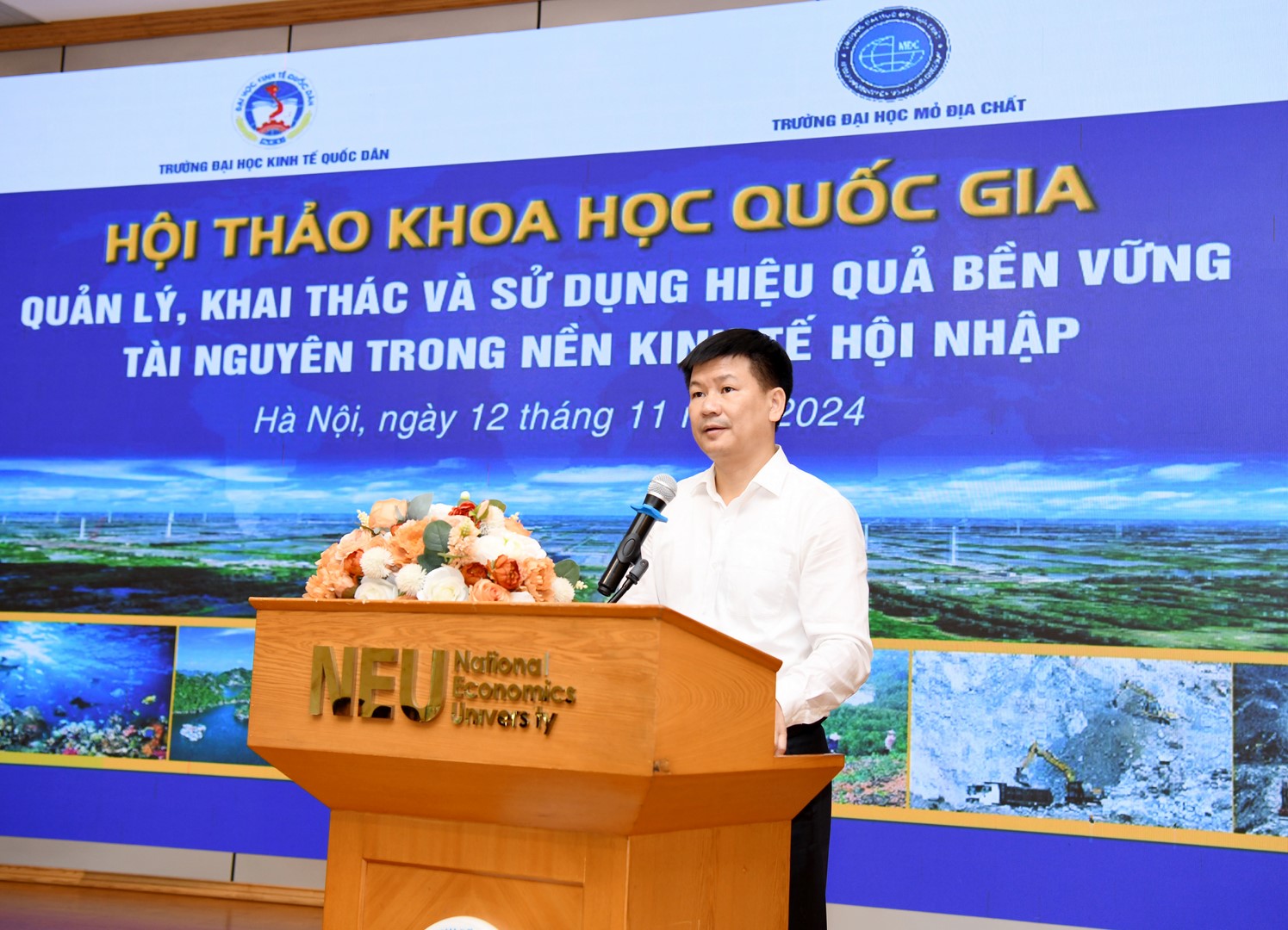
Prof. Dr. Tran Thanh Hai, Rector of Hanoi University of Mining and Geology, delivers the opening remarks at the conference.
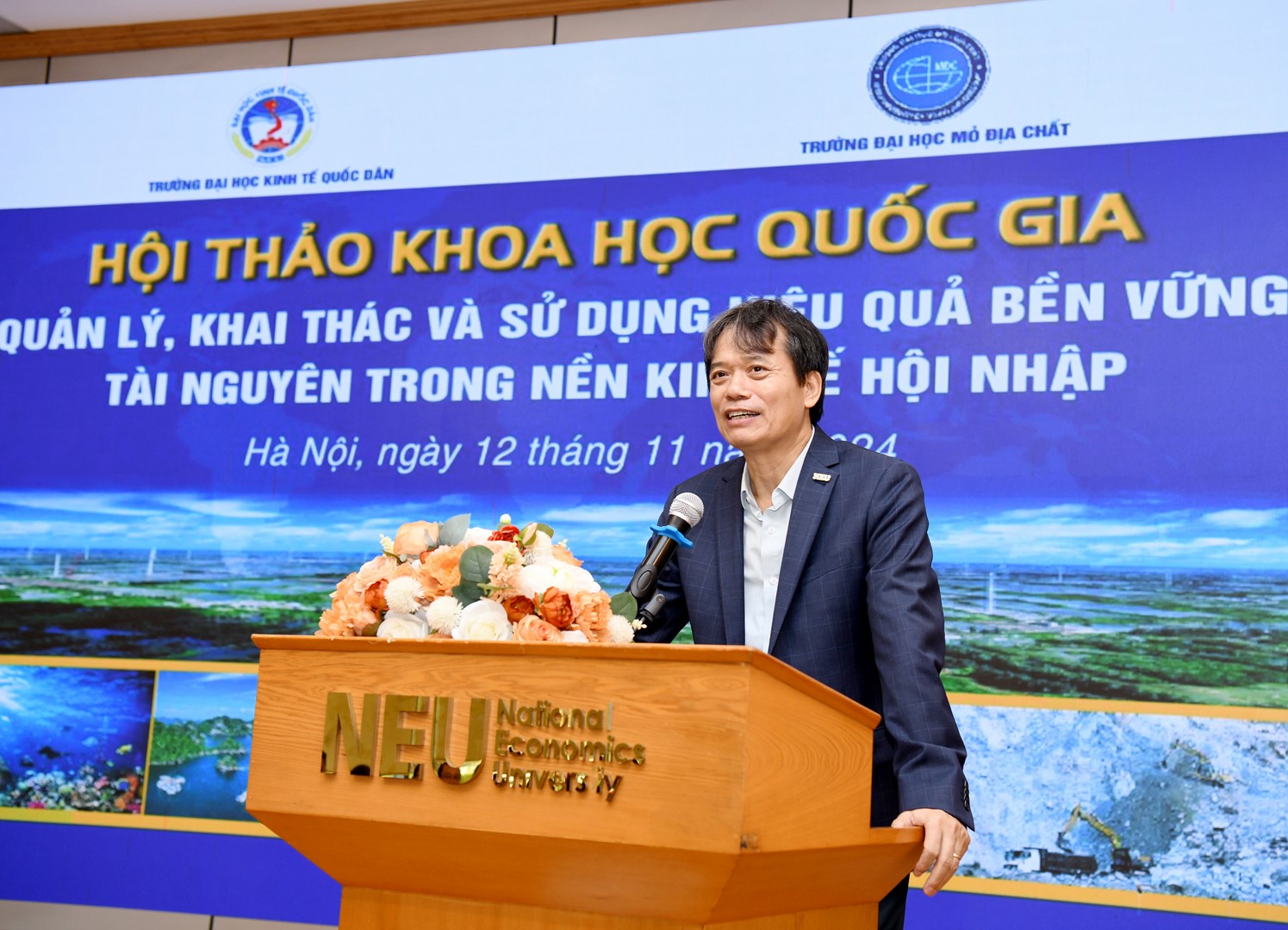
Prof. Dr. Pham Hong Chuong, President of NEU, delivers the introductory report at the conference.
On behalf of the University leadership, Prof. Dr. Pham Hong Chuong warmly welcomed delegates, managers, experts, scientists, lecturers, and researchers from ministries, sectoral agencies, localities, universities, and research institutes to the conference on “Efficient and Sustainable Management, Exploitation, and Use of Resources in an Integrating Economy.”
In his introductory report, Prof. Pham Hong Chuong stated that the Socio-Economic Development Strategy for 2021–2030 at the 8th National Party Congress acknowledged that economic growth to date had consumed the country’s resources at an unsustainable rate, leading to depletion. Accordingly, the Government has begun adjusting relevant plans and legal frameworks. These include Vietnam’s new Green Growth Strategy, led by the Ministry of Planning and Investment; the updated Nationally Determined Contribution (NDC), led by the Ministry of Natural Resources and Environment (MONRE); Power Development Plan VIII (PDP8); and the Renewable Energy Development Strategy for 2015–2030, with a vision to 2050, approved by the Government in September 2015, along with specific policies. Numerous policy mechanisms and legal frameworks continue to be refined, including the 2024 Land Law, the 2020 Law on Environmental Protection, the 2015 Law on Marine and Island Resources and Environment, and the draft Law on Geology and Minerals…
Against this backdrop, NEU and Hanoi University of Mining and Geology jointly organized this conference to provide a forum for academic exchange and the sharing of knowledge and experience among scientists, experts, managers, researchers, and lecturers at relevant universities and research institutes.
On behalf of the Conference Organizing Committee and NEU, Prof. Pham Hong Chuong thanked the experts, scientists, managers, researchers, lecturers, PhD candidates, master’s students, and students interested in the management and efficient use of Vietnam’s natural resources for participating and sharing their ideas and views.
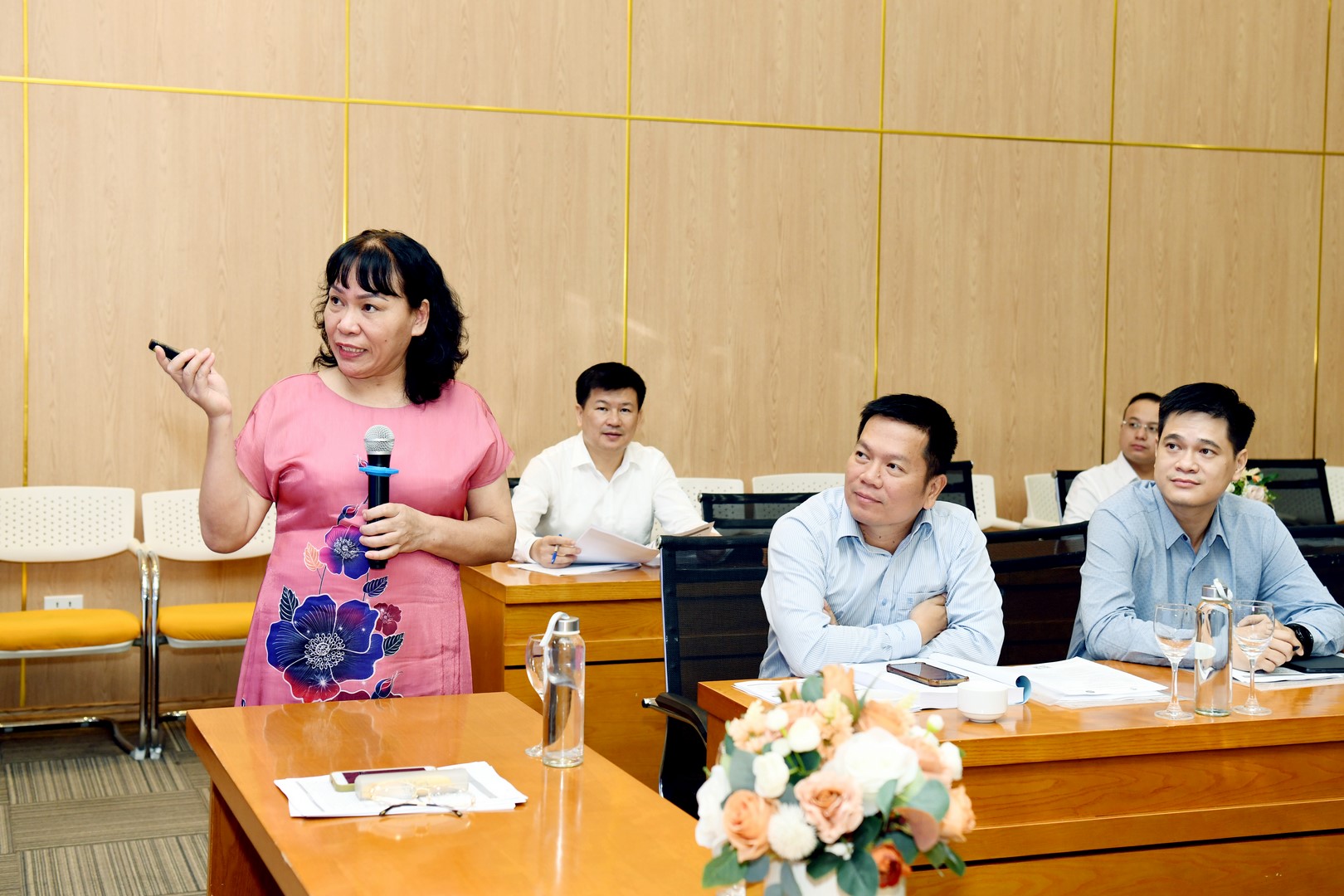
Assoc. Prof. Dr. Vu Thi Minh, Faculty of Real Estate and Resource Economics, NEU, presents a paper on trends in the exploitation and use of natural resources and natural resource products and services in the context of international integration.
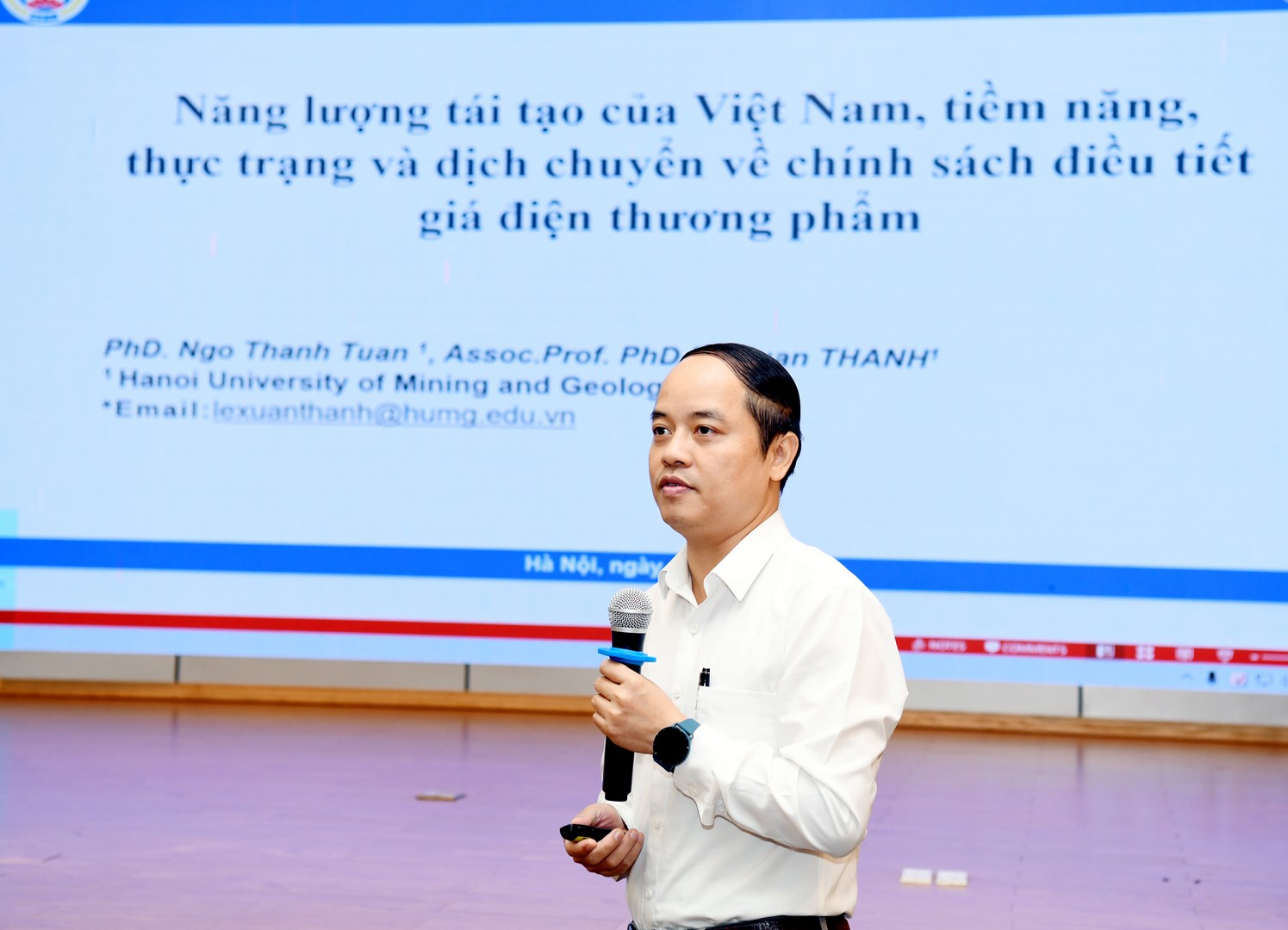
Assoc. Prof. Dr. Le Xuan Thanh, Hanoi University of Mining and Geology, presents a paper on Vietnam’s renewable energy: potential, current status, and shifts in commercial electricity price regulation policy.
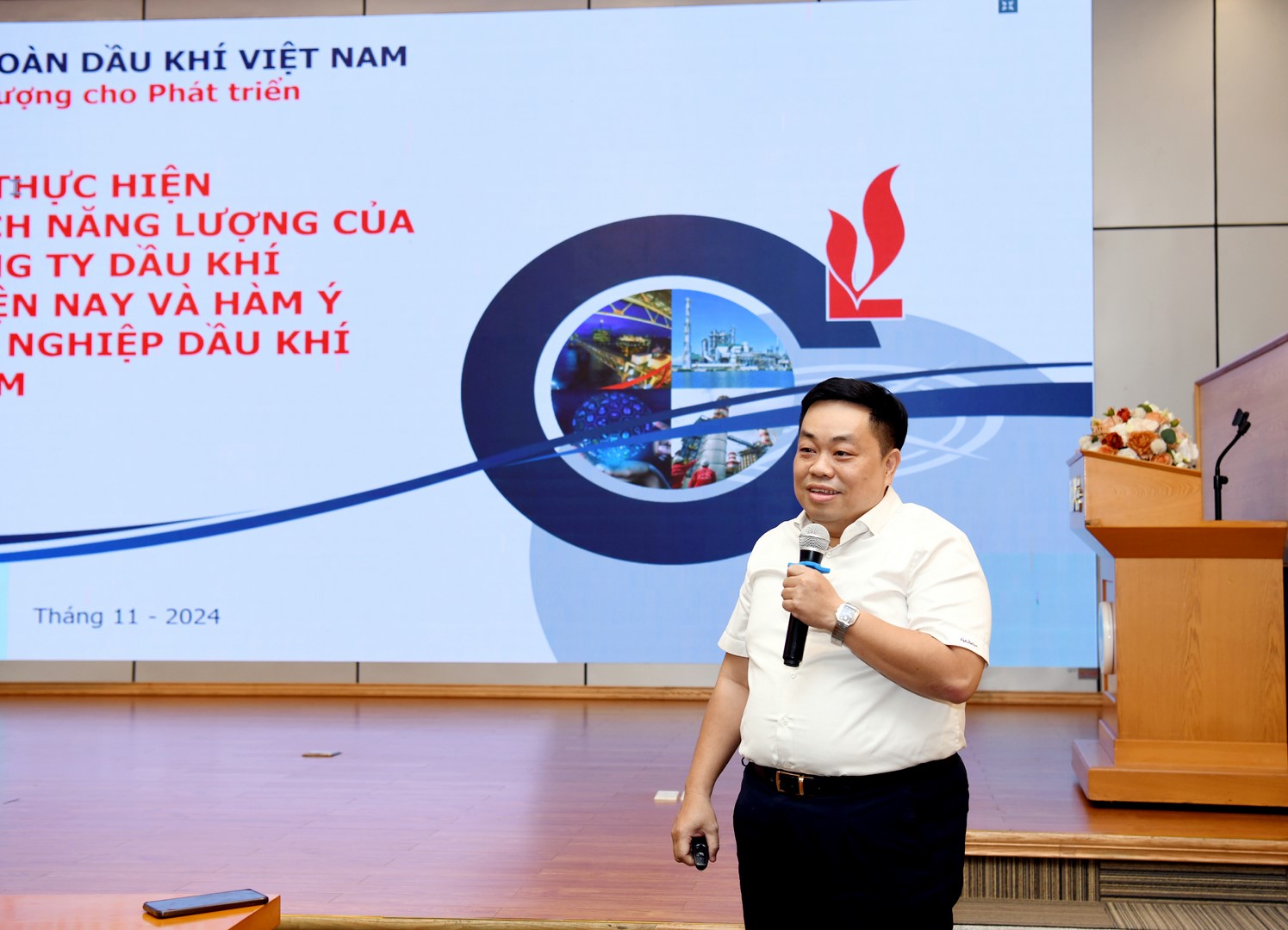
Nguyen Quang Huy, Head of the Department of Environmental Protection, presents a paper on the current implementation of the energy transition at selected international oil and gas companies and implications for oil and gas enterprises in Vietnam.
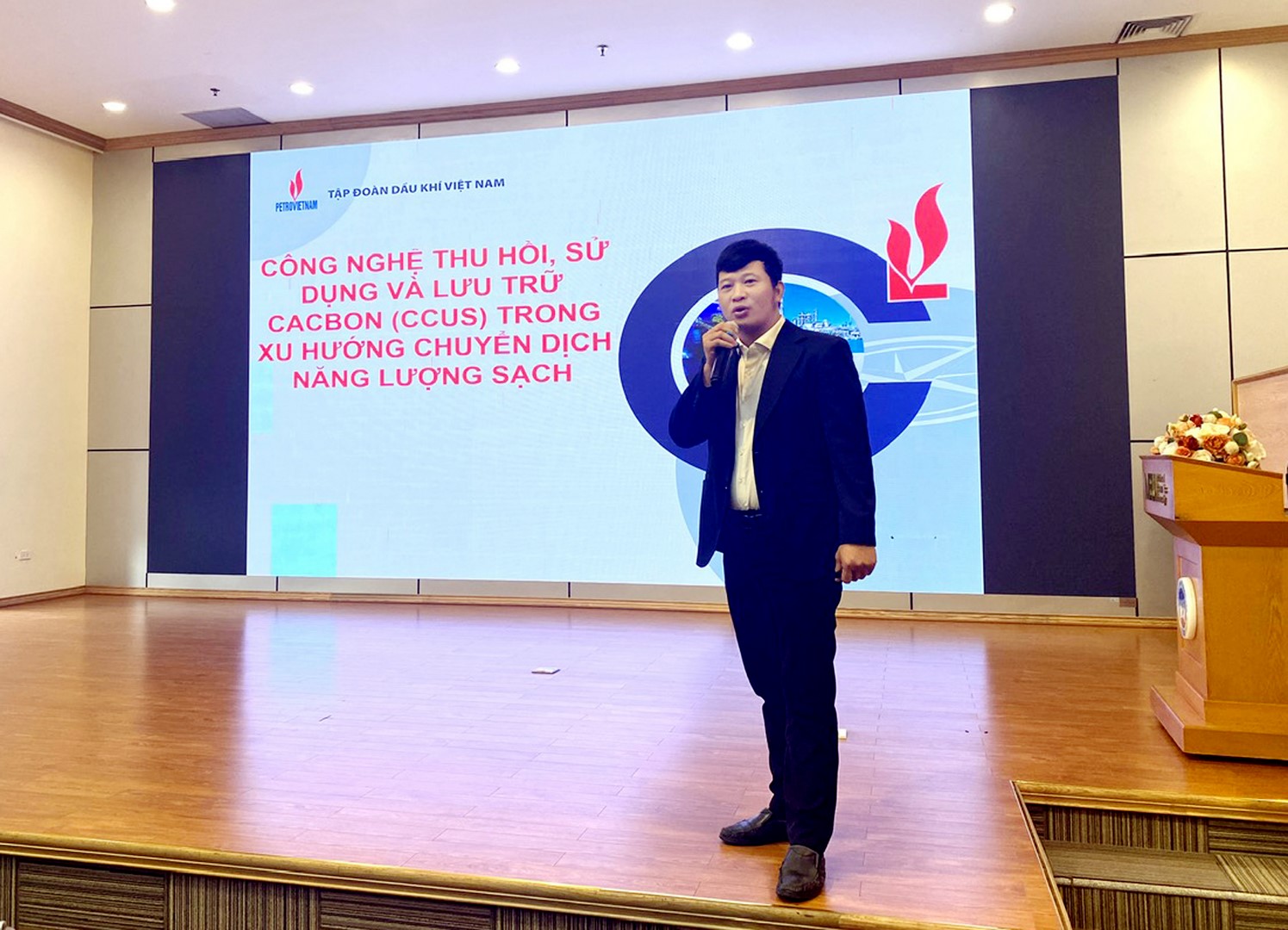
Dr. Le Dang Thuc, Production Division, Vietnam National Oil and Gas Group, presents a paper on carbon capture, utilization, and storage technology in the transition to clean energy.
Through 44 papers selected by the Conference Organizing Committee from the submissions received, scientists, experts, managers, university researchers and lecturers, and others offered diverse perspectives and solutions to improve the management and efficient use of land, water, forest, marine, and mineral resources, among others. Many contributions discussed green transformation and digital transformation in the exploitation, use, and management of natural resources to ensure that finite natural resources are allocated and used economically, efficiently, and equitably over the long term.
Natural resources are currently an important pillar of Vietnam’s economy, accounting for 16.3% of gross domestic product. Vietnam benefits greatly from its natural resources. Its forests are a valuable resource because of their biodiversity and flora and fauna. With a network of 3,450 rivers and streams measuring at least 10 km in length, Vietnam is considered to have relatively abundant water resources, including both surface water and groundwater. With a coastline stretching 3,260 km from north to south and 28 of its 63 provinces and cities located along the coast, Vietnam is considered to have significant advantages and potential in marine and island resources. Vietnam also ranks among the world’s leaders in reserves and production of several important minerals, including four main natural resources: coal, bauxite, oil, and natural gas. Vietnam is home to the world’s third-largest coal-fired power plant, after China and India. Vietnam is a leading global producer of several minerals, ranking 11th in bauxite production, second in tungsten production, and third in cement production in 2023. It is also estimated to have the world’s second-largest rare earth reserves. Its unique geographical location and abundant resources make Vietnam an excellent destination for renewable energy investment. Vietnam has some of the greatest wind energy potential in Southeast Asia and ranks among the world’s top 12 countries for offshore wind energy potential. In 2021, Vietnam ranked 31st on the list of countries with high attractiveness for renewable energy investment and deployment opportunities.
However, the degradation of natural resources is worsening because they have not been managed, used, and exploited efficiently. Natural resource depletion is currently three times the level of the late 1990s. This is driven by population growth and demand for natural resource consumption to meet economic and social needs. In the future, to expand economic development, Vietnam will need to move away from an inefficient approach in which resource use per unit of output is much higher than in other countries toward a development model with more efficient and sustainable resource management.
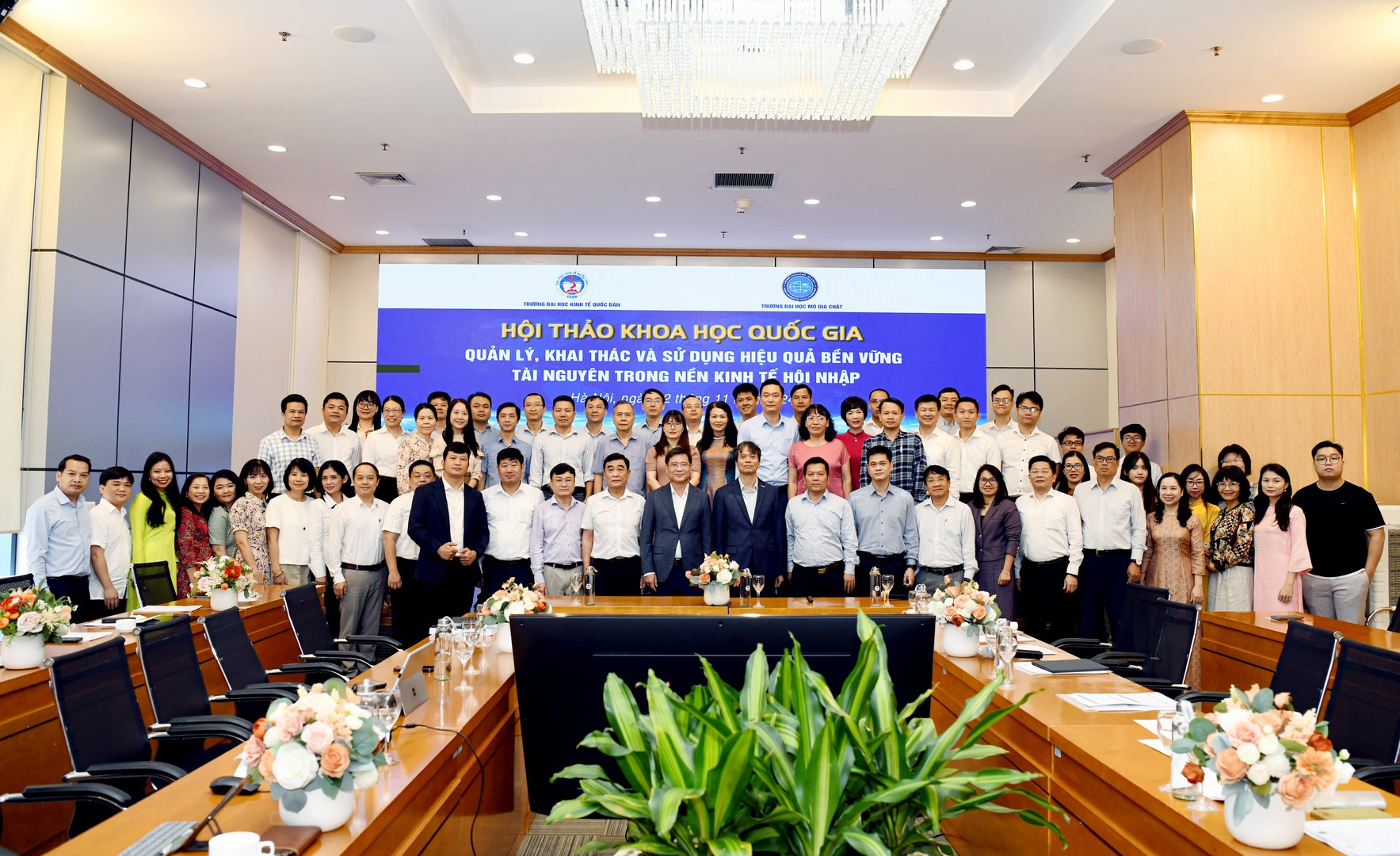
Conference delegates pose for a commemorative group photo
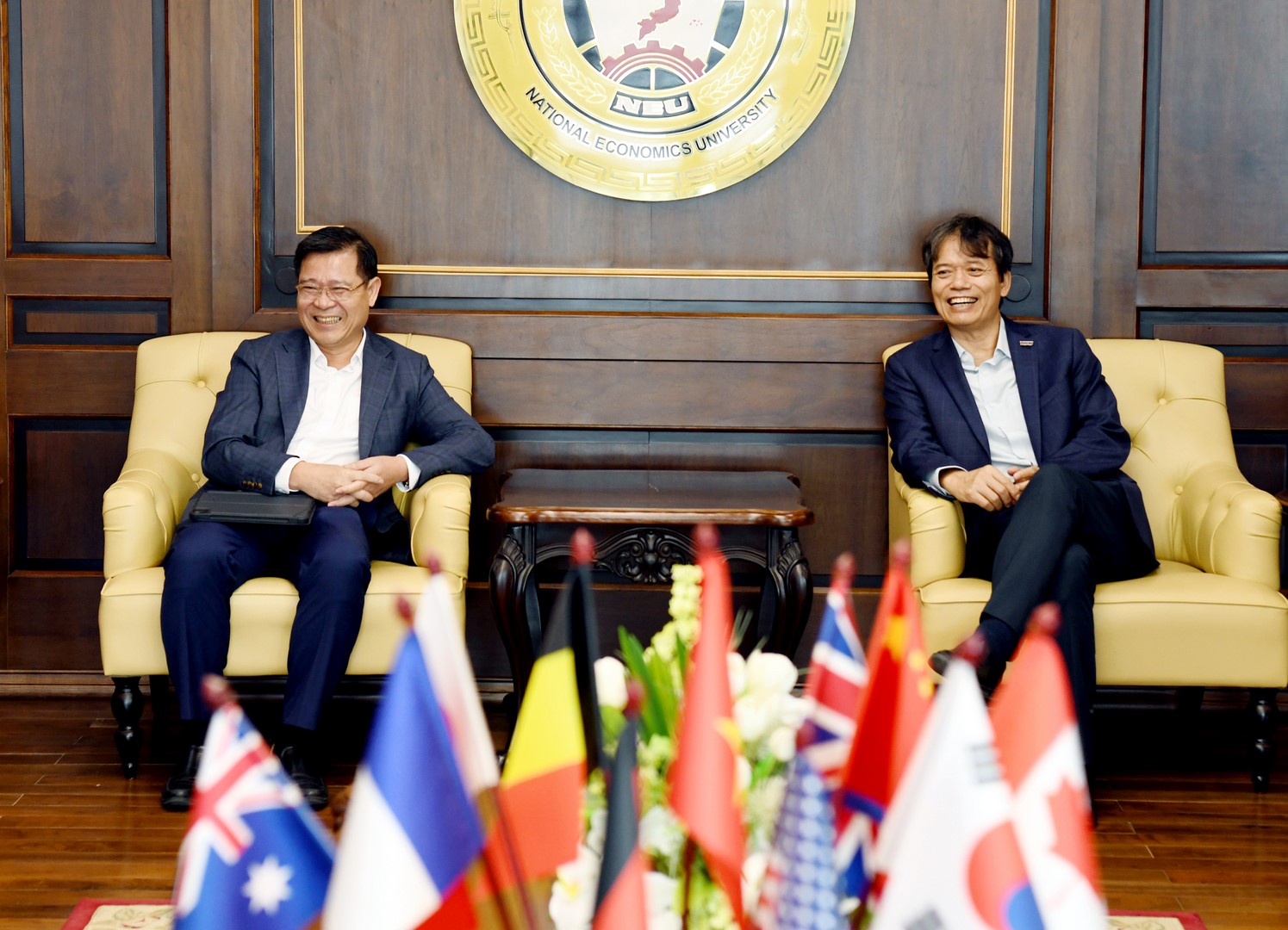
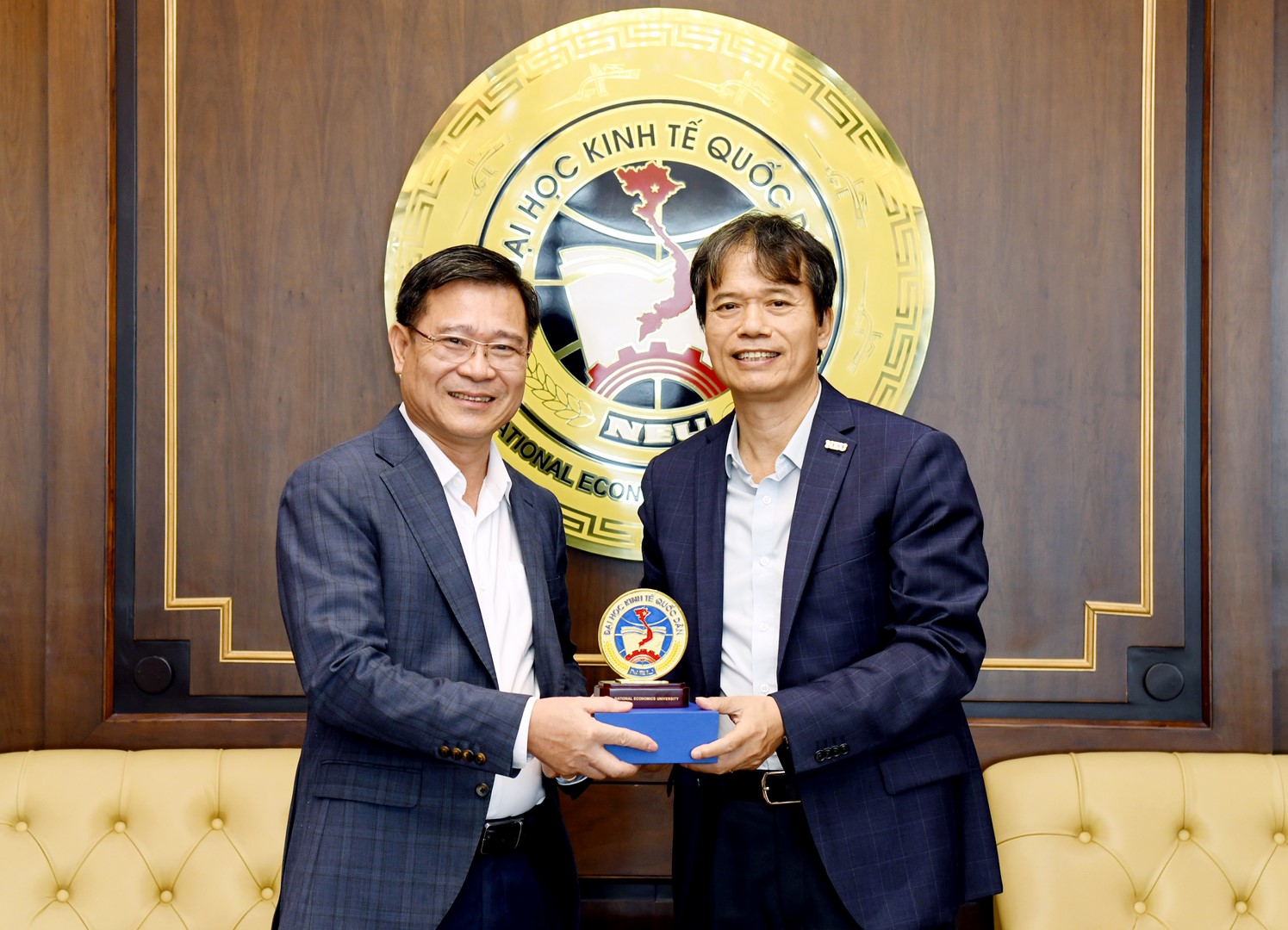
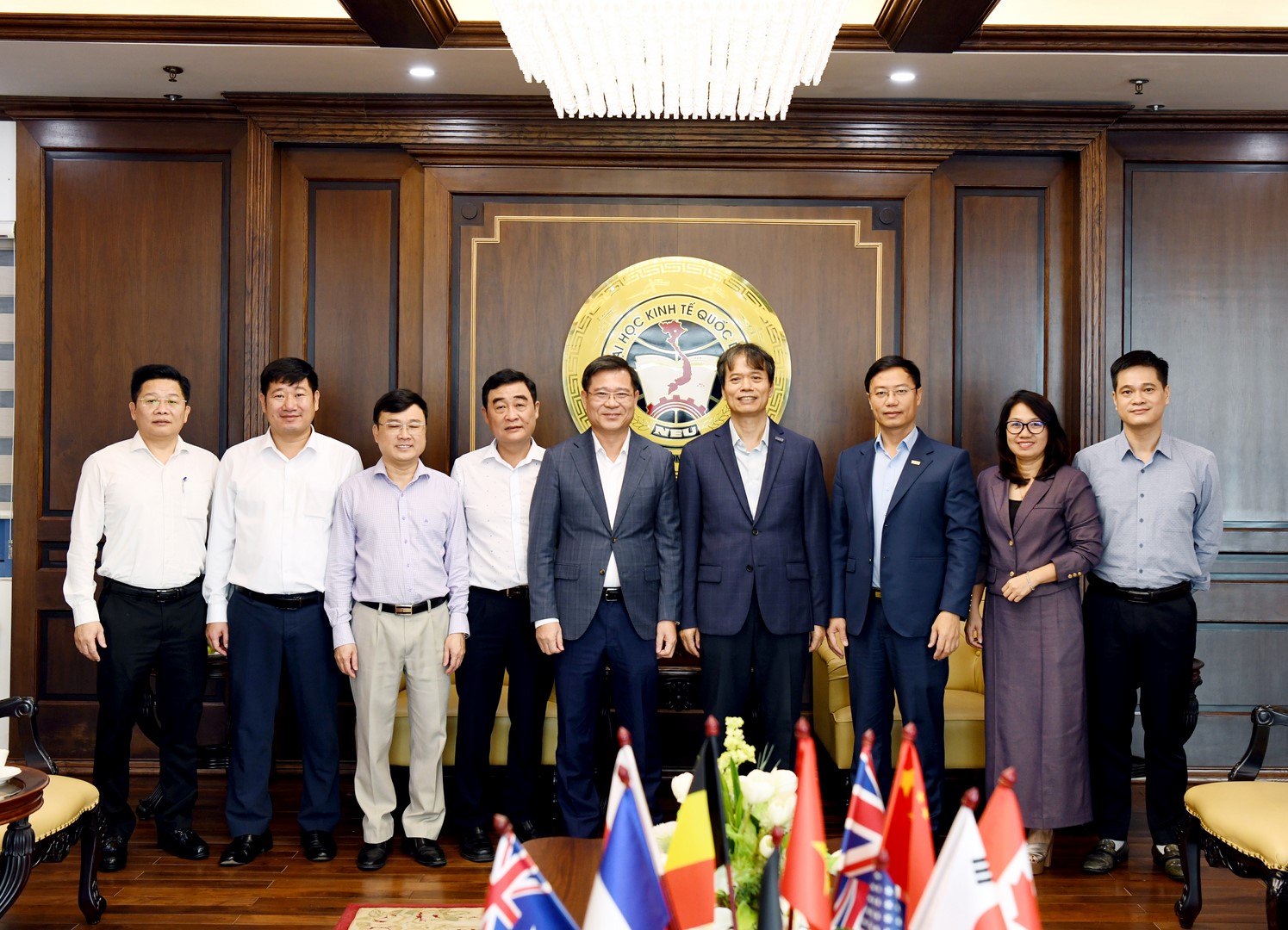
Prof. Dr. Pham Hong Chuong, President of NEU, welcomes and meets with the delegation from Hanoi University of Mining and Geology before the opening of the conference.
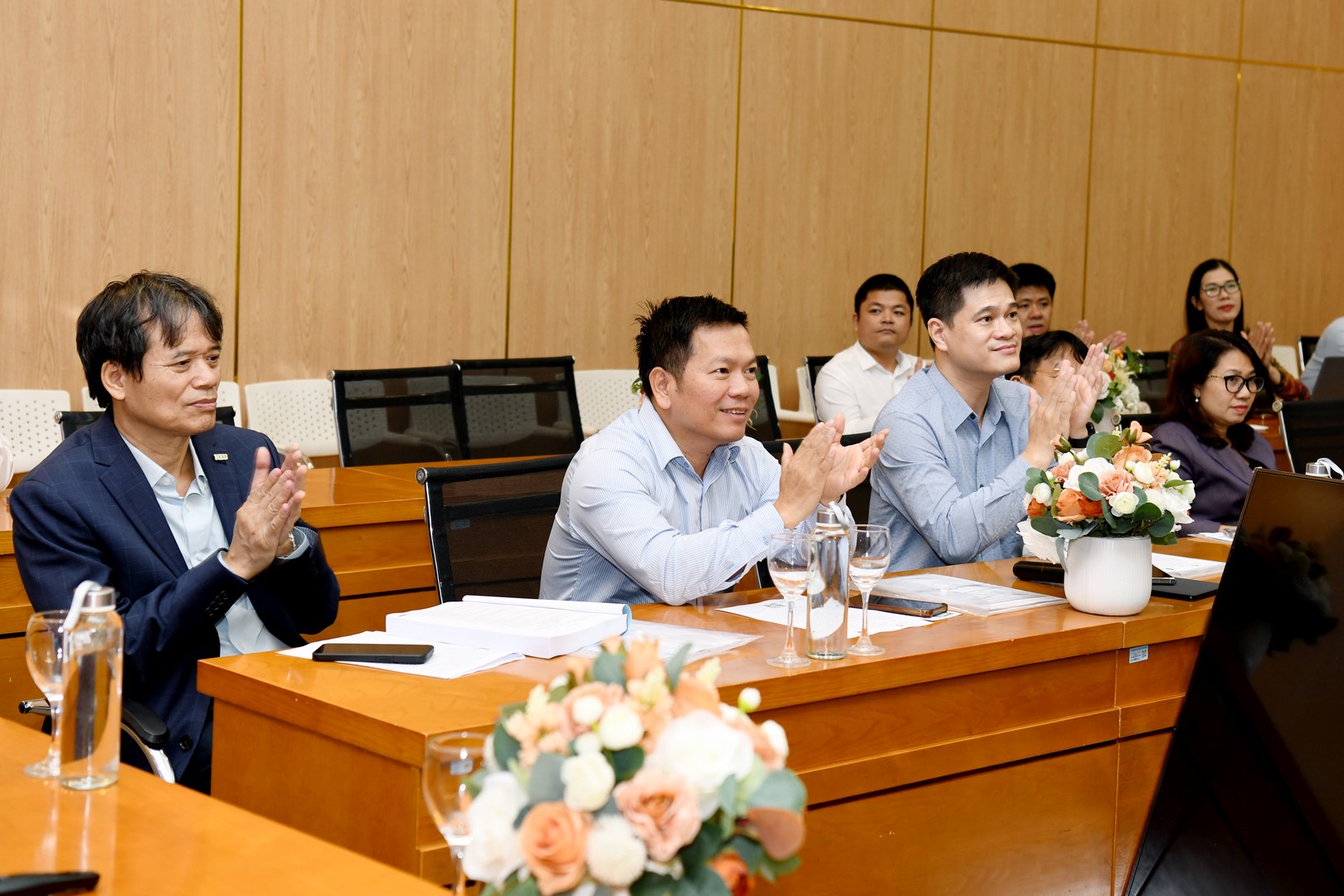
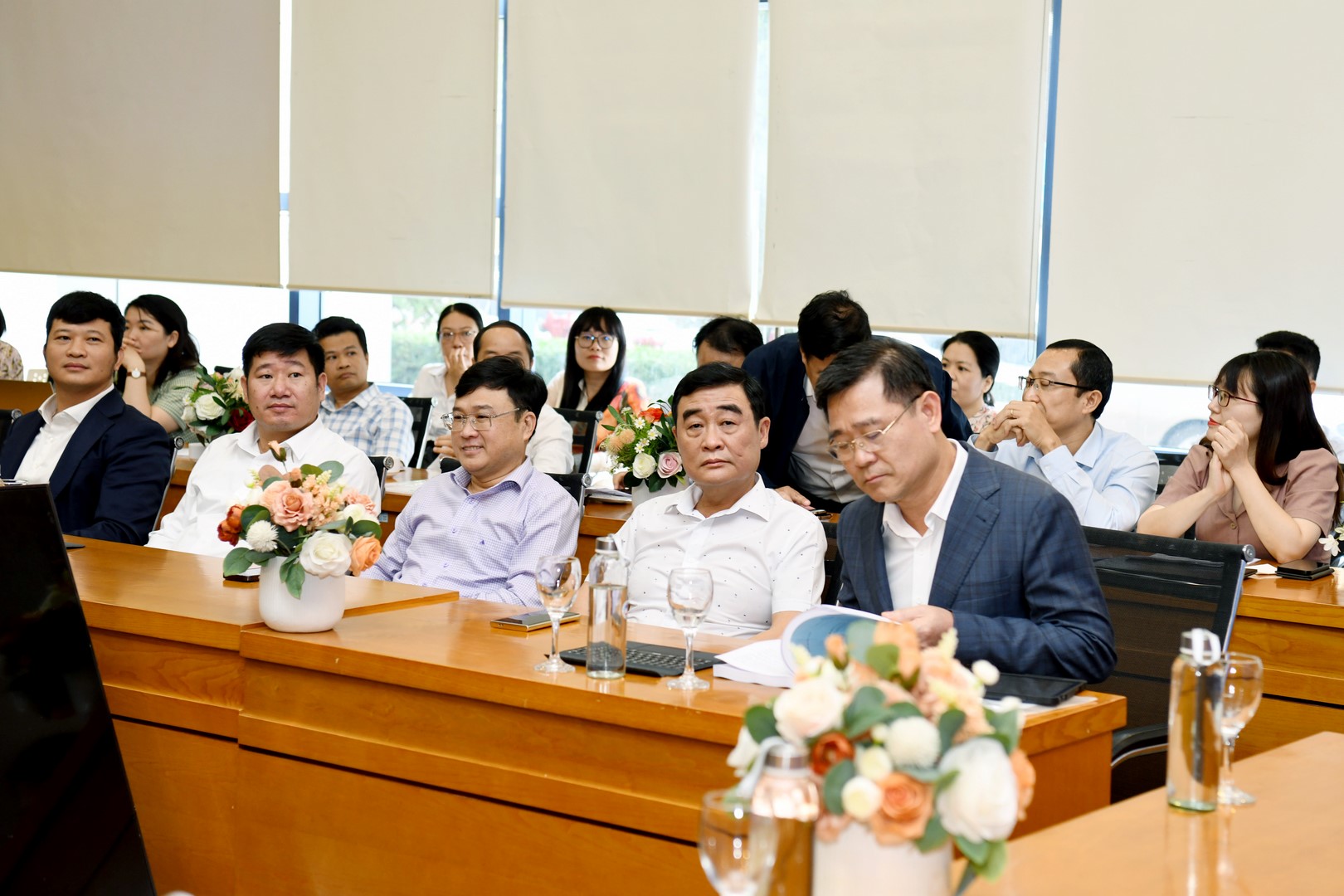
Additional photos from the conference:
Article and photos: Department of Communications
This is an automated translation. If you notice any errors, please contact the Department of Communications, National Economics University at phongtruyenthong@neu.edu.vn.