
NEU and ANU Advance Cooperation in Education, Research and Academic Exchange
04/09/2026 2026-09-06 10:08NEU and ANU Advance Cooperation in Education, Research and Academic Exchange
NEU and ANU Advance Cooperation in Education, Research and Academic Exchange
On 4 September 2026 in Canberra, a delegation from National Economics University (NEU), led by Professor Nguyen Huu Anh, Vice President, met with senior representatives of The Australian National University (ANU) to explore opportunities for a new phase of cooperation. Building on a long-standing relationship, the two universities discussed future collaboration in education, research, student and academic mobility, doctoral training, and broader academic engagement.
The meeting was held at the Crawford School of Public Policy as part of the NEU delegation’s visit to Australia and participation in Vietnam Update 2026.
The NEU delegation included Professor Nguyen Huu Anh, Vice President; Professor Tran Tho Dat, Chairman of the Academic and Training Council; Professor Le Quoc Hoi, Vice Rector of the College of Economics and Public Management; Professor Dinh Duc Truong, Dean of the Faculty of Environment, Climate Change and Urban Studies; and Dr Pham Sy Long, Deputy Head of the International Cooperation Department.
Representing ANU were Professor Paul Burke, Acting Director, Crawford School of Public Policy; Professor Marvin Wee, Deputy Director (Education), Research School of Accounting; Mr Jonathan Dampney, Director, ANU International Office; Ms Elizabeth Ingram, Manager, Global Engagement and Partnerships, Southeast Asia and the Pacific; Ms Ngan Le, Deputy Manager, Global Engagement and Partnerships, Southeast Asia and the Pacific; Mrs Hanoem Wijaya, Regional Manager, Global Engagement and Partnerships, Southeast Asia and the Pacific; and Mr Leonardo Alfonzo, Regional Manager, Global Engagement and Partnerships, Southeast Asia and the Pacific – Mekong Region.
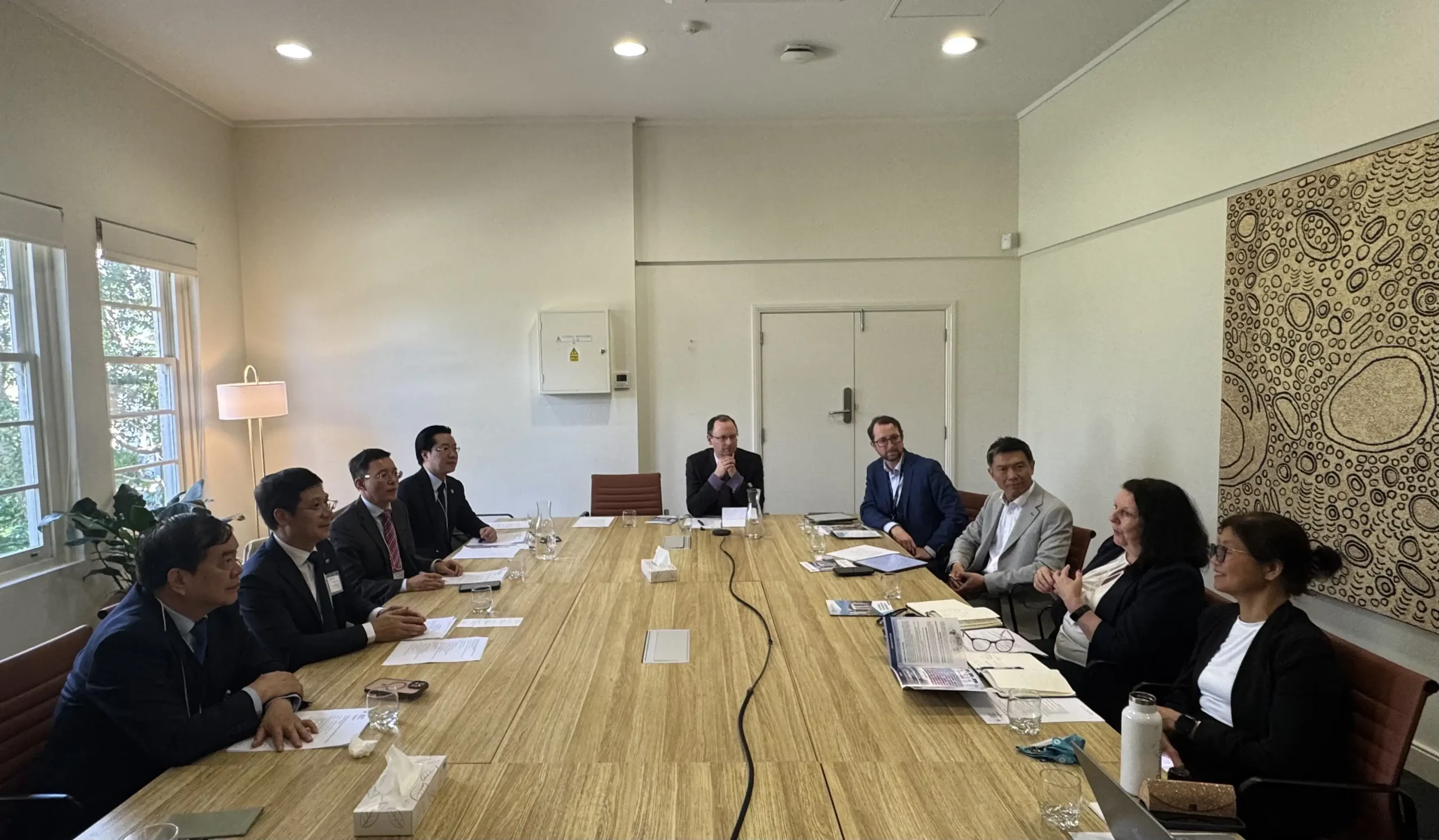
Representatives from NEU and ANU during the meeting in Canberra, Australia.
Developing Flexible Education Pathways
Education was a central focus of the meeting. The two universities explored opportunities to renew and expand cooperation at both undergraduate and postgraduate levels by connecting relevant academic units, mapping curricula, recognising academic credits, and developing pathways aligned with the academic requirements of both institutions.
Potential models discussed included 2+2, 3+1 and 1+1 arrangements, as well as integrated undergraduate-to-master’s pathways and progression opportunities into selected ANU master’s programmes for eligible NEU students. The Crawford School of Public Policy also expressed interest in further discussions on renewing and developing the 1+1 master’s model previously implemented by the two universities.
More broadly, both sides recognized the importance of direct engagement between relevant academic units to identify programs with strong academic compatibility and explore suitable models for articulation, progression, credit recognition and other forms of education cooperation.
As one example, NEU introduced its new Bachelor’s program in Environmental Technology and Sustainability as a potential area for curriculum mapping, student mobility and pathway development with relevant programs at ANU. The two universities also expressed openness to exploring cooperation across other undergraduate and postgraduate programs based on complementary strengths and academic interests.
Expanding Student and Academic Mobility and Doctoral Opportunities
Both universities expressed interest in developing more structured opportunities for two-way mobility, including short-term programmes, semester exchanges, faculty mobility and research visits.
The New Colombo Plan was discussed as a potential mechanism to support ANU students undertaking study and learning experiences in Vietnam. The meeting also explored opportunities for NEU academics, particularly early-career researchers, to undertake short-term research visits at ANU, enabling them to engage with scholars and research groups and expand their international academic networks.
At the doctoral level, the two sides discussed opportunities for NEU academics through the Vietnamese Government’s Project 89. ANU shared information on stipend top-up arrangements for eligible Project 89 PhD candidates and encouraged qualified NEU academics to explore doctoral opportunities at ANU. Early connections between prospective candidates and relevant supervisors and research groups were also recognised as an important area for further development.
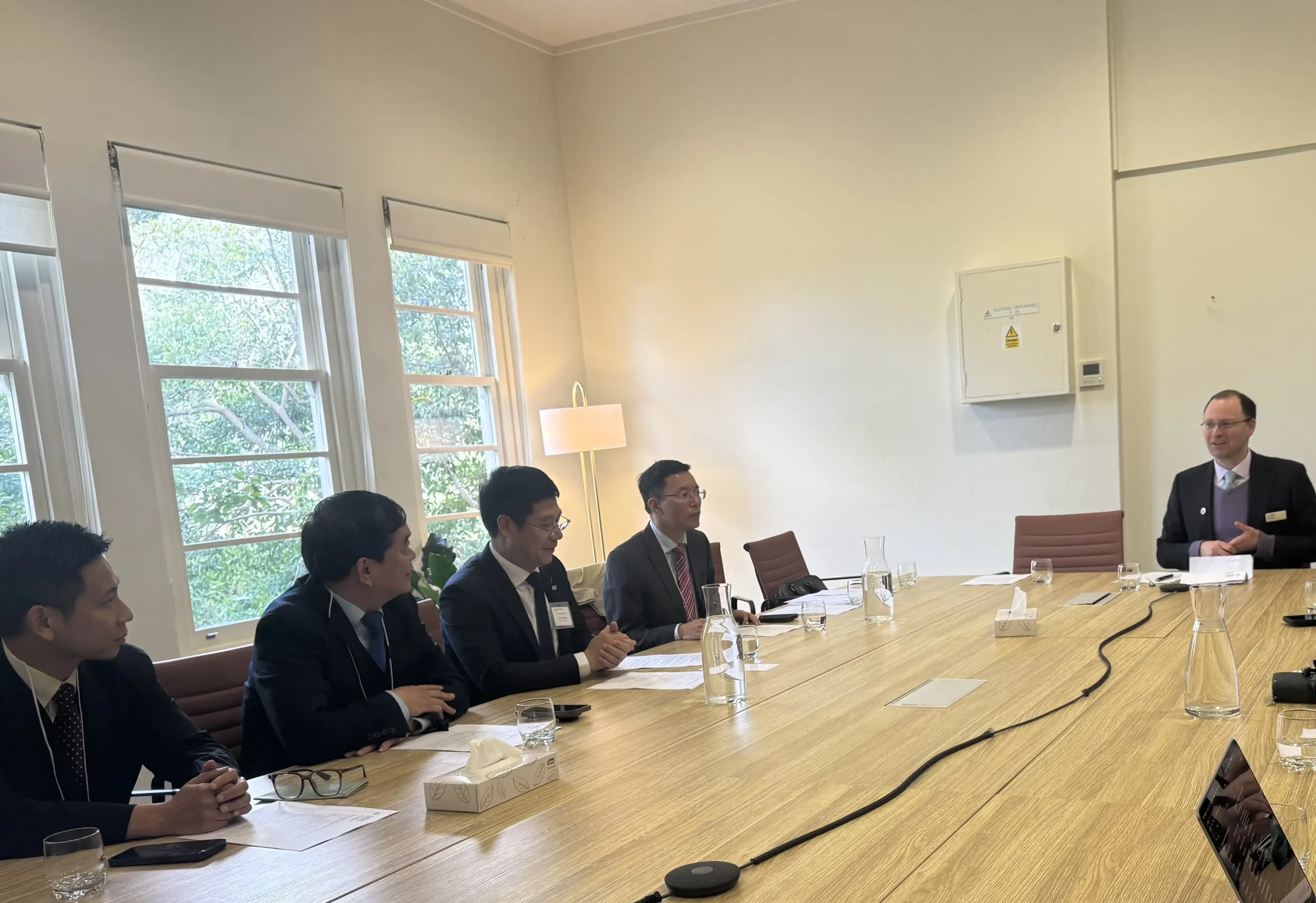
Professor Nguyen Huu Anh, Vice President of NEU, speaking at the meeting.
Expanding Joint Research and International Publications
Research was identified as an important pillar of ANU–NEU cooperation. Both universities expressed interest in expanding collaboration across areas of complementary academic strength and shared interest, while strengthening direct connections between researchers and research groups.
Areas discussed included economics and public policy, digital and green transformation, climate change, accounting and finance, environmental economics, and sustainable development. These represent examples of potential collaboration, alongside other areas that may be identified through further engagement between relevant academic units of the two universities.
Research cooperation could take multiple forms, ranging from researcher-to-researcher connections and joint research teams to collaborative projects, co-authored international publications, academic workshops and seminars, and joint applications for bilateral and other competitive research funding opportunities.
The two universities also recognised Vietnam Update and the International Conference on Contemporary Issues in Economics, Management and Business (CIEMB) as valuable academic platforms for sustaining scholarly connections and generating further opportunities for joint research, co-authored publications, research networks, policy dialogue and other collaborative academic activities.
Beyond education and research, the meeting explored opportunities to jointly develop executive education and short professional programmes, extending institutional cooperation to engagement with the public sector, professional communities and management practice.
Towards a Structured and Multidimensional Partnership
The meeting reflected a strong shared interest in taking the ANU–NEU relationship into a new phase characterised by a broader scope of cooperation and stronger connections between academic units across the two universities.
Priority areas for further development include undergraduate and postgraduate education cooperation; student, faculty and researcher mobility; doctoral training; joint research and publications; the joint pursuit of relevant research funding opportunities; continued development of academic platforms such as Vietnam Update and CIEMB; and executive education and short professional programmes.
Notably, ANU expressed strong interest in expanding its engagement in Vietnam and recognised the potential for NEU to develop as a priority institutional partner for ANU in Vietnam, building on the academic quality, mutual trust and long-standing relationship between the two universities.
Following the meeting, the ANU International Office and NEU International Cooperation Department will continue to serve as coordinating points, facilitating connections between relevant academic units and supporting the translation of the discussions into concrete initiatives. Immediate areas for follow-up include identifying suitable programmes for curriculum mapping and potential articulation arrangements; exploring the renewal of the 1+1 master’s cooperation and other progression pathways; promoting student and academic mobility and doctoral opportunities; and connecting research teams to develop joint research proposals, publications and other academic outputs.
Building on a relationship developed over many years, the Canberra meeting marked an important step towards a more structured and connected ANU–NEU partnership, linking education, research, academic exchange and capacity development. The next phase will focus on translating these shared priorities into concrete and sustainable initiatives for both universities.
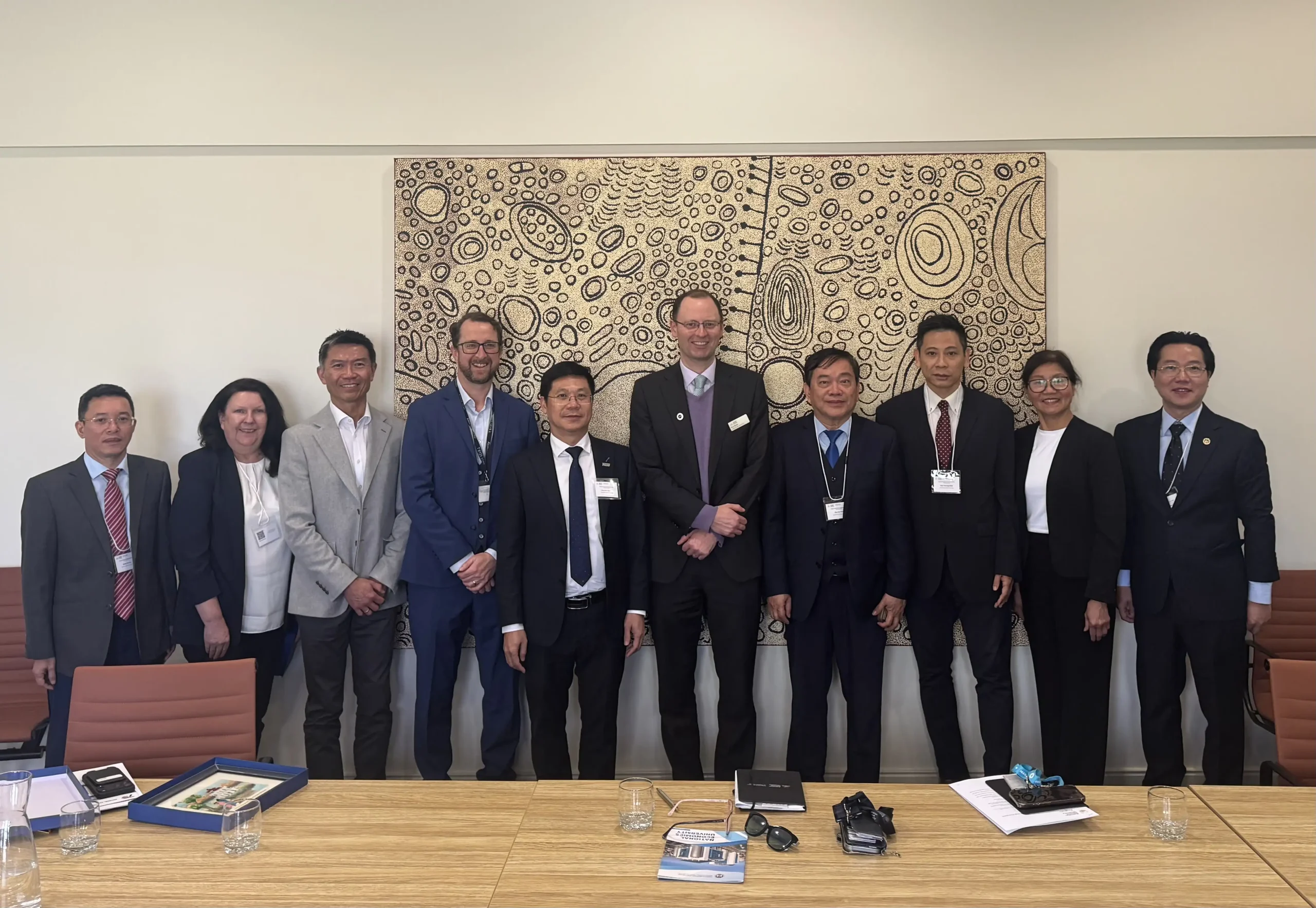
Representatives from NEU and ANU following the meeting.
By: International Cooperation Department, Research Management Department and Communications Department, NEU